
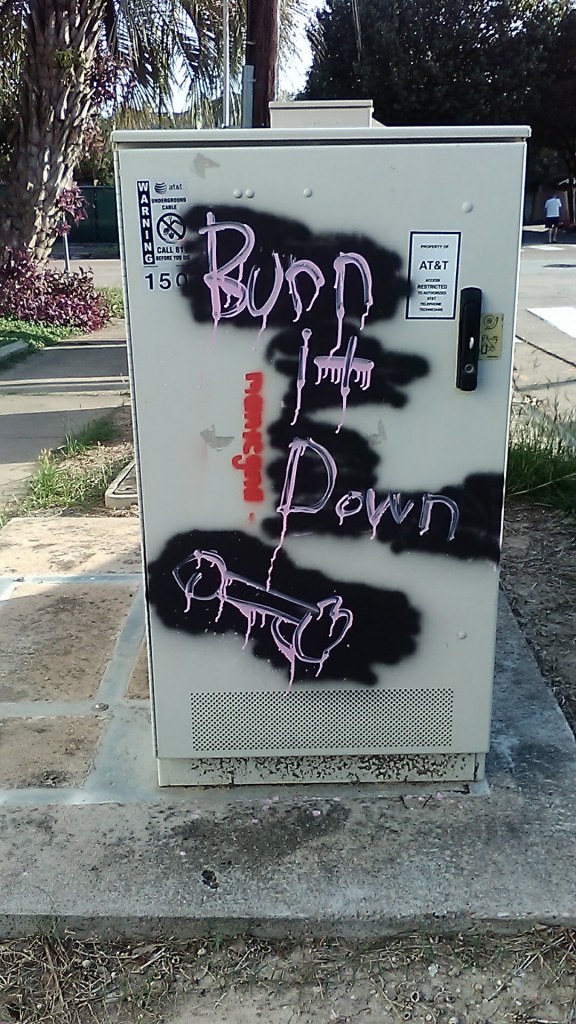
“Burn it down, Charlie. Burn it all down.”
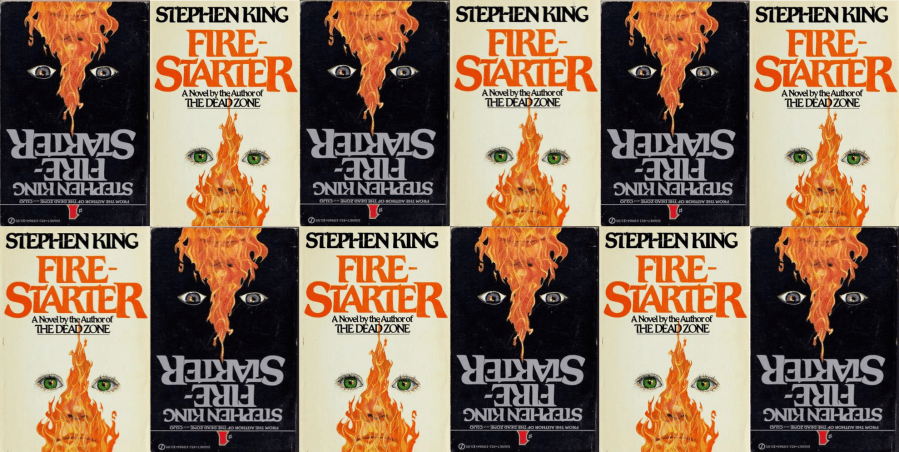
Stephen King. Firestarter. 1980.
The way we tell stories has real consequences on the way we interpret meaning in our everyday lives.
Matthew Salesses. Craft in the Real World: Rethinking Fiction Writing and Workshopping. 2021.
Published in 1980, Stephen King’s novel Firestarter extends his themes and fictional universe in ways that often feel, like the storyline itself, more repetitive than cumulative.
The Summary
We open with 34-year-old Andy McGee fleeing on foot down a New York City street, carrying his 7-year-old daughter Charlie and closely pursued by two men in a green car. Andy gets them into a cab, using his ability to “push” the cabdriver to convince him the men are after someone else, and that a one-dollar bill Andy gives him is actually a five-hundred-dollar bill to pay for taking them all the way to the Albany airport. En route, Andy dozes and remembers the psychology department experiment run by Dr. Wanless that he participated in twelve years earlier as a senior in college because he needed money; he was given the drug “Lot Six” and met Charlie’s mother Vicky, another participant in the experiment; Vicky is dead, killed by the men now pursuing Andy and Charlie. When they make it to the airport, Andy, suffering a debilitating headache from using the “push,” tells Charlie she needs to get them some money. Charlie uses her abilities to extricate the change from the phones in the phone booths, but some of her power gets away from her, and ends up setting on fire the boots of a nearby serviceman on the phone with–and clearly being a jerk to–his girlfriend.
As Charlie and Andy leave the airport on foot, Andy recalls the experience of the Lot 6 experiment in more detail. During it he was seated across from Vicky, and they began to communicate with each other telepathically and share intimate things with each other, falling in love. During the experiment Andy also saw a boy claw his own eyes out, though an assistant claimed afterward Andy was just hallucinating.
As the green car makes it to the Albany airport and Shop agents search it, a van picks up Andy and Charlie as hitchhikers and drops them at a motel fifteen miles away. Andy recalls the year after Charlie was born, when things would catch on fire but he and Vicky wouldn’t speak of why. Eventually Andy had to yell at Charlie for setting her teddy bear on fire, after which point he called his old college roommate Quincey, who knew about the Lot 6 experiment and who told him that the Shop would be very interested in Charlie if they were to learn about her powers.
At the Shop’s headquarters in Longmont, Virginia, Dr. Wanless has come in to see Captain Hollister, aka “Cap,” who first looks over the McGee file and Wanless’s notes on the Lot 6 experiment, most of whose subjects are now dead. Wanless comes in and gives his usual rant to Cap about how dangerous Charlie must be and how her parents must have given her a complex (a la toilet-training) about controlling her power and what could happen if she gets past this complex; Wanless thinks her “potential for destruction” is so high she needs to be killed. Then Cap meets with Rainbird, a half Cherokee Shop agent.
Meanwhile, at the hotel in Hastings Glen, Charlie recalls learning about her pyrokinesis powers and her parents telling her it was bad to use them. She and Andy shower and hit the road to hitch a ride while Shop agents (including Orv Jamieson, or OJ) convene nearby to search motels and restaurants; the pair of agents approaching Charlie and Andy’s motel blow a tire on the way and just miss them. Charlie and Andy are picked up by a farmer, Irv Manders, who takes them home for lunch with his wife. Sixteen Shop agents converge on the farm, and Charlie can tell (psychically) that they intend to kill her father. When agents grab Andy, she unleashes her pyrokinetic powers more than she ever has; in the commotion, Irv Manders is shot, and the Manders’ house burns down, but the Shop agents scatter (some are killed). Andy has to slap Charlie to snap her out of using her powers, at which point she almost inadvertently burns him up, too. Irv lets Andy and Charlie have his off-road Jeep and gives them directions to follow a dirt road that will help them evade the road blocks the cops have set up in the surrounding area to catch them.
Per the orders he was given in his meeting with Cap, John Rainbird kills Dr. Wanless, but makes Wanless tell him everything Wanless knows about Charlie and her powers first. Charlie and Andy successfully make it to Tashmore, Vermont, to an isolated cottage owned by Andy’s now deceased grandfather. Andy recalls the first time the Shop’s agents abducted Charlie fourteen months prior when she went to spend the night with a friend: after a psychic flash, he left work early and came home to find Vicky dead; the friend’s mother Charlie was staying with told him that some “friends” of his in a van had picked her up. Getting another psychic flash the abductors were escaping via the freeway rather than the airport, he tracked the van to a rest stop and got Charlie back by using his “pushing” abilities on the two agents with her to an extent that they were driven insane (he pushes one of them into believing he’s gone blind). When Charlie learned they killed her mother, she was barely able to keep her power from burning up their hotel bathroom.
Andy and Charlie stay several months over the winter on Tashmore Pond; Charlie turns eight. In the spring Andy decides to mail several letters to different newspapers about what’s happened, thinking that publicizing it might be the only way to save them, but when he doesn’t get a response after a couple of weeks, he assumes, correctly, that his letters have been intercepted and the Shop knows where they are. The Cap enlists Rainbird to assist with their capture, at which point Rainbird reveals he’s been hacking Cap’s computer and has a lot of sensitive info in order to blackmail Cap into letting him have access to Charlie once she’s captured. On the day Andy and Charlie try to leave the cottage, Shop agents, including Rainbird, shoot them with tranquilizer darts and easily capture them.
Five months later, a storm hits the Shop headquarters compound where Charlie and Andy are being held. The power goes out while Rainbird is in Charlie’s room posing as a janitor, and he uses it as an opportunity to get closer to Charlie by making up a story about being scared of the dark because of his time as a prisoner of the Vietcong. The blackout disrupts Andy’s med schedule, inducing a panic attack that somehow helps him regain his pushing abilities, and he ends up using the push on himself in his sleep.
As time passes after the storm, Rainbird–“John” to Charlie–convinces her to participate in a test and make fire in order to get some things for herself, like eventually seeing her father. Andy starts throwing his pills away and pretending he’s still drugged while using his push ability on his handler Dr. Pynchot to let him stick around for more testing instead of sending him away to another compound. Pynchot turns out to be a mental “deviant” (a transvestite), and so the push has an adverse effect on him that slowly makes him lose his sanity. Charlie does a successful test for the Shop people, demonstrating the startling potential scope of her powers. Afterwards she’s allowed to walk outside with John, who takes her to a stable where she meets a horse named Necromancer; Charlie tells John she was able to control her ability during the test in a way she hadn’t before. Cap and Rainbird decide Charlie ultimately can’t be controlled and that Rainbird will kill her.
Cap calls Andy into his office to tell him Dr. Pynchot killed himself and that Andy will be going off to the Hawaii compound; Andy uses his push on Cap to find out how Rainbird has been manipulating Charlie and then to arrange that the Cap will take him along to Pynchot’s funeral. Charlie has a bad dream about Necromancer and other horses burning.
Charlie does another test, this time destroying a cinderblock wall. She demands to see her father and threatens to make something happen if she doesn’t; one of the doctors, Hockstetter, thinks the testing has helped her practice her power in a dangerous way. On the way back from Pynchot’s funeral, Andy pushes Cap to arrange for both Cap and Charlie to come with him on the flight to the base in Hawaii (though he plans to get them off before that at a refueling stop), as well as to send Rainbird off to San Diego, and to give a note to Charlie. The Captain gives Charlie the note, which tells her to meet her father in the stables at 1pm the upcoming Wednesday, and not to trust Rainbird, who should be gone by then. This makes Charlie keep her distance the next time Rainbird visits her, which combined with the knowledge that Cap recently visited her, makes Rainbird nervous. He watches a recording of Cap in Charlie’s room and sees him pass the note; then Rainbird uses stolen computer codes to look over some files and deduces Andy does have his pushing ability and used it on Pynchot and Cap. When Cap calls to send him to San Diego, Rainbird agrees but then uses the Cap’s codes on the computer to cancel the order.
That Wednesday, Charlie asks to go out to the stables, and an agent takes her with orders to leave her there. Rainbird hears about her request to go to the stables and is there waiting in the loft after making everyone else clear out when she gets there. Rainbird calls down to her and she yells at him for betraying her; he says he wants to be straight with her and has almost convinced her to come up the ladder to him to finish their business when her father comes in the with Cap (who came to get him for them to get on the plane to Hawaii). Cap now has a full-blown ricochet effect in his head about golf and snakes from Andy’s pushing. Rainbird has his gun trained on Andy and tells Charlie he can either shoot her father or she can come up the ladder to him and her father can go to Hawaii; she’s about to go to the ladder again with Andy thinking he’ll have to push her not to, but then the Cap freaks out thinking a nearby hose is a snake near the time the agent who escorted Charlie to the stable rings a compound-wide alarm telling everyone to converge on the stables. When Rainbird jerks his gun toward the suddenly moving Cap, Andy uses a massive push against Rainbird to make him jump from the loft. Rainbird breaks a leg but manages to hang on to his gun and shoot Andy (who felt himself already dying from the amount of push he just used anyway). Rainbird wants Charlie to look at him so he can look her in the eye as she dies (this is what he’s wanted from her all along) but as he fires his bullet she uses her power to vaporize both the bullet and then Rainbird.
The back of the stable blows out, hitting a lot of Shop agents with shrapnel. Charlie goes to her dying father, who tells her to “‘[m]ake them know they were in a war” before he dies. When the horses start running from the barn, the Shop agents are on a hair trigger and shoot at them. Charlie comes up behind the agents and starts sending fire. She destroys the entire compound, including the antebellum houses. Her power almost spirals out of control completely, but she manages to get ahold of herself and send it into the duckpond. From the point of view of Shop agent OJ who was at the Manders farm, we get some of the chaos of Shop employees trying to climb the fences to escape and getting attacked by the Dobermen guard dogs there. Charlie sits by the pond recovering, then climbs the fence herself after a woman calls her a witch and Charlie screams back it’s not her fault.
The media reports that the destruction at the Shop compound was a terrorist attack and that Rainbird was a double agent. Four weeks later, the new (female!) head of the Shop wants Charlie found and killed after the initial period of confusion following the destruction enabled her to get away. Charlie shows up at the Manders farm, and they take her in uncertainly because they were threatened by the government to keep quiet about what happened with Charlie last time. After some months, word gets back to the Shop about where Charlie is, but the morning agents show up to apprehend her, she’s already left. She makes it to the offices of Rolling Stone and says she wants to tell one of the writers her story. The End.
The Agency
The titular trope of this novel seems a thematically apt one for the sea change my thoughts on the “craft” of fiction are undergoing as I’m teaching my first advanced fiction workshop in over a year and reading the recently released Craft in the Real World: Rethinking Fiction Writing and Workshopping by Matthew Salesses, who says:
Much of what we learn about craft (about the expectations we are supposed to consider) implies a straight, white, cis, able (etc.) audience.
Matthew Salesses. Craft in the Real World: Rethinking Fiction Writing and Workshopping. 2021.
Like many American institutions, this country’s fiction–popular and literary alike–is largely white supremacist. Nowhere is this more apparent than in King’s oeuvre. Salesses traces our idea of what’s “normal” in fiction back to Aristotle, who dissented with the god-driven plots common in the tragedies of his time to institute the character-driven model that is still the basis of literary fiction to this day. While King has played with both plot-driven and more character-driven models, within either, his white characters enjoy a significant amount of agency.
Take King’s story “Trucks,” for which we have a first-person white male narrator. If character development is knowing anything about this man outside of what he’s doing in immediate response to the sentient semis surrounding him, then we have zero here. But his white (supremacist) gaze is essentially consistent with any of King’s “implied authors,” as Salesses wold have it:
The girl in the booth screamed. Both hands were clamped into her cheeks, dragging the flesh down, turning it into a witch’s mask.
Stephen King, “Trucks,” Night Shift. 1977.
Glass broke. I turned my head and saw that the trucker had squeezed his glass hard enough to break it. I don’t think he knew it yet. Milk and a few drops of blood fell onto the counter.
The black counterman was frozen by the radio, a dishcloth in hand, looking amazed.
When the narrator ends up moored in a truck stop with a bunch of strangers, he sees a “girl,” a “trucker,” and a “black counterman.” The white male narrator is at the mercy of the trucks and essentially ends up enslaved by them at the end, but it is he who is able to lead the stand against them, hence: agency. But the agency of his gaze goes even further in defining a normative standard:
It is easy to forget whom we are writing for if we do not keep it a conscious consideration, and the default is not universal, but privileged. To name the race only of characters of color, for example, because that is how you’ve seen books do it before, is to write to a white audience. It is to write toward the expectations of how white people read the world.
Matthew Salesses. Craft in the Real World: Rethinking Fiction Writing and Workshopping. 2021.
History shows that white people tend to read the world as a hierarchy they’re at the top of, a worldview that keeps us in constant (bloody) conflict. Salesses traces how Aristotle’s character-driven plot model generally promotes the value of individual agency (agency in the sense of having the power ) in a way that certain government Agencies essentially propagated in a specific post-WWII fight:
In other words, the Workshop never meant craft to be neutral. Craft expressed certain artistic and social values that could be weaponized against the threat of Communism.
Matthew Salesses. Craft in the Real World: Rethinking Fiction Writing and Workshopping. 2021.
and
In his book on creative writing programs during the Cold War, Workshops of Empire, Eric Bennett traces the success of the workshop model to its history at the Iowa Writers’ Workshop. He quotes letters from Workshop cofounder Paul Engle to friends and funders, in which Engle sometimes describes his investment in craft as an ideological weapon against the spread of Communism. In one letter, Engle writes that he is convinced, “with a fervor approaching smugness,” that the tradition of Western literature “is precisely what these people [in the East], in their cloudy minds, need most.”
Matthew Salesses. Craft in the Real World: Rethinking Fiction Writing and Workshopping. 2021.
and
If you have been taught to write fiction in America, it is a good bet that you have been taught a style popularized by Ernest Hemingway and later by Raymond Carver, sometimes described as “invisible,” that is committed to limiting the use of modifiers and metaphors, to the concrete over the abstract, to individual agency and action, and to avoiding overt politics (other than the politics of white masculinity). Instead of a political argument, a character might angrily eat a potato. This is supposed to leave conclusions up to readers, though what it really means is that the ideology of craft is to hide its ideology. … If the Workshop is supposed to spread American values without looking like it is spreading American values, what better craft for the job than the craft of hiding meaning behind style? [bold emphasis mine]
I’ve been reading and writing about the “dirty” covert ops of the Central Intelligence Agency for some time, and now come to find out that through the weaponization of creative-writing pedagogy I’ve essentially been spreading their propaganda, an agent whose identity is unbeknownst even to myself…. So, that’s great. Salesses never name-checks the CIA, only this broader “ideological” battle between East and West, but this particular Agency’s enlistment and manipulation of literature is well documented.
In Firestarter, King does name-check the CIA:
“What sort of government agency we talking about? FBI?”
“No. The Shop.”
“What? That CIA outfit?” Irv looked frankly disbelieving.
“They don’t have anything at all to do with the CIA,” Andy said. “The Shop is really the DSI—Department of Scientific Intelligence. I read in an article about three years ago that some wiseacre nicknamed it the Shop in the early sixties, after a science-fiction story called ‘The Weapon Shops of Ishtar.’ By a guy named van Vogt, I think, but that doesn’t matter.”
It doesn’t matter, but it’s a sci-fi reference, so in it will go….and if the Shop didn’t “have anything at all to do with the CIA,” it wouldn’t be necessary for a character to state that categorically. The CIA-Shop likeness goes beyond general(ly questionable) covert tactics to the specificity of this plot: using mind-altering substances on unwitting subjects with the ultimate aim of mind control, which it’s been proven the CIA has attempted.
The CIA did Nixon’s dirty deeds dirt cheap, and Nixon is King’s Necromancer–his favorite whipping horse. This novel piles on the evidence that King was forged in the fires of Watergate and Vietnam.
“I’ve heard things,” Quincey said finally, when he saw that Andy wasn’t going to let him off without something. “But sometimes people listen in on phones, old buddy. It’s the era of Watergate.”
and:
Dr. Joseph Wanless had suffered his stroke on the same day Richard Nixon announced his resignation of the presidency—August 8, 1974. It had been a cerebral accident of moderate severity, and he had never come all the way back physically. Nor mentally, in Cap’s opinion. It was only following the stroke that Wanless’s interest in the Lot Six experiment and follow-up had become constant and obsessive.
As I sit here watching the closing arguments of Trump’s second impeachment trial, I’d say we still have not “come all the way back” from Watergate… the reveal of the potential for political corruption revealed by Nixon and his deployment of “intelligence” agents for a smear campaign is something Boomers could not un-see. After that it seems we entered an emperor-wears-no-clothes situation: we knew the system didn’t work but kept pretending it did anyway. Then Trump raised the specter of that corruption, beating it into a dead horse whose corpse he rode into the White House…
One of Trump’s favorite rhetorical levers is conspiracy theories, which were so effective due to our checkered political history (Watergate all the now known shady shit the CIA has done) opening up the possibility that these theories could be true; there was precedent. Drenched in deep-state government paranoia, Firestarter was published in September of 1980, shortly before John Lennon (RIP) was murdered by Mark David Chapman in December of 1980. There are conspiracy theories that J.D. Salinger’s novel The Catcher in the Rye, which Chapman was reading at the site of Lennon’s murder when police apprehended him, was part of some kind of CIA-related mind-control program, which is noteworthy in light of King’s overlapping interest in the specimen of the male adolescent. (Even if The Catcher in the Rye was not written or utilized as an explicit mind-control device, it’s still a mind-control device.)
Connected to the concept that the human mind might be programmed or controlled, the toilet-training metaphor about Charlie’s relationship to her powers, if leaned on too heavily/repetitively, took on resonance for me as a metaphor for how we’ve been conditioned to define a normative literary and otherwise standard as straight, white, male, etc., individualistic. I’m the perfect audience for some CIA-bashing, but I have been conditioned pretty strongly on the character-driven front to want what is in many ways lacking in this novel. I could do King’s premise-driven pocket-horror short stories for the most part, but in a novel, I struggle. Here, the characters are agents of the plot in that they only exist to advance it, instead of the plot existing to advance them. Not to say the characters should always be advanced, but they could at least be more interesting?
In Firestarter‘s premise, Andy McGee an unwitting victim of the government’s sinister experiment, utterly innocent. He seems to have less agency than a lot of white-male King characters, relentlessly pursued and powerless to stop it–except not entirely powerless. But using the “pushing” power he does have is literally killing him while we come to find the nature of Charlie’s is to feed on itself and grow more powerful, which subverts some of the agency that derives from Andy’s powers. His thorazine-dependent interlude at the Shop compound raises interesting themes about physiological v. psychological addiction and connects the “push” label to “drug pusher” (side note: according to an anecdote in King’s On Writing memoir, “pushing” is also the term King and his brother used for pooping when they were kids). Mind-altering drugs take away one’s personal agency, and I suppose the premise of a white man losing his agency is in large part what King is deriving horror from here. (The horror!)
So the Shop “controls” or is the party whose actions generate most of the plot here, but then they lose control in what turns into a narrative about the dangers of playing god. This happens not because of anything Charlie does–which would mean a more ancient-Greek-type plot of the Shop destroying itself–but because of a random storm, a deus ex machina, God in the form of a not-random storm…evidence for which might be the omniscient point of view in which this pivotal plot point of the electrical power going out is described (an omniscience reminiscent of a will-to-know-all in vein of CIA/NSA surveillance/”intelligence”):
The chain of events that ended in such destruction and loss of life began with a summer storm and the failure of two generators.
As someone who recognizes that the systems of our government consistently and constantly prey on people who have done nothing to “deserve” it, I shouldn’t need Andy to be the victim of his own tragic flaw to make this plot satisfying. Yet it’s my (conditioned) impulse to explore what that would look like, which would trace back to the reason Andy was in the study back in college in the first place: here it’s that he’s poor and needs money as he’s about to go to grad school for English. Surely something else I can sympathize with… but there’s something about him that just feels vanilla and hard to get invested in. (I don’t give a shit about his “Granther,” whose former existence is a paper-thin excuse for the cabin they’re able to hole up in, a convenient property that unwittingly belies this victimized white man’s privilege….) The novel’s alternating presentation of past and present timelines doesn’t help. In theory, opening in the middle of the action as it does should generate more tension/interest, but when it’s presented as Andy actually recalling the past in such detail as they’re in the midst of doing things like climbing down a steep highway embankment, it calls attention to itself as clumsy.
Other notable and in my (conditioned) view detrimental lacking aspects of character development would be Charlie, Vicky, Cap and Rainbird (more on the latter three in Part II). Charlie’s conflict over whether to use her powers is good or bad is pretty generic–ie feels like what any child might feel about this situation without anything to inflect it to express her individual character. Which just says more about my conditioning … the nature of Charlie’s power feeding on itself (the way fire itself does!) and the question of her control over it–her agency–resonates with the Shop’s relationship to its figurative power, but the conclusion of her story doesn’t play this out in much of a satisfying way; we get a Salem reference via the lady calling her a witch as she’s trying to leave and then she makes her way back to the Manders, where she only uses her powers in very tiny helpful ways that I guess are supposed to show us she has internalized the lesson that power corrupts and only seeks more power, a cycle she is then going to stop by going to Rolling Stone, of all places. This conclusion reinforces Charlie’s agency, which would feel more valuable to me for being non-male if she had some character development to pay more than lip service to her empowerment… It’s also a conclusion of King once again reinforcing the power of narrative itself.
Western patriarchal imperialist narrative, of course. This novel takes as its sole epigraph the opening line of Ray Bradbury’s famous novel Fahrenheit 451 about a world in which books aren’t just banned but burned. I mentioned in a previous post how King’s Bradbury homage “I am the Doorway” is “a possible (unconscious) allegory for … a passing of the patriarchal torch from Melville to Hemingway to Bradbury to King,” and it’s ironic that Firestarter takes 451 as its literary antecedent, since 451 seems like a conscious allegory about the dangers of burning down the patriarchal Western canon, while Firestarter feels like an unconscious allegory of the need to burn down the patriarchy itself. As the news breaks that Trump has been acquitted, it would be a pleasure to burn the whole of the Western canon and the political system that’s weaponized it.
-SCR
 Long Live The King