On the audio commentary of his own adaptation for television of The Shining (1997), King comments that “the network giveth and the network taketh away.”
It’s hard to isolate the most culturally significant element of the 2020 adaptation of what’s arguably one of Stephen King’s most important works: The Stand. Is it that the series adapting the narrative of a superflu killing off almost all of humanity wrapped production in early March of 2020, just as a global pandemic was declared? Is it that restaging this “epic” narrative of good v. evil that’s been reiterated (reincarnated?) several times gives us a chance to rectify past mistakes? Is it that “King’s eyes and prolific hands are all over this adaptation,” including episodes penned by King’s own son, Owen? Is it that King himself penned a “new” ending for the ninth and final “coda” episode?
A further point of interest for me is how the 2020 adaptation connects the gaps between where I am in my (attempted) chronological reading of King’s work and where I am in writing about it. Finishing the novel IT (1986) not long after watching the new Stand series is an almost cosmically charged experience, or at the least an illuminating one. Both of these novels of King’s play with and question the very concept of “chronology,” and could compete for King’s most ambitious work. (Elements of their cosmos will be further threaded together via The Dark Tower series.) Other connections between these texts (and their various iterations) include:
-The phrase “‘Be true. Stand,'” is used in the 2020 series but does not appear in the novel version of The Stand. The phrase appears repeatedly in IT.
-One of IT’s main characters, Ben Hanscom, is from Hemingford Home, Nebraska, the same place as The Stand‘s Mother Abagail. Hemingford Home becomes an actual nursing home in Colorado in the 2020 Stand adaptation, with King’s cameo reduced to an appearance in an advertisement for this home on a bus stop.
-Actor Owen Teague plays Patrick Hockstetter in It (2017) and It Chapter Two (2019), and Harold Lauder in the 2020 The Stand.
-For this year’s “Stephen King Area” of the 2021 Virtual PCA/ACA Conference, both of these novels have their own individual panels with multiple talks scheduled around them (“IT Lives!” and “Standing in a Pandemic,” respectively).
-A chapter in IT is called “The Circle Closes,” which is the title of the new epilogue King appended in the ’90 Uncut iteration of The Stand, which means this phrase (slash expression of one of King’s favorite metaphysical concepts) originates with IT. (“The Circle Closes” is also the title of the highly anticipated King-penned 2020 Stand coda episode, which Part III will…circle back to.).
I discussed in a previous post how King’s first Bachman novel, Rage, explores a link between Hollywood movies and gun violence not necessarily by depicting that violence itself, but by setting certain standards of masculinity which that violence becomes an expression of. Film critic Ann Hornaday has argued that this expression of toxic masculinity is a product of the fact that the vast majority of major studio films continue to be written and directed by white men. It has now been almost seven years since Hornaday posed this somehow controversial argument. I could read the 2020 adaptation of The Stand as evidence of the entertainment industry’s general response to this problem of representation in the interim, which would be to (attempt to) treat (some of) the symptoms of the disease rather than the disease itself.
To wit, a white man is still in charge of the latest iteration of the narrative, in this case via the showrunner Benjamin Cavell, apparently in fairly constant consultation with King himself both via email and by having Owen in the writers’ room. To alleviate if not necessarily the most grotesque but perhaps the most immediately obvious symptoms of this patriarchal disease (so as to limit comment on it and thus perpetuate its continued existence), the original white-man status of several characters is updated or “upgraded” (as Cavell puts it here) to represent more minorities than were in the source material. But in 2020’s iteration of The Stand, the attempts of the white-men-in-charge to make certain minority “upgrades” ultimately represent/express something less than progress.
Cavell’s description of another IT connection in a Vanity Fairinterview exchange displays the general (white) bro culture that surrounds the new adaptation and how this ultimately amounts to an extension of the culture surrounding the source material:
We also get a little shot of a turtle statue in the window of the house, and I was trying to explain to my wife what the turtle signifies. I found myself unable to explain it. It’s a cosmic power mentioned inIt, it’s a presence inThe Dark Towerseries …
I was going to say, how did you approach that? Yeah. I tried to explain it to my wife. Well, you know, the world kind of rides on the back of a turtle. She’s like, “What?”
King obviously has a long history of adaptations, which associate professor of film and television at Kingston University, Simon Brown, positions both as successful often as a product of other trends, but also a prevalent influence on media and visual narrative consumption trends in its own right. Which brings us to another connection between The Stand and IT–the format of their initial adaptations as (wildly successful) miniseries for primetime network television, specifically for ABC. What struck me about Brown’s analysis of the adaptation in this format was how IT airing in November of 1990 meant it was benefitting from the same network having aired the first season of Twin Peaks a few months earlier, which affected not so much its appeal to viewers as the network’s own “Standards and Practices”:
However, one of the long-standing taboos of Standards and Practices, raised in 1979 when CBS adapted Salem’s Lot, was the issue of placing children in danger.
Child endangerment being a defining component of the IT narrative meant this “taboo” had to be “relaxed” for ABC to even consider the project (Brown 159). King’s influence on and through shifting standards like these is kind of stunning when you consider the scope of the viewership and populace it reaches, even if a lot of the “explicit detail” was still removed for these television versions (Brown 162). (Of course, if it hadn’t been King the networks were willing to show increasingly graphic violence and sex for, it would have been somebody else.) Brown proceeds to outline how the success of IT beget the success of The Stand, and how King miniseries adaptations thus became as integral to 90s network television as, per my own comparison, Seinfeld.
(On a peripheral note, my favorite part of Brown’s history is how when King “was offered by ABC the chance to do whatever he wanted,” he chose to retell The Shining in miniseries form, but Stanley Kubrick would only sell him the rights back if King agreed to stop complaining about Kubrick’s adaptation (168).)
As the passage excerpted above indirectly points out, the other major network King has an extended history with is CBS. Which brings us to the 2020 Stand‘s format, appropriately updated to not just “television miniseries” but “streaming television miniseries,” for a streaming service owned by CBS (which currently the Republicans would like you to boycott). This basically means King can have his cake and eat it too (or the best of both worlds, whichever cliche you prefer) in terms of maintaining network backing and getting to show graphic violence and sex. (I don’t advise watching 2020’s version while eating.) Simon Brown notes the “‘major reduction in snot'” in 1994’s version (162); in 2020 the snot and the tube neck are back with a vengeance. (It’s too bad Brown couldn’t wait a couple more years to publish his adaptation study, since it means his discussion is missing both the new The Stand and It Chapter Two (2019).)
A major company like CBS wields increasing influence with its attendant corporate mergers, which King apparently enjoys working with because of the access it provides to the maximum number of viewers:
[King’s] argument was that to work with a cable channel “would be like publishing a major novel with a small press. I have nothing at all against either small presses or cable TV, but if I work hard over a long period of time, I’d like a shot at the largest possible audience” (1999b, xii).
Yet King’s working with these bastions of corporate power is probably enabling the continued growth and influence of the same corporations whose corruption of the culture he often seems to be attempting to critique, The Stand serving as a primary example of such narratives. So I suppose it shouldn’t be surprising that a) CBS installed a white man at the helm of this latest adaptation and that b) this white man’s adaptation fails to escape the patriarchy’s problematic permeation of the narrative on a number of explicit and implicit levels.
The Le Guin Test
One can learn a lot about dramatic efficiency by watching King adaptations. The changes they make to their source material may reflect changes in the culture at large, and, per the network discussion above, may also support a reading/message that supports the propagation of a culture that in turn propagates/perpetuates the network model of corporate power. The changes may also reflect the pitfalls of working as a lone novelist (one whose editors appear to be afraid of him).
Narratively, one of the first things I felt watching 2020’s version was the pacing: for the superflu part, they really clip right along, and present a generally scrambled chronology. (I definitely thought I would have been confused if I hadn’t read the book.) A potentially more significant narrative and thematic adjustment is how the series minimizes the government’s role in the apocalypse–most egregiously by 1) Flagg’s boot blocking the door that lets Campion out, and 2) Stu’s friendship with his captor Doctor Dietz and his added interaction with the somehow nobly depicted General Starkey. I could probably go with #1 (oversimplifying though it may be) if it hadn’t been in conjunction with #2, which was frankly gross. There’s a shadowy element at work in the form of some rando military guy who kills Dietz and tries to kill Stu but who Stu kills instead (in lieu of killing Dietz in the original) but the show itself intimates Starkey doesn’t know who this guy is working for, letting him off the hook.
Many of the adjustments to the original storylines are “good” in intensifying dramatic/narrative conflict, but in so doing these changes often (further) exacerbate the “bad” in creating (further) problems with the adaptation’s attempts at political correctness.
Matthew Salesses discusses an example of a similar issue in his recent book on the craft of fiction (which I discussed in a post on Firestarter):
Le Guin has great intentions with [A Wizard of Earthsea], not only to take power away from the idea that violent confrontation should provide the solution to conflict, but also to center characters of color. Ged is one of the first protagonists of color in white fantasy. On the other hand, Le Guin avoids the experience of being a person of color. She puts him in a world where his race causes him zero trouble. This is a moral stance. In fact, his main problem is himself, or perhaps a darker version of himself, and his main solution to his problem is himself. This is a moral stance. The novel, intentionally or not, puts forward the idea that everything is up to free will, even for people of color, and that what stands in a person’s way is his own darkness.
This isn’t Le Guin’s intention. Her intention was to upset traditional frameworks. She says so in her afterword. But conflict has consequences for meaning. It’s not just something you put in fiction to make a story compelling. Conflict presents a worldview.
Matthew Salesses, Craft in the Real World: Rethinking Fiction Writing and Workshopping. 2021.
In other words, if the character’s race changes and nothing else changes, that reflects a white supremacist text, one that is blind to systemic injustice in its failure to recognize the material impacts of same.
In The Stand, King’s conflict expresses a similar idea about “everything is up to free will,” at least per (preeminent) King scholar Tony Magistrale’s analysis:
In The Stand, more than any other King novel, free will and moral choice are solidly within the individual’s purview; all of the major characters in this book participate directly in determining their fates.
Tony Magistrale, “Free Will and Sexual Choice in The Stand,” Extrapolation, Vol. 34, No. 1, 1993. p30.
Magistrale’s phrasing implies race has no impact on such agency, when “the individual” whose “purview” free will is in would probably more accurately be designated “the white individual.” Which means, per Salesses, the narrative inherently fails what I’ll call the Le Guin Test (even if maybe it should be called the “Salesses Test”), if, as Magistrale points out, the very principle of this agency is essentially the backbone of the entire narrative:
The shape free will takes in this book directs the narrative itself: characters are tempted by Flagg’s promise of power and pleasure and join him in the west, or choose to align themselves with the Mother Abagail’s Free Zone society at Boulder.
Tony Magistrale, “Free Will and Sexual Choice in The Stand,” Extrapolation, Vol. 34, No. 1, 1993. p31.
If what counts as “society” has effectively collapsed then its “systemic” injustice must necessarily have collapsed along with it, yet one can’t help but think that for people of color, navigating a landscape essentially reconfigured into the Wild West might still be more fraught than for white people.
Perhaps it’s the very premise’s failure of the Le Guin Test that begets more failures on this front; for instance: that the titular “stand” is taken by four white men (Stu, Glen, Larry and Ralph), five if you count Nick Andros. In 2020, these five white men become two white men (Stu and Glen), a black man (Larry), a Native American woman (Ralph turned into Ray), and a Latino man (Nick). Sounds almost diverse enough, except that white men continue to maintain the majority, and also, what turn out to be mostly the most influential/substantive character roles.
Let’s start with Nick, a character who is deaf and mute. In an instance of upping the dramatic ante, Nick’s inadvertent barroom brawl from the original narrative leads him to also become blind in one eye, while in the book his eye injury heals. Yet this partial blindness doesn’t really lead to anything else of consequence dramatically, except maybe some thematic resonance with the upping of the drama/tension of the committee’s choice to send spies to New Vegas explicitly without Mother Abagail’s permission, which she then berates Nick alone for (repeating, as she is ironically wont to, that he is her “voice”). The eye loss is intimated to be part of the cost of Nick’s refusing Flagg, which is a new sequence this character gets that to me is emblematic of a pattern that repeats itself (looping like a circle…): this is supposed to be something that strengthens the representation of a now-minority character: now-Latino Nick is shown to be virtuous when he turns down Flagg’s offer to “fix him.” (Free will!) It’s like the writers think as long as they establish the minority character as “good” they’ve done enough work, but “good” is not the same thing as “human.” (This same near-angelic transcendence plays out when Nick gently sponges the face of the now-sick man who literally punched his eye out.)
In lieu of the backstory that does a lot of humanizing work for Nick in the novel about his bonding with the father-figure who taught him to read, we get some new information about the circumstances Nick grew up in. But, problematically, everything we learn about Nick’s past is uttered from Flagg’s mouth:
“Seems to me you got dealt a real shit hand, my friend. Mom came up from where, El Salvador? Crossed the border in the trunk of a car, to give her child the life she never had, and instead you end up deaf, and broke, pounding the pavement looking for day work. …”
I’d say that yes, Nick–or rather, his 2020 update–gets dealt perhaps the biggest “shit hand” in the form of his shallow one-dimensional representation. (What amounts to Frannie’s parallel individual “stand” against Flagg in the coda episode gets a bit more of a buildup by comparison.) We see no real character struggle on Nick’s part represented, only hear it told from the white man’s mouth. It’s like we’re supposed to extrapolate Nick’s struggle from his disabilities and immigrant status–which means, in essence, that those define his identity exclusively. Nick’s character also reminds us that some of the nuance Whoopi is claiming the new version adds to Mother Abagail’s character was already in the original–Mother Abagail was always mistaken in believing Nick was the one to lead the stand. And Nick has gotten the shaft/shit hand since the beginning, the least normative of the original five white men via his disabilities, and the only one to be killed off so abruptly.
In a sprawling narrative comprised of an ensemble cast like this one, you’re not going to be able to do equal justice to all in terms of development. But in picking the backstories to condense and sacrifice, the writers seem to have axed those mostly belonging to the characters whose updates include a shift to minority/non-white-man status. One of these, the minor character of the judge, is an example of this across-the-board issue. The narrative thread for this character, who’s become a (white) woman in 2020, is cut down to bare bones: we don’t see her (or at least notice her presence) until she is agreeing to be one of the three Vegas spies, see a flash of her on the road, and don’t see the original shootout scene from the novel in which the judge is killed, just Flagg seeing the bullet hole in her head after the fact. Plot-wise, this might arguably be all you “need” to see, but the condensing means the character’s overall importance is de-emphasized, linking the shift to a woman to a decrease in importance/status.
Next, Ray as Ralph, who gets an update in gender and race. Ralph as a character reflects the ensemble cast problem as King encountered it in the novel: despite being one of the four “good” guys to go to Vegas, he is never developed. Which makes choosing his role as one of the ones to update from white man problematic in the vein of the judge’s update–by picking the least important white-man character to update, you link the updated status to a certain lack of comparative importance. And the 2020 version doesn’t seem to develop Ray’s character any more than the original Ralph was. The character’s defining minority status is treated as a stereotype, evidencing another issue that recurs in the adaptation: its writers seem to think that naming the problem is akin to solving/addressing it, as in this exchange in episode 7 when the four have started their walk to Vegas and Larry wants to know how they’re going to find safe water. The men then all look at Ray:
Ray: What, you figured the Injun girl must know the ways of the earth, at least enough to find you water you won’t shit yourselves to death?
Others [overlapping]: Can you? Yeah.
Ray [pause, grins]: Of course.
Of course? Of course? This is basically saying of course she can because she’s Native American, which is another way of saying, of course the stereotype is true.
White Hand Man
The problems of narratively managing an ensemble cast are not strictly limited to those cast members (now) repped by minorities. By all appearances, Trashcan Man is still white in 2020, and he is probably shafted second most after Nick via the slashing of his backstory and consequent flattening of his character, and he arguably plays an even larger role in the outcome of the overall action. (I was definitely getting Gollum vibes from the couple of scenes his character did get.) He’s probably the only really shafted white man, though, unless you count the Kid, who was–thank God–excised entirely, his excision part of Trash’s excised backstory.
Then there’s Flagg’s right-hand man Lloyd, still a white man in 2020. Lloyd is hardly “shafted” by way of lack of screen time, but the opposite: his conflict is amped up, and he even gets to be redeemed this time around by actively standing up to Flagg. But some of his (mostly new?) characterization baffled me: Lloyd gazes rapturously at Flagg during their initial encounter, declaring Flagg “a beautiful fella” (an assessment many would probably agree with in this version). But then once in New Vegas, Lloyd apparently gets sexually involved with Julie Lawry (who is even more nymphomatically evil than in the original), but then is unable to perform with her–but only at the impetus of her mentioning Flagg’s name. Then there’s Lloyd’s flashy wardrobe, which includes animal-print ensembles that escalate into even more flamboyant color prints. When Lloyd pops out of the car that pulls up to apprehend the three remaining good guys in the desert, his “Hi, fellas” greeting felt like he was welcoming them to the set of Queer Eye for the Straight Guy. The idea of the “performance” of masculinity for this character is also emphasized by a new sequence in which Glen Bateman, instead of challenging Lloyd from the privacy of a prison cell, does so in front of a gallery of New Vegas citizens, prompting one to yell at Lloyd to shoot Glen–though after he does, the woman who yelled at him to do it laments that it was supposed to be a “show trial, not a snuff film.” At the end of the day it’s unclear if the writers know Lloyd’s gay or not…
King has shown resistance to the idea embodied by the Le Guin Test, the idea that “diversity” needs to be considered inasmuch as it actually has a material impact; as I’ve mentioned, Sarah E. Turner notes an interview exchange in which King accuses Tony Magistrale of an “imaginative failing” for suggesting a black character might have “wounds that are particular to his racial history” (144), and I posit that the accusation evidences King’s own “imaginative failing,” the blind spots that constitute an (unconscious) white supremacist worldview. The treatment of Larry Underwood’s character in his “upgrade” further evidences the adaptation extending this same problematic worldview, even through its very attempts to “fix” it. More in Part II.
Roadwork unfolds in a neat three-part structure comprised of November, December, and January, respectively, with narrative momentum established by movement toward a clear deadline–January 20, 1974, the date Barton Dawes is supposed to be out of his house. That the three-month structure straddles the transition from 1973 to 1974 is significant due to the centrality of Watergate in my reading of King’s oeuvre’s depiction of our haunted American history: Nixon resigns in August of ’74. Roadwork‘s resident Nixon reference appears thus:
The house was hot. He had turned the thermostat to seventy-eight degrees and had left it there ever since Mary left. What energy crisis? Fuck you, Dick. Also the horse you rode in on. Fuck Checkers, too.
Is the extravagant consumption Dawes displays here to be taken as a heroic stand for individualism, or, conversely, emblematic of the problematic national penchant to preserve individual rights that led to this period’s “energy crisis” in the first place, or some combination thereof? Here Dawes conceives of the extravagance as a direct flouting of authority in the form of Nixon, still president in the timeline of the narrative, resigned-in-disgrace emblematic-King-villain outside of the text. The latter creates the possibility that opposition to this villainous figure renders Dawes the “good guy,” figuring the extravagant consumption here as more explicitly heroic, and thus condoning it, which would be a problem. This is another one of those instances where it seems like the exact device King-as-Bachman is deploying in order to generate sympathy for Dawes’ character instead makes me hate him.
Train the Dog
My first Roadworkpost discussed how this lack of sympathy for Dawes largely manifests by way of the failure of the device of his son Charlie deployed on this front. Part of the reason the Charlie fails to generate sympathy is because his lack of development is highlighted by a stark contrast: there is much more emotional development and detail prevalent in the backstory surrounding the Dawes’ television. In this flashback sequence, both Dawes and his wife get side jobs to be able to buy a color one, which, when they do, leads to sex, creating a counterpoint to Charlie, a byproduct of sex, that might figure television as a hedonistic detriment to society rather than something more conducive to a fruitful continuation of our species….
The structure the television provides for plot, a linking of past and present, occurs when Dawes smashes the television near the height of his self-destructive (or system-inducing self-destruction) spiral, a gesture whose ultimate significance is hard to read in light of Dawes’ almost immediate regret for doing so. Is King-as-Bachman advocating for taking concrete action to escape television’s insidious influence? Is it ultimately figured as a helpful escape from Dawes’ tortured senseless plight of having to move to a new house, or does it play a more insidious role in his paralyzed stasis? It seems ironic that King would indict television on any level seeing the extent of the influence visual media has had on him (not to mention the success he has had in it, though perhaps not quite as much at the time he wrote Roadwork), but… maybe it’s a Freudian form of the father he needs to kill.
We basically see Dawes see the world through the lens of (television) advertisements, and how this impacts/ connects to real-life actions:
“Try one of these,” Harry said, and took a roll of pills from his breast pocket. Written on the outside was:
ROLAIDS
“Thanks,” he said. He took one off the top and popped it into his mouth, never minding the bit of lint on it. Look at me, I’m in a TV commercial. Consumes forty-seven times its own weight in excess stomach acid.
and
They watched the news in silence for a while. A commercial for a cold medicine came on—two men whose heads had been turned into blocks of snot. When one of them took the cold pill, the gray-green cube that had been encasing his head fell off in large lumps.
“Your cold sounds better tonight,” he said.
and
He masturbated instead, in front of the TV, and came to climax while an announcer was showing incontrovertibly that Anacin hit and held the highest pain-relief level of any brand.
It seems like you can track a pattern where we see Dawes increasingly isolated in each of these life-related-to-ad moments; in early ones he’s out interacting with people thinking of ads, then later he’s in front of the TV relating the ads he’s seeing to memories rather than directly experienced life in a reversal of the earlier moments. So when we get a theory Dawes advances to Olivia, it reads ironically in light of his own relationship to television and its attendant advertisements:
“The Trained Dog Ethic, first advanced by Barton George Dawes in late 1973, fully explains such mysteries as the monetary crisis, inflation, the Viet Nam war, and the current energy crisis. Let us take the energy crisis as an example. The American people are the trained dogs, trained in this case to love oil-guzzling toys. Cars, snowmobiles, large boats, dune buggies, motorcycles, minicycles, campers, and many, many more. In the years 1973 to 1980 we will be trained to hate energy toys. The American people love to be trained. Training makes them wag their tails. Use energy. Don’t use energy. Go pee on the newspaper. I don’t object to saving energy, I object to training.”
….
“Like Pavlov’s dogs,” he said. “They were trained to salivate at the sound of a bell. We’ve been trained to salivate when somebody shows us a Bombardier Skidoo with overdrive or a Zenith color TV with a motorized antenna. I have one of those at my house. The TV has a Space Command gadget. You can sit in your chair and change the channels, hike the volume or lower it, turn it on or off. I stuck the gadget in my mouth once and pushed the on button and the TV came right on. The signal went right through my brain and still did the job. Technology is wonderful.”
I’m definitely conditioned to a disturbing degree by the sound of my work email notification…at any rate, Dawes’ constant mental references to advertisements show us he is as trained in the Pavlovian manner by technology in the form of television as the “American people” he so disdainfully describes, which might be especially emphasized in this ad reference:
Before he had a chance to say what, there was a commercial for Gravy Train. The man in the commercial was saying that Gravy Train, when mixed with warm water, made its own gravy. He asked the audience if it didn’t look just like beef stew. To Barton George Dawes it looked just like a loose bowel movement that somebody had done in a red dog dish.
Dawes’ Pavlovian training seems to ultimately reveal itself in a sequence out in the “real world” when he sees a woman in the grocery store drop dead:
He was on his way down a middle aisle toward the checkouts when God perhaps spoke to him. There was a woman in front of him…. She made a funny gobbling, crowing noise in her throat and staggered. The squeeze bottle of mustard she had been holding in her hand fell to the floor and rolled, showing a red pennant and the word FRENCH’S over and over again.
“Ma’am?” he ventured. “Are you okay?”
The woman fell backward and her left hand, which she had put up to steady herself, swept a score of coffee cans onto the floor. Each can said:
MAXWELL HOUSEGood To The Very Last Drop.
After a nearby doctor establishes this woman has died of a brain hemorrhage, the scene ends with:
His calm of the last five days was shattered, and probably for good. Had there ever been a clearer omen? Surely not. But what did it mean? What?
It means Dawes thinks a woman’s death has more significance as a sign for him than it means for her. The brand names prevalent in the surrounding descriptions of this death seem to heighten its horror via juxtaposition/contrast with the ordinary/mundane, but the prevalent presence of objects reinforces the woman’s usage as an object to be read as a sign of relevance for Dawes. Which would seem illustrative of a type of thinking King has a female character explicate in a much later story, “Mr. Harrigan’s Phone,” from his 2020 novella collection If It Bleeds:
“Kids your age have a Ptolemaic view of the universe. I’m young enough to remember.”
“I don’t know what—”
“Ptolemy was a Roman mathematician and astrologer who believed the earth was the center of the universe, a stillpoint everything else revolved around. Children believe their entire worlds revolve around them. That sense of being at the center of everything usually starts to fade by the time you’re twenty or so, but you’re a long way from that.”
It’s telling that in 2020 King is citing children as the most vulnerable to this worldview, when it seems equally applicable to the willful blindness of the white patriarchy, a system designed to revolve around a particular demographic that perpetuates its own worldview (ie that of its own inherent supremacy) as “normal.” When you are inherently supreme, everyone else exists for your benefit, as the woman in the store does for Dawes. The text seems conscious to a degree that Dawes doing this is not exactly the most stable thing to do, that he is a “trained dog” as it were, trained to read all surrounding signs and symbols for their relevance to him. But it seems ironic that, per Matthew Salesses’ ideas I discussed in my first Firestarterpost, this is a problem the text itself is perpetuating, training the audience/culture to read all signs for their relevance to…the white man. If Dawes is a “trained dog,” this is another way he is a victim of the systemic injustices of the systems designed to revolve around the white men…a victim of the self-centered conceptual framework that advertising cultivates, even more so when that self is a white man.
(Olivia as a character also amounts to little more than a plot device; sleeping with Dawes for no other apparent reason except his initial refusal to do so, she–or more specifically, his sleeping with her–becomes a pawn the powers that be can blackmail Dawes with. Mary as a female figure doesn’t fare much better.)
Advertising itself ends up affecting the plot more directly when, after Magliore won’t sell him explosives, Dawes hears a PSA about not taking gas home from the gas station because it’s explosive, which then inspires him to use it for homemade molotov-cocktail-style explosives (another Night Shift call back by way of “Trucks”) to vandalize the roadwork site. But this vandalism is ultimately ineffective, foreshadowing the climactic gun-and-car-battery sequence. As this final part unfolds, Dawes’ visual-text trained-dog associations shift from ads to movies:
When the first police car screamed around the corner in a calculated racing drift like something out of The French Connection he was ready.
and
“You know what, fellow? You’ve seen too many movies.”
“I don’t go to the movies much anymore. I did see The Exorcist, thought. I wish I hadn’t. How are your movie guys coming out there?”
and
“You’ll never take me alive!” he yelled, delirious with joy. “You’re the dirty rats who shot my kid brother! I’ll see some of ya in hell before ya get me!”
These passages seem to reveal a pattern of escalation in their own right: internal reference, external interaction that then implicates media in the type of problematic influence we’ve seen the silver screen in Dawes’ living room having, and finally, Dawes literally performing something from a movie as if he is in it. A merging of worlds–but in his head. This is actually creepily starting to seem symbolic of King himself and the extent to which he is a prism of American literary and pop culture…
The treatment of the media here becomes interesting in light of the conclusion of Firestarter, which seems to valorize the freedom of the press pretty unequivocally. Roadwork‘s conclusion is more…equivocal. We’re told people will remember the image of Dawes’ exploding house as filmed by the media, and that the reporting got a Pulitzer for revealing the bad guy/monster is the system itself (in theory making Dawes’ death worthwhile or mean something)…but then people forget again…and nothing changes. It also seems worth noting that the media aspect frames the whole book via the prologue we get of Dawes meeting the reporter who will break his posthumous story–but whom Dawes also won’t remember, a possible symbol of how we don’t realize/recognize how much of what we see/know is “framed” by the media…and yet what the media seems to be revealing in Dawes’ case is how Dawes has in effect been “framed” as the bad guy in this narrative…so, mixed signals.
The Failure
King scholar Patrick McAleer notes a larger pattern that the futility of Dawes’ one-man stand against the larger system can be read into:
…the theory that King’s writing is purposely set up so that the characters fail, suggests that King, at least through his “dark half” Richard Bachman, focuses his writing on failure to criticize his peers: death may be a quite unfavorable climax to anticipate, but the beneficial cost and the moral purpose of, essentially, martyrdom is an ideal that King constantly revisits in order to remind the Boomers of what they abandoned and that their infamy remains alive and as a mark of shame when compared to the foolish and quixotic yet heroic, memorable, and perhaps admirable characters in the Bachman books.
Patrick McAleer, “I Have the Whole World in My Hands … Now What?: Power, Control, Responsibility and the Baby Boomers in Stephen King’s Fiction.” The Journal of Popular Culture, Vol. 44, No. 6, 2011, pp1221-1222
Dawes’ death serves to reveal a larger problem–the highway extension itself being an unnecessary and destructive product of bureaucratic budget acrobatics–but does little to solve it. I suppose this could qualify him as a “martyr,” but that he’s “admirable” would be a stretch for me.
McAleer’s charting of King’s representation of Boomer failures manifests primarily in the figures of Father Callahan from ‘Salem’s Lot, Louis Creed from Pet Sematary, Roland Deschain from The Dark Tower, and (somewhat confusingly since he doesn’t fit the generational profile) Paul Edgecomb in The Green Mile, to support the thesis that:
What King, then, seemingly aims to do through his fiction is to suggest that as many of his characters are placed within positions of power and are given numerous chances to remedy their respective situations, they often fail, and it is through this failure, despite the abundant opportunity to amend any potential wrongs, that King provides a layered discussion focused on a constant lamentation for himself and his generation—the Baby Boomers: a selection of people who were positioned to radically alter their social landscape and who reportedly had the necessary means to do so, yet failed to use the available resources, which were required to accomplish their ends and must now live with and face the constant reminders of their resonating and collective collapse.
Patrick McAleer, “I Have the Whole World in My Hands … Now What?: Power, Control, Responsibility and the Baby Boomers in Stephen King’s Fiction.” The Journal of Popular Culture, Vol. 44, No. 6, 2011, p1210.
Ouch. As a millennial, I can appreciate putting the onus back on the Boomers in a certain reversal…and reading Roadwork in 2020-21, the Boomers’ failures are nothing but amplified on the climate-change front. McAleer’s article as well, now a decade old, has attained new resonance in light of our recent election of yet another Boomer for president:
The real tensions of the new Administration, which began with a twenty-two-year-old old Black poet offering wisdom to a seventy-eight-year-old white President, are generational. Was American liberalism contingent on boomer optimism, and was that contingent on a once-in-human-history sequence of prosperity? There are plenty of ways to define Biden’s agenda, but one is that he is trying to apply a politics built on boomer optimism to an era in which that optimism has faded.
What McAleer does not seem to directly acknowledge is how King’s “lamentation for himself” included in his generational indictment can be applied to the failure of King’s work–with the “abundant opportunity” inherent in its massive mainstream platform–to provide more equitable representations of marginalized demographics, with two of his more prominent failures on this front being those of gay people and black people. As McAleer himself says, the Bachman books are as relevant as any in King’s oeuvre when it comes to discerning patterns, etc., in his work, and so can offer evidence of King’s problematic treatment of both the Queer presence and the Africanist presence.
In Roadwork, the latter seems more prominent, while the former manifests in Magliore’s use of the term “fruitcake” as a label for Dawes, which is apparently supposed to indicate craziness more than queerness–as in “Nutty as a fruitcake“–though it seems to encode queerness. Queerness also comes up indirectly in references to “coming out of the closet” applied to non-queer contexts, such as:
He had joined the mainstream of lunacy, he had come out of the closet.
This is doing double duty in terms of being offensive to non-“mainstream” demographics, conflating queer people and people with mental-health issues and thus implying there’s some kind of inherent connection between them. The other figurative closet invocation provides a springboard to the appearance of the Africanist presence:
“Are you really going to drink that down-by-de-Swanee-Ribber stuff? I always thought you were a scotch man.”
“I was always a private Comfort-and-ginger-ale man. I’ve come out of the closet.”
Up until this point in the novel, when Dawes doesn’t give a shit anymore because everything’s been taken away from him, he feels the need to hide that this was his drink of choice, as we learn upon its introduction fairly early:
…drinking his private drink, Southern Comfort and Seven-Up. It was his private drink because people laughed when he drank it in public.
It was not until I read the racist fake-dialect-emphasizing exchange where Dawes “come[s] out of the closet” about this drink that I understood the reason people (i.e., white people) would laugh at it has racialized, or more specifically, racist, implications. Dawes is, in effect, aligning and/or associating himself with black people by drinking a drink associated with them, an alignment that is replicated/reiterated through the figure that offered our other platform to the queer presence: Magliore. Magliore invokes the N-word to describe a black person he claims blew up a federal courthouse in an anecdote he presents to Dawes as evidence for why Dawes’ efforts toward vandalism/sabotage (or “action” as McAleer might formulate it) will be futile (or fail). Magliore thus creates a narrative equality/equivalency between Dawes and this nameless black person that underscores how the novel’s entire plot figures Dawes as marginalized by the system in the same way that minorities are. Before he was given his walking papers by the powers that be, Dawes had to hide any potential affinity that would link him to such marginalized groups–he has to stay in the closet when he’s drinking his Southern Comfort. Once he’s been victimized/tossed aside by the system like they’ve been, he can empathize, and, by the text’s formulation, he’s essentially been outed as one of them.
Dawes expresses a similar affinity for blackness/black people elsewhere:
He rode up with a black woman who had a large Afro. She was wearing a jumper and was holding a steno notebook.
“I like your Afro,” he said abruptly, for no reason.
She looked at him coolly and said nothing. Nothing at all.
This seems an attempt on Dawes’ part to declare an allegiance of sorts, one that this black woman doesn’t accept/rebuffs–with silence. But does her silence give her power in this exchange, or is this the text not giving a black woman a voice? Is it some type of progress that this “black woman” is not only given the “Afro” attribute but two other non-racially charged descriptors?
To complicate these questions, we have another nameless avatar of blackness to unpack the stereotypical and sartorial trappings of:
In Norton, blacks stood around on street corners and outside bars. Restaurants advertised different kinds of soul food. Children hopped and danced on chalked sidewalk grids. [Dawes] saw a pimpmobile—a huge pink Eldorado Cadillac—pull up in front of an anonymous brownstone apartment building. The man who got out was a Wilt Chamberlain-size black in a white planter’s hat and a white ice cream suit with pearl buttons and black platform shoes with huge gold buckles on the sides. He carried a malacca stick with a large ivory ball on the top. He walked slowly, majestically, around to the hood of the car, where a set of caribou antlers were mounted. A tiny silver spoon hung on a silver chain around his neck and winked in the thin autumn sun. He watched the man in the rearview mirror as the children ran to him for sweets.
Sweet Jesus…
This figure’s outfit and accessories (inadvertently) reveal how this entire description is a white projection of blackness: the black figure is literally cloaked in whiteness. One might initially be able to conceive of the use of the term “black” as a noun (rather than as an adjective preceding some version of “person”) as Dawes being racist and King just depicting the truth of a white man’s mindset in this particular place and time. But the clothes and car description, in existing in the text as concrete objects, become King’s projection of blackness rather than just Dawes’. There’s also the fact–which I know to be one based on several other references to same appearing in other ’80s King novels–that the figure (who is a “man” by the end of the passage) is unequivocally associated with drug use via the “tiny silver spoon,” and further coded to be a drug dealer corrupting the neighborhood (or perhaps an inherent part of the corruption of a black neighborhood?) via the children running to him for “sweets.”
A version of this sequence recurs in another Magliore-linked section clunky for narrative reasons and even more so for racial reasons: Dawes has a nightmare about a dog from a story Magliore told him, and the pimp from before explicitly appears in this nightmare with all the same markers of car, antlers, suit, hat. And he has candy. All the children run to him but one:
All the children around the pimp were black, but the little boy approaching the dog was white.
Dawes desperately wants the white boy to go to the pimp for candy instead of to the dog, but the boy goes to the dog and gets attacked, at which point he sees it’s Charlie. This would seem to figure the pimp’s candy, formerly symbolically drugs, as some sort of potential saving grace. That or it symbolizes that a white boy will be torn to pieces in a black neighborhood (the dog is “black”)–or rather, the fear that this is what will happen in a black neighborhood. This anecdotal dog of Magliore’s, used several times as a means to highlight Dawes’ rising anxiety and which is here also associated with race, hearkens back to the figurative trained dog of Dawes’ theory, and thus to advertising. This link creates the possibility that the text demonstrates–however inadvertently–how the two-dimensional worlds constructed in the fantasies of advertising become manifest in two-dimensional white projections/fantasies of blackness.
Ultimately the novel engages with interesting political questions, but what would seem to be the defining feature of the Bachman brand up to this point: a literal execution(s) that’s executed poorly, figuratively, which is to say, the text seems to fail largely in its intended aims, at least for an audience that would include myself and people for whom the put-upon white man who has always had everything handed to him while honestly believing what he was being handed was the product of his own hard work having to deal with things no longer being handed to him but even actively taken away from him…
“It might fuck you up worse than you are. But it might help. I’ve heard of it.”
Richard Bachman. Roadwork. 1981.
Roadwork, published in 1981, is the third novel Stephen King published under his pseudonym Richard Bachman, which up to this point in his corpus he seems to have reserved for the use of scenarios more realistic/speculative than the usually explicitly supernatural, if at times psychologically ambiguous. (The 1984 Bachman novel Thinner is a divergence from this distinction, so effectively dissolving it that the novel led to King being outed as the true identity of his pseudonymous alter-ego.)
Stephen King, the real name that sounds like a pen(is) name…
Summary
Prologue
A reporter is interviewing a crowd about a highway extension that’s being constructed, which one interviewee named Dawes cheerfully says he thinks is “a piece of shit.” The reporter will meet this man again months later without either of them remembering having met before.
Part I: November 1973
On November 20, 1973, Barton Dawes sees a gun shop while out walking and decides to go in. Maintaining an inner dialog between “Fred” and “George,” Dawes makes up a story for the proprietor about needing a rifle as a gift for his cousin who’s a hunter, “Nick Adams,” and buys a huge one. Back at home, Dawes’ wife Mary nags him about finding a new house because they have to move out of theirs in three months. The next day, Dawes is at the industrial laundry where he works and sees messages that a higher-up wants to see him; he calls in an underling, Vinnie Mason, and reams him out for telling this executive, Steve Ordner, that he’s dragging his feet “on that Waterford deal,” aka signing the deal to buy a new property for the laundromat to move to because it’s in the path of the highway extension, just like his house is. Dawes tells Vinnie a long story about the laundromat’s history, the former owner giving him a loan to go to college, and how he worked for the owner for years until the guy died and the large faceless corporation that Ordner works for bought it.
The next morning, Dawes has a dream about building sand castles with his dead son Charlie that get gobbled up by the tide. The day after that, he goes to see Ordner and lies to him about the status of the Waterford deal, claiming he’s letting the option to buy the property run out to somehow then get a cheaper price. On his way home he bemoans the status of their lost neighborhood, all their old friends on the block having already moved for the highway extension, and cries because it’s where they lived with Charlie before Charlie died. That weekend Dawes ponders (via the inner dialog of an argument between Fred and George) about how his lies about the Waterford deal will soon be discovered and he’ll lose his job. He has lunch with his friend Tom in order to ask about a “crook” Tom pointed out recently when they were out having dinner. Dawes calls this so-called crook’s used car lot, but the guy’s out of town. At home, he lies to Mary about being close to finding a new house for them. He recalls back when they were first married and made a deal to get side jobs so they could buy a new TV. He runs into an old neighbor who seems unhappy with his new neighborhood before going to see the car lot crook, Sal Magliore, and requesting to buy “stuff.” Magliore thinks Dawes must be some kind of cop and copies his credit cards to run a check on him while telling him an anecdote about a nice dog that went mean and bit a kid when it got really hot out. That night Dawes dreams this anecdotal dog bit Charlie (who’s been dead three years).
The next day, one of the drivers who works for the laundry is killed in a car accident on the job. Ordner calls Dawes to his downtown office because he found out someone else bought the Waterford property Dawes claimed he was getting for the laundromat to move to. Ordner says Dawes had been earmarked for executive Vice President until this screwup, and Dawes goes on a tirade about how Ordner and the corporation don’t give a shit about the laundromat. Dawes then goes to Magliore’s and tells him he wants explosives to blow up the 784 highway extension, but Magliore won’t do it because he’s convinced it will lead back to him. When Dawes goes home afterward, Mary is crying and upset because people have called to tell her Dawes was fired and ask what’s wrong with him. He tries to claim that his inexplicable actions might have something to do with Charlie.
Part II: December 1973
Mary’s gone to stay with her parents and Dawes gets drunk while watching TV and pitying himself. He drives around during the day and ends up picking up a young female hitchhiker, Olivia, whom he brings home; they watch TV, and he initially refuses to go to bed with her (he wants to help her by giving her some money and acts like sleeping with her will taint that transaction, prostituting her), but after having a nightmare in the night, he gets up and goes to her and they have sex. She tells him about leaving college after becoming disillusioned with too many drug trips, and gives him some mescaline she says may or may not help him. He calls Mary (sober for once) and convinces her to have lunch with him; at the restaurant Mary surprises him by revealing she had considered not marrying him in the first place when she learned she was pregnant. He lies and tells her he’ll get another job and see a psychiatrist but then ends up getting mad and yelling at her until she flees.
Out Christmas shopping, Dawes runs into Vinnie Mason and tries to convince him his new position with the corporation that owns the laundry is a dead end, driving Vinnie to punch him. His friend Tom from the laundry calls and tells him the demolition of the laundry is happening ahead of schedule and that the brother of the laundry driver who died in the car accident killed himself. Dawes goes to watch the laundry demolition. Later he makes homemade molotov cocktails/“firebombs” using gasoline and in the wee hours drives to the construction site of the highway extension and successfully uses them on several of the machines and the trailer of the construction company’s portable office. The next morning he hears on the news that the damage he did will only cause a minimal delay in the highway construction. He meets Mary to give her some Christmas presents, lies about a job interview, and she tells him about a New Year’s Eve party. On Christmas, Olivia the hitchhiker calls from Las Vegas telling him it’s not going well, and he tries to encourage her to stay a little longer and offers to send her money. Then Sal Magliore calls to congratulate him for the construction-site vandalism (even though it essentially had no effect on the highway extension’s progress) and complains about the energy crisis hurting his car business. The next night, after getting another letter from the city about relocating, Dawes drinks and recalls finding out about Charlie’s inoperable brain tumor, and how he didn’t cry after Charlie died, but Mary did; now Mary has turned out to be the one who’s healed while he hasn’t.
On his way to the NYE party at a friend of his and Mary’s, Dawes discovers the mescaline that Olivia gave him in his coat pocket, and takes it at the party and starts tripping. He runs into a mysterious man named Drake who tells him about owning a coffeeshop then gives him a ride home. Alone, Dawes busts his television with a hammer at midnight when it turns to 1974.
Part III: January 1974
When Dawes is at the grocery store a few days later, a random woman drops dead of a brain hemorrhage in front of him. At home, he suddenly wonders what they did with Charlie’s clothes and finds them in the attic. A couple of days later, a lawyer, Fenner, visits to try to get him to submit the form he needs to sell the city his house; when Dawes resists, Fenner attempts to blackmail him re: his tryst with Olivia, and Dawes realizes they’ve been spying on him, though they don’t seem to know about his vandalism of the roadwork site. Later that afternoon Dawes calls Fenner and says he’ll agree to sell for a little extra money. He has lunch with Magliore, who sends some guys to his house under the guise of TV repairmen to sweep his house for bugs, and they find several. He cashes half the payment he’s getting for the house and sends the other half to Mary. He considers driving out to Vegas to get Olivia. Magliore calls and says they can do business and instructs him to meet a couple of guys at a bowling alley, who explain some things about the explosives he’s buying from them before loading them in his car. He finds Drake at the coffeeshop he owns that helps out poor strung-out kids and tries to give him five grand to help with the business. He buys a car battery. He calls Magliore and tells him he wants him to find Olivia in Vegas and set up a trust fund for her with some of Dawes’ money. He calls Mary and they agree they will divorce civilly; he calls Steve Ordner and tries to convince him to let Vinnie out of his dead-end job. He practices firing the guns he bought from the gun shop.
On January 20, 1974, the day he’s legally supposed to be out of the property, Dawes gets out the car battery and sets the explosives around the house. When the lawyers show up with a couple of cops, he has an internal dialog between Fred and George resolving to go through with his plan but to try not to kill anybody. Then he uses a rifle to shoot out a tire on the cop car and there’s a shootout. A lot more cops come and he hopes he can make it until the TV people show up. When he does see a news van, he yells for Fenner and demands for one of them to come in and talk to him. The reporter from the prologue enters the house and mediates some of Dawes’ demands, making sure the camera crew sets up. He tells the reporter he’s doing it because of the roadwork before the reporter leaves. When Dawes sees everything is set up, and the cops send in tear gas, he detonates the explosives via the car battery, and dies.
Epilogue
The reporter releases a documentary about Dawes’ last stand and the explosion, interrogating the questionable cause of the 784 extension in the first place; it had no practical utility other than spending enough of the municipality’s budget that they would continue to be allocated that much…people quickly forget about it, though most remember the image of the exploding house. The End.
In the Name of the Father, Son, and White Man’s Spirit
On the fourth anniversary of my father’s death, The New Yorker published a piece by Tobias Wolff about the short stories of the writer whose advice and reputation has been a bastion of white American masculinity who’s generated reams of bad, terse imitation prose for nearly a century now: Ernest Hemingway. Wolff, a celebrated short-story writer and memoirist whose writing has its own issues with misogyny, is making a point about Hemingway’s stories’ “feeling for human fragility,” and as I scanned the article and found no concrete impetus for the publication of this discussion at this particular time, I grew increasingly disgusted. Why the f*ck are we still publishing random valorizations of this man?
Roadwork invokes Hemingway in its opening chapter, when our protagonist Barton Dawes is purchasing a firearm for mysterious reasons that are meant to pique reader interest further when the gun-shop proprietor prods him into providing a fake name: “Nick Adams.” (The use of a figure that functions as Hemingway’s alter-ego attains another layer of resonance deployed in the context of a Bachman novel.) Its deployment in relation to guns in the text links it to Hemingway’s use of Adams to manifest his own phallic-toxic masculinity, often by exerting dominion over animals; Dawes tells the shop owner that his cousin Nick is going to need it for hunting:
“… It seems that he and about six buddies chipped in together and bought themselves a trip to this place in Mexico, sort of like a free-fire zone—”
“A no-limit hunting preserve?”
“Yeah, that’s it.” He chuckled a little. “You shoot as much as you want. They stock it, you know. Deer, antelope, bear, bison. Everything.”
“Was it Boca Rio?”
The proprietor’s interest in the name recurs later when he calls Dawes to tell him his order is ready; he repeats twice he went himself and it was “‘the best time I ever had in my life.'” The text seems to mock the proprietor’s enthusiasm for shooting a zebra in what amounts to a penned-in area where your ability to do so depends entirely on your ability to pay for it as opposed to any other masculinity-defining traits that are inherent rather than purchased (ie brute strength or cunning), and so to possibly serve to mock the Hemingway ethos.
The context in which the Nick Adams name is invoked might further reinforce a refutation of Hemingway rather than an homage: everything Dawes says regarding “Nick Adams” is a bald-faced lie, both in the near-opening scene and later in an exchange he has with Mary in which the reader is also aware he’s lying:
“The psychiatrist?”
“Yes.”
“I called two. One is booked up until almost June. The other guy is going to be in the Bahamas until the end of March. He said he could take me then.”
“What were their names?”
“Names? Gee, honey, I’d have to look them up again to tell you. Adams, I think the first guy was. Nicholas Adams—”
“Bart,” she said sadly.
“It might have been Aarons,” he said wildly.
Alongside this link to a (patriarchal) literary predecessor, Roadwork offers a notable link to the work that bears King’s “real” name in Dawes running the “Blue Ribbon Laundry,” which is the name of the same laundromat that appears in “The Mangler” from King’s Night Shift story collection. And if that weren’t enough of a King-clue, this seems, in hindsight, like it should have been:
He could hear the washers and the steady thumping hiss of the ironer. The mangler, they called it, on account of what would happen to you if you ever got caught in it.
But perhaps it just seemed an homage…as is the first UK edition’s cover image bears the text (in all caps): “Now they would listen to him–now he had the guns”?
It’s funny the UK cover emphasizes the gun theme slightly more than the attendant text of its American counterpart:
“His life was in the path of the wrecking ball…but he wouldn’t budge”
Both of these covers seem to valorize Dawes and, via the (phallic) images of the gun, his masculinity. The plot that the wrecking-ball invocation so aptly captures reinforces the importance of property to masculine identity, a more specific spin on a common King theme that academics have picked up on:
Douglas Keesey argues that King’s “fictions address the problem of how one can be something other than a football player—say a writer—and still retain respect for oneself as a man” (195). Keesey’s observation that anything short of rugged masculinity may be problematic for King, reflects our larger cultural ideals of masculinity, what Marc Fasteau refers to as the “male machine.” [14] King’s response to this ideal is to people his novels with male figures who are emphatically notfootball players or any other version of empowered masculinity such as construction workers, Don Juans, captains of industry, etc. Instead, he offers his readers men and boys who possess many feminine characteristics, who are frequently social misfits and suffer as a result of their nature and/or social circumstances. Initially, King invokes this new masculine ideal through his critique of corrupt patriarchal institutions.
A bureaucratic institution is certainly indicted by Roadwork‘s plot, but how cognizant the text is of the patriarchal significance to its corruption is less clear. Dawes is, after all, a white man of not a little privilege, and in that sense a representative of the patriarchy itself. This seems, in fact, to be in large part the aspect from which the novel’s most fundamental horror derives: that the privilege of a white man could fall victim to the system that was engineered to privilege white men, engineered by privileged white men… but does this mean Roadwork‘s plot figures the patriarchy as the enemy? Only if the bureaucracy that mindlessly enacts “progress”–in the form of a highway extension that will only further incentivize a consumption of resources driving us toward our own destruction–is shown to be the product of male pig-headedness. (I would have sworn AC/DC’s “Highway to Hell” inspired this plot concept if the 1979 release of that song didn’t seem a couple years past when King must have first drafted it.) Yet the most pig-headed male here would seem to be Dawes himself…
In our third Bachman novel we have a plot that revolves around a road, as its immediate Bachman predecessor, The Long Walk, did in a more literal way, offering a political commentary of sorts in the depiction of its dystopia. Roadwork is already explicitly political by its subtitle: “a novel of the first energy crisis.” King has been lambasting those insidious SUVs since before it was trendy:
When they went by the roadwork, [Dawes] asked Drake’s opinion.
“They’re building new roads for energy-sucking behemoths while kids in this city are starving,” Drake said shortly. “What do I think? I think it’s a bloody crime.”
King claims in a Bachman Books introduction to have written the book as a way of processing the cancer that had senselessly killed his mother, which effectively identifies the larger metaphor of the highway extension as a cancer that senselessly and undeservedly destroys Barton Dawes’ life, bearing down on him from the two directions that are the foundation of his (and most American men’s) entire existence: home and work. This highway extension is itself an “extension” of the government bureaucracy that incentivized the “senseless” extension in the first place. At the time of the energy crisis, the culture was closer to the interstate system’s origin than our current culture is to that energy crisis, but due to our current…climate of climate-change awareness, the novel’s thematic concerns–both conscious and unconscious–is still relevant.
That King-as-author has connected this climate-change cancer to his parent makes sense in light of the narrative’s use of a parent-child relationship as a focal point to channel the pain of the larger political conflict of the energy crisis. Dawes’ son Charlie died of a brain tumor. Unfortunately, this is one of the major aspects of the narrative that… doesn’t work.
To me, the Charlie backstory thread and its connection to Dawes’ motivations just did not feel well integrated. Good idea, poor execution. In theory, this is our protagonist’s primary element of chronic tension, that which is supposed to provide insight (and thereby sympathy) into the actions that appear inexplicable to those surrounding him. Charlie becomes another piece of property Dawes has lost in a way that exacerbates the conflict between Dawes and his wife:
“Mary, he was our son—”
“He was yours!” she screamed at him.
In theory, the impending destruction of the house–aka the property that the property of his son grew up in–should function as an effective acute tension to raise the specter of the unresolved chronic, but the references that were supposed to elucidate his emotional connection to Charlie in a way that created sympathy in me as a reader fell flat; they felt jammed in ham-handedly like the Charlie connection was thought up after everything else was written. As in this clunky transition:
That night, sitting in front of the Zenith TV, he found himself thinking about how he and Mary had found out, almost forty-two months ago now, that God had decided to do a little roadwork on their son Charlie’s brain.
This chronic-tension element is perhaps most significantly expressed through Dawes’ inner dialogue between “Fred” and “George,” names/entities we come to find out explicitly originate with Charlie:
The two of them had fitted so well that names were ridiculous, even pronouns a little obscene. So they became George and Fred, a vaudeville sort of combination, two Mortimer Veeblefeezers against the world.
Another instance of good theory and bad execution: we’re told “names were ridiculous,” “[s]o they became [names]…” in a logical construction that contradicts itself and thus undermines the intended impact. This failure of logic seems to play out on a larger scale as there seems to be no rhyme or reason to the times that “Fred” doesn’t respond to him in his mind when George asks for him, which happens a few times, but then later Fred will just be there again. Perhaps this lack of logic is supposed to be the point, a signifier of Dawes’ mental deterioration. And perhaps that part could work if it weren’t for the other problems, such as the fact that Charlie is supposed to be the original “Fred,” yet the Fred voice in Dawes’ head in no way mimics a child’s in any way I was able to pick up on.
As a corollary, a narrative element that does work by the metrics of its own imparted logic is when Dawes moves beyond the guns he bought in the novel’s opening to another weapon, one that was not designed as such in the traditional sense (embodied by guns), and a car battery becomes instrument/trigger of destruction:
“If I hook this up to the car battery beside me on the floor, everything goes!”
This works on a few levels: the climate-change one we’re able to feel even more viscerally in 2021, and the reversal of the metaphorical engine of Dawes’ own destruction turned on his destroyers.
Along the way, he throws out the traditional weapon(s), though only after he’s made use of them:
…he scurried back to the overturned chair and threw the rifle out the window. He picked up the Magnum and threw that out after it. Good-bye, Nick Adams.
If only it was goodbye for good…this fake name’s link to lies that might imply a critique of the Hemingway ethos and influence might be undermined by the heroism/martyrdom connected to the “stand” Dawes is ultimately able to make with them, even if he throws them out after the fact in what is, by that point, a fairly meaningless gesture.
The invocation of this fake name so close to his death links some element of Dawes’ craziness (back) to Hemingway, he who famously, as Tobias Wolff describes remembering learning of so vividly in his article, committed suicide by shotgun. Nick Adams is like a version of Hemingway’s alter ego reflecting the Fred/George reflection-of-insanity dichotomy, possibly implicating writers as generally crazy by proxy of living through alter egos (multiple layers of them in this book’s case), or at the least expressing some aspect of their own monstrousness, as academic Jeffrey Jerome Cohen has it in his “Monster Culture” analysis:
When contained by geographic, generic, or epistemic marginalization, the monster can function as an alter ego, as an alluring projection of (an Other) self.
The backstory/motivation thread with Charlie-George-Fred is tied up with the novel’s depiction of what might be broadly termed “insanity,” the topic of which is broached directly a few times, as we see when Dawes is firebombing the construction site:
A semblance of sanity began to return.
The Fred-and-George dialogue reads to some degree as schizophrenic in the stereotypical sense of hearing multiple voices in one’s head, though the text itself never specifically invokes the term, and its link to the external event of Charlie’s death as its onset might not be medically sound…. This possibility as a diagnosis seems reinforced by the section near the climax where we get such an internal dialog in an experimental mode that academics might designate “postmodern”:
…i’m going ahead freddy my boy do you have anything you’d care to say at this auspicious moment at this point in the proceedings yes says fred you’re going to hold out for the newspeople aren’t you i sure am says george the words the pictures the newsreels demolition i know has only the point of visibility but freddy does it strike you how lonely this is how all over this city and the world people are eating and shitting and fucking and scratching their eczema all the things they write books about while we have to do this alone yes i’ve considered that george in fact i tried to tell you something about it if you’ll…
But, at the risk of invoking this concept again in reference to depictions of mental illness, this doesn’t work according to its own code of narrative logic: in one sense it’s written like an unfiltered internal (insane) monologue as if we are getting it directly as the character of Dawes himself is experiencing it: this is the function of the lack of punctuation and capitalization denoting the traditional distinctions between sentences. But then we also get some internal dialog tags: “says george” interspersed to intimate to the reader that Dawes still has the schizophrenic dialog going on between two voices. (This is a tag technically different from something like “freddy my boy” in which one of the voices is saying the name, a device which it seems should be enough to distinguish “fred” and “george” in the run-together dialog but would then feel even more overused if relied on exclusively…..) Dawes’ own direct experience should be able to distinguish between these two voices in a way that seems intruded upon by the “george says” type of tag–these are words that should not be in his internal monologue in the same way the other words are “in” the monologue…
So, Dawes is “driven” insane by the stripping of his property by the same institution that was supposed to uphold his right to pursue same (if we equate property with “happiness”) in conjunction with the unhealed wound of the equally senseless cosmic stripping of the property of his son (aka the propagation of his line), all exacerbated by the surrounding culture’s processing more foods than emotions (more on this final factor in Part II). Ultimately, Dawes is an individual–a white American middle-class male individual–sacrificed to/victimized by the larger system created and perpetuated by white American males. By which reading Dawes’ “stand” is a heroic if futile (more heroic for being futile?) gesture that makes him and his guns the good guys, valorizing a specific strain of masculinity. If Dawes’ emotional attachment to his son might read as more traditionally feminine, his choice that ultimately amounts to dying instead of moving to a new house also reads as more traditionally masculine, a tough-guy refusal to be pushed around. Of course, Dawes’ inability to express his feminine-coded grief (Mary is the one who both cries and grieves after Charlie’s death, and then, not coincidentally, heals) is implicated in leading to his ultimately futile projection of action-hero masculinity….
All of which is to say, while the climate-change and power-structure themes worked for me most of the time, and even if the Charlie backstory motivation thread “worked” narratively in the way it seems intended, this one lets the white guy off the hook too much for my taste, despite its best efforts to isolate the ironies of the destruction rendered in the name of progress.
The state’s independent network of utilities was devised with the goal of avoiding federal regulation; by not crossing state lines, Texas’s power grid could sidestep national utility guidelines—and energy companies could profit under the guise of individualism and “self-reliance.”
As I write I am fortunate enough to be doing so on a computer that is still connected to working electricity, while at least a million in the Houston area are without power, as are millions more across the state, as we continue to experience record low temperatures. Millions, also, are like myself probably hearing for the first time of the existence of ERCOT (the Electric Reliability Council of Texas) and processing the implication that the insane scale of these power outages are related to the fact that a single entity controls all of the state’s…power. The same “unprecedented” winter storm that created a record demand from the statewide interconnected power grid simultaneously crippled the turbines and other integral machinery’s ability to supply that grid, generating…the perfect storm.
Recent tweets from Houston mayor Sylvester Turner.
Is this event a “deus ex machina” like the plot development of the storm and subsequent power outage in Firestarter, or did we call this down upon ourselves? One’s answer may depend to some degree on their political orientation, since “facts” don’t so much exist anymore, but King would probably agree at this point that we’ve played an active role in the climate change that is in turn likely playing an active role in Texas experiencing an “arctic” weather event. In addition to climate-change culpability, there’s the questionable design of a statewide interconnected system that was apparently designed to avoid federal regulation for the sake of greater profits and necessarily spreads incapacitation…like wildfire.
If the storm that causes the shit to hit the fan in Firestarter is a deus ex machina, the origin of the fire itself is less so–the title itself seems to refer to Charlie, who has the power to start fires, but the text is also interested in the question of how this power…started. Firestarter is in many ways reminiscent of Carrie, with the female protagonist’s name adjusted by a couple of letters, the hateful mother replaced by a loving father, and the mother’s evil relocated to that shady covert-ops branch of the American government in the entity of “the Shop,” an explicitly CIA-like organization interested in both protecting and furthering the power of the State. This results in what might be the most significant divergence from Carrie, locating the source of the female protagonist’s x-kinetic “powers” rather than its source remaining mysterious–scientific papers in Carrie identify her telekinesis as genetic, and Charlie’s powers are as well, passed down from her parents. But Charlie’s parents reveal the more precise manner in which these powers entered the genetic code via the government-administered Lot Six experiment. In locating the powers’ source, King locates a monster with historical precedent in the Shop, but both the physical setting and descriptions of the Shop’s headquarters and the bureaucratic-and-beyond battle of individual monsters therein–specifically Cap and Rainbird–reveals, if unconsciously, longer standing monstrous aspects of America’s history.
Who’s The Biggest Monster of Them All?
More mileage might have been gotten out of some character development for Cap, a pure villain, by hinting at a more explicit source of his particular mental “ricochet” once Andy starts pushing him. The other figure to experience such a debilitating “ricochet” is Pynchot, who is explicitly identified to be a “mental deviant” in the form of a transvestite, a problematic figuration to be sure in putting the impetus of guilt on the individual rather than the society that so rigorously establishes and enforces its behavioral norms. What Cap’s equivalent mental “deviance” would be is not clear; the memory he has of a scary encounter with a snake as a kid doesn’t really seem to qualify. The golf and snakes thing he comes to fixate on is so random as to feel stupid (and would seem to reveal that King himself is the one weirdly preoccupied with these elements based on their prominent linkage in another story of his, “Autopsy Room 4”).
The most interesting things about Cap are:
1) The invocation of his real-life referents (some of whom went more or less insane due to the nature of their work): “Nixon, Lance, Helms … all victims of cancer of the credibility.” It’s part of Cap’s monstrous characterization that he designates these insidious figures “victims” (especially since the first is perhaps the biggest Kingian monster of them all?).
2) Martin Sheen plays Cap in the 1984 Firestarter film adaptation just a year after Sheen played King villain Greg Stillson in The Dead Zone film adaptation. Sheen also famously played the protagonist of (loose) Heart of Darkness (1899) adaptation Apocalypse Now (1979), recalling Firestarter‘s themes of America’s hypocritical destructiveness in the Vietnam War, as well as one of Matthew Salesses’s points about the difference (or lack thereof) between a character’s and a text’s racism raised via Chinua Achebe’s critique of Heart of Darkness “for the racist use of Africans as objects and setting rather than as characters.”
For more on Firestarter‘s racism as a text we go to Rainbird, Firestarter‘s resident POC. Reading in professor J.J. Cohen’s monster-theory fashion, Rainbird is a “monster” via “Thesis IV: The Monster Dwells at the Gates of Difference” by being a “dialectical Other” via his status as Native American, a status/difference rendered monstrous through his scarred appearance, which is, not incidentally, usually figured as the most monstrous through the gaze of the novel’s other monster, Cap:
And Cap was glad Rainbird was on their side, because he was the only human he had ever met who completely terrified him. Rainbird was a troll, an ore, a balrog of a man. He stood two inches shy of seven feet tall, and he wore his glossy hair drawn back and tied in a curt ponytail. Ten years before, a Claymore had blown up in his face during his second tour of Vietnam, and now his countenance was a horrorshow of scar tissue with runneled flesh. His left eye was gone. There was nothing where it had been but a ravine. He would not have plastic surgery or an artificial eye because, he said, when he got to the happy hunting ground beyond, he would be asked to show his battlescars. When he said such things, you did not know whether to believe him or not; you did not know if he was serious or leading you on for reasons of his own.
and
The top of his huge head seemed almost to brush the ceiling. The gored ruin of his empty eyesocket made Cap shudder inwardly.
It’s Rainbird who utters this novel’s two uses of the N-word (a shockingly low number for a King text) both in contexts I’d never heard. One is modified by “red,” Rainbird uttering a racialized and racist projection of himself as figured by the Shop in an argument with Cap; in his full phrasing, he also invokes his disfiguration, referring to himself as “‘this one-eyed red [N-word].'” (The other use of the slur is part of a term for a random lock Rainbird was taught to pick.) In doing so, Rainbird calls out the normative white gaze in a way that might seem a larger symbol of literature’s normative white gaze and, per Matthew Salesses, its default position of white supremacy. But at the end of the day, all signs say we’re supposed to read Rainbird as “bad,” which means his calling out the white man for enforcing his standards as all standards then becomes “bad,” and the text returns to white supremacist…
Rainbird is plenty capable as an individual–but scarily capable, his capabilities deployed for pure evil, and even if we might get some satisfaction out of him putting one over on Cap since Cap is also a monster in his own right (one that hides in disguise), Rainbird’s overriding motivation of looking nine-year-old Charlie in the eyes as she dies would seem to leave it pretty unequivocal about where his nature falls on the good/evil spectrum. Yet there appears to be a deal of authorial effort to complicate this particular matter, which might in large part be a side effect of Rainbird’s predominant use as a plot device to establish Cap and the Shop (and thereby America) as monstrous. Rainbird explicitly terrifies Cap, which means that however monstrous/scary Cap is, Rainbird must be even scarier….
Rainbird’s scarred appearance renders him monstrous physically, but also through how he got it. The injury is not the fault of the “‘Cong,'” as he claims in his critical lie to Charlie, but men on the American side:
“We were on patrol and we walked into an ambush,” [Rainbird] said. That much was the truth, but this was where John Rainbird and the truth parted company. There was no need to confuse her by pointing out that they had all been stoned, most of the grunts smoked up well on Cambodian red, and their West Point lieutenant, who was only one step away from the checkpoint between the lands of sanity and madness, on the peyote buttons that he chewed whenever they were out on patrol. Rainbird had once seen this looey shoot a pregnant woman with a semiautomatic rifle, had seen the woman’s six-month fetus ripped from her body in disintegrating pieces; that, the looey told them later, was known as a West Point Abortion. So there they were, on their way back to base, and they had indeed walked into an ambush, only it had been laid by their own guys, even more stoned than they were, and four guys had been blown away. Rainbird saw no need to tell Charlie all of this, or that the Claymore that had pulverized half his face had been made in a Maryland munitions plant.
This description of war is brutal in a way that walks the line between gratuitous glorification of violence and a critique of it in a way that reminds me (again) of Apocalypse Now:
Commentators have debated whether Apocalypse Now is an anti-war or pro-war film. Some evidence of the film’s anti-war message includes the purposeless brutality of the war, the absence of military leadership, and the imagery of machinery destroying nature.[93] Advocates of a pro-war stance view these same elements as a glorification of war and the assertion of American supremacy.
The source of Rainbird’s monstrous injury seems an effort on King’s part to continue to emphasize the American government (or at least the war hawk military-industrial branch of it) as the monster behind all monsters (the Oz monster?), twisting and disfiguring the rationale of “weaponizing” anything–a little girl, creative-writing pedagogy–for the sake of “national security” (that rhetorical smokescreen for American supremacy) and letting their paranoia twist and disfigure perceived threats until they themselves become twisted and disfigured. Drugs are again invoked here as part of the culprit, the men deploying the Claymore directly responsible for “pulverizing” Rainbird’s face because they were “stoned” and therefore confused. These things seem to position Rainbird as a “victim,” but that Rainbird is the one who then twists the tale to switch out the guilty party undermines any element of this victimization that might budge him from the evil end of the spectrum. He becomes complicit in duplicity. And his terrifying the Oz monster of Cap and thus being scarier/more monstrous than the Oz monster means the Oz monster can’t really be the Oz monster…
Then there’s Rainbird’s relationship with Charlie…perhaps best characterized as duplicitous seduction? The duplicitous covert element of it takes Rainbird’s evil/monstrousness beyond Cap’s and the Shop’s, figuring Rainbird’s use of what the White man taught him not as righteous/redemptive revenge, but as even more evil than that of the people who taught it to him. The seduction part of it, per Cohen’s monster theory, provides another significant element of Rainbird’s monstrousness:
Feminine and cultural others are monstrous enough by themselves in patriarchal society, but when they threaten to mingle, the entire economy of desire comes under attack.
With a lover’s eye, Rainbird noted that she had not braided her hair today; it lay loose and fine and lovely over her neck and shoulders. She wasn’t doing anything but sitting on the sofa. No book. No TV. She looked like a woman waiting for a bus.
Charlie, he thought admiringly, I love you. I really do.
Rainbird is a “cultural other” who is “threaten[ing] to mingle” with a “feminine other,” a mingling whose monstrousness is then underscored by the age of this feminine other lending another dimension of taboo/monstrousness to the threatened mingling. His overtly sexual gaze and “womanizing” of a girl-child is a threat to the patriarchal order, and if that threat is monstrous, as it would be hard for such a threat to a nine-year-old’s innocence not to be, Rainbird’s monstrousness thus reinforces the patriarchal order it exists in opposition to as “good.” So if his threat to that particular order is not good, then his threat to the order of the Shop would seem to be implicated as not good either, which complicates reading the Shop and its aims as monstrous…even though King clearly intends them to be.
What complicates the (disturbingly) overtly sexual nature of Rainbird’s gaze are other passages reinforcing that it’s not a sexual desire for Charlie herself we’re seeing Rainbird exhibit, but for something that she represents that will somehow manifest when he sees her die, an experience he’s generally fond of and in her specific case seems to think will be even better because of Charlie’s a) youth/innocence and b) powers? It’s not entirely clear. It is entirely creepy, even if it seems like we’re supposed to read Rainbird’s love of death as more sexual than his love of Charlie herself is. That the horse that becomes a bonding/bargaining chip between them is named “Necromancer” seems to make it symbolic of Rainbird, but also of the Shop itself, the entity with the true tragic flaw leading to self-destruction in this narrative.
Rainbird’s romancing of death through a nine-year-old girl seems to offer a distinct type of monstrousness when contrasted with Cap’s, more overt as opposed to covert, though Rainbird maintains secrecy about his true aims and utilizes covert means obtained from his Shop training. He’s a figure who is ultimately trying to bring down the Shop’s covert order, using its own covert means to do so, which means this destruction can be classified as self-inflicted–the government planted the seeds of its own self-destruction, trained its own assassin. There seems potential for Rainbird to be read as a redemptive Native American figure, taking just vengeance against the government created by the colonizers that used a variety of covert means to eradicate his people, using their covert tactics against them, through which he becomes in part the vehicle/catalyst of their self-destruction.
But as Audre Lord has it, “The Master’s Tools Will Never Dismantle the Master’s House.” Even if Rainbird is using covert means, his fight against the larger covert order again reinforces a sense that he’s associated with more “overt” evil of the “savage” variety as opposed to the “covert”/”civilized” kind. King, who loves “counterpoints,” seems to be using Rainbird as a counterpoint to Cap to make the (counter)point that there’s more than one way to be evil, once again indicting the more evil evil as the one that pretends not to be. It might be true that “civilized” has been the veneer of empire and its attendant ruthless bloodlust, but the use of Rainbird’s savagery to emphasize it ends up representing him in a way that’s essentially parallel to the original designation of indigenous people as “savage” as a means to prop up civilization–just in this case to prop it up as equally evil instead of the opposite.
The “Master’s House” brings us to the Shop’s precise location and its connection to America’s long and brutal history of oppression:
Two handsome Southern plantation homes faced each other across a long and rolling grass lawn that was crisscrossed by a few gracefully looping bike paths and a two-lane crushed-gravel drive that came over the hill from the main road. Off to one side of one of these houses was a large barn, painted a bright red and trimmed a spotless white. Near the other was a long stable, done in the same handsome red with white trim. Some of the best horseflesh in the South was quartered here. Between the barn and the stable was a wide, shallow duckpond, calmly reflecting the sky.
In the 1860s, the original owners of these two homes had gone off and got themselves killed in the war, and all survivors of both familes were dead now. The two estates had been consolidated into one piece of government property in 1954. It was Shop headquarters.
The designations of “plantation,” “antebellum,” “handsome,” and “graceful” are invoked a few times throughout the book to refer to these twin houses (including the passage in which Charlie burns them down); the “plantation” and “antebellum” labels more directly invoke a connection to slavery that the opening description explicitly–or almost explicitly–references by mentioning the Civil War. The setting here reinforces a thematic starting point of the Shop’s evil, implying that the Shop is carrying out an agenda parallel to/descended from the Confederate South’s systematic subjugation, which Rainbird’s whole deal (including his “red N-word” invocation) would imply goes all the way back to the conception of our country on land stolen from indigenous people in the first place.
But again, this plot does not figure Rainbird as a monster solely through the narrative logic that his country–or the country that took his country–made him one. His ultimate aim to degrade Charlie due to his preoccupation with death seems more rooted in a vague mysticism associated with his native heritage than anything else:
Perhaps with a child the result would be different. There might be another expression in the eyes at the end, something besides the puzzlement that made him feel so empty and so—yes, it was true—so sad.
He might discover part of what he needed to know in the death of a child.
A child like this Charlene McGee.
“My life is like the straight roads in the desert,” John Rainbird said softly. He looked absorbedly into the dull blue marbles that had been the eyes of Dr. Wanless. “But your life is no road at all, my friend . . . my good friend.”
Rainbird considers the killing he’s done for the sake of his job “impersonal,” thus the larger meaning he apparently seeks to derive from death seems disconnected from the White Man’s agenda that’s ultimately driving his impersonal killing career-wise. It’s the search for this larger meaning that motivates him to break with the Shop, again implying it exists in opposition to the Shop (i.e., is not something he has because of the Shop or its training). That and the terrible “‘roads in the desert'” mystic aphorism he utters in the wake of murder read to me as the construction of a Native American stereotype. The text problematically roots his desire to kill Charlie in the stereotype of that Native Americanness, in a desire to seek death for the sake of death and some kind of mystical/spiritual unity with it, rather than out of any desire for vengeance engendered by American/colonialist exploitation.
The single detail the text provides and leans on to try to “humanize” Rainbird, i.e., provide some type of character development, also invokes this vague stereotypical conception of Native Americans, a detail with both possibly mystical and savage connotations–that they go barefoot:
John Rainbird was a man at peace. … If he was not yet at complete peace with himself, that was only because his pilgrimage was not yet over. He had many coups, many honorable scars. It did not matter that people turned away from him in fear and loathing. It did not matter that he had lost one eye in Vietnam. What they paid him did not matter. He took it and most of it went to buy shoes. He had a great love of shoes. He owned a home in Flagstaff, and although he rarely went there himself, he had all his shoes sent there. When he did get a chance to go to his house, he admired the shoes—Gucci, Bally, Bass, Adidas, Van Donen. Shoes. His house was a strange forest; shoe trees grew in every room, and he would go from room to room admiring the shoefruit that grew on them. But when he was alone, he went barefoot. His father, a full-blooded Cherokee, had been buried barefoot. Someone had stolen his burial moccasins.
The shoe thing feels like a weird appendage of a detail to me. It’s presented as an antidote to a humiliation that his father suffered, but that humiliation was not getting to participate in a cultural rite that Rainbird’s highly Western capitalist materialist antidote of hoarding designer footwear seems to make a mockery of in and of itself. It feels more absurd than authentic. King seems to be abiding by Western narrative conventions in more ways than one here, and the shoe tidbit would be a violation of “show don’t tell”–I’m told this character “had a great love of shoes”; I’m not shown that in any way approaching convincing. Listing the brand names isn’t enough.
More effective is the way we’re shown Rainbird isn’t really at peace through the close-third-person narration in his point of view telling us that he is. John Rainbird’s conflict seems figured in the passage above as his being split between two worlds, his perspective likening the inside of his house (i.e., the unnatural world) to the natural world (“forest” “[]fruit”). This particular description does a decent job of splitting the difference of depicting Rainbird’s conflicting influences–Native v non-Native. But on the whole, when it comes to depicting one of these influences as more in the vein of tainting or contaminating–as more, in a word, monstrous, or raising the possibility that it’s the very combination itself that’s monstrous in a way that doesn’t necessarily figure one as “worse” than the other–the evidence above weighs heavily in the column of characterizing Native Americanness itself as problematically monstrous alongside a characterization of American monstrousness that is ultimately less problematic for being more historically justified…
Lest anyone thinks these points about Rainbird utterly irrelevant, a Firestarter film reboot is approaching production, with Zac Efron (our resident Neighbor) set to play Andy and a more recent announcement that Rainbird, the “Main Villain,” will be played by Michael Greyeyes, who “earned praise for his performance in the 2021 Sundance Film Festival entry Wild Indian” (in which he seems to also have played a murderous Native American). I suppose having a Canadian actor who is Native American play this “Main Villain” role when George C. Scott, an American actor who was not Native American, played it in the original, is in theory a marker of progress, but this description would indicate they’re sticking pretty close to the problematic aspects of the text:
John Rainbird is an agent who operates for The Shop – and is also a sadistic psychotic. When he learns of what Charlie can do, he becomes obsessed with her, and though his handlers don’t know it, he has plans to take the girl for himself when she is found. It’s a terrifying character….
But I do hope Drew Barrymore, whose childhood portrayal of Charlie might be the only thing that renders the original worth watching, plays reboot Vicky. King’s thematic use of drugs as another way to highlight both the government’s callousness and hypocrisy in their being willing to prey on an innocent child becomes ironic in light of his repeated thematic use (exploitation?) of children’s innocence to highlight the evil of adults by contrast (a la Holden Caulfield) has led to child actors such as Ms. Barrymore having their innocence thereby corrupted and often falling victim to substance abuse… But unlike the two Coreys, Ms. Barrymore has made an admirable recovery (seemingly facilitated by, like Charlie, telling her story), and as a woman who’s gained some power in male-dominated Hollywood, perhaps she might be able to bring some more dimension to the role, since Vicky probably presents us with our least developed character who feels like she should be entitled to a bit more nuance considering she factors pretty heavily in the path to Charlie’s powers. The novel’s in media res starting point necessitates burying Vicky in a past timeline, simultaneously draining the suspense and significance from her death. The absence of any human attributes other than the purely physical becomes most glaring in the flashback scene where Andy discovers her murdered corpse:
He opened the door between the washer and the dryer and the ironing board whistled down with a ratchet and a crash and there beneath it, her legs tied up so that her knees were just below her chin, her eyes open and glazed and dead, was Vicky Tomlinson McGee with a cleaning rag stuffed in her mouth. There was a thick and sickening smell of Pledge furniture polish in the air.
He made a low gagging noise and stumbled backward. His hands flailed, as if to drive this terrible vision away, and one of them struck the control panel of the dryer and it whirred into life. Clothes began to tumble and click inside. Andy screamed. And then he ran.
The details of the domestic setting here get more description than anything Vicky herself gets in the rest of the entire book. They seem an attempt to render the central horrific element of the scene–a corpse discovery–more horrifying by juxtaposing it with that which we find mundane: the dryer has “life”; Vicky does not. This trick would work if Vicky had a life as a character in the first place. Since she doesn’t, (at least) two things happen here: 1) Vicky the character becomes nothing more than the sum of her domestic duties, and 2) it’s the domestic itself that becomes horrific, figured as a murderer-by-proxy: if this is a horrific place to die, then it must have been a horrific place to live. But we have no idea how horrific Vicky might have found any of it, which leaves King himself as the one who finds these domestic trappings the essence of horror…
One random-seeming character ends up getting to feel more human than Vicky:
The name of the third man was Orville Jamieson, but he preferred to be called OJ, or even better, The Juice. He signed all his office memos OJ. He had signed one The Juice and that bastard Cap had given him a reprimand. Not just an oral one; a written one that had gone in his record.
This would appear to be a pretty explicit reference, one ultimately as random as the character himself. OJ is the eyes of the Shop agent on the ground who gets to experience Charlie’s destruction and danger more directly than Cap, but there’s no answer to the question of why this character is the agent who gets to be those eyes (he does not turn out to play any significant role in the action other than bearing witness), or why that character gets the initials that lead him to give himself the nickname of this particular cultural figure that at the time of Firestarter‘s publication would not have had quite the notoriety he has now. Perhaps King was inspired by Simpson’s role as a security guard in 1974’s The Towering Inferno…
In other perhaps more explicable likenesses, the “McGee” last name appears to be an homage to Travis McGee, a recurring detective character of mystery writer John D. MacDonald. I also happened to recently come across a “Chuck McGee” (i.e., Charlie McGee) in some non-King reading. This McGee is a real-life coach of “overbreathing” that James Nestor, the author of Breath, hired to practice the technique:
“You are not the passenger,” McGee keeps yelling at me. “You are the pilot!”
James Nestor, Breath: The New Science of A Lost Art. 2020.
This metaphor for control reminded me (once again) of Matthew Salesses’s reconsideration of the craft of fiction and how often Western literature depends on the idea of individual agency, which King’s plot once again reinforces by having nine-year-old Charlie escape the clutches of the Agency of the Shop, and by telling her story through the media, reinforcing the same Western democratic values that engender the existence of counterintuitive secretive government entities to “protect” it. At the end of the day, King might have thought he was sticking it to the Man with Firestarter‘s horrific depiction of callous G-men, but whether capitalizing on deep-state paranoia or critiquing it as founded, King is basically contributing to a larger cultural narrative Trump was able to use as a critical springboard, and might have had more spring for it….
The way we tell stories has real consequences on the way we interpret meaning in our everyday lives.
Matthew Salesses. Craft in the Real World: Rethinking Fiction Writing and Workshopping. 2021.
Published in 1980, Stephen King’s novel Firestarter extends his themes and fictional universe in ways that often feel, like the storyline itself, more repetitive than cumulative.
The Summary
We open with 34-year-old Andy McGee fleeing on foot down a New York City street, carrying his 7-year-old daughter Charlie and closely pursued by two men in a green car. Andy gets them into a cab, using his ability to “push” the cabdriver to convince him the men are after someone else, and that a one-dollar bill Andy gives him is actually a five-hundred-dollar bill to pay for taking them all the way to the Albany airport. En route, Andy dozes and remembers the psychology department experiment run by Dr. Wanless that he participated in twelve years earlier as a senior in college because he needed money; he was given the drug “Lot Six” and met Charlie’s mother Vicky, another participant in the experiment; Vicky is dead, killed by the men now pursuing Andy and Charlie. When they make it to the airport, Andy, suffering a debilitating headache from using the “push,” tells Charlie she needs to get them some money. Charlie uses her abilities to extricate the change from the phones in the phone booths, but some of her power gets away from her, and ends up setting on fire the boots of a nearby serviceman on the phone with–and clearly being a jerk to–his girlfriend.
As Charlie and Andy leave the airport on foot, Andy recalls the experience of the Lot 6 experiment in more detail. During it he was seated across from Vicky, and they began to communicate with each other telepathically and share intimate things with each other, falling in love. During the experiment Andy also saw a boy claw his own eyes out, though an assistant claimed afterward Andy was just hallucinating.
As the green car makes it to the Albany airport and Shop agents search it, a van picks up Andy and Charlie as hitchhikers and drops them at a motel fifteen miles away. Andy recalls the year after Charlie was born, when things would catch on fire but he and Vicky wouldn’t speak of why. Eventually Andy had to yell at Charlie for setting her teddy bear on fire, after which point he called his old college roommate Quincey, who knew about the Lot 6 experiment and who told him that the Shop would be very interested in Charlie if they were to learn about her powers.
At the Shop’s headquarters in Longmont, Virginia, Dr. Wanless has come in to see Captain Hollister, aka “Cap,” who first looks over the McGee file and Wanless’s notes on the Lot 6 experiment, most of whose subjects are now dead. Wanless comes in and gives his usual rant to Cap about how dangerous Charlie must be and how her parents must have given her a complex (a la toilet-training) about controlling her power and what could happen if she gets past this complex; Wanless thinks her “potential for destruction” is so high she needs to be killed. Then Cap meets with Rainbird, a half Cherokee Shop agent.
Meanwhile, at the hotel in Hastings Glen, Charlie recalls learning about her pyrokinesis powers and her parents telling her it was bad to use them. She and Andy shower and hit the road to hitch a ride while Shop agents (including Orv Jamieson, or OJ) convene nearby to search motels and restaurants; the pair of agents approaching Charlie and Andy’s motel blow a tire on the way and just miss them. Charlie and Andy are picked up by a farmer, Irv Manders, who takes them home for lunch with his wife. Sixteen Shop agents converge on the farm, and Charlie can tell (psychically) that they intend to kill her father. When agents grab Andy, she unleashes her pyrokinetic powers more than she ever has; in the commotion, Irv Manders is shot, and the Manders’ house burns down, but the Shop agents scatter (some are killed). Andy has to slap Charlie to snap her out of using her powers, at which point she almost inadvertently burns him up, too. Irv lets Andy and Charlie have his off-road Jeep and gives them directions to follow a dirt road that will help them evade the road blocks the cops have set up in the surrounding area to catch them.
Per the orders he was given in his meeting with Cap, John Rainbird kills Dr. Wanless, but makes Wanless tell him everything Wanless knows about Charlie and her powers first. Charlie and Andy successfully make it to Tashmore, Vermont, to an isolated cottage owned by Andy’s now deceased grandfather. Andy recalls the first time the Shop’s agents abducted Charlie fourteen months prior when she went to spend the night with a friend: after a psychic flash, he left work early and came home to find Vicky dead; the friend’s mother Charlie was staying with told him that some “friends” of his in a van had picked her up. Getting another psychic flash the abductors were escaping via the freeway rather than the airport, he tracked the van to a rest stop and got Charlie back by using his “pushing” abilities on the two agents with her to an extent that they were driven insane (he pushes one of them into believing he’s gone blind). When Charlie learned they killed her mother, she was barely able to keep her power from burning up their hotel bathroom.
Andy and Charlie stay several months over the winter on Tashmore Pond; Charlie turns eight. In the spring Andy decides to mail several letters to different newspapers about what’s happened, thinking that publicizing it might be the only way to save them, but when he doesn’t get a response after a couple of weeks, he assumes, correctly, that his letters have been intercepted and the Shop knows where they are. The Cap enlists Rainbird to assist with their capture, at which point Rainbird reveals he’s been hacking Cap’s computer and has a lot of sensitive info in order to blackmail Cap into letting him have access to Charlie once she’s captured. On the day Andy and Charlie try to leave the cottage, Shop agents, including Rainbird, shoot them with tranquilizer darts and easily capture them.
Five months later, a storm hits the Shop headquarters compound where Charlie and Andy are being held. The power goes out while Rainbird is in Charlie’s room posing as a janitor, and he uses it as an opportunity to get closer to Charlie by making up a story about being scared of the dark because of his time as a prisoner of the Vietcong. The blackout disrupts Andy’s med schedule, inducing a panic attack that somehow helps him regain his pushing abilities, and he ends up using the push on himself in his sleep.
As time passes after the storm, Rainbird–“John” to Charlie–convinces her to participate in a test and make fire in order to get some things for herself, like eventually seeing her father. Andy starts throwing his pills away and pretending he’s still drugged while using his push ability on his handler Dr. Pynchot to let him stick around for more testing instead of sending him away to another compound. Pynchot turns out to be a mental “deviant” (a transvestite), and so the push has an adverse effect on him that slowly makes him lose his sanity. Charlie does a successful test for the Shop people, demonstrating the startling potential scope of her powers. Afterwards she’s allowed to walk outside with John, who takes her to a stable where she meets a horse named Necromancer; Charlie tells John she was able to control her ability during the test in a way she hadn’t before. Cap and Rainbird decide Charlie ultimately can’t be controlled and that Rainbird will kill her.
Cap calls Andy into his office to tell him Dr. Pynchot killed himself and that Andy will be going off to the Hawaii compound; Andy uses his push on Cap to find out how Rainbird has been manipulating Charlie and then to arrange that the Cap will take him along to Pynchot’s funeral. Charlie has a bad dream about Necromancer and other horses burning.
Charlie does another test, this time destroying a cinderblock wall. She demands to see her father and threatens to make something happen if she doesn’t; one of the doctors, Hockstetter, thinks the testing has helped her practice her power in a dangerous way. On the way back from Pynchot’s funeral, Andy pushes Cap to arrange for both Cap and Charlie to come with him on the flight to the base in Hawaii (though he plans to get them off before that at a refueling stop), as well as to send Rainbird off to San Diego, and to give a note to Charlie. The Captain gives Charlie the note, which tells her to meet her father in the stables at 1pm the upcoming Wednesday, and not to trust Rainbird, who should be gone by then. This makes Charlie keep her distance the next time Rainbird visits her, which combined with the knowledge that Cap recently visited her, makes Rainbird nervous. He watches a recording of Cap in Charlie’s room and sees him pass the note; then Rainbird uses stolen computer codes to look over some files and deduces Andy does have his pushing ability and used it on Pynchot and Cap. When Cap calls to send him to San Diego, Rainbird agrees but then uses the Cap’s codes on the computer to cancel the order.
That Wednesday, Charlie asks to go out to the stables, and an agent takes her with orders to leave her there. Rainbird hears about her request to go to the stables and is there waiting in the loft after making everyone else clear out when she gets there. Rainbird calls down to her and she yells at him for betraying her; he says he wants to be straight with her and has almost convinced her to come up the ladder to him to finish their business when her father comes in the with Cap (who came to get him for them to get on the plane to Hawaii). Cap now has a full-blown ricochet effect in his head about golf and snakes from Andy’s pushing. Rainbird has his gun trained on Andy and tells Charlie he can either shoot her father or she can come up the ladder to him and her father can go to Hawaii; she’s about to go to the ladder again with Andy thinking he’ll have to push her not to, but then the Cap freaks out thinking a nearby hose is a snake near the time the agent who escorted Charlie to the stable rings a compound-wide alarm telling everyone to converge on the stables. When Rainbird jerks his gun toward the suddenly moving Cap, Andy uses a massive push against Rainbird to make him jump from the loft. Rainbird breaks a leg but manages to hang on to his gun and shoot Andy (who felt himself already dying from the amount of push he just used anyway). Rainbird wants Charlie to look at him so he can look her in the eye as she dies (this is what he’s wanted from her all along) but as he fires his bullet she uses her power to vaporize both the bullet and then Rainbird.
The back of the stable blows out, hitting a lot of Shop agents with shrapnel. Charlie goes to her dying father, who tells her to “‘[m]ake them know they were in a war” before he dies. When the horses start running from the barn, the Shop agents are on a hair trigger and shoot at them. Charlie comes up behind the agents and starts sending fire. She destroys the entire compound, including the antebellum houses. Her power almost spirals out of control completely, but she manages to get ahold of herself and send it into the duckpond. From the point of view of Shop agent OJ who was at the Manders farm, we get some of the chaos of Shop employees trying to climb the fences to escape and getting attacked by the Dobermen guard dogs there. Charlie sits by the pond recovering, then climbs the fence herself after a woman calls her a witch and Charlie screams back it’s not her fault.
The media reports that the destruction at the Shop compound was a terrorist attack and that Rainbird was a double agent. Four weeks later, the new (female!) head of the Shop wants Charlie found and killed after the initial period of confusion following the destruction enabled her to get away. Charlie shows up at the Manders farm, and they take her in uncertainly because they were threatened by the government to keep quiet about what happened with Charlie last time. After some months, word gets back to the Shop about where Charlie is, but the morning agents show up to apprehend her, she’s already left. She makes it to the offices of Rolling Stone and says she wants to tell one of the writers her story. The End.
The Agency
The titular trope of this novel seems a thematically apt one for the sea change my thoughts on the “craft” of fiction are undergoing as I’m teaching my first advanced fiction workshop in over a year and reading the recently released Craft in the Real World: Rethinking Fiction Writing and Workshopping by Matthew Salesses, who says:
Much of what we learn about craft (about the expectations we are supposed to consider) implies a straight, white, cis, able (etc.) audience.
Matthew Salesses. Craft in the Real World: Rethinking Fiction Writing and Workshopping. 2021.
Like many American institutions, this country’s fiction–popular and literary alike–is largely white supremacist. Nowhere is this more apparent than in King’s oeuvre. Salesses traces our idea of what’s “normal” in fiction back to Aristotle, who dissented with the god-driven plots common in the tragedies of his time to institute the character-driven model that is still the basis of literary fiction to this day. While King has played with both plot-driven and more character-driven models, within either, his white characters enjoy a significant amount of agency.
Take King’s story “Trucks,” for which we have a first-person white male narrator. If character development is knowing anything about this man outside of what he’s doing in immediate response to the sentient semis surrounding him, then we have zero here. But his white (supremacist) gaze is essentially consistent with any of King’s “implied authors,” as Salesses wold have it:
The girl in the booth screamed. Both hands were clamped into her cheeks, dragging the flesh down, turning it into a witch’s mask.
Glass broke. I turned my head and saw that the trucker had squeezed his glass hard enough to break it. I don’t think he knew it yet. Milk and a few drops of blood fell onto the counter.
The black counterman was frozen by the radio, a dishcloth in hand, looking amazed.
Stephen King, “Trucks,” Night Shift. 1977.
When the narrator ends up moored in a truck stop with a bunch of strangers, he sees a “girl,” a “trucker,” and a “black counterman.” The white male narrator is at the mercy of the trucks and essentially ends up enslaved by them at the end, but it is he who is able to lead the stand against them, hence: agency. But the agency of his gaze goes even further in defining a normative standard:
It is easy to forget whom we are writing for if we do not keep it a conscious consideration, and the default is not universal, but privileged. To name the race only of characters of color, for example, because that is how you’ve seen books do it before, is to write to a white audience. It is to write toward the expectations of how white people read the world.
Matthew Salesses. Craft in the Real World: Rethinking Fiction Writing and Workshopping. 2021.
History shows that white people tend to read the world as a hierarchy they’re at the top of, a worldview that keeps us in constant (bloody) conflict. Salesses traces how Aristotle’s character-driven plot model generally promotes the value of individual agency (agency in the sense of having the power ) in a way that certain government Agencies essentially propagated in a specific post-WWII fight:
In other words, the Workshop never meant craft to be neutral. Craft expressed certain artistic and social values that could be weaponized against the threat of Communism.
Matthew Salesses. Craft in the Real World: Rethinking Fiction Writing and Workshopping. 2021.
and
In his book on creative writing programs during the Cold War, Workshops of Empire, Eric Bennett traces the success of the workshop model to its history at the Iowa Writers’ Workshop. He quotes letters from Workshop cofounder Paul Engle to friends and funders, in which Engle sometimes describes his investment in craft as an ideological weapon against the spread of Communism. In one letter, Engle writes that he is convinced, “with a fervor approaching smugness,” that the tradition of Western literature “is precisely what these people [in the East], in their cloudy minds, need most.”
Matthew Salesses. Craft in the Real World: Rethinking Fiction Writing and Workshopping. 2021.
and
If you have been taught to write fiction in America, it is a good bet that you have been taught a style popularized by Ernest Hemingway and later by Raymond Carver, sometimes described as “invisible,” that is committed to limiting the use of modifiers and metaphors, to the concrete over the abstract, to individual agency and action, and to avoiding overt politics (other than the politics of white masculinity). Instead of a political argument, a character might angrily eat a potato. This is supposed to leave conclusions up to readers, though what it really means is that the ideology of craft is to hide its ideology. … If the Workshop is supposed to spread American values without looking like it is spreading American values, what better craft for the job than the craft of hiding meaning behind style? [bold emphasis mine]
I’ve been reading and writing about the “dirty” covert ops of the Central Intelligence Agency for some time, and now come to find out that through the weaponization of creative-writing pedagogy I’ve essentially been spreading their propaganda, an agent whose identity is unbeknownst even to myself…. So, that’s great. Salesses never name-checks the CIA, only this broader “ideological” battle between East and West, but this particular Agency’s enlistment and manipulation of literature is well documented.
In Firestarter, King does name-check the CIA:
“What sort of government agency we talking about? FBI?”
“No. The Shop.”
“What? That CIA outfit?” Irv looked frankly disbelieving.
“They don’t have anything at all to do with the CIA,” Andy said. “The Shop is really the DSI—Department of Scientific Intelligence. I read in an article about three years ago that some wiseacre nicknamed it the Shop in the early sixties, after a science-fiction story called ‘The Weapon Shops of Ishtar.’ By a guy named van Vogt, I think, but that doesn’t matter.”
It doesn’t matter, but it’s a sci-fi reference, so in it will go….and if the Shop didn’t “have anything at all to do with the CIA,” it wouldn’t be necessary for a character to state that categorically. The CIA-Shop likeness goes beyond general(ly questionable) covert tactics to the specificity of this plot: using mind-altering substances on unwitting subjects with the ultimate aim of mind control, which it’s been proven the CIA has attempted.
The CIA did Nixon’s dirty deeds dirt cheap, and Nixon is King’s Necromancer–his favorite whipping horse. This novel piles on the evidence that King was forged in the fires of Watergate and Vietnam.
“I’ve heard things,” Quincey said finally, when he saw that Andy wasn’t going to let him off without something. “But sometimes people listen in on phones, old buddy. It’s the era of Watergate.”
and:
Dr. Joseph Wanless had suffered his stroke on the same day Richard Nixon announced his resignation of the presidency—August 8, 1974. It had been a cerebral accident of moderate severity, and he had never come all the way back physically. Nor mentally, in Cap’s opinion. It was only following the stroke that Wanless’s interest in the Lot Six experiment and follow-up had become constant and obsessive.
As I sit here watching the closing arguments of Trump’s second impeachment trial, I’d say we still have not “come all the way back” from Watergate… the reveal of the potential for political corruption revealed by Nixon and his deployment of “intelligence” agents for a smear campaign is something Boomers could not un-see. After that it seems we entered an emperor-wears-no-clothes situation: we knew the system didn’t work but kept pretending it did anyway. Then Trump raised the specter of that corruption, beating it into a dead horse whose corpse he rode into the White House…
One of Trump’s favorite rhetorical levers is conspiracy theories, which were so effective due to our checkered political history (Watergate all the now known shady shit the CIA has done) opening up the possibility that these theories could be true; there was precedent. Drenched in deep-state government paranoia, Firestarter was published in September of 1980, shortly before John Lennon (RIP) was murdered by Mark David Chapman in December of 1980. There are conspiracy theories that J.D. Salinger’s novel The Catcher in the Rye, which Chapman was reading at the site of Lennon’s murder when police apprehended him, was part of some kind of CIA-related mind-control program, which is noteworthy in light of King’s overlapping interest in the specimen of the male adolescent. (Even if The Catcher in the Rye was not written or utilized as an explicit mind-control device, it’s still a mind-control device.)
Connected to the concept that the human mind might be programmed or controlled, the toilet-training metaphor about Charlie’s relationship to her powers, if leaned on too heavily/repetitively, took on resonance for me as a metaphor for how we’ve been conditioned to define a normative literary and otherwise standard as straight, white, male, etc., individualistic. I’m the perfect audience for some CIA-bashing, but I have been conditioned pretty strongly on the character-driven front to want what is in many ways lacking in this novel. I could do King’s premise-driven pocket-horror short stories for the most part, but in a novel, I struggle. Here, the characters are agents of the plot in that they only exist to advance it, instead of the plot existing to advance them. Not to say the characters should always be advanced, but they could at least be more interesting?
In Firestarter‘s premise, Andy McGee an unwitting victim of the government’s sinister experiment, utterly innocent. He seems to have less agency than a lot of white-male King characters, relentlessly pursued and powerless to stop it–except not entirely powerless. But using the “pushing” power he does have is literally killing him while we come to find the nature of Charlie’s is to feed on itself and grow more powerful, which subverts some of the agency that derives from Andy’s powers. His thorazine-dependent interlude at the Shop compound raises interesting themes about physiological v. psychological addiction and connects the “push” label to “drug pusher” (side note: according to an anecdote in King’s On Writing memoir, “pushing” is also the term King and his brother used for pooping when they were kids). Mind-altering drugs take away one’s personal agency, and I suppose the premise of a white man losing his agency is in large part what King is deriving horror from here. (The horror!)
So the Shop “controls” or is the party whose actions generate most of the plot here, but then they lose control in what turns into a narrative about the dangers of playing god. This happens not because of anything Charlie does–which would mean a more ancient-Greek-type plot of the Shop destroying itself–but because of a random storm, a deus ex machina, God in the form of a not-random storm…evidence for which might be the omniscient point of view in which this pivotal plot point of the electrical power going out is described (an omniscience reminiscent of a will-to-know-all in vein of CIA/NSA surveillance/”intelligence”):
The chain of events that ended in such destruction and loss of life began with a summer storm and the failure of two generators.
As someone who recognizes that the systems of our government consistently and constantly prey on people who have done nothing to “deserve” it, I shouldn’t need Andy to be the victim of his own tragic flaw to make this plot satisfying. Yet it’s my (conditioned) impulse to explore what that would look like, which would trace back to the reason Andy was in the study back in college in the first place: here it’s that he’s poor and needs money as he’s about to go to grad school for English. Surely something else I can sympathize with… but there’s something about him that just feels vanilla and hard to get invested in. (I don’t give a shit about his “Granther,” whose former existence is a paper-thin excuse for the cabin they’re able to hole up in, a convenient property that unwittingly belies this victimized white man’s privilege….) The novel’s alternating presentation of past and present timelines doesn’t help. In theory, opening in the middle of the action as it does should generate more tension/interest, but when it’s presented as Andy actually recalling the past in such detail as they’re in the midst of doing things like climbing down a steep highway embankment, it calls attention to itself as clumsy.
Other notable and in my (conditioned) view detrimental lacking aspects of character development would be Charlie, Vicky, Cap and Rainbird (more on the latter three in Part II). Charlie’s conflict over whether to use her powers is good or bad is pretty generic–ie feels like what any child might feel about this situation without anything to inflect it to express her individual character. Which just says more about my conditioning … the nature of Charlie’s power feeding on itself (the way fire itself does!) and the question of her control over it–her agency–resonates with the Shop’s relationship to its figurative power, but the conclusion of her story doesn’t play this out in much of a satisfying way; we get a Salem reference via the lady calling her a witch as she’s trying to leave and then she makes her way back to the Manders, where she only uses her powers in very tiny helpful ways that I guess are supposed to show us she has internalized the lesson that power corrupts and only seeks more power, a cycle she is then going to stop by going to Rolling Stone, of all places. This conclusion reinforces Charlie’s agency, which would feel more valuable to me for being non-male if she had some character development to pay more than lip service to her empowerment… It’s also a conclusion of King once again reinforcing the power of narrative itself.
Western patriarchal imperialist narrative, of course. This novel takes as its sole epigraph the opening line of Ray Bradbury’s famous novel Fahrenheit 451 about a world in which books aren’t just banned but burned. I mentioned in a previous post how King’s Bradbury homage “I am the Doorway” is “a possible (unconscious) allegory for … a passing of the patriarchal torch from Melville to Hemingway to Bradbury to King,” and it’s ironic that Firestarter takes 451 as its literary antecedent, since 451 seems like a conscious allegory about the dangers of burning down the patriarchal Western canon, while Firestarter feels like an unconscious allegory of the need to burn down the patriarchy itself. As the news breaks that Trump has been acquitted, it would be a pleasure to burn the whole of the Western canon and the political system that’s weaponized it.
He was an actor of genius. There was no more overwhelming actor on the stage, in the motion pictures, nor even in the pulpit.
Sinclair Lewis. It Can’t Happen Here. 1935.
In The Dead Zone, Stephen King takes his exploration of the country’s political anxieties to the next level. I noted in my analysis of The Stand how that novel’s premise reflects a mistrust of the American government rooted in Watergate that has spawned a propensity toward conspiracy theories one could argue has played a significant role in the Trumpian nightmare from which we will (hopefully) soon be waking–not unlike The Dead Zone‘s everyman John Smith emerging from his coma spanning roughly the length of a single Presidential term (+ the final campaign push toward it). So it’s fitting that Watergate happens while John is in his coma:
“It was Watergate.”
“Watergate? Was that an operation in Vietnam? Something like that?”
“The Watergate Hotel in Washington,” Herb said. “Some Cubans broke into the offices of the Democratic Committee there and got caught. Nixon knew about it. He tried to cover it up.”
“Are you kidding?” Johnny managed at last.
John’s disorientation at this political sea change is part of his everymanness, reflecting the feelings of the average American’s political dislocation, that which eventually trickled down to give us Trump. And there are lots of things about The Dead Zone‘s human monster Greg Stillson that are reminiscent of … certain current human monsters.
Yes, there were lots of things about Greg Stillson that scared Johnny.
The domineering father and laxly approving mother. The political rallies that felt more like rock concerts. The man’s way with a crowd, his bodyguards—
Ever since Sinclair Lewis people had been crying woe and doom and beware of the fascist state in America, and it just didn’t happen.
I happened to read the Sinclair Lewis novel this passage is most likely referring to, It Can’t Happen Here, around the time Trump was inaugurated in 2017; like Greg Stillson, this novel’s political villain, Buzz Windrip, bears some unsettling similarities to Trump, though unlike Stillson, Windrip does succeed in ascending to the presidency. (Similarly to Stillson in a defining non-Trumpian quality, Windrip holds political office before running for President.) Windrip creates his own militia called the Minute Men, “more menacing than the Kuklux Klan.” It’s a fantasy of overt domination in the Orwellian vein–one whose elements were probably realized most saliently during yesterday’s storming of the Capitol to interrupt certification of the Electoral College results (did you ever think that would happen here?)–but which we’ve been feeling the echoes of as Trump has attempted his own version of a coup in the wake of the 2020 election:
…Trump’s effort to subvert the election results has been made explicit and unmistakably clear. He is no longer merely pursuing spurious lawsuits in state courts; in recent days, he and his lawyers have confirmed publicly that Trump now is trying to directly overturn the election results and the will of the American people by pressuring Republican state legislators to appoint electors who will vote for Trump in the Electoral College instead of Biden.
“You saw him,” Roger said, gesturing at the TV set. “The man is a clown. He goes charging around the speaking platform like that at every rally. Throws his helmet into the crowd—I’d guess he’s gone through a hundred of them by now—and gives out hot dogs. He’s a clown, so what? Maybe people need a little comic relief from time to time. We’re running out of oil, the inflation is slowly but surely getting out of control, the average guy’s tax load has never been heavier, and we’re apparently getting ready to elect a fuzzy-minded Georgia cracker president of the United States. So people want a giggle or two. Even more, they want to thumb their noses at a political establishment that doesn’t seem able to solve anything. Stillson’s harmless.”
The mention of hot dogs in this passage is one of the clues that Stillson is anything but.
The Hot Dogs
The Dead Zone offers quite a plot to ponder while experiencing the roller coaster of the 2020 election, though perhaps 2016 would have been a more appropriate year to ponder the ethics of this general hypothetical in regards to politicians whose own actions (and/or inaction) would result in irreparable lasting damage….
At any rate, a hot dog is integral to the novel’s entire plot in being the first link in the chain of events that leads to John’s crash then coma then everything else: John would not be in the position of his particular quandary re: political assassination were it not for … a hot dog. More specifically, a “bad” one. It’s on John and Sarah’s date to the fair Sarah gets sick from eating this “bad hot dog”; we’re even treated to a scene of her projectile-vomiting it up. Lest you think I exaggerate the hot dog’s significance, here are the highlights:
“I always eat at least three hot dogs.”
You parked your car in a dirt parking lot and paid your two bucks at the gate, and when you were barely inside the fairgrounds you could smell hot dogs, frying peppers and onions, bacon, cotton candy, sawdust, and sweet, aromatic horseshit.
At last they escaped and he got them a couple of fried hot dogs and a Dixie cup filled with greasy french fries that tasted the way french fries hardly ever do once you’ve gotten past your fifteenth year.
I got a bad hot dog, she thought dismally.
“I think it was my hot dog.”
“It’s those hot dogs, I bet. You can get a bad one pretty easy.”
“I ate the bad hot dog.”
“It was just a bad carnival hot dog, Johnny. ”
Well, they ate a bad hot dog called Vietnam and it gave them ptomaine.
And this other guy, his name was Nixon, he said, “I know how to fix that. Have a few more hot dogs.” And that’s what’s wrong with the youth of America.
“Carnival hot dogs, I guess …”
“Yes we did, until … well, I ate a bad hot dog or something. We had my car and Johnny drove me home to my place in Veazie. I was pretty sick to my stomach. He called a cab.”
“If I hadn’t eaten that bad hot dog … if you had stayed instead of going back …”
“Is a bad hot dog an act of God?”
“HOT DOGS!!”
These hot dog references track the entire opening plot sequence and then beyond: Sarah’s initial request for them, eating them at the fair, Sarah feeling sick from them, John thinking about them as a metaphor for what’s wrong with the youth of America in the cab ride he takes home from Sarah’s specifically because she got sick from the hot dog, which Sarah then mentions again directly before she learns of John’s death and again when she meets John’s father Herb right after John’s coma-thus-enhanced-precognitive-ability-inducing accident. The hot dog is specifically considered by Sarah to be the cause of everything, i.e. the derailing of her and Johnny’s life together, which she references in her and John’s final meeting when they finally get it on. After this point, the hot dog morphs into one of the “boards” in Stillson’s political “platform.” By the point it becomes associated with Stillson, the hot dog has gained fully negative connotations–making someone sick, thereby creating the impression that Stillson is someone who should … make you sick.
The clown is dangerous.
Stillson specifically uses hot dogs as part of his campaign, and that campaign, in turn, is successful. The hot dogs as a critical ingredient to this success is highlighted by their position as the climactic “board” in Stillson’s platform of (empty) promises:
“Last board,” Stillson said, and approached the metal cart. He threw back the hinged lid and a cloud of steam puffed out. “HOT DOGS!!”
He began to grab double handfuls of hot dogs from the cart, which Johnny now recognized as a portable steam table. He threw them into the crowd and went back for more. Hot dogs flew everywhere. “Hot dogs for every man, woman, and child in America! And when you put Greg Stillson in the House of Representatives, you gonna say HOT DOG! SOMEONE GIVES A RIP AT LAST!”
Apparent wordplay here in Stillson positioning himself as giving a “RIP” when the novel indicates his political success is tantamount to mass nuclear annihilation.
“In speeches, he refers to independent candidate Stillson as the only member of the American Hot Dog party. But the fact is this: the latest CBS poll in New Hampshire’s third district showed David Bowes with twenty percent of the vote, Harrison Fisher with twenty-six-and maverick Greg Stillson with a whopping forty-two percent. Of course election day is still quite a way down the road, and things may change. But for now, Greg Stillson has captured the hearts—if not the minds—of New Hampshire’s third-district voters.”
The TV showed a shot of Herman from the waist up. Both hands had been out of sight. Now he raised one of them, and in it was a hot dog. He took a big bite.
“This is George Herman. CBS News, in Ridgeway. New Hampshire.”
Walter Cronkite came back on in the CBS newsroom, chuckling. “Hot dogs,” he said, and chuckled again. “And that’s the way it is …”
Walter Cronkite, last vestige of a nationally trusted news source…
Stillson showing his true colors via the “dark blue snowmobile suit with bright yellow piping” worn by the baby he uses as a shield is enough to kill his political prospects just a few years out from Watergate; a certain orange-complected politician showing his true colors, conversely, only furthered his political success.
“You never want nothing but the best, and the kid comes home with hair down to his asshole and says the president of the United States is a pig. A pig! Sheeyit, I don’t …”
“Look out!” Johnny yelled.
It’s tempting (for me) to think that King extrapolated the plot utility of a literal hot dog from the figurative connotations of the term: human “hot dogs” are showoffs full of hot air, i.e., meaningless words. Pivotal to my personal political disillusionment was my first serious run-in with the dumb power of words at the end of 7th grade, running for student council president. The campaign for this consisted primarily of a handful of posters in the hallways–mine bearing bad clipart and something about “integrity”–and culminated in the various candidates each giving a speech to the entire K-8 student body. My speech was in the earnest vein of my posters, a snooze for sure, enumerating my practical qualifications for the position, which I believed (and still do) were more legit than my opponent’s, since I was a disciplined straight-A student while he was something of a … class clown. I didn’t understand but was about to learn that these things were a popularity contest and that his being class clown, or an ass, was an asset.
His speech was something. He wove an extended metaphor around the refrain “Let me be your toilet paper,” enumerating not his specific personal qualifications, but the general dependable qualities and necessity of…that with which you wipe your ass. Until the official announcement of the election results confirmed my loss, I clung to the delusion that rationality would prevail, but when I heard the gales of laughter in response to his invocations of toilet paper echoing in the school gymnasium that day, I knew the truth. I ate the bad hot dog of my own personal Watergate.
From the Lisa Rogak biography oF King Haunted Heart (2009)
The hot dog, in being the root cause of The Dead Zone‘s plot, mirrors the way King locates Watergate as a root cause of a national disillusionment with America’s political system that from the hindsight of the year 2020 seems to have paved the way for Trump the wayThe Apprentice did.
The road to Trump seems to run through Reagan, the original actor-politician, who also graces the pages of The Dead Zone:
It was Ford who was in a scrap for his political life with Ronald Reagan, the ex-governor of California and ex-host of “GE Theater.”
As he did with Jimmy Carter, Johnny also shakes hands with Reagan:
He shook hands with Morris Udall and Henry Jackson. Fred Harris clapped him on the back. Ronald Reagan gave him a quick and practiced politico’s double-pump and said, “Get out to the polls and help us if you can.” Johnny had nodded agreeably enough, seeing no point in disabusing Mr. Reagan of his notion that he was a bona fide New Hampshire voter.
That Johnny doesn’t get the precog vision that Reagan will win the Presidency like he did with Carter probably nixes any theory that King’s Trump-like representation of Stillson is evidence that King himself has any precognitive abilities…
Johnny resorts to violence to prevent violence, taking an action the novel seems to both deem necessary and valorize without acknowledging its parallels to the logic (or lack thereof) of the arms race. And I have to say that King seems to be doing nothing so much as sinking to a Trumpian level when he explicitly involves himself in today’s politics:
I mentioned in my first Dead Zonepost that the novel feels like it could have been one of King’s “cocaine novels”–as in, written under the influence of. King biographer Lisa Rogak locates 1979 as the year King became hooked; The Dead Zone was published in August of that year. The origin point of King’s personal cocaine narrative is loosely sketched thus:
In the movie and media world of the late seventies, drugs were as much as part of doing business as alcohol, and it wasn’t unusual to see Valium, quaaludes, and cocaine presented in abundance at cocktail parties and industry functions. As Steve began to spend more time in this world—and given his experimentation with drugs back in college—it was inevitable that he would try out these drugs as well, and so around this time he used cocaine for the first time. …
“With cocaine, one snort, and it owned me body and soul,” [King] said. “It was like the missing link. Cocaine was my on switch, and it seemed like a really good energizing drug. You try some and think, ‘Wow, why haven’t I been taking this for years?’ So you take a bit more and write a novel and decorate the house and mow the lawn and then you’re ready to start a new novel again.
Sounds great, though it will take an eventual toll as the go-go 80s wears on…but the introduction of white-collar cocaine and its blue-collar counterpart, crack, has its origin in the 70s, and as with so much of our national evil (i.e., Watergate) that King skewers with his allegorical pitchfork, this one goes back to that old resigned devil, Tricky Dick Nixon. Nixon’s 70s administration is the one that launched the War on Drugs; Reagan took this ball and ran with it through the 80s largely via the vehicle of…cocaine.
I’ll pause here to note that–at the point of this writing at the tail end of 2020–I have only gotten through writing about King’s eighth published book total (including two pseudonymous technically non-King Bachman novels): Carrie (’74), ‘Salem’s Lot (’75), The Shining (’77), Rage (’77), The Stand (’78), Night Shift (’78), The Long Walk (’79) and now The Dead Zone (’79), which covers roughly the first five years of the King’s career. I’m ahead of that in my reading, having gotten through Roadwork (’81), Cujo (’81), The Running Man (’82), The Gunslinger (’82), Different Seasons (’82), Christine (’83), and Pet Sematary (’83), covering roughly the first decade of his career.
Recently watching the Shawshank movie adaptation after finishing that novella in Different Seasons, I noticed in the opening credits that its production company was Castle Rock Entertainment, and wondered if it was connected to King’s Castle Rock. According to Wikipedia:
Just as King’s Dark Tower is the nexus of the space-time continuum and Castle Rock is the nexus of the Kingverse, King himself exists at the nexus of reciprocal influence between film, literature, television…and cocaine. In The Dead Zone, Johnny likes to ask Sarah in a flirty way that signifies their love for each other if she’s still “doing that wicked cocaine”–a teasing tidbit whose absence from David Cronenberg’s 1983 film adaptation of the book is the jumping-off point of Sarah E. Turner’s academic essay “Reaganomics, Cocaine, and Race: David Cronenberg’s Off-Kilter America and The Dead Zone.” Cronenberg develops an aspect of John’s character that the novel doesn’t via both the landscape–snowy, white–and John’s overcoat–black, large collar necessarily turned up against the former.
Christopher Walken as John Smith (as raven) in David Cronenberg’s 1983 adaptation of The Dead Zone.
The meaning of the coat is set up by a literary reference at the film’s beginning that is absent from the novel, John reading Edgar Allen Poe’s classic poem “The Raven” out loud to his English class. He also tells them they’ll be reading “The Headless Horseman” next, but the raven is the figure Walken’s winged collar will render him against the blizzardy-white landscape into which his circumstances will force him, and which will thereby, according to Turner, further “posit[] him as representational of otherness/blackness,” as will the framing of other coat shots (and windows and doorways).
Cinematographic framing in David Cronenberg’s 1983 adaptation of The Dead Zone
Turner has specified by this point she means racial blackness, further evidence for which she offers via a racialized reading of the Poe poem offered by film critic William Beard in his interpretation of the milk truck that causes John’s accident in the film, a detail specifically changed from the accident’s cause (drag-racing) in the novel, a change that becomes…
…inherent to the underlying racial message of the text–whiteness attacks him, almost takes his life, and plunges him into the role of Other/blackness that he assumes.
Sarah E. Turner, “Reaganomics, Cocaine, and Race: David Cronenberg’s Off-Kilter America and The Dead Zone,” The Films of Stephen King, ed. Tony Magistrale, 2008.
Which apparently explains why “The Raven” bit, another change from the novel, is included…
…a decision that is both intriguing and troubling in that [Cronenberg] sets a tone of racial intolerance from the opening shots.[4] Although much has been said about the parallels between John Smith and the narrator of the poem, and the obvious references and fanatical brooding on the embodiment of Poe’s Lenore in the figure of Sarah, there is another, much “darker” reading of Cronenberg’s decision to reference Poe. Poe’s poem, albeit about lost love and questionable sanity, also reflects Poe’s truly American gothic side in its fear of blackness and by extension, black characters and imagery.
Sarah E. Turner, “Reaganomics, Cocaine, and Race: David Cronenberg’s Off-Kilter America and The Dead Zone,” The Films of Stephen King, ed. Tony Magistrale, 2008.
Which brings us to the blackbird, the iconography of which I was reminded while teaching a collage class this past fall and a student was doing a project involving bird imagery. I had recently watched the 1994 adaptation of The Stand in which King, penning the screenplay, leaned even more heavily on the representation of the Dark Man as a crow that he had planted in the novel version (a tactic he developed further in The Gunslinger and presumably the rest of the Dark Tower series)…
One minute, eight seconds into the 1994 miniseries of The Stand.
I had also recently seen this image accompanying a September 2020 article in The New Yorker:
Illustration by Tyler Comrie. Photographs by Zena Holloway / Getty (bird); Nathan Griffith / Getty (mailbox). Accompanying “The Legal Fight Awaiting Us After the Election,” by Jeffrey Toobin, September 21, 2020.
But it seems this winged harbinger of doom might have presaged/foreshadowed a more personal dark fate for Mr. Toobin than he initially realized… an example of attendant meanings’ ability to morph over time if ever there was one. Toobin is still working for CNN and probably won’t have trouble supporting himself when this all blows over–like Johnny when he goes to the symbolic city of Phoenix to work on a road crew in the period before he makes his move on Stillson, I’m sure he’ll rise again, not unlike Moira Rose’s career after starring in the horror flick The Crows Have Eyes in season 5 of Schitt’s Creek:
Moira Rose playing a literal and figurative crow, respectively, in episodes 1 and 2 of Schitt’s Creek season 5 (January 2019).
Turner’s essay then proceeds to discuss some aspects of the film adaptation that reflect the gap between the novel (1979) and film (1983), only four years apart, and yet 1979 is a significant boundary, ushering in the age of Reagan. Turner’s essay is pre-Trump, with the Trump era adding another layer of parallels on top of the ones she mentions:
The parallels between Stillson as politician-actor and Reagan as actor-politician cannot be overlooked. … Cronenberg’s … seemingly conservative nature is instead a harsh criticism on the Reagan years, the rise of the conservative right, and the institutionalized racism suggested both by the group of white men to whom Stillson announces “the missiles are flying” in Smith’s vision and by the conspiracy theory that connected the CIA to the rising crack epidemic in the inner cities of America.
Sarah E. Turner, “Reaganomics, Cocaine, and Race: David Cronenberg’s Off-Kilter America and The Dead Zone,” The Films of Stephen King, 2008.
Cocaine is a drug that is cut along class and race lines–one that specifically cuts the non-hegemonic race into the poorer, more incarcerated class. In Cronenberg’s adaptation, the shots of snow emphasize the white landscape which reinforce the uniform whiteness of the crowd at Stillson’s campaign rally, implicitly highlighting the absence of both blackness and cocaine, elements that loom on the margins via Reagan’s floating head:
“Nobody, and I mean nobody, is gonna stop me!” Martin Sheen as politician-villain Greg Stillson in David Cronenberg’s 1983 adaptation of The Dead Zone
If Stillson is an alter ego for Reagan (and/or Trump), then this might lend credence to or in turn be supported by the theory that Dodd is Johnny’s alter ego, an aspect the movie develops more than the novel by seeming to extrapolate from a detail the novel attributes to Dodd–his wearing a black vinyl raincoat–and using Johnny’s coat to define an aspect of his character in turn.
Jekyll and Hyde…
Dodd’s black vinyl raincoat is a more utilitarian attribute in the novel, as we see when we’re in the killer’s point of view that he wears it specifically because it is “slick” and thereby impedes his victims from fighting him off. John’s coat with its noticeably large collar is utilitarian for the harsh wintry Maine landscape in which he finds himself; shots of him in this landscape further reinforce him as outsider in an allegorical reading of the film as a white man experiencing the horror of what it is to be Black in America–which is necessarily White America. (Kind of like the It’s Always Sunny in Philadelphia episode “The Gang Turns Black” from January 2017, but less on the nose.) Though this analogy kind of falls apart in the face of John’s sort-of-selfless willingness to sacrifice himself to save America–which is necessarily White America, though figures like Stillson (and Reagan and Trump) are working to make it even whiter….
Two other figures in the film bear sharp black lapels on their torsos, the latter notably more winged:
The reporter who goads Johnny into giving a demonstration at the press conferenceThe dude Stillson goads into executing the nuke-launch sequence in Johnny’s vision
John is still wearing one of his Mister Rogers sweaters in the scene with the reporter, so if it’s largely his black winged-collared coat that renders him “other,” then I guess it means his transformation to other isn’t complete yet and figures like the reporter are helping him on his way. The latter dude’s collar seems to more definitively link him to John’s mode of representational otherness, and if he’s literally Stillson’s helping hand (he has to press his full hand down on the screen to execute the nuke sequence), then perhaps he’s showing that if John does nothing with his precognitive knowledge of this then he will essentially be helping Stillson almost as directly as this patsy is…
Part of Stillson’s “act” as politician is also reinforced through clothing/accessories, specifically the working-man’s hard hat or “helmet” he wears to his campaign rallies, which in the novel is specifically noted to be yellow:
Stillson moved quickly through the ranks of the band to shake hands on the other side, and Johnny lost complete sight of him except for the bobbing yellow helmet. …
…
… A female hand reached for the bobbing yellow hard hat, maybe just to touch it for good luck, and one of Stillson’s fellows moved in quickly.
The film shifts the hard hat’s color to white, in keeping with the theory that the film is reinforcing a ubiquitous vision of whiteness(-as-nightmare) in multiple elements of its landscape:
Keep America under construction: Cronenberg’s “construction of America” in The Dead Zone
Now I’m wondering if the helmet is yellow in the novel in order to render the figure of Stillson more hot-dog-like…
Another way clothes come into play in the novel’s narrative is via the aforementioned snowsuit (with yellow piping) of the baby-as-shield, through which Stillson reveals his true figurative colors. The novel links this snowsuit to a metaphor made by Ngo Phat, the piping likened to the stripes of the tiger that had to be killed when it got a taste for human meat. As with the hot dog, the movie dispenses with Ngo and his metaphor (adding a new flourish by having the child Stillson uses as a shield be Sarah’s). Turner’s essay claims in a footnote that “it must be noted that there aren’t any clearly defined black or minority characters in the book,” but this completely overlooks Ngo Phat, whom the text identifies as the Chatsworths’ “Vietnamese groundsman” (and who in classic King fashion exemplifies his workingman status by wearing a “chambray work shirt”). Ngo is more a device for plot and theme development than developed character in his own right; he affects the plot because Johnny is at the rally where he touches Stillson and has the nuclear-holocaust vision because he goes with Ngo’s U.S. citizenship class; he affects the theme through his tiger metaphor applied to Stillson, developing the theme of politician-as-monster. Since Ngo’s “character” actually serves more than one function, he gets more play than a fair amount of minority characters in the Kingverse–certainly more play than the one person of color in the film Turner does take pains to note via the “brief shot of an Asian American man in the band that plays outside at the Stillson rally in the latter part of the film.”
The lone POC in David Cronenberg’s The Dead Zone
She doesn’t note that his clothes also seem to differentiate him… but she does expound further in a footnote that in a latter shot of the band:
…his head is obscured by the raised arm of the white man standing next to him, in a sense erasing his difference as, from the neck down, he looks like all the other white members of the band.
Sarah E. Turner, “Reaganomics, Cocaine, and Race: David Cronenberg’s Off-Kilter America and The Dead Zone,” The Films of Stephen King, ed. Tony Magistrale, 2008.
I was unable to locate this latter shot (there’s a guy with his head obscured that it seems like she might be referring to, but he’s not playing the flute). But perhaps this single “Asian man” in the film is a sort of homage to the scrapped “character” of Ngo Phat…
That Cronenberg (who’s from Canada, and filmed The Dead Zone there) constructed an “off-kilter America” in which the hegemonic culture’s vision of itself is subtly but horrifically realized feels fitting for an adaptation of the first novel in which King’s Castle Rock appears, that “fictional” landscape of a “real” place. (King’s wife Tabitha has her own parallel Maine creation, setting several of her novels in the fictional town of Nodd’s Ridge; one of these, The Trap (1985), explores the nexus of the film industry, cocaine, and the legacy of (the bad hot dog of) the Vietnam War.) This “off-kilter” aspect of a fictional setting amid “real” surroundings and events seems an implicit acknowledgment that any single author’s take on the “real” is necessarily limited by their individual perspective, despite narrative devices like omniscience and/or representing multiple characters’ points of view. The fictional mileage King has gotten out of Castle Rock places it in the tradition of William Faulkner’s Yoknapatawpha County, that fictional Mississippi county in which real Southern attitudes were expressed; a new book compares Faulkner’s fiction’s evisceration of those racist attitudes to his real-life failure “to truly acknowledge the evils of slavery and segregation.”
The Rock is a fictional town in the whitest state in America, and I’m not so far sensing a gap between the author and the fiction in terms of attitudes expressed, what often becomes an inadvertent and often good-intentioned but ultimately racist attempt to perform anti-racism, or a racist performance of racism for the sake of showing the ugly truth of its existence. This is the vibe I’m getting from my dip into the first decade of King texts, manifest in an exchange Turner quoted that King once had with Tony Magistrale, a King scholar (and apparently at some point King’s research assistant). The exchange is about John Coffey from The Green Mile (1996); King says the character’s racial blackness is necessary to the narrative to make Coffey doomed when he’s caught with the dead girls in his arms (the implication being his guilt will be assumed instantly); when Magistrale suggests Coffey’s suffering as a black Christ figure “becomes all the more profound because he is black and a victim of wounds that are particular to his racial history,” King accuses Magistrale of “an imaginative failing.” Which is ironic (in a way that I shudder to say is almost Trumpian), because King seems to be the one demonstrating such a failure here, a failure to imagine all the possible meanings a text can inadvertently accrue or manifest, despite King’s history as and valorization of English teachers. But maybe his blind spot with inadvertent meanings is more specifically race-related… and/or maybe its his ability to compartmentalize white guilt that helps fuel his prodigious output… We’ll see how King’s Castle Rock’s “off-kilter” elements confront the trickle-down “evils of slavery and segregation” from here… and if our so-called democracy survives.
When Roger came to the neck of land that joined the Castle Rock to the mainland he was not surprised to be challenged. He had reckoned, during the terrible night, on finding at least some of the tribe holding out against the horrors of the island in the safest place.
William Golding. Lord of the Flies. 1954.
Published on August 30, 1979, Stephen King’s novel The Dead Zone might be more significant for marking the first appearance of King’s fictional creation Castle Rock than as a narrative achievement in and of itself, were it not for reading it during the 2020 election…
Prologue
In 1953, six-year-old John Smith is out skating on a pond when a bigger boy collides with him, causing him to bash his head on the ice. When he comes to, he has a premonition about one of the men helping him, telling the man not to “jump it no more” because of “the acid.” A month later the man tries to jump a car battery and it explodes in his face.
In 1955, a traveling Bible salesman named Greg Stillson pulls up to a farm; no one is home and a dog comes out, growling at him; Greg sprays it with ammonia then ends up kicking it to death when it bites his pants leg. He has a feeling he’s destined for greatness if he can keep his temper under control.
Part 1: The Wheel of Fortune
In late October of 1970, Sarah Bracknell shows up for a date at John Smith’s apartment in Cleaves Mills, Maine, and he frightens her by greeting her in a Jekyll and Hyde mask. They’re both new high-school English teachers in their first year out of college; Sarah had a toxic boyfriend right before John and hasn’t slept with John yet. When they get to the county fair, their date goes really well until John is betting on a wheel of fortune and Sarah starts to feel sick from a hot dog she ate. Getting one of his “hunches,” John plays the wheel for a growing crowd until he wins $500, then takes a sick Sarah home. She had wanted him to stay over for the first time that night, but since she’s sick, he takes a cab home, telling him she loves him for the first time right before he leaves. On its way to John’s, the cab collides head-on with a drag-racing car. Johnny’s parents Herb and Vera are notified; Vera, extremely religious, keeps ejaculating prayers and is hostile to Sarah when they meet her for the first time at the hospital and receive the news that John is in a coma. Sarah tries to pick her life back up, and a killer starts strangling women in Castle Rock, Maine. Greg Stillson recruits a greasy biker named Sonny Elliman to be his chief enforcer. Sarah stays in touch with Herb but eventually begins to date again and marries a law student; Herb goes to her wedding while Vera is off with some crazy religious people on a farm waiting for the rapture. Sarah has a baby, and the Castle Rock killer strikes again.
After four and a half years, Johnny wakes from his coma. When he touches people, he knows things about them. Herb and Vera visit and Herb tries to order Vera not to proselytize to John about his having survived to fulfill some purpose of God’s. When John touches the hand of Dr. Weizak, he gets a flash revealing that Weizak’s mother didn’t actually die during WWII like Weizak had always thought, but had gotten amnesia and was actually living in California; Weizak calls and confirms that it’s true. John has surgeries to lengthen the ligaments that shortened while he was bedridden; Sarah visits while he’s recuperating and he tells her where her lost wedding ring is. His mother stops taking her blood-pressure medication and his old principal offers him his job back. When he’s working with a physical therapist one day, he gets a flash that her house is on fire, which turns out to be true. This prompts a bunch of reporters to show up at the hospital, and Johnny gives a press conference during which one of the reporters demands he do a demonstration and hands him a medallion he has on his person; when Johnny touches it he’s able to tell the reporter’s sister died of a meth-related heart attack, and a ruckus with the agitated reporter ensues. That night John gets a call from his father that his mother’s in the hospital after having a stroke when she saw the press conference with him on the news. Weizak drives John over and she again insists God has a job for him before she dies.
As mayor of Ridgeway, New Hampshire, Greg Stillson privately assaults and threatens a youth offender for wearing an obscene t-shirt. Sarah’s husband Walt shows her the news story about Johnny’s press conference and thinks Johnny is hoaxing it for money, an idea that angers Sarah. A guy from a tabloid newspaper tracks John down at his father’s once he’s discharged from the hospital to offer him a clearly unsavory job as a magazine psychic; John insults and borderline assaults him turning it down, infuriating the guy and getting them to run a story accusing Johnny of being a fraud. Stillson runs for an open House of Representatives seat because he’s gotten photos of the supposedly unbeatable incumbent sleeping with someone who’s not his wife. Sarah comes to visit Johnny with her young son Denny when they’re vacationing nearby (sans her husband, who has political aspirations) and finally sleeps with John, saying it will be just for this one day. John is happy people think he’s a fraud because it means he’s not constantly being mailed objects to touch, but then he gets a call from a sheriff in Castle Rock about the murderer there after Dr. Weizak mentioned John’s abilities to the sheriff. John refuses to help at first, but when a nine-year-old girl is raped and murdered, he agrees to help and meets with Sheriff Bannerman, who gives him a cigarette pack they believe the killer touched. This doesn’t produce any results, but when they go to the town common (with reporters following) where one of the murders happened, John sees enough to realize the killer is Frank Dodd, one of Bannerman’s deputies. Bannerman doesn’t want to believe it at first, but they go to confront Dodd at his house where his mother tries to stop them; by the time they get to him upstairs, Dodd has cut his own throat. After the news stories about his help with the case come out, John loses his teaching job because the school board doesn’t want his notoriety.
Part II: The Laughing Tiger
Six months later, in the summer of 1976, John is living in the guest house of the wealthy Chatsworth family, tutoring their high-school-senior son Chuck, who has reading problems–specifically processing/remembering what he reads after he’s read it. This day during their lesson John tests a method he’s been waiting to try, asking Chuck unrelated questions to get his mind off the text before returning to it, and it works. Sonny Elliman accosts someone about to run a story revealing Stillson’s illegal real-estate scams.
While he’s tutoring Chuck, John develops an interest in politics and meets several politicians, including Jimmy Carter, whom he shakes hands with, inducing a premonition that Carter will win his run for the Presidency. After Chuck’s reading breakthrough, his father gives John a bonus, revealing he knows about John’s past as a psychic, and they see a clip of Stillson campaigning on the news (this is the first time John sees/hears of him); his campaign is described as “eccentric” and he presents himself as a man of the people by wearing a yellow hardhat everywhere. John thinks Stillson looks crazy, but Chatsworth, while conceding the point, predicts Stillson will appeal to the blue-collar electorate and win.
Johnny strikes up an acquaintance with the Chatsworths’ Vietnamese groundkeeper Ngo Phat, who’s in the process of applying for U.S. Citizenship; when Ngo’s class and Johnny attend a Stillson rally, Johnny ends up touching Stillson, getting a flash of Stillson taking the oath of office and some vague broader destruction that’s in the “dead zone,” the part of John’s brain that’s been damaged, leading to blank spots in his precognitive visions. Stillson senses something (as people tend to when Johnny gets flashes from them via touch) and some of his biker goons rush John, who passes out and wakes up in an interrogation room with an FBI agent who was at the rally. Ngo compares Stillson to a tiger from his village who had to be trapped and killed after he got a taste for human meat. Johnny watches the ’76 election results and sees Carter beat Ford and Stillson also win his race. Chuck puts off taking the SATs to attend Stovington Prep for a year. Johnny becomes obsessed with Stillson and looks into his history, including his stint as a rainmaker, and puzzles as to why the press hasn’t probed more into his shady real-estate deals and biker-goon bodyguards. When Johnny’s father gets remarried, Johnny sees Sarah at the wedding and meets her husband for the first time; he asks his father’s new father-in-law who served in WWI if he would go back in time and kill Hitler, and the man says he would, as does Chuck Chatsworth.
In the summer of 1977, Chuck graduates from high school, and at a gathering after the ceremony when Johnny hugs him, he sees that the place where everyone is going for their graduation party that night will burn down after being struck by lightning, trapping and killing a lot of people. Roger Chatsworth thinks the prediction is ridiculous, but Chuck says he won’t go; the two go with Johnny to the place, Cathy’s, to try to convince the owner to close but he says it’s worth too much money and claims he has lightning rods, even though when they go outside they see he doesn’t. They invite everyone to the Chatsworth’s for a party instead but only about half accept; at the party that night the news breaks that Cathy’s has burned down and several of the graduating students there were killed.
Johnny drifts to Phoenix and keeps rejecting checks from Roger Chatsworth, but Roger pays off all his medical bills. The FBI agent Johnny talked to who was looking into Stillson turns up murdered. Stillson is reelected to his House of Representatives seat. Johnny debates about assassinating Stillson. When he finds out he’s almost “run out of time,” he buys a rifle and makes his way to a Stillson gathering in Timmesdale, New Hampshire, looking visibly sick to everyone he encounters. He writes letters to his father and Sarah. He examines the space where the Stillson gathering will be and spends the night hiding in its upstairs gallery. One of Stillson’s bodyguards almost finds him the next morning but is just doing a cursory check, and misses him. When Stillson comes into the crowded gathering, Johnny stands to shoot him but Stillson ducks; Johnny gets shot by the bodyguards but still tries to get another shot off, at which point Stillson grabs a little boy in a snowsuit from someone and holds him up as a shield. Johnny doesn’t try to risk shooting him again, and thinks he’s failed. He falls down from the gallery, and when Stillson and some of the bodyguards approach him (Stillson yelling at some of them to go chase down a kid who took a picture of him holding up the baby as a shield), John grabs Stillson’s ankle and sees that everything’s changed, that Stillson won’t become president and start a nuclear war, that his political career is finished. John dies.
III: Notes from the Dead Zone
We get Johnny’s letter to his father interspersed with testimony acquired by the “Stillson Committee” looking into the attempted assassination. It turns out Johnny had found out he had a brain tumor and only a limited time to live without another operation, which he’d declined. Dr. Weizak claims that the brain tumor is not responsible for Johnny’s actions and that his letters show he was rational to the end. Sarah visits Johnny’s grave and briefly feels his hand on her neck before saying goodbye. The End.
Narrative Execution
The execution of this plot feels disjointed and jerky in ways the physicality of John’s climactic assassination attempt plays out almost comically, and which also feels like it might be King starting to write under the pressure of contract-reinforced deadlines (and possibly the influence of cocaine). According to the authority of certain t-shirts, King has trouble sticking the landing when it comes to his endings:
Reader dissatisfaction with King’s endings strikes me as a product of how good/immersive his books are up that point and thus a product of a double-edged sword: the better the book–that is, the more the reader is immersed in its world and characters–the better the ending has to be to satisfy. It’s like King has set such a high bar for himself in the buildup that his ending will necessarily never be able to meet it; the reader comes to love the characters and their world so much that no ending can be good enough. Any resolution is inherently “disappointing” because it means the book is over and you can no longer continue reading it… But The Dead Zone was the opposite for me: I liked the ending; it was the buildup to it that felt lacking.
Let’s start with the prologue: here we get two separate scenes focusing on two different characters. The scene we get of our protagonist John Smith seems critical to the overall narrative in showing us an early head injury that is implied to be related to why the eventual coma has the effect on him that it does in terms of his precognitive abilities. Then there’s the scene of Greg Stillson: this scene shows us the character in a way that instills a sense of foreboding about him, but unlike John’s scene, what happens in it is not technically critical to any later plot developments–it’s not like what happens here with the dog causes or has any influence on changing his actions in a pivotal way, like this is the moment he decides he has a higher calling specifically due to what happened in the scene. The other problem is that its placement implies Johnny and Stillson are going to get equal or at least comparable airtime/page counts throughout the book, but Johnny gets much more, and part of what we do end up getting about Stillson’s side doesn’t even directly involve him–like a scene of his enforcer Sonny Elliman threatening a journalist. Such scenes, like that of Stillson’s in the prologue, show us something about the character and his general trajectory, but don’t feel directly critical to the Johnny-Stillson plot–Elliman has presumably threatened many journalists, so why is this threat the one we end up getting in scene?
Stillson is not developed in any satisfying way as a human being in the scenes we do get of him or otherwise, but rather is shown to be a psychotic monster with no nuance. This could be fine for thematic purposes, highlighting the monstrousness of politicians and/or the political machine that subsumes people who have to adhere to its platforms/demands in order to be successful in politics. I am increasingly wary of narratives that humanize would-be monsters so that we end up sympathizing with them in a way that might implicitly let them off the hook (I don’t want to sympathize with Donald Trump, no matter how mean his father was to him). But the framing of Stillson we get via the prologue, if in form more than content, sets up an expectation that he’ll get more nuanced development than he does.
Yet despite the page count dedicated to him, development is a problem that extends to Johnny as well. By naming this protagonist “John Smith” with no middle name, King seems to be branding Johnny as an everyman, more cipher than individual, which a lack of character development would seem in keeping with. So there’s a technical explanation, but John’s everymanness sure is boring to read–he’s as bland as freeze-dried rations that only approximate the flavor of meat. Sarah is a plot/character device for John in that she represents the life John would have had if he hadn’t lost those 4.5 years due to the accident–her son Denny should have been his son, etc. And he was a preternaturally gifted charismatic English teacher, so the happy life he should have had is outlined to heighten the tragedy of what is precisely the sacrifice of his individuality that defines the plot’s rising action, but the sketching of all of this bent toward hokey.
This aspect combined with the extended period of time the novel covers in jerks and stutters make the overall reading experience a bit of a slog. The interest we’re told Johnny develops in politicians following his coma feels utterly contrived, something that clearly exists only because of/for the sake of the plot: Johnny’s interest in politicians seems to be due to his increased post-coma precog abilities, but it would be better if this interest had some seed in his individual character that existed apart from these abilities. His mother’s extreme religious tendencies seem to exist to introduce the idea that John has been chosen or called on by some larger/divine force to use his abilities for some larger significant purpose, but there is nothing about John independent of these abilities, nothing about his individual character, that impacts his decision to ultimately accept his calling and use them. If it’s supposed to be due to the deathbed exchange he has with his crazy religious mother about his calling, that’s not really working for me, though perhaps some might try to argue for this mother-based motivation based on the theory that Frank Dodd is a version of Hyde to Johnny’s Jekyll. The narrative basically lays the blame/motivation for Dodd’s…tendencies…at the mother’s doorstep with the descriptions of how she made him clothespin his penis when she caught him playing with it when he was young, and his invocation of her language (“nasty-fuckers”) in his direct point-of-view considerations of his crimes.
Pacing-wise, the lack of page count around Stillson is apparently due to getting a lot of stuff about Johnny that is prepping him for how to handle Stillson, but since the prologue is also focalized on Stillson, it’s implied the rising action should also revolve more around Stillson. Instead we get a long digression about Johnny’s psychic fight with another human monster: Castle Rock serial killer Frank Dodd. This plot thread is in theory supposed to be something that vindicates Johnny’s abilities and thus his decision to go through with attempting to kill Stillson, but his vision about Chuck Chatsworth and the graduation party would in theory be enough to serve this purpose. The whole Frank Dodd thread feels like it should be its own separate novel with the confrontation with Dodd as its climax; we get scenes in the killer’s point of view, but this plot thread, especially Bannerman’s relationship with Dodd, ends up feeling undeveloped and rushed. King will lean on Dodd later in his development of Castle Rock (particularly in Cujo, whose titular character/monster will be implied to be some manifestation of Dodd), and if King had leaned on Dodd more here than he does, that would also be more satisfying.
As for the ending, the setup implies two obvious outcomes for the fulcrum of Johnny’s assassination attempt on Stillson: he succeeds in killing Stillson and thus annihilating the possibility of nuclear annihilation for the world at large, or he fails and we all die in an inferno much like the one conjured by Sarah Connor’s consciousness in Terminator 2.
Terminator 2.
Our protagonist does die in the attempt that fails in its most immediate goal: Stillson is not killed. But the attempt itself turns out to achieve the larger goal the assassination was meant to achieve by causing Stillson to show his true colors, thus ending his political career and his chance to access the nuclear codes. So even if you don’t succeed, sometimes just trying is enough…
Of course, how heroic Johnny really is in sacrificing himself for this mission that’s supposed to serve the greater good of humanity is somewhat mitigated by the fact that he was going to die soon anyway from a brain tumor…
In John we have another significant Kingian figure, the English teacher who battles the monster(s). As a teacher, I can appreciate King’s emphasis on the importance of the teacher, and by extension of reading…
Long-suffering good humor predominated, but beneath it he could sometimes see another Chuck: sullen, worried, and scared. Plenty scared. Because it was a reader’s world, the unlettered of America were dinosaurs lumbering down a blind alley, and Chuck was smart enough to know it. And he was plenty afraid of what might happen to him when he got back to school this fall.
This lends new meaning to the term “letter jacket”…
Enter the Kingverse
It feels ironic to me that King declared The Dead Zone his “first real novel,” though his biographer’s juxtaposition of this inflated claim with another tidbit about this novel speaks volumes:
“That’s the first real novel I wrote,” [King] said. “Up until then, the others were just exercises. That’s a real novel with real characters, a real big plot and subplots.”
The Dead Zone was his first book set in Castle Rock, a town in Maine that he’s said he’s patterned after Durham and Lisbon Falls. He borrowed the name from William Golding’s Lord of the Flies, one of his favorite books as a kid. Castle Rock is the rocky part of the island where Golding’s story occurs.
So The Dead Zone is King’s first (published) novel to introduce the now infamous imaginary Maine town of Castle Rock. In this and other critical ways, it provides insight into King’s world-building tactics, as does its Author’s Note at the beginning:
What follows is a work of fiction. All of the major characters are made up. Because it plays against the historical backdrop of the last decade, the reader may recognize certain actual figures who played their parts in the 1970s. It is my hope that none of these figures has been misrepresented. There is no third congressional district in New Hampshire and no town of Castle Rock in Maine. Chuck Chatsworth’s reading lesson is drawn from Fire Brain, by Max Brand, originally published by Dodd, Mead and Company, Inc.
So, an interplay between the fictional and the “actual,” which the fictional Castle Rock reflects by being situated in a Maine topography both “actual” and fixed in other King novels:
“All right, Daddy,” Johnny said, almost in a whisper. “Yes. Cumberland General. I know where it is. Just above Jerusalem’s Lot. Okay. All right. Daddy …”
It’s later on, when John is tutoring Chuck, that another setting link to the Kingverse, one outside the bounds of Maine, crops up:
…the decision had already been made between Chuck and his father that he would spend a year at Stovington Prep, a good private school in Vermont.
Stovington Prep is where Jack Torrance of The Shining taught, so this is an even more direct link to that novel than the use of Stovington in general as the location of a disease-control center where Stu Redman ends up in The Stand. Of course, The Dead Zone cannot technically take place in the “same” world as The Stand, since the majority of the population of that world has already been killed off, though it seems like The Dead Zone could take place in the same world as The Shining. But this aspect is complicated by another reference:
And then, suddenly, from somewhere behind him Patty Strachan began to talk in a high hysterical voice. “It’s his fault, that guy there! He made it happen! He set it on fire by his mind, just like in that book Carrie. You murderer! Killer! You …”
The Dead Zone takes place in a world where Carrie exists as a work of fiction rather than as events that “really” happened. Which seems like an odd choice, considering the overlapping supernatural-seeming abilities these works’ protagonists share…
While I would dispute that this novel feels like it has “real characters,” King’s claim in his Night Shiftforeword that if the story is good enough it will make up for such shortcomings rings true here. Stillson may not be developed, but the landscape in which such a supposedly anti-political figure could succeed definitely is:
There was also a carton of paperbacks entitled America the TruthWay: The Communist-Jewish Conspiracy Against Our United States.
Greg did better with this paperback, printed on cheap pulp stock, than with all the Bibles put together. It told all about how the Rothschilds and the Roosevelts and the Greenblatts were taking over the U.S. economy and the U.S. government. There were graphs showing how the Jews related directly to the Communist-Marxist-Leninist-Trotskyite axis, and from there to the Antichrist Itself.
The days of McCarthyism were not long over in Washington; in the Midwest Joe McCarthy’s star had not yet set, and Margaret Chase Smith of Maine was known as “that bitch” for her famous Declaration of Conscience. In addition to the stuff about Communism, Greg Stillson’s rural farm constituency seemed to have a morbid interest in the idea that the Jews were running the world.
Conspiracy theories appealing to a “rural farm constituency” that purports to be Christian, hmm…sounds familiar. Stillson’s initial occupation as a Bible/conspiracy-theory tract salesman offers an interesting overlap with John’s occupation as English teacher/tutor and King’s conception of a “reader’s world” as played out via Chuck Chatsworth. Chuck’s specific issue is not that he can’t read, but that he can’t remember/retain what he reads, which has larger thematic implications for how we “read” history and what we’ve actually learned/retained from it. King has constructed a fictional world around the pillars of our “real” one, as indicated by the references to McCarthy and other real historical figures in the above passage, and perhaps embodied more directly here in the figure of Jimmy Carter, the “fuzzy-minded Georgia cracker president of the United States” referred to by Roger Chatsworth above, and whom John himself has something of a chance in-person meeting with during his initial campaign for the Presidency, during which he shakes Carter’s hand and thereby gets a precognitive flash that Carter will win. While this meeting feels like one of the contrived absurdities that largely constitute the plot of this book, in the larger context of the Kingverse it feels symbolic of the intersection of the fictional and the “real” threads that comprise the fabric of the King cosmos in a weave rendering (rather than rending) what King would call the “capital-T Truth,” a weave more fully formed via the creation of King’s seminal setting, Castle Rock. That “Castle Rock” is a literary reference further emphasizes the reading-related themes.
The Long Walk, published in 1979, is the second novel Stephen King put out under his pseudonym Richard Bachman but the first novel he ever wrote–or at least “completed”–back when he was in college. So perhaps it shouldn’t be surprising that it’s overrun (so to speak) with adolescent boys. As with King’s first Bachman novel, Rage, its focus is on one teenaged boy in particular, but in contrast to the former, this one is told from a close-third-person perspective instead of first. The dystopic premise here might have some promise, but as with its Bachman predecessor, the execution(s) feels clunky, and upon finishing the novel it remains difficult to get a grip on why the main character has done what he did.
The Summary
A car pulls into a lot carrying Ray Garraty, who’s come to participate in an annual race known as the Long Walk that takes place in Maine, where Garraty’s from, with ninety-nine other boys aged 18 or under from around the country. In the hour before the race begins, Garraty meets a couple of the others, including Peter McVries, as the boys check in and get their numbers one by one from the famed figure of the Major. When the Walk starts, the boys have to keep their pace above four miles per hour; their speed is monitored via computer sensor by soldiers on a “halftrack” vehicle pacing them. The participants get three warnings for rule violations like slowing down; a fourth violation within the space of an hour means they’ll be shot and killed. (Each warning is erased after an hour passes.) The boys are walking until only one of them is left alive, whose prize will be whatever his heart desires for the rest of his life, but they don’t seem to register the reality of their looming deaths until the first Walker is shot a few hours in, a boy named Curley who gets a Charlie horse.
Garraty is cheered on regularly by onlookers because he’s from Maine, and is subsumed into a group that dubs themselves the “musketeers,” which includes McVries, Art Baker, Abraham, and Olson. They’re antagonized by a boy named Barkovitch and trailed by a mysterious quiet boy named Stebbins. The second to get his “ticket” is a black boy named Ewing who gets terrible blisters from wearing sneakers. Closer to nightfall, Garraty dozes and thinks about his girlfriend Jan as well as Jimmy Owens, a friend from when he was a kid whom he played Doctor with and later hit in the face. That night, as Garraty starts to feel the possibility of going crazy, he also thinks of Freaky D’Allessio, a kid he knew who died when they were young. Several more boys get their tickets by morning. A guy named Scramm who’s married and a favorite to win–a lot of money is bet on the Long Walk–starts to get a cold he claims is allergies but steadily worsens.
When Garraty defends a trucker who’s angry at the Walkers for blocking his route, he reveals to the musketeers that his father (who was a trucker) was “Squaded” when Garraty was around five for not being “much of a Long Walk booster” and being too free with his political views. They debate about why they’re doing the Long Walk, with Stebbins, who seems to know an awful lot about the Long Walk and its history, chiming in it’s because they “‘want to die.’” McVries saves Garraty when Garraty catches a case of hysterical laughter upon seeing the first huge crowds about a hundred miles in; then McVries tells him how he got a scar on his face during a breakup with a girl after they both got summer jobs at a pajama factory and she ended up making more money than him.
That afternoon, a vendor manages to toss them some watermelon against the rules, and then it starts to storm. When Olson is about to give out, he storms the soldiers on the halftrack, and they shoot him in the gut so it takes him longer to die to discourage the others from following suit. That night Garraty has to stop to take a shit with crowds watching and thinks about people collecting it as a souvenir. The next day, Scramm is clearly dying of pneumonia, and the group collectively decides that whoever wins will do something for his pregnant wife; Scramm and another boy who’d been walking at the front the whole time with his brother take their tickets. In the afternoon Garraty has to stop due to a debilitating leg cramp, managing to start up again just in the nick of time before his final warning. He and McVries talk about getting selected for the Walk (McVries was an alternate for someone who backed out) and how Garraty’s mother and his girlfriend Jan didn’t want him to participate but are supposed to be on the Walkers’ route in Freeport to see him. McVries offers to jerk Garraty off, and Garraty seems to consider it due to McVries’ having saved his life, but then McVries backs off. Barkovitch tries to explain to Garraty that he’s not really such a bad guy shortly before he (Barkovitch) goes crazy and claws out his own throat.
Garraty makes it through another night. The next morning Stebbins baits him about seeing his mother, and Garraty blows up at McVries after trying to confess to him about how he undressed with his friend Jimmy. In Freeport, when Garraty sees his mother and Jan and holds their hands, he almost stays with them too long and gets a ticket, but McVries drags him away, saving him for the second time. The remaining Walkers make a promise that no one will help anyone else from that point on. A boy named Collie Parker manages to take one of the soldiers’ guns and tries to rally the others to mutiny, but they hesitate and Parker is shot. That night it starts to rain; they cross the New Hampshire border with ten Walkers remaining.
The next morning (the last), Stebbins confesses that he’s the Major’s bastard son who’d wanted to claim moving into the Major’s house as his prize, but says he didn’t realize the Major knew who he was all along and was just using him as a carrot to drive the other Walkers farther, which seems to have worked. Seven remaining Walkers make it into Massachusetts, and then Baker gets a bad nosebleed and takes his ticket. McVries wanders off sleeping toward the crowd and Garraty tries to help him, but McVries says it’s time and sits down. Garraty swears he’ll walk down Stebbins before realizing he can’t make it, but when he goes to tell Stebbins he’s giving up, he sees that Stebbins has turned into an old man, and then Stebbins drops dead. The Major tries to declare Garraty the winner, but Garraty runs from him toward a dark figure he sees beckoning. The End.
The Narrative Structure
Trying to remember what happens in what order plot-wise is harder for this book than most of King’s because of how monotonous this narrative is–apparently by design. The premise has a built-in timeline/narrative arc: the duration of the walking contest, with the rising action constituted by Garraty’s and the other characters’ increasing exhaustion. But that’s not enough “action” in and of itself, so we have the relationship between Garraty and McVries, with the most significant developments in the action being Garraty’s close calls to getting his ticket, and McVries then rescuing him. Garraty has three close calls, generating a clear pattern, but unfortunately the first two of these are entirely arbitrary/contrived, i.e., could have happened to any of the boys–his laughing fit and then his leg cramps. The third–wanting to stay with his mother and girlfriend–is the only one that arises from his character and/or his specific individual circumstances, and which feels more like a choice. That Garraty is the main character indicates that he will be the last one walking (the last shall be first…), though the fact that he’s from Maine and so specifically singled out by the crowds introduces another possible rationale for his being the focal character so that the conclusion is not entirely foregone (but still pretty much is).
The most appealing aspect of this novel for me is how its premise starts to achieve an allegorical resonance–the monotonous plod through the long walk of life, of having to endlessly put one foot in front of the other because life, with its endless bullshit and unexpected obstacles, is not going to stop for you. The pattern of Garraty’s close calls plays into this specifically via McVries, who saves him two out of the three times, generating a sense of indebtedness in Garraty and thematically highlighting the necessity of assistance from others and of relationships in general. Late in the game the boys decide they have to make it on their own, but the fact remains that Garraty hardly wins by himself. Then there’s the haunting conclusion of his so-called victory, the beckoning of the reaper-like figure. The book ends with Garraty still in motion.
By this point King has revealed a certain fondness for epigraphs, and here he uses them to excess even for him, with one at the beginning of every chapter, giving us eighteen total. The final chapter’s epigraph demonstrates another favorite King tic of epigraphing quotes from his own characters (though at least in this case he doesn’t have the character state the epigraph quote in the actual chapter itself, rendering it utterly superfluous), but all of the others are from real-life game shows, which, if nothing else, taught me some television history I was unfamiliar with.
On the whole these game-show quotes seem like they would make more sense for King’s next Bachman dystopia, The Running Man (1982), the premise of which revolves around an actual game show. You can get a sense from the titles that The Long Walk is a sort of Running Man precursor, but conceptually the Long Walk is not a game show. Clunk.
The Female Presence
One of the most unappealing aspects of this novel is how entirely male-centric it is. This is not uncommon for King, but seems even more exaggerated here. The premise of Rage at least allowed some space for female characters to have some kind of presence/voice (however problematically rendered), since the class that the protagonist Charlie Decker takes hostage is not exclusively male, as the members of the titular contest are here. Of course, there should be space in Garraty’s backstory for some women, and in that space we have his girlfriend Jan and his mother, who make the briefest of appearances in the present action. It’s quite the contest in and of itself who would be the most undeveloped female character in a King/Bachman novel, but these two are up there:
. . . for the first time it seemed perfectly real and totally unnatural, and he wanted either Jan or his mother, some woman, and he wondered what in the hell he was doing and how he ever could have gotten involved.
“Some woman” just about sums it up. As per usual, these women exist exclusively for male character and/or plot development. Before we hear anything more about Jan than her name, Garraty kisses and gropes a random girl cheering him on from the sideline. Then later on, when things get more dire, Jan becomes his motivation to continue as he thinks about how much he loves her and he feels “a twinge of guilt” about the girl from earlier.
Sure, whatever.
Jan and his mother serve as vague oppositional figures, being against his participating in this contest, highlighting one of this narrative’s other major problems: just why the hell Garraty is doing this in the first place. The narrative explicitly questioning this, as it does in the above passage, does not mitigate the problem, but just calls attention to it. (A form of empty lip service as per Garraty’s “twinge of guilt”: acknowledging the problem is not the same thing as addressing/solving it.) Garraty’s father is much more developed than his mother in that this father has a whole history that connects to the politics of this dystopia and the Long Walk specifically, but the narrative never seems to connect this in any way to Garraty’s motivation to do the Long Walk. This seems like a pretty big missed opportunity, especially considering the climactic reveal revolving around paternity, i.e., Stebbins being the Major’s son. Garraty’s essentially uncoerced and unmotivated participation becomes starker in light of such comparisons as:
The novel since its publication has become a classic in its dystopian vision, the echoes of which can be found throughout popular culture (e.g. The Hunger Games, The Maze Runner).
Katniss “volunteers” as tribute, except not really, since she’s only doing it to replace her younger sister who was forcibly selected. The forcible selection reflects the overt oppression of that novel’s dystopia, and in theory I guess we’re supposed to interpret so many boys’ willingness to participate in the Long Walk (a whole application process is described; no one is being overtly “forced” to apply) as a product of glory and/or the vague grand prize of getting whatever they want, possibly representative of an even creepier form of coercion in the sense that no one realizes they’re being coerced, which definitely resonates with certain aspects of living under a capitalist so-called democracy…
The narrative takes pains to point out that none of the boys really has a concept of what they’re getting into:
“… And I don’t think I ever realized the real gut truth of what this is. I think I had the idea that when the first guy got so he couldn’t cut it anymore they’d aim the guns at him and pull the triggers and little pieces of paper with the word BANG printed on them would . . . would . . . and the Major would say April Fool and we’d all go home. Do you get what I’m saying at all?”
Garraty thought of his own rending shock when Curley had gone down in a spray of blood and brains like oatmeal, brains on the pavement and the white line. “Yes,” he said. “I know what you’re saying.”
This contributes to the allegorical aspect of life/growing up/facing mortality, but Garraty having a more specific motivation would raise the stakes and help the reader become more invested in his character.
The Africanist Presence
The only Black character in the novel is a Long Walker named Ewing, the second boy to get his ticket. Not surprisingly for a King novel, even if published under a different name, the N-word is invoked in relation to him, though by Barkovitch, who’s the closest thing to a villain apart from the Major and the soldiers on the halftrack. Ewing’s mistake is wearing sneakers for the Walk, which the “hints” in the boys’ Long Walk manuals specifically recommend against due to their causing blisters, as they do with Ewing. This novel was written before Nike became ubiquitous, and at least for me, it was surprising to hear that sneakers are supposed to be the worst thing you could wear in an essentially athletic competition like the Walk–especially since it’s never specified what kind of footwear is actually recommended or what they’re actually wearing, except for some moccasins that Stebbins is keeping in his belt for later in the walk (it’s not clear what’s on his feet before he puts these on). At any rate, Ewing chooses not to listen to the establishment’s recommendation, which might make a certain sense from a minority perspective, but the narrative proves him wrong not to have listened.
Ewing has no voice, being merely an observed casualty who never speaks to anyone. Ewing’s position as second to die instead of first might seem like it subverts the horror trope of the Black guy being the first to get killed, but from an inverted perspective, being first might have had more dignity than second:
“How tough it’s going to be for the second-to-last guy.”
“Why so tough?” McVries asked.
… “You know, to walk down everybody, absolutely everybody but that last guy. There ought to be a runner-up Prize, that’s what I think.”
The Africanist presence also appears in another form, not embodied in a character, in a way that reveals, among other things, how this dystopia resembles our “real” world:
“…Ma used to say he was her cross, but he only got into bad trouble that once. I did worse. I was a night rider for three years.”
…
“That’s a Squading offense, but I didn’t care. I was only twelve when I got into it. Ain’t hardly nothing but kids who go night-riding now, you know. Older heads are wiser heads. They’d tell us to go to it and pat our heads, but they weren’t out to get Squaded, not them. I got out after we burnt a cross on some black man’s lawn. I was scairt green. And ashamed, too. Why does anybody want to go burning a cross on some black man’s lawn? Jesus Christ, that stuff’s history, ain’t it? Sure it is.” Baker shook his head vaguely. “It wasn’t right.”
At that moment the rifles went again.
Quite a bit of wordplay here with the “cross,” “Jesus Christ,” and “history”…this overt condemnation of racism–the rifles here linking the horror and general senselessness of the Walkers’ deaths to the senselessness of the murderous violence perpetrated by the KKK–strikes me as indicative of King’s good intentions (believing himself to not be a racist but merely representing the Truth of racism’s existence and manifestations), intentions that he frequently and seemingly unintentionally undermines in other ways, such as in the marginalization of Ewing.
The Gay Stuff
I have put forth a theory that Rage‘s protagonist Charlie Decker is GAY, but The Long Walk engages with queerness a lot more explicitly. Once again we see a male figure from Garraty’s past gets more development than the females via the figure of Jimmy Owens, whom Garraty seems to think about more than gf Jan. Jan’s name is technically mentioned more, but seemingly repeated as a mindless mantra and in reference to her physical/sexual attributes rather than thinking anything substantive about her. Jan, through Garraty’s eyes, does not have what might be termed a personality.
The Truth of being a teenage boy, I’m sure.
In certain ways, Jimmy Owens is positioned in a female role. Jan is mentioned in the the text first, but Jimmy directly displaces her as Garraty walk-dozes:
Jan was gone. Her face became that of Jimmy Owens, the kid down the block from them. He had been five and Jimmy had been five and Jimmy’s mother had caught them playing Doctor’s Office in the sandpit behind Jimmy’s house. They both had boners.
In this sequence Garraty is initially thinking of his mother, who’s then displaced by Jan, connecting to Freudian themes re: the “motherfucker” that resurface throughout the text–via Jimmy telling Garraty what Jimmy’s mother looked like when he saw her naked (“hairy and cut open”), and later through Stebbins antagonizing Garraty about seeing his mother in the present action. Also, by all appearances from the description in the above ruminating/dozing sequence, Garraty and Jimmy have only looked at each other with their clothes off. But something more significant about their Doctor game is revealed later:
He thought of Jimmy Owens, he had hit Jimmy with the barrel of his air rifle, and yes he had meant to, because it had been Jimmy’s idea, taking off their clothes and touching each other had been Jimmy’s idea, it had been Jimmy’s idea.
Embarrassment/shame over this episode is the apparent reason he later hits Jimmy; after McVries relays how his girlfriend cut him with a letter opener during their breakup, Garraty wonders if Jimmy has a scar from when Garraty hit him, further heightening the romantic/non-platonic aspect of Garraty and Jimmy’s association. Appropriately then, McVries steps into Jimmy’s role in the present, and I was as shocked as Garraty at how explicit it became:
“He thinks we’re queer for each other,” McVries said, amused.
“He what?” Garraty’s head snapped up.
“He’s not such a bad guy,” McVries said thoughtfully. He cocked a humorous eye at Garraty. “Maybe he’s even half-right. Maybe that’s why I saved your ass. Maybe I’m queer for you.”
“With a face like mine? I thought you perverts liked the willowy type.” Still, he was suddenly uneasy.
Suddenly, shockingly, McVries said: “Would you let me jerk you off ?”
Garraty hissed in breath. “What the hell—”
“Oh, shut up,” McVries said crossly. “Where do you get off with all this self-righteous shit? I’m not even going to make it any easier by letting you know if I’m joking. What say?”
Garraty felt a sticky dryness in his throat. The thing was, he wanted to be touched. Queer, not queer, that didn’t seem to matter now that they were all busy dying. All that mattered was McVries. He didn’t want McVries to touch him, not that way.
“Well, I suppose you did save my life—” Garraty let it hang.
McVries laughed. “I’m supposed to feel like a heel because you owe me something and I’m taking advantage? Is that it?”
“Do what you want,” Garraty said shortly. “But quit playing games.”
“Does that mean yes?”
“Whatever you want!” Garraty yelled. Pearson, who had been staring, nearly hypnotized, at his feet, looked up, startled. “Whatever you goddam want!” Garraty yelled.
McVries laughed again. “You’re all right, Ray. Never doubt it.” He clapped Garraty’s shoulder and dropped back.
Garraty stared after him, mystified.
There’s some ambiguity, but since Garraty, even though “he wanted to be touched,” then immediately “didn’t want McVries to touch him, not that way,” it does seem like he’s only open to the possibility out of a sense of indebtedness. Which seems like a copout considering the Jimmy backstory…
Basically Garraty doesn’t seem queer as characterized by the text, but rather experiencing traditional adolescent sexual confusion I’ve seen touched on (so to speak) by other apparently straight male writers. This general sexual confusion seems further reinforced by the Freudian themes surrounding Garraty’s mother, revealing a fundamental aspect of male heterosexuality in a patriarchal culture, the conundrum underscored by the lack of female character development (here and in other King novels): heterosexual males are mainly fucking females (or talking about doing so) to demonstrate their heterosexuality/sexual prowess to other males in a dynamic that becomes implicitly homosexual, or rather, constitutes a “crisis of male self-definition that throws into question the very category of male heterosexuality,” as an academic text frames it in a more extended discussion of King’s repping of queerness in ‘Salem’s Lot. This crisis is a recurring King theme.
The way queerness plays into conceptions of masculinity is further highlighted in The Long Walk by a pair of non-white characters who lack any specific individual development:
The vanguard was in plain sight: two tall, tanned boys with black leather jackets tied around their waists. The word was that they were queer for each other, but Garraty believed that like he believed the moon was green cheese. They didn’t look effeminate, and they seemed like nice enough guys . . . not that either one of those things had much to do with whether or not they were queer, he supposed. And not that it was any of his business if they were. But . . .
That’s Garraty’s unfinished thought and ellipses. Eventually it’s confirmed that these boys are not queer:
“Joe and Mike? The leather-jacket guys everybody thought was queer for each other? They’re Hopis. I think that was what Scramm was trying to tell us before, and we weren’t gettin’ him. But . . . see . . . what I hear is that they’re brothers.”
Scramm ends up taking his ticket alongside one of these mistaken queers, and his link to this pair is significant, since Scramm is the one boy who seems to have surpassed boyhood by not only marrying a woman, but impregnating her. But Scramm’s manliness/strength fails him; the favorite to win loses. And if the boys everyone took for queer are straight–or at least their closeness signifies something other than queerness: literal fraternity–then perhaps Garraty’s apparent straightness is…something else.
“… Besides, these fanatics always try suicide; the pattern’s familiar.”
Ray Bradbury, Fahrenheit 451. 1953.
In fiction, psychological horror can manifest in the ambiguity of whether a monster “really” exists or is merely a figment of a character’s imagination (and thus reflective of their (psychological) problems). Or, as King does in Night Shift‘s pocket horrors, the story’s circumstances can figure the monster as “real,” but what the story treats literally, the reader’s mind treats symbolically–symbolic of their own (psychological) issues/demons, and/or those of the culture at large: gas shortages, climate change, addiction…the patriarchy.
Since Part I of this post, my former graduate program hosted a discussion with some fiction agents, all of whom were white. It was a male agent who parried, when the subject arose, “Does appropriation exist in arts and culture?” Implying, in a nutshell, that it didn’t.
In recent years I’ve become increasingly conscious of how white-male-western-dominated my personal literary lineage has been–via my education, but also via the Western canon in general, a lot of which it’s now hard for me not to look at in the present moment…in horror. Such as, from Bradbury’s Fahrenheit 451:
“It’s not just the woman that died,” said Montag. “Last night I thought about all that kerosene I’ve used in the past ten years. And I thought about books. And for the first time I realized that a man was behind each one of the books. A man had to think them up. A man had to take a long time to put them down on paper. And I’d never even thought that thought before.” He got out of bed. “It took some man a lifetime maybe to put some of his thoughts down, looking around at the world and life and then I come along in two minutes and boom! it’s all over.”
This passage reveals a nameless woman killed off as a plot device, and attributes all books, several times, to…men.
Then there’s Hemingway’s The Sun Also Rises, a novel often touted as Hemingway’s best whose entire plot revolves around the absence of a penis that…also rises.
The fact that both of these pillars of the Western canon lean on the biblical book of Ecclesiastes might implicate the Bible as the textual origin of the patriarchy. In the beginning was the word … The makeup/composition of the “Holy Trinity” would be in line with, a deity inherently figured as a man by virtue of his gendered designation “father,” this perfect man’s son, and a bird/ghost, for some reason. Which says something about where women stand in the religious pecking order…
Reading and discussing the recent Susan Choi story “Flashlight” with my intro fiction classes this semester, the story started to feel allegorical of my ongoing struggle with an identity forged in relation to the patriarchy, or perhaps more specifically, with the death of my unconscious acceptance of the (literary) patriarchy as an undisputed gold standard.
“Flashlight” is told from the close third-person perspective of Louisa, a ten-year-old who is dealing with the recent death of her father. This obvious trauma is compounded by a couple of factors: 1) Louisa favored her father over her mother, who Louisa believes is “faking” the ailment that keeps her in a wheelchair, and 2) Louisa was with her father right before he died.
The story opens with a flashback of the latter, when Louisa indirectly asserts her “loyalty” to her father over her mother via an exchange they have walking along the beach: when her father says in the story’s opening line that he is glad her mother taught her how to swim, Louisa says she hates swimming, even though she doesn’t. In the present after her father has died, Louisa visits a child psychologist whose office is filled with objects designed to elicit children’s interest as a jumping-off point to get them to talk, and one does indeed attract Louisa’s–a doll house, reminding her of the homemade one her father made for her. But she’s even more captivated by an object that exists primarily for another purpose–a flashlight the doctor keeps on his windowsill “‘in case of a power outage.'” Louisa, who’s become a klepto, steals the flashlight, and we learn that her father drowned shortly after the conversation he had with her about being glad her mother taught her to swim; Louisa woke up on the beach after whatever happened to her father without a clear memory of it, except that he’d had a flashlight with him that he dropped.
The opening flashback mentions this flashlight via Louisa’s thought that it’s “not necessary,” but at the story’s end, when Louisa is fiddling with the beam of the stolen flashlight in bed, she returns to what happened on the beach, recalling that it got dark and “[t]hey’d needed the flashlight to be sure of their footing” (this reversal in the classification of the flashlight’s necessity signifying a larger emotional reversal for Louisa…). Some semantic pyrotechnics revolving around this flashlight ensue (the word appears nine times after the above mention in this sequence and about four times more than that in the story total) as Louisa considers the surprising lack of noise the flashlight made when her father dropped it in the sand. But then her flashlight-facilitated thoughts are interrupted:
Her door swung open and the spill of light from the hallway washed over the ceiling and drowned her jellyfish. “Louisa?” came her mother’s cracked voice. The wheelchair bumbled through the doorframe, banging and scraping in haste, and then her mother was on her, having somehow launched herself across the space between the wheelchair and the bed, confirming what Louisa kept saying: her mother didn’t need the chair; she was faking.
“Oh, Louisa, Louisa, oh, sweetie,” her mother was keening, drowning Louisa in touch as Louisa tried to thrash her away. Now her aunt was also busying into the scrum.
“What a sound! It’s like she’s being murdered!” her aunt cried. “It’s making my hair stand on end! Here’s milk—it should calm her right down.”
But she didn’t want milk or her mother’s hands on her. Why wouldn’t they let her alone?
“Drowning” is invoked figuratively twice in this passage…
In their presentations on the story, my students took Louisa’s perspective here as “reality,” stating that this moment reveals that Louisa’s mother is, in fact, “faking” her illness. But it seems what’s being shown here is a larger reality that eclipses Louisa’s limited perspective that we’ve been tethered to from the beginning: the “sound” the aunt is referring to is Louisa crying and/or screaming. There are two people reacting to Louisa’s actions here, which seems like the story triangulating the larger “reality” of what’s going on–both of these people seem to think Louisa needs calming down, not just her mother, negating the possibility that Louisa’s mother is making up this need to react to her (Louisa accused her mother of lying about things Louisa had done during her doctor’s appointment). I made the students look more closely at the line describing the mother’s “faking”: Louisa confirms her own preconceived suspicion via a perception that her mother “somehow launched herself across the space”–hardly the most precise description. Louisa’s perspective is what’s revealed to be unreliable here, not her mother’s need for a wheelchair–though, to be fair, Choi is coy about this particular question in the interview with her that the New Yorker posted with the story:
Why does Louisa repeatedly deny that her mother is even ill?
To make you ask that question! Is her mother really ill? Hmm. . . .
By now I’m reading my own story into the apparently deliberate ambiguity Choi has put into hers; in my reading/interpretation, Louisa’s repeated denial of something I saw enough clues to support being very close to definitively true is there to show Louisa symbolically embracing the patriarchy’s gaslighting of women’s reality…i.e., refuting the existence of the oppression and silencing women suffer under its auspices.
Ultimately, in my interpretation, Louisa apparently does not realize that she is crying out in pain; she does not recognize the sound of her own voice. She is struggling with her father’s death, but she’s also trying to process the extent of her own complicity in it, as well as her own unfounded, seemingly ableist paternal preference. She seems to be psychologically fabricating her mother’s psychological fabrication of an illness as a means to justify her favor for her father, and this fabrication predating the father’s death indicates a certain disdain for (perceived) weakness that the story’s ending seems to illuminate: Louisa hates this (perceived weakness) so much that she’s patently unwilling to acknowledge/recognize it in herself.
That Louisa believes her mother is merely projecting her own limitations is, in this reading, symbolic of a certain patriarchal perspective (which, by being located in ten-year-old Louisa, is inherently “childish”): that women’s complaining signifies weakness in them rather than any possible legitimacy to the issues they’re complaining about. Women are just making up things to complain about for the sake of complaining, not due to the existence of actual problems!
Louisa’s father is the dead patriarch here, so it’s interesting that one of the two things we see him do via flashback–the very first thing that happens in the story–is that he endorses the mother’s perspective, and more specifically, the mother’s lessons/education, and even more specifically, lessons/education about the very thing that his lack of education in will kill him… perhaps there is some symbolism here that to acknowledge one’s own inferiority is to sign one’s own death warrant, and/or commentary that the matriarchy was in possession of the most survival-critical skill set all along…
The second thing we see Louisa’s father do is build the doll house, a representation of his version of the world, one that captivates Louisa, even if, notably, “[h]er mother perhaps helped reveal” its charm. The image the New Yorker paired with the story perhaps spurred on my allegorical reading:
Photograph by Chase Middleton for The New Yorker (from here)
The flashlight shines the light inside the doll house of the patriarchy, the structure the father built. The story’s plot enacts how this symbolic structure is ingrained in our cultural subconscious, enacts the pain of the current reckoning presided over by the Trump administration and its attendant revelations. It enacts my current reckoning with how ingrained the patriarchy is in my subconscious in ways that my initiating this very project probably reveal directly.
One of the first things we learn about Louisa’s state of mind in the story’s present post-father’s-death timeline is that she is now afraid of the dark. Presentation 2 of my students’ “Flashlight” presentations specifically analyzes the use of lightness and darkness in the story. Another way this usage manifests through the titular object specifically is the flashlight becoming a conduit for a memory of (or near) the father’s death. The object of the doll house similarly becomes a conduit for exposition about/a memory of her father, but, in accordance with the flashlight being functionally different than the other objects in the doctor’s office, the flashlight shines a light on Louisa’s unconscious–it illuminates a memory traumatic enough that her conscious mind is trying to cover it up, while the memory linked to the doll house is positive, more in line with the version of her father that it seems Louisa would like to preserve.
Ultimately the story seems to use the flashlight to reveal Louisa’s unconscious to the reader rather than to Louisa herself. The story ends, more than a little ominously:
Then they did let her alone, though she didn’t see which of them yanked the door shut, leaving her in darkness.
The object of the door, and its attendant manipulations of light and darkness, is used near the story’s beginning in part to convey Louisa’s fear of darkness that the ending seems to illuminate the psychological source of. This, in conjunction with recently reading Ray Bradbury’s Fahrenheit 451 (1953), or, more specifically, a coda to it Bradbury wrote in 1979, led me to reconsider a possible (unconscious) allegory for the Bradbury tribute story in the first half of Nigh Shift, “I Am the Doorway”: a passing of the patriarchal torch from Melville to Hemingway to Bradbury to King, each the literary doorway to the next generation of essentially the same, if in a slightly different…package.
In King’s story, the (white male) protagonist, who’s explicitly characterized as complicit in conquests of imperialist colonizing, grows eyes on his hands, a growth which is depicted as exquisitely painful physically (a feeling he tests at one point by poking an eye with a pencil). Further, he starts to be able to see out of these eyes, a perspective through which he–to his own horror–looks like a monster. And then, even more horrifically, the eyes start to be able to control him.
Then I read Bradbury’s coda railing against “minorities” wanting representation as on par with the fascist book-burning in his most famous novel:
There is more than one way to burn a book. And the world is full of people running about with lit matches. Every minority, be it Baptist/Unitarian, Irish/Italian/Octogenarian/Zen Buddhist, Zionist/Seventhday Adventist, Women’s Lib/Republican, Mattachine/Four Square Gospel feels it has the will, the right, the duty to douse the kerosene, light the fuse.
…
For it is a mad world and it will get madder if we allow the minorities, be they dwarf or giant, orangutan or dolphin, nuclear-head or water-conservationist, procomputerologist or Neo-Luddite, simpleton or sage, to interfere with aesthetics.
How dare minorities mess with…aesthetics.
In the “I Am the Doorway” to the patriarchy reading, the protagonist’s horror of the eyes on his hands (which the story’s logic fully justifies) becomes symbolic of the patriarchy’s perspective of any perspective that diverges from its own: the patriarchy’s propper-uppers are the ones who look like monsters from this perspective, yet they try to figure the new perspective as the one that’s monstrous, and the patriarchy’s ultimate fear of any differing perspective is rooted in a fear of losing control to it and over it, losing their position as the dominant paradigm/perspective.
The “Doorway” narrator ultimately burns his hands off to get rid of the pain of this perspective and regain control over it (even, it’s worth noting, at significant cost to himself). It’s supposed to be the horrific twist that this perspective or some variation of it will grow back/rise again, but perhaps now this can be read as a happier ending than intended…
And perhaps it’s appropriate that a very likely–if at the time unconsidered–reason I started this project was because it was too daunting to try to write my own fiction as I entered the year I was getting married, a circumstance that intensified the absence of my own father, who died in February of 2017. In some Freudian fashion I seem to have to have turned to King as a version of a paternal substitute. That King is the one I turned to is probably related to my mother’s fandom, but my relationship to the first story in the second half of Night Shift might also have something to do with it.
So with that in mind…
“Strawberry Spring”:
Incited by a newspaper headline about “Springheel Jack,” the first-person narrator recalls eight years ago, when he was in college and there was a “strawberry spring,” i.e., a fake spring before winter’s really over that entails a period of thick mist. Back then a killer the media dubbed “Springheel Jack” used the mist as a cover to kill several students; the narrator can remember a night while the murders were ongoing that he wandered through the mist, seeing only shadows. The murders stopped when the strawberry spring ended, and the killer was never caught. Now there’s a strawberry spring again, and a woman was murdered the night before. The narrator can’t remember how he got home that night, and he’s afraid to open the trunk of his car because (it’s implied) he thinks the murdered woman’s head will be in it. The End.
This story completely lacks characterization and might be one of my least favorites not only for that, but for the premise failing to compensate for this lack mainly by leaving the killer’s titular trait unexplained. Narratively I’d expect no explanation for why the strawberry spring appears to possess this particular individual–is this an allegory for white male rage and the proclivity to dominate/oppress needing no such explanation? But just what is it about this possession that makes him spring-heeled, or rather, what is its significance, plot-wise, theme-wise, otherwise? And what’s even more logistically problematic is the question of what he was doing with the heads of the victims in college, a plot hole that seems to undermine the concluding gesture (in what again fits the pocket-horror template of ending on a cliffhanger note of the evil force uncontained/returning) when the idea that the head would be in the trunk of his car is used to imply he’s the killer, but by extension this implies he would have hidden–and would therefore have previously discovered–the first round of heads….
But, as I said, I have a personal attachment to this story, as dumb as its execution(s) struck me initially. It was the morning after my father died that a student presented on “Strawberry Spring” in one of my classes. Probably my favorite line from this:
First of all, it’s Stephen King writing something short, which is like a blue moon.
This student analyzed the story’s use of setting:
…having the physical setting parallel the character is always a neat trick— but instead of always having it be raining when a character’s sad, we can put a King-esque twist on it.
The “King-esque twist” here would be that talking to creative-writing students about this premise- and setting-based story turned out to be the ideal setting for me on that very specific morning… and thinking about King’s own analysis of the way horror operates allegorically on the subconscious, that makes a certain sense…
I couldn’t help but wonder…should we all talk about a Stephen King story the morning after our father dies?
I also couldn’t help but wonder if in the (post-)Trump era there’s a #MeToo reading of this story, if the cultural monster manifest in this killer of women who does not know/realize that he’s a killer of women is all the men who not only assaulted/coerced women, but, possibly even more horrifyingly, didn’t realize there was anything wrong with what they were doing in the first place…
“The Ledge”:
The first-person narrator is in the 43rd-story penthouse apartment of a man named Cressner, who offers the narrator a “wager”: he’ll get a sack of money and Cressner’s (absent) wife (a tennis-pro client of the narrator’s with whom he’s in love and been having an affair), IF he successfully walks around the building on a five-inch-wide ledge surrounding it. (If he doesn’t take the wager, Cressner will have a hired goon plant heroin in his car and send him to prison for forty years because the narrator is already a convicted felon.) The narrator takes the wager and successfully makes it around despite the freezing wind and pecking pigeons. But when he gets back, Cressner, who has an armed goon with him, tells him he’s already had his wife killed. The narrator gets the better of the goon, and gets hold of his gun. He uses it to force Cressner to take a “bet” of getting to live if he successfully circles the building on the ledge. Now he’s waiting to see if Cressner makes it around; if he does, the narrator plans to kill him anyway. The End.
Here we are, “Battleground” continued. Except there’s some actual character development here, with the narrator having personal instead of rigidly professional motivations. Cressner’s an interesting if not necessarily developed character in his insistence that he’s a “gentleman” despite the clearly illicit nature of his work; he even has an armed goon on hand, which comes into play in the plot nicely when his means of protection/aggression is then turned against him (the gun, not the goon). He seems emblematic of businessmen in general in his insistence on semantics and some vague and obviously hypocritical idea of honor that depends, specifically, on his word: “‘I never welsh.'” Perhaps what makes him seem more emblematic of a so-called “legitimate” businessman is how he gets out of this with a semantic loophole, as a lawyer would: he didn’t welsh on the “wager” because the narrator can still get his wife, he can just pick her up at the morgue. The narrator offers Cressner a “bet,” insisting on the non-gentlemen usage that foreshadows the ultimate reveal about his character at the end, that he has “been known to” welsh. The specifically unresolved ending–we end waiting to see if Cressner has fallen or not–feels similar to other endings like “The Mangler” and “Gray Matter,” but this waiting is markedly different, because the protagonist that we’re waiting with has the upper hand for once.
And speaking of hands, this story literally made my palms sweat during the vivid descriptions of the narrator out on the ledge–all that was rushed through in “Battleground.” The audiobook, which is abridged and missing several stories despite King specifically designating abridged audiobooks as “the pits” in On Writing, has sound effects for the stories it does have, and the primary one for “The Ledge” is the whistling of the wind, which, combined with King’s sensory details (also enhanced by careful observations of passing time in this piece) is more than enough for this premise to work.
“The Ledge” is the first story in the collection that does not depend on a supernatural/absurdist premise, though perhaps one could argue that the pandemic in “Night Surf” could happen…. I’m categorizing the giant worm-rat in “Graveyard Shift” and the mysteriously spring-heeled and mysteriously amnesiac killer in “Strawberry Spring” as absurdist in a way that seems to transcend the absurdity of Cressner’s “wager,” which seems more within the realm of literal, physical possibility, though perhaps the narrator’s survival of his 400-foot-high circuit isn’t…
“The Lawnmower Man”:
Harold Parquette has to hire a new lawn service after getting rid of his lawnmower the previous year when the boy mowing with it ran over a cat. He lets it get really overgrown before he calls a random service who sends a guy with a belly that looks like a “basketball” and who gets completely naked and crawls behind the mower as it mows, eating the grass it spits out. He tells Harold his boss is “Pan”; when Harold calls the cops and reports “indecent exposure,” the guy comes in the house with the mower and lets it run Harold down, saying a sacrifice is required. When the cops show up later, they think that Harold might have been the naked lawn mower, even though his remains are everywhere and they’ve concluded someone chased him through the house with a lawnmower. The End.
I’ve only had students present on Night Shift stories twice, both in the same semester. “The Lawnmower Man” was the second one, and I often think of this presentation’s first line:
“The Lawnmower Man” is one of those Stephen King stories that was made into agod awful film that we will not speak of beyond this point.
I guess I’ve taken that to heart because I still haven’t watched it…though according to the Wikipedia page quite a few liberties were taken with the storyline, to the point that King sued to have his name taken off it.
Independently of my students, I probably would think this is one of the dumber pocket horrors in the collection, though it has more of an explanation for the evil force in the story–interestingly not a “night creature” as King categorizes this collection’s collection of monsters in the foreword, but a satyr that operates in broad daylight–showing King drawing from a range of source material, in this case Greek mythology.
Plot-wise, what initially seems gratuitous—the cat death—becomes a form of foreshadowing, an image that provides a sense of structure in turning out to be part of what establishes the escalating pattern. But it’s totes weird that his daughter is described as throwing up into the lap of her “jumper” in reaction to the cat’s gory death, creating the impression she’s a little girl (since the story is set in New England, not the United Kingdom), but then:
…Alicia had taken time enough to change her jumper for a pair of blue jeans and one of those disgusting skimpy sweaters. She had a crush on the boy who mowed the lawn.
His daughter’s sluttiness is alluded to again later:
He sat on the back porch on the weekends and watched glumly as a never ending progression of young boys he had never seen before popped out to mutter a quick hello before taking his buxom daughter off to the local passion pit.
Oh the horrors of domesticity, a slutty daughter and an overgrown lawn, treated with the good ole all-American antibiotics of baseball and beer…the daughter’s sluttiness in this instance serves the narrative purpose of passing time for the lawn to grow…meanwhile a parallel is created between the fertility of the lawn and the fertility of the daughter, thus rendering the latter horrifying. It almost seems like the real (“real”) monster here is the lethargy of the then-modern lifestyle, as the narrative at its climax seems to shift the onus of blame from the monstrous figure of the lawnmower man to Harold himself:
The lawnmower roared off the top step like a skier going off a jump. Harold sprinted across his newly cut back lawn, but there had been too many beers, too many afternoon naps. He could sense it nearing him, then on his heels, and then he looked over his shoulder and tripped over his own feet.
One can almost imagine this story’s roots in King’s horror at the prospect of mowing his own lawn, or the incessant repetition of it (though he probably still lived in a trailer at the point he wrote this) and its potential to devour his writing time…
“Quitters, Inc.”:
Dick Morrison meets an old college friend in an airport who tells him his life changed after he quit smoking, and he gives Dick the card of the company that helped him: Quitters, Inc. Dick goes by their office one day and signs a contract for treatment, at which point he learns that their program is to constantly spy on the person and inflict physical harm on his loved ones every time he slips up and smokes; if he gets past a certain point and still continues to smoke, they’ll kill him. Harold’s first slip-up comes when he’s stuck in traffic and finds some old cigarettes in a glove box; his wife is taken to the office and given mild shocks in front of Harold, after which she agrees that the Quitters, Inc. program is effective. Despite his initial resistance, months pass and Dick finds the program effective enough to give an acquaintance who’s trying to quit their card, as his old college friend did for him. Later, he runs into that original college friend that gave him the card and sees the guy’s wife’s finger is cut off, which means the guy has slipped up several times. The End.
This story is unlikely, though I suppose technically literally possible, making it one of King’s Monsters-R-Us narratives. Another allegory for one of the addictive pocket horrors of modern life: nicotine. Except the entity in the monster/villain role is essentially the organization trying to get the protagonist to quit smoking, complicating the reading of who the true monster is, and perhaps raising moral questions about ends justifying means. Not much characterization for ole Dick–his accepting the system he initially resisted to the point of enlisting someone else feels more plot than character development–and even less for his wife, whose acceptance of her own torture for the sake of his quitting (“‘God bless these people'”) feels more than a little ridiculous. And yet, the premise carries this one.
“I Know What You Need”:
Elizabeth is studying for a sociology final in the university library when Edward Jackson Hamner, Jr. comes up and tells her he knows what she needs—an ice cream cone, which she had been thinking about. Despite an air of dorkiness she wouldn’t usually give the time of day, Edward increasingly intrigues Elizabeth, especially after he gives her the answers to her sociology exam, claiming to have taken it before and to have a photographic memory. He’s sad when she tells him she has a boyfriend and they part ways for the summer, during which her boyfriend Tony pressures her to marry him when she doesn’t feel ready. Then Tony is killed when he’s hit by a car while working his construction job. Edward shows up, claiming he ran into Elizabeth’s roommate Alice and she told him about Tony, and comforts her, seeming to know everything she needs. Back at school they start dating, until one day Alice tells Elizabeth that she became suspicious of Edward since Alice never told him about Tony’s death like he claimed, and her rich father let her hire a private investigator to look into Ed’s past, who found that Ed was actually in Elizabeth’s first-grade class with her. His father had a gambling problem and bringing Edward with him to the casinos seemed to change his luck; Edward also appears to have made his family money in the stock market, but one day his mother tried to kill him and she’s been in an institution ever since. Elizabeth, unsure if she really loves Ed or just the fact that he always seems to know what she needs, goes to his apartment, and when he’s not there, lets herself in with a spare key on his doorjamb. She discovers several suspicious objects in his closet, including a toy car with a piece of Tony’s shirt taped to it, and what appears to be a doll of her hair with hair like she had when she was a girl. Edward comes in and sees what she’s found and calls her an “ungrateful bitch” and complains about his parents never loving him; Elizabeth says she knows he killed Tony and she never wants to see him again. She crushes his Elizabeth doll and takes his other weird objects with her and throws them over a bridge. The End.
Here we have our only female narrator in the collection, though it would seem Edward is the more complex character, having the whole traumatized family history specifically due to the same power he’s currently using to manipulate Elizabeth. The fact that he’s supposedly been in love with Elizabeth since first grade and then in the final confrontation yells at her for not knowing how easy she has it because she’s pretty raises some questions and/or possible inconsistencies in his characterization, since it sounds like that’s basically an admission that he only fell in love with her because of her looks. The way he turns on her seems consistent with a general white male rage…
Perhaps some commentary on the system of American wealth here, a likening of investing in the stock market to garish casino gambling, with the generation of wealth not pleasing Edward’s father but only stoking his desire for more (the horror!).
The character who actually interests me the most here is Alice. She’s entirely plot device, the vehicle (so to speak), through which all of the necessary information about Edward’s past is revealed. As such, she’s a pretty clunky one, creating some logistical issues about Alice’s motivation here. I mean, for the amount of time and (her father’s) money that Alice has got invested in this thing, she’s got to be borderline obsessed with Elizabeth in what feels like a patently way-beyond-platonic way. The story seems to acknowledge these feelings of Alice’s at one point:
“I don’t have to know anything except he’s kind and good and—”
“Love is blind, huh?” Alice said, and smiled bitterly. “Well, maybe I happen to love you a little, Liz. Have you ever thought of that?”
Elizabeth turned and looked at her for a long moment. “If you do, you’ve got a funny way of showing it,” she said. “Go on, then. Maybe you’re right. Maybe I owe you that much. Go on.”
She magnanimously lets Alice give her the rest of the painstakingly gathered information about Edward, and then, having served its plot purpose, Alice’s love never comes up again. Except for the premise-relevant declaration about love she gets to make:
“… He’s made you love him by knowing every secret thing you want and need, and that’s not love at all. That’s rape.”
Elizabeth resists but then seems to accept this idea by the end but this does not equate to an acceptance of Alice, still leaving Alice squarely in the realm of plot device. But this ending feels more definitive than most of the other ones because the evil force is not still at large–Ed is still alive, but the objects that enabled his manipulation of Elizabeth have been destroyed.
The use of objects as connected to the psychic-cognitive powers is also worth noting here–there’s the general creepiness of the hair doll (which also in this case shows how long this obsession has been going on) and the intimation that a physical conduit is required for the mental control, a tenet King will return to in future books.
“Children of the Corn”:
Burt and his wife Vicky are fighting as they drive through Nebraska cornfields when they hit a little boy who runs into the road. They see his throat has been cut, and Burt puts the body in the trunk to take to the next town; on the way they hear preaching on the radio that sounds like children and weird religious road signs. When they get to Gatlin, it’s weirdly deserted and Vicky wants to leave, but Burt insists on finding the constable. He goes in to look at a church that’s the only thing that doesn’t look abandoned (with a sign referring to “he who walks behind the rows”), leaving Vicky in the car against her will after taking the keys from her. Inside he gets creeped out by how the iconography has been decorated with corn husks, but waits a bit to go back out because he doesn’t want Vicky to be right. He finds a bible with a list of names and their birth dates and death dates, which show they died as teenagers. He concludes these children got religion, killed their parents, and are only allowed to live to age nineteen before being sacrificed to “He Who Walks Behind the Rows.” Outside Vicky starts honking the horn and he goes out and sees children converging on the car with “axes and hatchets and chunks of pipe.” When he runs up to help her a boy throws a jackknife into his arm; when the boy tries to attack him Burt takes the knife out and throws it into the boy’s throat. Then the rest turn on him and he flees; they chase him into the cornfields, where he manages to lose them. He keeps going through the corn until eventually he comes into a weird circular clearing and feels like he’s been inadvertently led there. He sees Vicky mounted on a crossbar with her eyes ripped out and filled with cornsilk and mouth with cornhusks, and also a hanging man with a police chief badge. Then he hears something:
Coming.
He Who Walks Behind the Rows.
It began to come into the clearing. Burt saw something huge, bulking up to the sky . . . something green with terrible red eyes the size of footballs.
He starts screaming. Cut to later, the children looking at the bodies in the clearing, and one, Malachi, saying he had a dream the Lord was displeased with them for having to complete this sacrifice Himself, so the cutoff age for being sacrificed is dropping from nineteen to eighteen. Malachi is eighteen, so he walks off into the corn, which “was well pleased.” The End.
I love this one for something it has in common with The Shining: the gut-wrenching depiction of marital strife (don’t tell my wife). Via the terrible state of their marriage, there’s an actual chronic tension for the characters that the acute-tension situation of running into the children of the corn brings to…a new state. The character development comes from seeing Burt’s spite for Vicky, the blame he explicitly places on her for the badness of the marriage, motivate his actions in a way that affects the outcome of the story and leads to his death—his spite for Vicky kills him and her both, a fact he recognizes and confronts before he dies, marking a reversal that’s actually a change in character possibly more significant than in any of Night Shift‘s other stories:
He ran, but not quite blindly. He skirted the Municipal Building—no help there, they would corner him like a rat—and ran on up Main Street, which opened out and became the highway again two blocks further up. He and Vicky would have been on that road now and away, if he had only listened.
“[N]ot quite blindly”! This acknowledgment of fault in the acute situation amounts to an acknowledgment of fault in the chronic bad-marriage situation. At least Burt pays for his sins…though of course the female lead must be sacrificed as well.
Another reason I love this one is its allegorical levels: the real-life horrors of 1) agriculture, possibly categorically evil due to its contributions to climate change (reminiscent of the titular monsters in “Trucks”) and diabetes: we Americans are all children of the corn! Aka of high-fructose corn syrup thanks to nonsensical governmental corn-farm subsidies… And 2) religion. Murderous children is a pretty horrific concept; but as with ‘Salem’s Lot, the plot here doesn’t indict overzealous religious belief by ultimately presenting the “deity” the children are murdering on behalf of as actually existing. Another weird part of the plot for me is the way Burt figures out exactly what’s going on with the sacrifices from the records in the church…which seems like a bit of an extreme conclusion to jump to based on the evidence he has.
My wife and I watched, or half-watched, the original 1984 movie adaptation of this story starring Linda Hamilton on November 7, the day it was officially announced Biden won the election. My wife also picked up on some allegorical elements of the premise based on the horror of parentless children and endless cornfields: “This is a metaphor for Trump country.”
One can almost sense King getting the idea for this as he drove cross-country with his family on their way to move to Colorado from Maine…
“The Last Rung on the Ladder”:
The first-person narrator has just received a one-line postcard from his sister Katrina after returning from a trip to L.A. with his father; the postcard was sent to an old address because he was out of touch with her, so it took a long time to finally reach him. Now a high-powered corporate lawyer, he recounts how he and this younger sister, then known as “Kitty,” grew up as “hicks” in Hemmingford Home, Nebraska; one day when they were young they were climbing an old ladder up seventy feet and jumping down into a huge hay pile, the ladder broke when Kitty was near the top, leaving her dangling several yards away from where the hay pile would protect her fall. The narrator moved over as much hay as he could before the rung she was holding broke and she fell; he’d moved enough hay that she only broke her ankle, and that night she told him she dropped when he told her to without having any idea what he was doing below her. He reveals that he carries a newspaper clipping about Katrina, “CALL GIRL SWAN-DIVES TO HER DEATH,” and that the one line on Katrina’s postcard says it would have been better if the rung had broken before he could move enough hay. The End.
This is one of my favorites, because there’s actual character development and probably because it doesn’t depend on a fifties-movies monster (it’s also set in Hemmingford Home, Nebraska, where Mother Abagail from The Stand initially lives). This is a frame narrative in which the story’s main action is something that happened in the past that the narrator is narrating from a specific point in the present, and it’s the connection between past and present that leads the character to develop. Like Burt in “Children of the Corn,” the male lead here acknowledges that he (and a specific character-defining trait of his) is to blame for the death of a female they loved at some point. More examples of females sacrificed for the sake of male character development…
“The Man Who Loved Flowers”:
A young man who everyone can see is obviously in love buys some flowers for his girl from a vendor. When he finally sees his love in an alley, she doesn’t appear to recognize him, and then he murders her with a hammer, “as he had done five other times,” “because she wasn’t Norma, none of them were Norma.” After he walks away from the murder scene, people continue to think he looks like a man in love. The End.
This is one of the least interesting for me; the only way the titular character develops is in the reader’s coming to understand that character’s true state/nature, not in that nature actually changing. There appears to be nothing that differentiates this murder, presented as his sixth, from the pattern of the other five times, which probably contributes to the narrative feeling unsatisfying. Upon consideration, the premise raises a possibly interesting connection between nearly delirious love and murderous hate, implying there’s a corollary. King plays with this binary via the objects of the flowers contrasted with the hammer, objects that basically organize the plot: man buys flowers, man uses hammer when woman doesn’t want flowers. These objects also possibly have some Freudian undertones: the flaccid flowers associated with love (or the appearance of it), the hard hammer enforcing the man’s will when the flaccid flowers don’t, to mix metaphors, cut it…
“One for the Road”:
The first-person narrator, Booth, is in Tookey’s Bar at closing time with its owner, Tookey, when a man named Lumley bursts in from the snowstorm outside and tells them his car went off the road in the snow six miles south, and he left his wife and daughter in the car while he went for help. They figure out the car went off the road in Jerusalem’s Lot, which “burned out two years back.” Lumley is impatient with Tookey and Booth’s hesitation as they check they have religious medals on them, which most people in the area keep on their person after figuring out there are vampires in the Lot (only one person ever spoke of it openly and said he was going to the Lot to confirm, and he never returned). They go out in a Scout in the storm and find the car, but the wife and daughter are gone, the daughter’s coat left behind. They follow Lumley as he tries to look for them and see him bitten by the form of his wife. When they run back to the car, the little girl is there and Booth feels himself falling under her spell and offering his neck to her, but then Tookey throws a bible at her and they escape. Now it’s some time later and Tookey’s been dead a couple of years and Booth warns the reader to stay away from Jerusalem’s Lot. The End.
If Night Shift‘s opener provided a prequel to ‘Salem’s Lot, here we get the sequel:
“What’s this town, Jerusalem’s Lot?” he asked. “Why was the road drifted in? And no lights on anywhere?”
I said, “Jerusalem’s Lot burned out two years back.”
“And they never rebuilt?” He looked like he didn’t believe it.
“It appears that way,” I said…
As the novel it’s drawn from did, this plot privileges the power of religious iconography, with the narrator saved from the jaws of the vampire by a thrown bible: text-as-weapon. This would be an apt metaphor for the violence of a certain brand of religious rhetoric were it not figured as successfully destructive of the evil force…
The way the first-person narrative perspective leaps ahead in time a few years at the end is reminiscent of the conclusion of “I Am the Doorway,” except that in that story there was an actual reason it jumped ahead to that point (the origin of more eyes growing from the narrator’s body), while here the narrator is issuing a generic warning about the lot that doesn’t seem to have any reason to be relayed from this point in time specifically…
“The Woman in the Room”:
Johnny is wondering if he can actually give his mother some Darvon pills he found in her bathroom now that she’s hospitalized after an operation that’s left her unable to walk that was supposed to treat the pain from her incurable cancer by destroying nerve endings. He’s been visiting her drunk in the hospital regularly, and this time she’s out of it when he visits and the doctor says there’s nothing to be done. During his next visit, when she asks for her aspirin, he takes out the Darvon and says it’s “stronger.” When he shakes out more pills than he knows that she knows she should take but she doesn’t comment, he gives them to her and she takes them all, telling him he’s a good son. He goes home to wait for the call that she’s died, drinking water. The End.
King concludes with what would probably be designated the most “literary” story in the collection; “The Ledge” and “The Last Rung on the Ladder” also offer plots that don’t depend on the supernatural and/or serial killers, but only the latter approaches this one literarily. King uses an unusual narrative tactic by ending each section in mid-sentence, with the opening of the next section after a jump cut picking up from the previous unfinished sentence, shifting its meaning contextually. For example:
The urge to drink going home was nil. So leftover beers collected in the icebox at home and when there were six of them, he would
never have come if he had known it was going to be this bad.
This particular passage also invokes the object(s) that will register a concrete reversal for the main character apart from the technical state of his mother’s life between the beginning and the end: this is exposition about how he can only attend his mother by her hospital bed if he’s drunk, so in the story’s final line, his drinking only water helps reinforce the feeling that something significant has changed in his mindset. While this story is “realistic,” its ending point, with the narrator still waiting for the confirmation of his mother’s death, feels in keeping with a sense of evil/foreboding still lingering as with the other pocket horrors, but the change with the water undercuts a lot of that bad feeling, so that with the ending of this story the collection concludes on a subtly uplifting note by contrast. Which apparently did not carry through to “real life”:
Though Steve was already a heavy drinker, the depression that set in after his mother’s death caused him to drink even more. He also plunged into his writing: shortly after his mother died, he wrote “The Woman in the Room,” the story of a grown son who helps his terminally ill mother end her life.
Amid some other transmuted biographical material here is that the main character in the story has a brother, like King does, but the character in the story visits the mother more than his brother does–it’s mentioned that the brother lives farther away–and this in conjunction with the steps this character takes that are clearly, from his perspective, only to help end her suffering, imply that he’s the more dedicated of the mother’s two sons. But even though the Rogak biography doesn’t mention it, what King mentions in On Writing (2000) seems to invert the roles of the brothers as portrayed in this story:
And although I didn’t live as close to [our mother] as Dave and didn’t see her as often, the last time I had seen her I could tell she had lost weight.
Dave King is the one their mother moved in with as she was dying, and she died at his home rather than in the hospital, though Steve was there:
The end came in February of 1974. By then a little of the money from Carrie had begun to flow and I was able to help with some of the medical expenses—there was that much to be glad about. And I was there for the last of it, staying in the back bedroom of Dave and Linda’s place. I’d been drunk the night before but was only moderately hungover, which was good. One wouldn’t want to be too hungover at the deathbed of one’s mother.
He does note that he was drunk when he gave her eulogy. And that she died before Carrie was published but late enough that he was able to read a galley copy of it to her. That timing seems especially tragic in the context of how King’s craft memoir depicts not only his mother’s influence and support of his writing as a critical ingredient to his success, but the general sacrifices she had to make to take care of him and his brother as a single mother.
On fictionalizing that component of his mother, we only get one specific memory the main character has of the fictional mother from when he was twelve and mouthed off about something:
…his mother had been washing out her mother’s pissy diapers and then running them through the wringer of her ancient washing machine, and she had turned around and laid into him with one of them…
The main character’s mother was taking care of her own ailing mother, as he is now taking care of her, and which is also autobiographical:
“Those were very unhappy years for my mother,” [King] said. “She had no money, and she was always on duty. My grandmother had total senile dementia and was incontinent.” Ruth used an old wringer washing machine to do the laundry, and when she hung the diapers on the clothesline in winter, her hands started to bleed because the combination of the lye and the cold water dried out her skin.
It’s also an oft-cited biographical detail that the first dead body King ever personally encountered was that of his grandmother. It also seems significant that the one memory the character associates with his mother is laundry-related, since both Ruth King and later King himself worked in industrial laundries…
One detail King never mentions about his real mother’s illness that’s in the story is that the mother character has just had an operation on her nerve centers to manage her pain, since at this point nothing can be done about the actual cause of the pain itself. This procedure has mixed results:
—She says she still has pain. And that she itches.
The doctor taps his head solemnly, like Victor DeGroot in the old psychiatrist cartoons.
—She imagines the pain. But it is nonetheless real. Real to her. …
This concept of “realness” strikes me as similar to parasocial relationships to fiction/fictional characters…
Bob’s Burgers 9.8, “Roller, I Hardly Knew Her.” November 25, 2018.
But it also reminds me of gaslighting the legitimacy of women’s feelings, the patriarchy at work, as in Choi’s “Flashlight” when the ten-year-old female protagonist is already indoctrinated by this system to the extent that she believes her mother is faking the need for a wheelchair, and as in Great Britain when the first female prime minister seemed to represent progress only for toxic masculinity….
Prime Minister Margaret Thatcher and her (“favourite”) child Mark in The Crown 4.4, “The Favourites.” November 15, 2020.
At the end of this collection, the son essentially kills his mother, whose existence has reached the point that it’s characterized exclusively by pain, which justifies putting her out to pasture and leads to a sort of light at the end of the tunnel for the son (signified by the water at the end, a symbol of life). In “Flashlight,” the daughter indirectly kills her father and is in turn so traumatized she blacks out what happened; when she attempts to shed light on what she blacked out, she’s ultimately still left in darkness.
So go ahead and pick the pocket of the patriarchy, since it’s picking yours…
Our interest in these pocket horrors is undeniable, but so is our own revulsion.
Stephen King. “Night Shift.” iBooks.
Night Shift is Stephen King’s first collection of short stories; published in February of 1978, it contains a lot of material that predates Carrie, his first novel. In Night Shift‘s foreword, King lays out a horror formula predicated on the pattern story and the allegory as the bridge between our conscious and unconscious minds that in the horror form specifically enables us to confront our own mortality. The allegorical form of the pocket horrors means individual readers can read their own psychological shit into them, and thus maybe get something out of them, emotionally. So many of these stories are almost laughably absurd, yet manage to resonate decades later with larger cultural fears. Because horror and anxiety are never in short supply…
Another aspect of King’s craft worth noting is his prioritization of “story,” or what seems to amount to action:
All my life as a writer I have been committed to the idea that in fiction the story value holds dominance over every other facet of the writer’s craft; characterization, theme, mood, none of those things is anything if the story is dull. And if the story does hold you, all else can be forgiven.
Night Shift‘s stories span a spectrum from pure “story” to more “literary” nuanced development of those other “facets.” They all employ the basic pattern formula he describes in the foreword in a comparison about how fiction reflects a writer’s own psychological shit:
Louis L’Amour, the Western writer, and I might both stand at the edge of a small pond in Colorado, and we both might have an idea at exactly the same time. We might both feel the urge to sit down and try to work it out in words. His story might be about water rights in a dry season, my story would more likely be about some dreadful, hulking thing rising out of the still waters to carry off sheep . . . and horses . . . and finally people.
These stories also show King starting to develop his extended universe with two of the stories here linking back to his second novel, ‘Salem’s Lot. King further (inadvertently?) contextualizes why this is the novel he keeps returning to (a pattern?) in the foreword:
Bram Stoker’s Dracula, often a basis of comparison for the modern horror story (as it should be; it is the first with unabashedly psycho-Freudian overtones), features a maniac named Renfield who gobbles flies, spiders, and finally a bird.
King has some Freudian fascinations…
Joey plays Sigmund Freud in “Freud!” in Friends, “The One With the Butt,” October 27, 1994.
…manifest in his literalizing the spectrum of what are probably his own fears but which then reflect/resonate with larger cultural fears (and desires, the other side of the fear coin); any individual living in a particular time will have fears reflective of that time’s larger culture (cough*Covid*cough). That fear is King’s primary personal fascination is the narrative foregrounded in Lisa Rogak’s biography of King, with an introduction that opens:
It’s probably no surprise that his fears rule every second of Stephen King’s existence.
Which seems consistent with the opening line of King’s Night Shift foreword:
Let’s talk, you and I. Let’s talk about fear.
Friends, “The One where Rachel Quits,” December 12, 1996.
King—he prefers to be called Steve—draws upon his fears quite liberally in his writing, yet at the same time, part of the reason that he writes is to attempt to drown them out, to suffocate them and put them out of their misery once and for all so he’ll never be tormented by them again.
Yeah, right. He doesn’t believe it either.
The only way he can block them out is when he’s writing.
King tames his fears masterfully and gracefully as a bullfighter via the smokescreen of his deceptively simple prose.
The Sun Also Rises (1957).
It’s hard to say at this point if reading so much King during Covid is responsible for my increased anxiety or helping it…but at least it’s helping him I guess.
“Jerusalem’s Lot”:
In 1850, Charles Boon moves into Chapelwaite, an estate in Maine he’s inherited from an estranged family member. Told entirely in epistolary format via journals and letters (primarily to Charles’ acquaintance Bones, noted to be an abolitionist), Charles documents the townspeople’s strange reaction to his arrival, the sounds in the walls of the house that seem too loud to be rats, and his and his assistant Calvin’s discovery of a map they follow to a “deserted village” called Jerusalem’s Lot, where they discover a sort of profane church with a book called The Mysteries of the Worm. They discover via a decoded diary that Charles’ ancestor James Boone started the village and procured this “profane bible” dedicated to worshipping “the worm that corrupts,” and thus initially summoned this monster, initiating a curse carried through the Boon bloodline that comes to fruition on All Saints’ Eve. On that day, Charles returns to the Jerusalem’s Lot church with Calvin to destroy the profane book, but is instead possessed:
“Gyyagin vardar!” I screamed. “Servant of Yogsoggoth, the Nameless One! The Worm from beyond Space! Star-Eater! Blinder of Time! Verminis! Now comes the Hour of Filling, the Time of Rending! Verminis! Alyah! Alyah! Gyyagin!”
This incantation summons a “huge and awful form” from beneath the church that kills Calvin before vanishing again as the book turns to ash, and Charles thinks he sees the skeleton of James Boon crawling out of the hole before he flees. He thinks he must kill himself to end the curse since there are other copies of the book and he’s the last of the bloodline, but at the end we see his papers have ended up with another Boon descendant from a bastard offshoot Charles didn’t know about. This Boon, also named James, dismisses Charles’ recorded narrative as the product of brain fever, noting that he himself will be moving into Chapelwaite. The End.
Here King gets to exercise his Victorian chops, while the story’s subject matter and fully epistolary form further mark the degree of Dracula’s influence on him. The ending enacts the horror formula that will be replicated in most of the collection’s other stories: a resolution that’s a sort of lack of resolution, scaring via a sense that the evil force is still present/returning. The “twist” ending in this story’s case also illustrates invokes an element of psychological horror in the final Boon’s refusal to accept Charles’ recorded account as “reality,” but as pretty much all the other stories here will do, this story renders the supernatural monsters “real” rather than possibly projected figments of a character’s imagination. If you read this story in a vacuum, it might seem like Charles’ account could possibly be the product of brain fever as the last Boon posits, but the setting connection to the larger King universe would indicate the evil forces in this particular location are indeed present.
A notable detail about this story is the inclusion of an “abolitionist” whose name is “Bones”:
I’m glad to hear that you are recovered from the miasma that has so long set in your lungs, although I assure you that I do sympathize with the moral dilemma the cure has affected you with. An ailing abolitionist healed by the sunny climes of slave-struck Florida! Still and all, Bones, I ask you as a friend who has also walked in the valley of the shadow, to take all care of yourself and venture not back to Massachusetts until your body gives you leave. Your fine mind and incisive pen cannot serve us if you are clay, and if the Southern zone is a healing one, is there not poetic justice in that?
This tidbit opens the door to a possible allegorical reading in which the bloodline curse represents the real-life evil of white supremacy/white guilt for the “bones” or foundation of this country being slavery, a crime perpetuated by the Euro-Caucasian bloodline or race. Charles is possessed by a larger evil network/system/monster and rendered a catalyst/vessel for its orders: even if it is against his will, he participates/furthers that system. In this reading, the ending is particularly sinister in how the most recent generation of this bloodline is unwittingly starting up the cycle of evil again, more or less due to their belief that this cycle of evil doesn’t really exist. Like the people who think white privilege doesn’t exist…
The whole “worm that corrupts” thing plus the abandoned village giving off Sodom-and-Gomorrah vibes made me wonder if there were some homophobic undertones connected to the monster here, though perhaps that’s contradicted by the curse that summons it being perpetuated through a bloodline necessarily perpetuated by heterosexual intercourse…
The story also includes a recurring King theme of the importance/influence of texts, reinforced both through the epistolary format but also the “profane bible” playing a pivotal role in the plot: the monster apparently can’t exist without it.
“Graveyard Shift”:
At a clothing mill in Gates Falls, Maine, a picker-machine operator named Hall is enlisted by his foreman, Warwick, to join a graveyard-shift crew cleaning out a basement level of the mill that hasn’t been touched in years. As the crew delves deeper into the building, the rats get bigger and more aggressive. Once men are attacked and bitten, Hall gets into a standoff with Warwick (who calls Hall “college boy”) over the working conditions, blackmailing Warwick via library research of an old town law into accompanying him to a newly discovered sub-basement level, where Hall forces Warwick to walk deeper and deeper while the rats get bigger and bigger (and are also blind and missing legs) until Hall uses the industrial hose he’s been fighting the rats off with to spray Warwick into the queen rat-worm, who’s “as big as a Holstein calf.” Hall is killed on his way back out by the worm-rats, including some with wings. The End.
“Graveyard Shift” is the first story King ever published (in October of 1970), based on tales a cleanup crew told him when he worked at a mill. This in itself illuminates King’s spin on the horror formula: take the larger-than-normal rats described by the crew and make them…even bigger. The story has a natural narrative momentum created by the movement of the characters deeper underground and, concurrently, the rats getting bigger and scarier.
When you read “Graveyard Shift” on the heels of “Jerusalem’s Lot,” the similarity between the climactic underground giant-worm monsters–Verminis!–is hard to miss. I guess that makes the exploitative practices of mill management on par with an ancient demonic curse…. This mill is concealing a monster in its depths where the sun don’t shine, a monster that could be read allegorically as the carbon footprint of standard industrial practices. The sensory details here emphasize that aspect literally by showing the polluted river and rotting fabric and the junk piling up in the mill itself that hasn’t been cleaned out in years. A peek behind the curtain of clothing production, the unseemly underbelly your seams are stitched over. And this is before off-shoring…
“Night Surf”:
In this precursor story to The Stand, the majority of the population has been killed off by a superflu alternately referred to as “A6” and “Captain Trips.” As some vague form of sacrifice, the first-person narrator, Bernie, and his friends have just burned a man to death on the beach who was dying of the flu. Bernie is apparently sleeping with Susie, but treats her like shit. Then his friend Needles confesses he has A6, making Bernie realize he himself is not necessarily immune. Discussing Needles’ case with Susie and the implications for their contracting A6, he offers her false hope instead of being the complete and total ass he was formerly. He thinks about the man they burned and the real weight of his fate seems to finally hit him:
It was all narrowing so swiftly, and it was all so mean—there was no dignity in it.
Bernie remembers happier pre-flu times when he used to come to the beach with his former girlfriend Maureen. The End.
This story might seem to achieve–or at least aim for–a more literary treatment of an apocalyptic superflu pandemic by focusing on a single character’s contemplation of his own death, and then concluding with a quietly beautiful/tragic image of better times rather than an action-based twist. Character development constitutes the plot here more than it does in most of the other stories, with the climax showing the narrator making the choice to not be the giant asshole to the girl he seems to only be using for sex. But honestly, fuck this guy every way but literally. The story validates the vaguely rehabilitated asshole type to the extent that it’s probably my least favorite here despite its literary aspirations, and even if the description of the “surf coming in, coming in, coming in” as an objective correlative for the narrator’s overwhelmed emotional state as he ponders death does strike a chord with the tidal wave of terror/blood that is 2020…
(And also reminded me of this and this in terms of tidal metaphors.)
“I Am The Doorway”:
The first-person narrator is telling his friend Richard he’s killed a boy because he’s the “doorway.” His hands itch because of his “new eyes,” and he tells Richard about his trip to space as an astronaut with one other guy to gather intel on Venus (in the effort of finding something worth saving the space program’s budget); nothing seemed to happen on Venus, but he got an eerie feeling when they were close to it. They crashed on re-entry to Earth, eventually killing his partner Cory and leaving him in a wheelchair. After five years, he grew eyes on his hands that now seem to be increasingly able to control him. He and Richard look for where he thinks the boy they made him kill is buried. Richard doesn’t believe him about the eyes on his hands, so the narrator unwraps them, but then the eyes make him attack Richard and lightning strikes him (Richard). When the narrator wakes up, the eyes are tired enough that they don’t realize what he’s doing until he’s managed to soak his hands in kerosene and light them on fire. Seven years later, he has hooks for hands, and now a circle of eyes is growing on his chest. The End.
This sci-fi romp is King writing as Ray Bradbury, whom, based on other references, is up there with Bram Stoker and J.R.R Tolkien in terms of his influences. The sensory details (the itching!) and surreal descriptions are excellent and reflect an aspect of monster theory: the identity of the “real” monster is all a matter of perspective. Overall character development for the narrator here is pretty nil. This one is pure story, with that classic horror twist of the evil returning at the end. To me the hand-eye thing embodies the essence of surrealism…
“The Mangler”:
A machine at an industrial laundry starts injuring and killing people, even though nothing appears to be mechanically wrong with it. When he hears that these incidents began after a young girl cut herself and bled all over the machine, Hinton, a policeman, and his English-teacher friend Mark develop a theory that the machine is demonically possessed. They confirm that the girl is a virgin, thus apparently confirming the theory. Narrowing down the other possible demonic “common denominators” that might have contributed to the machine’s possession, they decide to try a “Christian white magic” exorcism on the machine, but it goes wrong because their theory is wrong about the nature of the machine’s possession: neither realize that belladonna or hand of glory, the most dangerous “common denominator” that can lead to demonic possession, is an ingredient in some medicine that one of the laundry employees spilled in the machine around the same time it got bled on by the virgin. The exorcism fails, with the machine killing Mark as it pulls itself free of its mounts. Hinton flees to the house of another investigator involved in the case, who then hears the noise of the machine coming toward them down the street. The End.
This is another example of pure story with no attendant character development, and the evil/horror unmitigated by the end. King creates suspense in this case via manipulation of point of view when an omniscient narrator reveals what the two main characters don’t know about the nature of the machine’s possession.
King worked in an industrial laundry after graduating from college (at which point he had a wife and child to support), and his mother also worked in one, so it seems he literalized the real-life horror of that menial labor by turning one of the giant industrial (and probably very monstrous-looking already) machines into a literal monster. It’s kind of funny how there’s more pains taken here to explicitly explain the nature of the monster than there is in stories like “Doorway” that use vaguer implications as their foundation. And the whole virgin “common denominator” element is ludicrous; the degree to which the story acknowledges this is questionable. The mangler’s victory at the end due to the human underestimation/presumptiveness can’t be read as some kind of punishment for the belief that virginity is a contributing factor, because it is shown to be one definitively; it’s the medication ingredient that they didn’t take into account.
One of my favorite parts of this story is the conversation the detective has with one of the earthy women who works in the industrial laundry:
“What happened?”
“We was running sheets and the ironer just blew up—or it seemed that way. I was thinking about going home an’ getting off my dogs when there’s this great big bang, like a bomb. Steam is everywhere and this hissing noise . . . awful.”
She also happens to be the one who supplies the critical link to Sherry the virgin.
“The Boogeyman”:
28-year-old divorced Lester Billings comes to tell Dr. Harper the unbelievable story of how his three children died over the course of a few years. When his first child complained about a “boogeyman,” Billings made the kid sleep in his room anyway due to his staunch belief in not coddling children. The pattern repeated itself with the second child, and Billings realized the boogeyman really existed (and lived/hid in the closet) and it eventually followed them when they have a third child (against his will) and move to a new house. He actually witnessed the boogeyman kill his third child by violently shaking him. Now he’s come to tell his story to get it off his chest, even if no one will believe him. The doctor convinces him to make weekly appointments to try to get rid of his guilt for what happened; when Billings comes back in the doctor’s office because the receptionist isn’t there, the doctor is gone, and the voice of the boogeyman speaks to him from the doctor’s closet. The End.
This is actually one of my favorites, for the characterization of the narrator as an unabashed asshole whose actions are shown to be rooted in his past, and for its depiction of (horrific) parenting:
“It started when Denny was almost two and Shirl was just an infant. He started crying when Rita put him to bed. We had a two-bedroom place, see. Shirl slept in a crib in our room. At first I thought he was crying because he didn’t have a bottle to take to bed anymore. Rita said don’t make an issue of it, let it go, let him have it and he’ll drop it on his own. But that’s the way kids start off bad. You get permissive with them, spoil them. Then they break your heart. Get some girl knocked up, you know, or start shooting dope. Or they get to be sissies. Can you imagine waking up some morning and finding your kid—your son—is a sissy? …”
It’s pretty grotesque how Billings uses homophobia as part of his justification for why he left his son in a position to die (he won’t let the son come to bed with them when the son starts crying about the boogeyman more explicitly), but the story itself seems to acknowledge Billings’ hypocrisy in this passage when he talks about permissiveness leading to getting a girl knocked up, which he already implicitly described himself as doing (his stony reaction to the doctor calling him out for his hypocrisy on this front is also hilarious). Billings casually drops the N-word, not once but twice, in the only two instances it’s used in the entire collection. The story goes even further with Billings’ characterization by including a bit of backstory about his own childhood that he uses as the basis of his own parental philosophy:
“Jesus, I loved having the kid in with us. But you can’t get overprotective. You make a kid a cripple that way. When I was a kid my mom used to take me to the beach and then scream herself hoarse. ‘Don’t go out so far! Don’t go there! It’s got an undertow! You only ate an hour ago! Don’t go over your head!’ Even to watch out for sharks, before God. So what happens? I can’t even go near the water now. It’s the truth. I get the cramps if I go near a beach. Rita got me to take her and the kids to Savin Rock once when Denny was alive. I got sick as a dog. I know, see? You can’t overprotect kids. And you can’t coddle yourself either. Life goes on. …”
Billings’ explicit homophobia is especially interesting in light of this story’s central conceit revolving around the “thing that lives in the closet,” as King designates this particular “night creature” in the collection’s foreword. And, of course, the “thing” is still on the loose at the end, perhaps manifesting another subconscious horror of many in revealing the monstrous identity of the therapist who is revealed at the end to have been wearing a “mask”… But really the central conceit seems to point to homosexuality as the allegorical monster, being in the closet and all, and then destroying Billings’ heterosexual nuclear family (or…unit), though that family has got a fair amount of horrific overtones of its own judging from Billings’ own synopsis of his attitude and actions toward his wife and kids. Billings has character development in that we’re given some insight into his motivations and attitudes, but he does not seem to actually “develop” or evolve in any way as a character in terms of actually acknowledging his own mistakes, though in a way it seems he’s doing that by coming to tell his story.
Billings also expresses casual racial superiority that seems to express that of the American military industrial complex:
“His eyes were open. That was the worst, you know. Wide open and glassy, like the eyes you see on a moosehead some guy put over his mantel. Like pictures you see of those gook kids over in Nam. But an American kid shouldn’t look like that. Dead on his back.”
Probably for the best this guy doesn’t end up with any kids to raise…
“Gray Mattter”:
The first-person narrator is hanging out with some other old geezers in a store called Henry’s Nite-Owl when Richie Grenadine’s boy, who usually stops in to pick up a case of beer for his dad, comes in completely freaked out, and Henry takes him in the back to talk to him. When Henry emerges after hearing the boy’s story, he enlists the narrator and another guy to come with him to Richie’s. As they walk over, Henry tells them the story the boy told him: his father drank most of a bad-tasting beer one night that the boy noticed had some gray slime on it. Richie then became increasingly sensitive to light and stopped leaving the house or getting out of his chair, until one day Richie took off the blanket he’d started using to cover himself and showed the boy that he was being consumed by a strange gray slime. Then the boy came home from school early because of a snowstorm, and saw through the broken peephole that his father was inside consuming a dead cat, at which point the boy ran and told Henry. Henry and the others surmise that Richie must be responsible for some other recent disappearances in the town. The three knock on the door, Henry with his gun ready, and the voice on the other side demands they open all the tabs on the beer before leaving it. Then the thing bursts out of the door; the narrator and other man immediately flee while hearing Henry fire shots behind them. Now they’re waiting at the store to see if Henry comes back or if something else does. The End.
Alcoholism allegory alert! Another favorite of mine for that reason. Consumption of beer effectively leads to a man to being consumed by beer, causing him to then consume others in the classic escalating pattern. Not much in the way of characterization here, but Richie’s in some resonant circumstances:
Richie always was a pig about his beer, but he handled it okay when he was working at the sawmill out in Clifton. Then something happened—a pulper piled a bad load, or maybe Richie just made it out that way—and Richie was off work, free an’ easy, with the sawmill company paying him compensation. Something in his back. Anyway, he got awful fat.
Industrial labor as drinking preventative…or drinking-as-much preventative.
The cliffhanger ending of this one feels almost identical to the end of “The Mangler,” except in the latter the details intimate the evil machine is definitely on its way toward more people, while this one leaves the door to the possibility that it might be Henry that returns slightly–slightly–open.
“Battleground”:
Hired assassin John Renshaw has just finished a job killing the head of a toy company when he gets a mysterious package with handwriting on it that is reminiscent of a card he noticed from the toy company CEO’s mother when he was in the CEO’s office. When he opens the package at his penthouse apartment, a bunch of live toy soldiers with live weapons and helicopters emerge and attack him. They corner him in his bathroom, and with the door locked, he crawls out the window and walks around the ledge 43 stories up to his balcony on the other side. He thinks he’ll surprise attack them, but then they kill him with their live toy nuke. The End.
This one might be the purest of the pure-action stories, all premise, in this case the action of a battle that the novelty of involving toy-sized soldiers and weapons is hardly enough to prevent from being generally boring, like the plastic compilations of modern blockbusters’ CGI explosions. There’s a commentary here on the Boomers and their forebears treating nukes like toys, I suppose, with the lack of characterization of the protagonist in this reading potentially contributing to a general characterization of that generation as mindless assassins for hire (aka profit). In terms of the premise, we get the explanation of who the killer toys were sent by (which is important to show that the so-called protagonist is hardly an innocent victim), but nothing close to an explanation of the killer toys’ (bio)mechanics.
The sequence where the narrator circles the building on a ledge forty-plus stories up happens with improbably minimal difficulty, something King attempts to rectify with a curiously similar and much more painstaking excursion in this same collection (“The Ledge”).
“Trucks”:
The first-person narrator is in a truck stop looking out at a bunch of trucks, and a wrecked car, and a corpse on the ground in the parking lot. Snodgrass, one of the people watching inside with him, makes a run for it outside and is knocked by one of the trucks into a ditch. The narrator tells some of the others how he ended up there after an unmanned truck tried to run his car off the road. The power goes out, and the narrator and another guy try to go to an outdoor bathroom to get its water; they are attacked by a truck and don’t make it back with much. One guy notices the trucks are dying when they run out of gas, and then one of the trucks starts bleating Morse code demanding someone in the truck stop gas the trucks up. The people inside debate and refuse to do it, inciting a bulldozer to start knocking the place down. The people make some homemade Molotov cocktails to throw at it, but the bulldozer kills one of them before the narrator manages to blow the bulldozer up. Another truck starts honking at them, so the narrator gives up and goes to pump the trucks’ gas; trucks line up for him so he has to do it for hours. Someone else finally gives him a break, and he thinks the machines will take over until eventually they die because they can’t reproduce, then he figures they’ll somehow manage to get an assembly line going somewhere to keep building themselves. He wonders if a plane in the sky is unmanned. The End.
This is also one of my favorites despite the complete and utter lack of character development. Probably because I often feel stalked by trucks walking my dogs around what should be a relatively sedate Houston neighborhood, minus the leg along a major thoroughfare. Even on the back streets I’m regularly treated to a variety of monstrous machines: cherry pickers blocking the sidewalk with tires as tall as my forehead, WCA Waste trucks wafting noxious odors alongside the noise pollution of their engines and incessant warning beeps, the 4x4s servicing the nonstop construction crews in both personal and professional capacities, luxury sedans taunting with cryptic vanity plates (“I Cater”; “RU ONE2”). If Stephen King lived in my neighborhood, he’d write a pocket horror story about the invasion of the twin three-story townhouses gobbling up the bungalows reasonably sized enough to leave space for lawns.
As for “Trucks,” the concluding speculations about the trucks managing to enlist humans for assembly lines to continue them is a poetically grotesque, or grotesquely poetic?, inversion of the traditional power dynamic between man and machine, one that plenty of sci-fi has played with in the AI vein. But when you apply it to “trucks” specifically, the pocket-horror allegory seems to encompass climate change: the logical extension of the rate at which we were packing our pavement with increasingly hulking fossil-fuel guzzlers. Gas shortages in the 70s during the period King wrote this were revealing a reliance on other country’s resources, and this story plays out a reversal of a traditional oil-related power dynamic reflecting that what we were driven to consume was starting to consume us… Vehicles’ potential to kill in general, which as a culture we seem to take for granted, is also manifest in the premise.
“Sometimes They Come Back”:
Jim Norman, an English teacher, gets a job at a new school after suffering a breakdown at his former one. His “Living with Lit” class is a particular struggle, and then students in it start dying in freak accidents and being replaced with students who bear an uncanny resemblance to the group of teenaged boys whom Jim witnessed murder his older brother Wayne sixteen years prior, when Jim was nine. They start explicitly threatening him, openly admitting who they are and that they’re dead; Jim independently confirms that the boys suspected of killing his brother died in a car crash when they were still teenagers. When Jim’s wife dies after they’ve explicitly threatened to kill her, he invites them to a room in the school, faking surrender. Based on what Jim has read in the book Raising Demons, when he gets to the room, he puts on a record with the sound of the train that went over the overpass as Wayne’s murder happened, summons a spirit with some objects and a pentagram, and offers a sacrifice to it by cutting off both of his index fingers. When the dead boys show up, a Wayne spirit appears from the pentagram and the dead boys, seemingly compelled to involuntarily, re-enact his murder. When the train record ends, the boys are gone, though Jim sees a shadow as he’s leaving and thinks of the book’s warning that “sometimes they come back.” The End.
Maybe if I start keeping a tally of how many of King’s protagonists are English teachers, I’ll feel better about my job(s)… the reading of a book becomes the saving grace here, summoning an ultimately helpful if supremely creepy force, rather than summoning the evil force the “profane book” does in “Jerusalem’s Lot.” The “Living with Lit” class being the setting for this struggle further emphasizes the central importance of books. It also seems to play with the phrase “living with it,” in reference to a past trauma (represented by the living dead boys). What “living with it” even means raises the question of if there’s a way to fully, or at the least more helpfully, “process” traumas like Jim’s. This story has more character development than a lot, possibly most, of the others here via Jim’s processing of his past. The premise here necessarily revolves around the character’s specific emotional past the way a lot of the others don’t (“Trucks,” “Battleground,” etc.). Which is to say, the acute tension situation actually resolves a chronic tension situation for the character.
It seems pretty significant that Jim never tells anyone about his trauma, not his wife, not his therapist:
It had been on the tip of his tongue to spill everything. But how could he? It was worse than crazy. Where would you start? The dream? The breakdown? The appearance of Robert Lawson?
No. With Wayne—your brother.
But he had never told anyone about that, not even in analysis.
King again seems to be literalizing abstract concepts to extract their horrific essence: Jim is haunted by this trauma. He would seem to be more haunted by his apparent compulsion to not speak of the trauma, to keep it a tightly bottled secret. He continues to lie to his wife:
“What’s the matter, Jim?”
“Nothing.”
“Yes. Something is.”
“Nothing I can’t handle.”
“Is it something . . . about your brother?”
A draft of terror blew over him, as if an inner door had been opened. “Why do you say that?”
“You were moaning his name in your sleep last night. Wayne, Wayne, you were saying. Run, Wayne.”
“It’s nothing.”
But it wasn’t. They both knew it. He watched her go.
This is the last time he sees her before she’s killed; the setup implies that his insistence on keeping this secret from her essentially kills her. The pattern of the living dead boys’ murders getting increasingly closer to Jim himself (first his students, then his wife, then…him) could be read as his inability to process this trauma–specifically via a verbal purging–slowly killing him. It’s interesting that the climax doesn’t then have him engage in a verbal purging (so to speak). But it does have him re-enact or effectively relive the trauma itself, and it’s so doing (along with the physical objects, including his own (improbably) removed body parts) that dissolves these demons from his past. The re-enactment element seems like a possible allegory for psychoanalytic treatment of a trauma, in keeping with King’s common theme of facing your demons rather than running away from them–as the above passage seems to reference by invoking Jim’s order to Wayne to run from his murderers, a stand-in/symbolic order to himself about how to handle the trauma. But running away did not work for Wayne.
Jim doesn’t tell his wife or another living person about the trauma, but he confronts the demons directly, and in so doing destroys their power over him. In keeping with the formula, some aspect of the evil must remain, though markedly less so here than in most of the other stories.
This story gets a cameo in King’s craft memoir On Writing:
We both knew Naomi needed THE PINK STUFF, which was what we called liquid amoxicillin. THE PINK STUFF was expensive, and we were broke. I mean stony.
… My friends at the Dugent Publishing Corporation, purveyors of Cavalier and many other fine adult publications, had sent me a check for “Sometimes They Come Back,” a long story I hadn’t believed would sell anywhere. The check was for five hundred dollars, easily the largest sum I’d ever received. Suddenly we were able to afford not only a doctor’s visit and a bottle of THE PINK STUFF, but also a nice Sunday-night meal. And I imagine that once the kids were asleep, Tabby and I got friendly.
The role of the Raising Demons book in the story, plus the re-enactment possibly being symbolic of a psychoanalytic approach involving framing/taking control of the narrative of your trauma (facing “what happened” = describing what happened = telling the story of what happened), would seem to figure stories as symbolic medicine of a sort, which this little anecdote about the story’s role in procuring actual medicine reinforces on a “real-life” level. But I’m increasingly wary of the healing/therapeutic potential of narrative in the age of our current conspiracy-theorist-in-chief (if only, god-willing, for a couple more months) who wields narrative like a weapon.
So that’s the first ten of twenty stories in the collection….

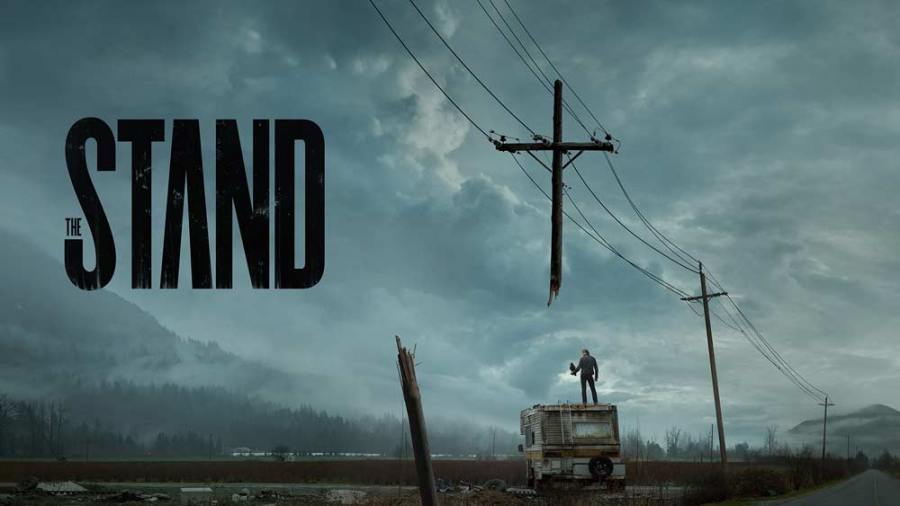

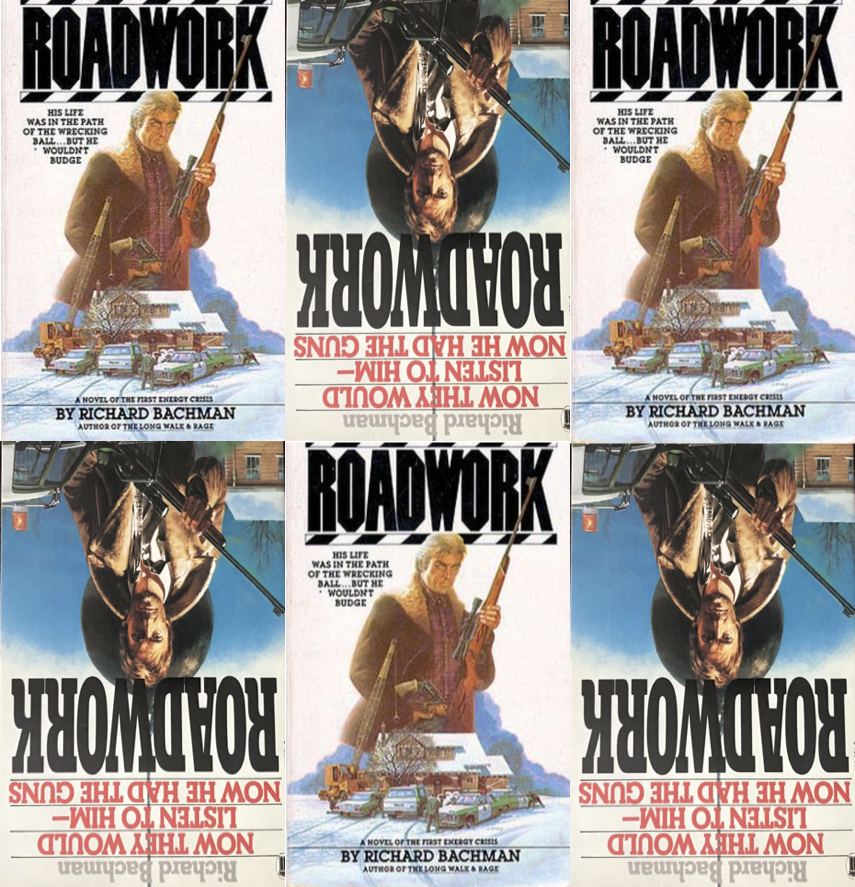
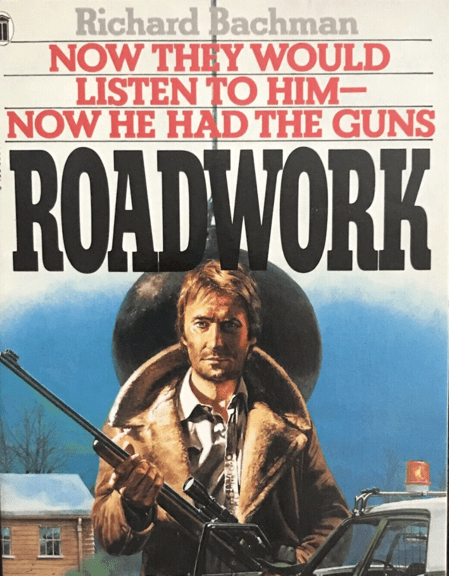
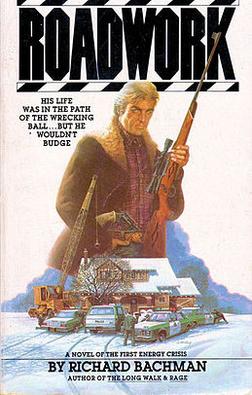
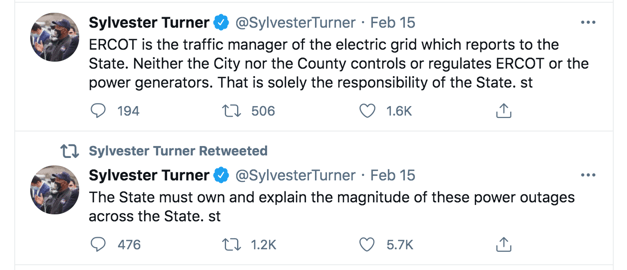
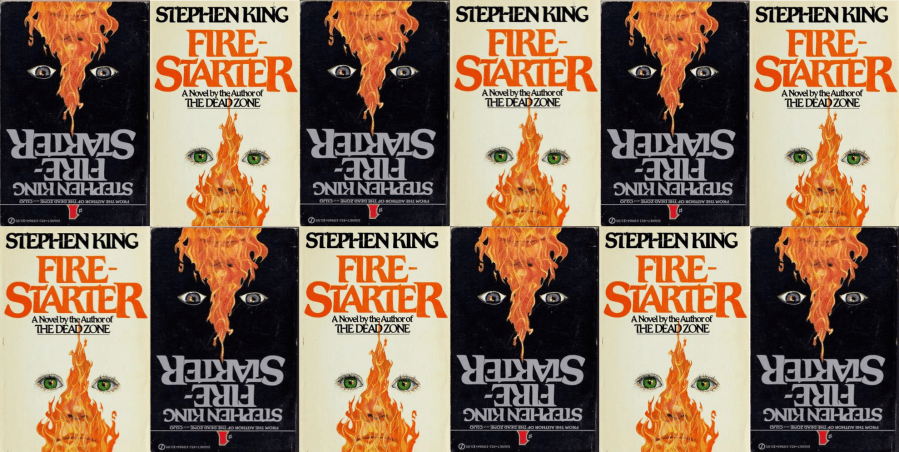
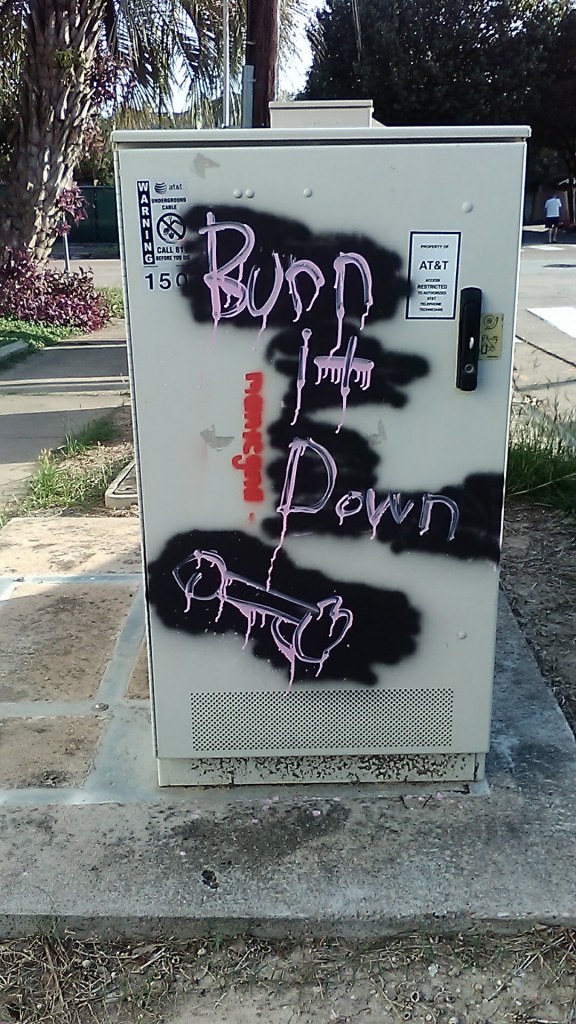

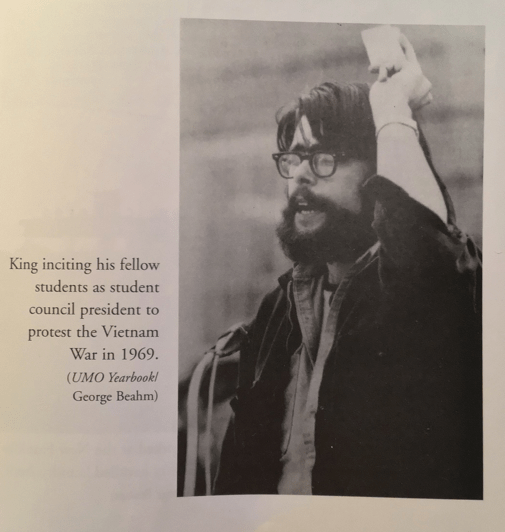
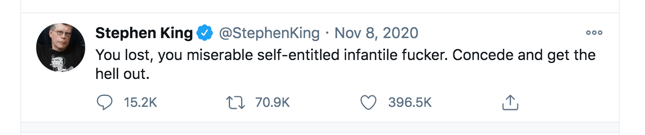
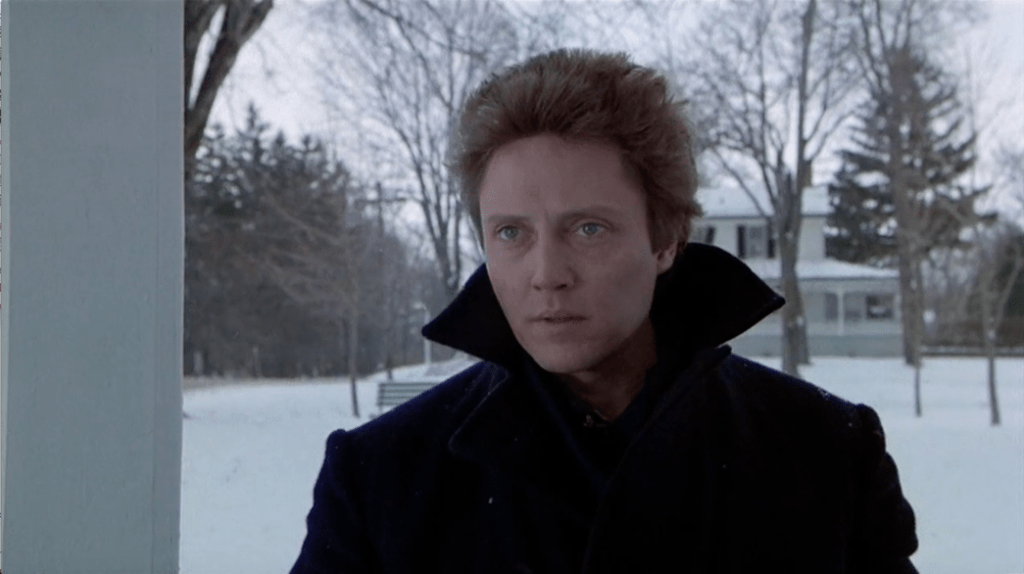
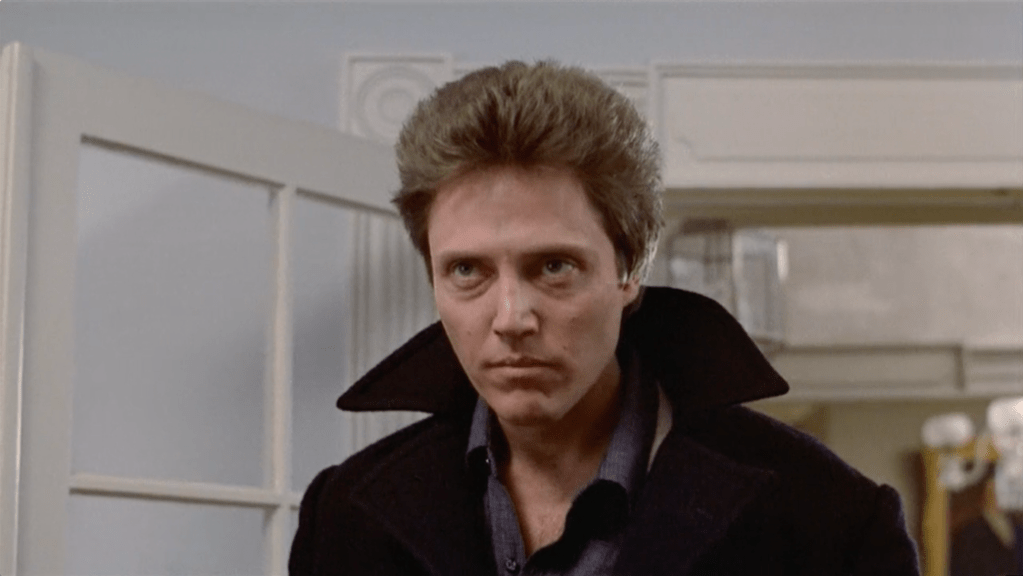
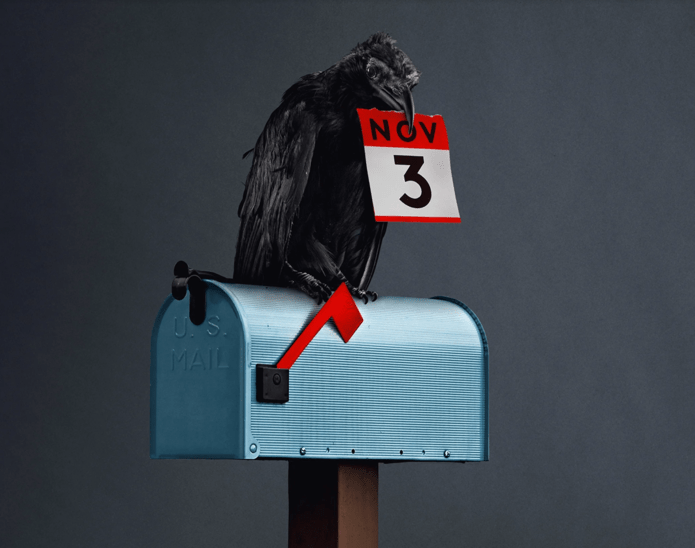
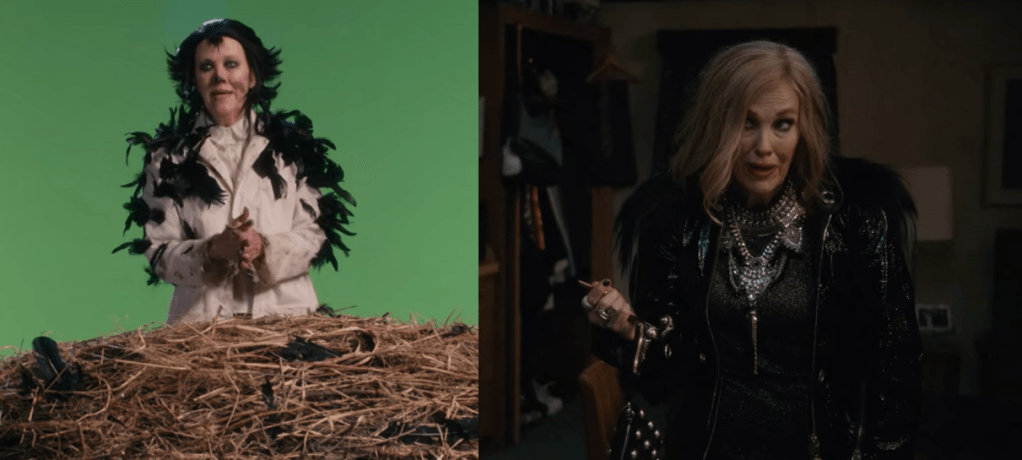
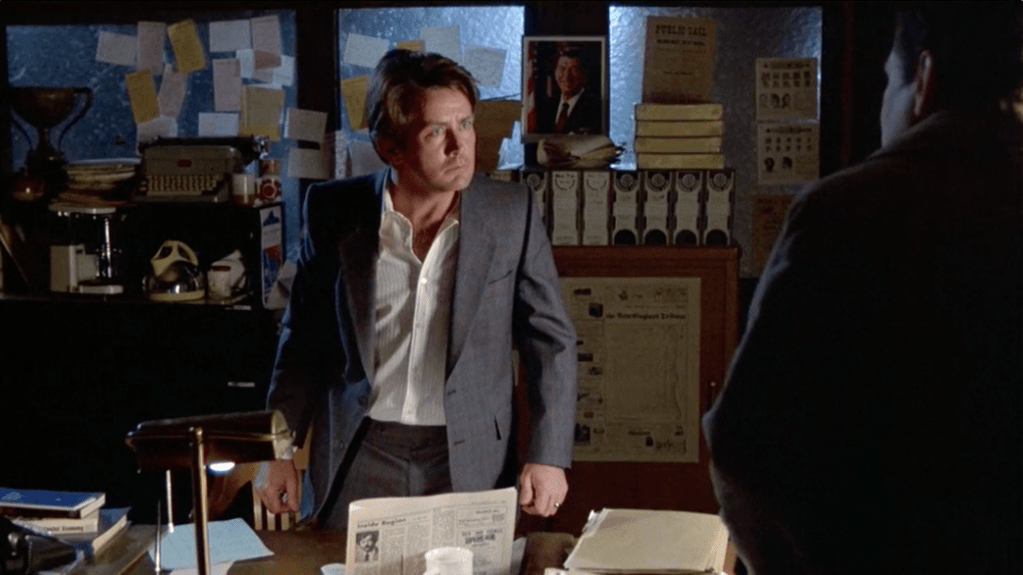
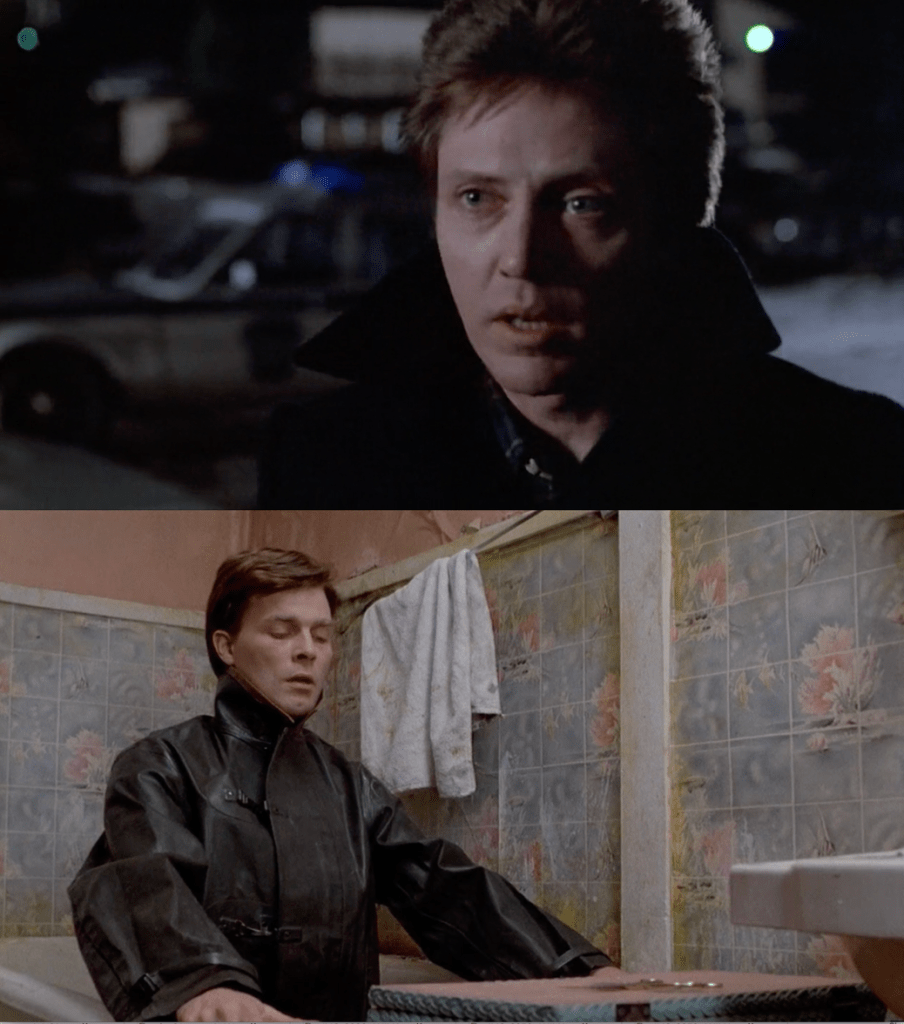
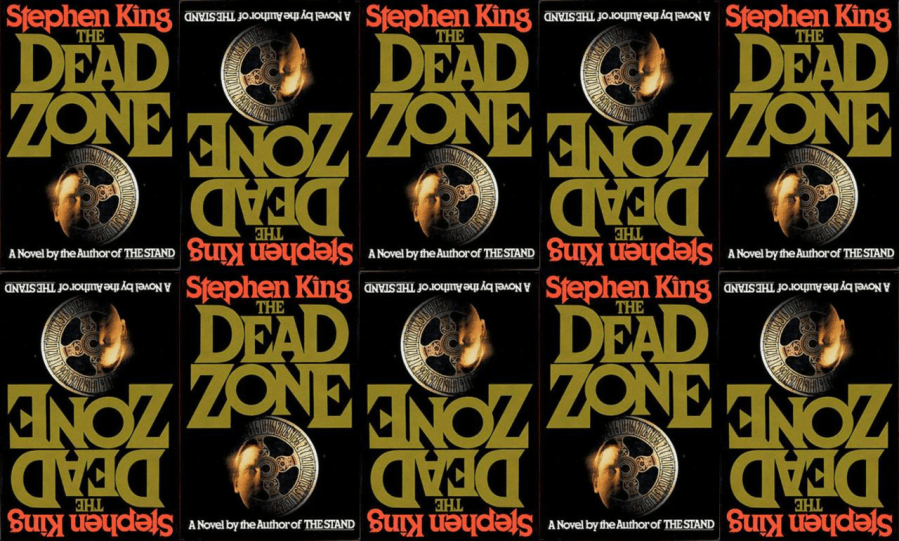
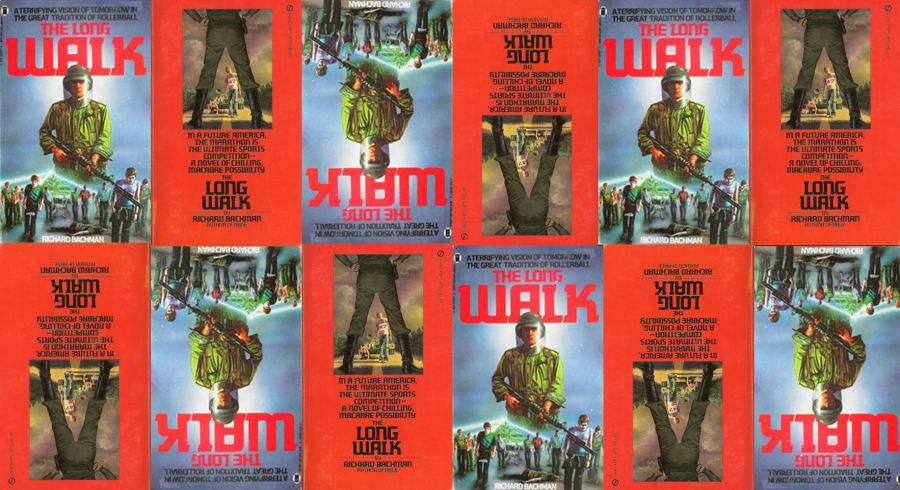


 Long Live The King