I am rereading Never Flinch, King’s requisite annual text for 2025, for a planned talk/essay on the treatment of substance-abuse recovery in King’s work. This novel offers an interesting case: its main premise is a serial killer operating under the pseudonym Bill Wilson (aka the founder of Alcoholics Anonymous) and serial killing for the supposed motivation of “making amends” for something (step 9 of the 12 steps in AA). What he’s making amends for is part of what keeps us in suspense, being revealed maybe two-thirds through the book.
As always, full spoilers.
Plot Problems
This novel is one of a spate of King’s detective novels that partially inspired the academic study on King’s work released this year, King Noir by noted King scholars Tony Magistrale and Michael Blouin, which came out right before this novel so the study doesn’t address it. Since the Mr. Mercedes trilogy (2014-2016) in which King introduced the character Holly that he’s remained so keen on (apparently having yet another idea for an upcoming book with her), King has operated heavily within the detective genre (though the study points out how elements of this genre have long been prominent in King’s work). The Mr. Mercedes novels remained somewhat in keeping with the genre of a detective novel, which is to say, without throwing in a lot of Stephen King supernatural stuff, but by the third book it’s gone back into traditional King territory with a character having gained some mind control powers from a coma (with a “scientific” basis in the form of an experimental drug). Then in The Outsider (2018), King brought Holly back to help with a case that turns out to be entirely supernatural. In such a case, the initial question that hooks the reader is how there can be seemingly conclusive evidence that the same person was in two different places at once. That would be a challenge for a traditional “realist” narrative to answer. King can only answer it with a supernatural explanation.
Which means that Holly Gibney exists in a world where supernatural things can occur, though in Holly (2023) and Never Flinch (2025), supernatural elements do not come into play in the plot. Though with callbacks to the previous novels, King reminds us that she exists in such a supernatural world, so I would think that on the whole Holly might be more inclined to consider the supernatural as possibilities when she’s trying to crack a case, yet this doesn’t seem to be the…case.
King had apparently been thinking about calling this novel Always Holly. Thank fucking god he didn’t because that might be the worst title in the history of titles–but, unfortunately, that might symbolically reflect how this is probably one of his worst books. (Another title he mentioned was We Think Not, a reference to the Big Book of Alcoholics Anonymous that I kind of like for its larger political implications, because this book does explore political themes.) Yet the book does have redeeming qualities that are not exclusively limited to how this narrative should be a lesson in what not to do. King has intimated that he doesn’t want to write a plotted novel again after this one (and yet he’s thinking about writing another Holly novel, not sure how that’s going to work). This calls attention to the fact that a detective novel has to be more “plotted” than the way King traditionally writes, which is to just figure it out as he goes along. The initial plan for this book was that he wanted to have three different plot threads converge. I think it was the draft that Tabby read where she told him he could do better that led to the excision of one of these plot threads (based on the kidnapping of Lady Gaga’s dogs, apparently). And the biggest problem with this book is that he couldn’t pull off the convergence of just two plot threads. It also has the same basic problem Magistrale and Blouin identify both Mr. Mercedes and Holly having: “the reader knows from the beginning who committed the crime, and the process of deduction plays a limited role in what unfolds”; this is because “King rarely trusts his reader enough to leave her to her own devices (a place of uncertainty, from which the reader tries to sort out the case alongside the detective).”
One of the redeeming factors in the book is how many different points of view King jumps between, including the serial killer Trig’s, who is one of the main points of view. While it’s not accurate to call this a “whodunnit,” because the reader knows who done it from the first kill, there are some critical pieces of information King manages to withhold, one that it seems he shouldn’t be able to get away with withholding if we’re in the killer’s point of view, and yet I think he does pull this part off. Primarily this is withholding what Trig thinks he’s making amends for. Secondarily this is withholding Trig’s real name and job, since he turns out to be a figure that characters are interacting with in the other plot thread. In those interactions, readers don’t realize those characters are interacting with the killer until again about two-thirds in.
While King pulls those parts off, one of the big story problems is that there are just too many coincidences.
The two main plot threads: we have a feminist activist public speaker, Kate McKay, being stalked by a fundamentalist religious person who ultimately wants to kill her for her promotion of women’s rights (primarily but not exclusively abortion) and for that reason enlists Holly as a bodyguard, and the second (really the first because it appears first in the text) is Trig’s serial killing that we do know from the beginning is related to a man who is killed in prison, a man it turns out was innocent and framed for the crime he was imprisoned for. Trig is killing not the people who were on the jury that wrongfully convicted this man, but killing completely innocent people and leaving the name of one of these jurors in the hand of each murder victim, so that his spree is eventually designated the “surrogate juror murders” (not unlike “The Rural Juror”). Trig’s “logic” is that the deaths of the innocent will make the guilty people suffer more. Then there is actually a third plot line: a famous singer, Sista Bessie, is going to be touring for the first time in years, with her first show (and all of her rehearsals up to that point) being in Buckeye City, Holly’s hometown and the city where Trig is operating. This subplot is probably the clunkiest one–and they’re all clunky.
King was not referring to the Sista Bessie-show-related stuff as a third plot line to converge, since apparently that was about Lady Gaga’s dogs, so it seems he considered this a subplot in his attempt to make two rather than three plot lines converge. But the Sista Bessie show does function as a third plot line in terms of the convergence that later happens (or purports to happen).
So let’s call Trig’s murders plot line A, Kate McKay’s being stalked plot line B, and the Sista Bessie show plot line C.
The C Sista Bessie plot is introduced very early by a member of Holly’s favorite Black family, Barbara Robinson (the Robinson siblings Barbara and Jerome have been in all of the Holly novels going back to Mr. Mercedes), calling Holly with the news that she’s won tickets and backstage passes to the opening Sista Bessie show, and she wants Holly to go with her–apparently Barbara doesn’t have any Black friends (Sista Bessie is a “soul” singer, aka she is Black). This development is entirely nullified when Sista Bessie herself calls Barbara telling her she wants to set one of Barbara’s poems to music to include in the show and offers Barbara tickets and backstage passes. She also invites Barbara to rehearsals, leading to Barbara eventually being invited to join Sista Bessie’s backup singers, the Dixie Crystals. Which, really? Dixie?
This is all extremely frustrating on levels of both racial representation and narrative.
There does not need to be a scene of that phone call with Barbara and Holly about those tickets; we could have gone straight to Sista Bessie calling Barbara with her offer. Not only that, through being Kate McKay’s bodyguard, Holly also ends up independently getting a ticket to Sista Bessie’s opening show, as a consolation prize for Kate getting bumped from the talk she’s supposed to give by that very show–even though Sista Bessie is in that same town weeks beforehand for rehearsals (and why a random city in Ohio is where she would elect to rehearse for weeks before opening the tour there is unexplained and one of the problematic coincidences), she apparently could not have gone on one night sooner in order for the venue, the Mingo Auditorium, to maintain the original booking they’d already given to Kate McKay. No one actually suggests this idea, though they bitch about the person who runs the venue and did the bumping, Donald Gibson–the person who turns out to be Trig the killer. This is revealed concurrently with Trig’s true motivation for the murders: he was on the jury that convicted the innocent man who was later killed in prison. Again, I was fine with the way that reveal(s) was handled. It was all the clunky pieces that had to be moved to get the Sista Bessie crew and Kate McKay crew (which now includes Holly) to converge in the same place for the climax that’s the problem.
So by the time Holly is back in her hometown with McKay and her assistant Corrie for that leg of their tour, Trig is several victims deep into his murders (which by his logic of juror-parallel killing have a fixed number) and has decided he has the opportunity to better publicize them by utilizing the Sista Bessie show–or rather, Sista Bessie’s appearance to sing the National Anthem at a local cops versus firefighters softball game the night before the show (that this game would still be happening in the midst of a serial-killer’s escalating efforts receives much in-text commentary). Also by this time, Holly has figured out the identity of McKay’s deadly stalker, whose church pastor has, because of this, called him off, but he insists he has to finish his mission. This thread of the novel with the stalker is its own whole problematic can of worms due to this character, Christopher Stewart, dressing like a woman half the time not to disguise himself for his stalking, but because he truly believes that half the time he occupies the identity of his twin sister Chrissy, who died when he was seven (yes, their parents named them Chris and Chrissy). The first time we get the stalker’s point of view, it’s Chrissy’s, then a bit later we get Chris’s, and, per the point of view trick that echoes Trig’s, we don’t learn for awhile (but probably before the halfway point) that Chris and Chrissy are the same person.
Obviously Trig is already essentially being depicted as crazy by the “logic” of his murders, but he is further depicted as unbalanced by repeatedly hearing his dead father’s voice in his head; his father often exhorted him to “never flinch” in reference to, we eventually learn, Trig having been a hockey goalie as a kid. Trig has decided the condemned abandoned building where the hockey rink used to be is where all his murders must conclude, because that’s the place he realized his father murdered his mother. That he would repeatedly appeal to his father for approval for not “flinching” in carrying through with the murders is somewhat contradicted by his father’s voice repeatedly reprimanding him for being careless with them and thereby wanting to get caught but Trig continuing to be careless anyway, but it’s hard to critique the “logic” of an unbalanced inner voice, and this is supposed to be explained by Trig now being as addicted to killing as he used to be to drinking, and addiction causes one to be reckless.
Since Trig’s being in AA is central to his motivation (making amends) and he expresses this through using the alias Bill Wilson when he explicitly notifies the authorities of his mission, it makes sense that his being in AA would come to play a role in the outcome of his murder plot thread. The line that gave me the idea to possibly use this book as a basis for an elective on detective/crime stories was about something Holly learned from her late detective mentor, Bill Hodges.
Bill told her to stop, think, and isolate the central question in each case. Answer that and presto, case solved.
So what’s the central question with Trig? That he’s in AA?
…is Trig’s reason for attending AA the central question? Is that the mystery of the thing? No. The central question, Holly realizes, is much simpler, and might be the key to everything. To her own face in the mirror, she asks it aloud: “Why does he care enough about Alan Duffrey to kill people?”
Alan Duffrey being the innocent man who was killed in prison. As Holly asks that question, the reader is still too asking it. We get the answer long before Holly does, and again, I’ll reiterate that this works–the scene where we get the reveal is a convergence of sorts of the A and B threads–Kate McKay’s assistant Corrie calls Donald Gibson to check a few things about logistics after Sista Bessie has managed to get them back on the Mingo schedule, not for the original date that’s now Sista Bessie’s opening show, but for the night before (sigh). We get the two reveals at once:
He looks at the blinking light on his phone and wonders how his caller would respond if he picked up the handset and said, Hello, this is Trig, also known as Donald, also known as Juror Nine.
It makes sense we would get the reveal as the plot lines are converging, because now specifically in his capacity as Mingo Program Director Donald Gibson he can carry out one of his Trig juror-motivated murders by luring Corrie to him unnecessarily to sign a bogus insurance form. But he’s using her as bait to lure McKay in to get in both more murders at once and publicity for them. And so, simultaneously for the sake of more murders, he plans to use his role as Program Director to also lure in…Barbara Robinson.
The other element of the plot lines converging here is what gets clunky and too coincidental, specifically in regard to the B plot: Holly having figured out the identity of Christopher Stewart as McKay’s stalker by the time they get to Buckeye City. How did she do this? The stalking has been unequivocally religiously motivated to McKay and Holly from the beginning, when early on Stewart threw (fake) acid on Corrie mistaking her for McKay, quoting a bible verse at her in the process. So Holly asks her trusty assistant Jerome Robinson (who’s not even actually her assistant, just conveniently available) to look up churches that had perpetuated acts of violence for their causes. Jerome sends her several news stories, including one where they used fake acid the same way McKay’s stalker did. There’s a picture of four of the church members associated with this, and Holly zeroes in on the one designated Christopher Stewart in the picture as their stalker, apparently for the reason that he’s younger than the other three in the picture. She keeps showing pictures to Corrie to try to get her to confirm she’s right about Stewart’s identity, to which Corrie keeps replying that it happened so fast she can’t be sure and he was wearing a women’s wig during it:
“I told you, I only got a glimpse—”
There’s a Sharpie in the side pocket of Corrie’s slacks, perfect for signing autographs, and also perfect for drawing on glossy photos. Holly plucks it out and draws bangs on the upturned face of the man who was sitting in the third row of the Macbride a week ago. Corrie looks long and hard. Then she turns to Holly. “That’s him. Her. Whatever. I’m almost positive.”
And that’s where the absurdity of the narrative and the absurdity of the gender-identity representation converge…
Since Holly can now be sure of Stewart’s identity, for some reason she calls the pastor of Stewart’s church to tell him what she’s figured out, or maybe to probe him for what he knows, I don’t know. She picks up from his cagey tone that he knows what Stewart’s doing and might be behind it (which she’s correct about). While her motivation is murky, it’s necessary that Holly make this call narratively so that the pastor now calls Stewart to call him off; Stewart refuses, but now that he knows he’s been identified (when he’s in Buckeye City) he has to leave the hotel where he was booked and stay instead in an abandoned building so no one will identify him–leading him to the abandoned hockey rink Trig plans to use for his murder spree climax, and where he’s actually already left the body of a murder victim, as Chris discovers when he gets in. So Chris, as Chrissy, happens to be in this abandoned building when Trig drags in Corrie bound up but still alive, and then, a bit later, drags in a bound up and alive Barbara Robinson (whom we see Donald Gibson call with a fake story to lure her in like he did with Corrie; we see him abduct Corrie, but for Barbara we just jump straight from lure-in call to him dragging her into the abandoned rink building). Trig then calls both Kate McCay to tell her to come to the building if she doesn’t want him to kill Corrie, then calls Sista Bessie to tell her to come to the building if she doesn’t want him to kill Barbara. All the pieces are lining up, right? Lining up for three different threads, since Chrissy is in the building where Corrie and Barbara are.
Oh, and by the way, while for the B plot Holly has successfully id’ed Kate McKay’s stalker by the point of Corrie’s and Barbara’s abductions–which is again necessary to have Chrissy be in the building where Trig is for A and B to be converging with C–for the A plot, she has successfully identified that the killer calls himself “Trig,” but she is still working on id’ing what Trig’s real name and identity is. She’s been working on this periodically even as she’s been McKay’s bodyguard by getting a friend to ask around AA meetings if they know anyone calling themselves Trig. This turns up the following tidbit: someone remembers someone calling themselves Trig who once said something that made people laugh in a meeting: “Have you ever tried to get someone to clean up elephant shit at ten in the morning?” The friend, getting this tidbit, thinks it’s meaningless but tells Holly anyway. Holly thinks it’s meaningful enough to call Bill Hodges’ old partner Pete, now retired, and ask his opinion. Pete doesn’t know anything at first but then calls her back with a revelation, right at the moment Holly is starting to suspect something is wrong because Corrie’s been gone too long: a few years ago, a small circus with a family of elephants came to the Mingo auditorium. Without Pete saying anything else this is enough for Holly to recall the Mingo auditorium’s director, whom she met in the course of prepping for Kate’s appearance there, as Donald Gibson, which she connects to the names of one of the jurors on the Duffrey case. But Holly misidentified someone being the possible nicknamed Trig before, so she’s hesitant to go to the police with this.
Also, Holly’s figuring this out at this point is effectively useless because Kate is about to disappear when she’s supposed to be making a public appearance, so Holly would have ended up pursuing Kate by the same means she’s going to use anyway; her having figured out Trig and Donald Gibson are one and the same ends up changing exactly nothing.
Meanwhile, Kate McKay shows up at the abandoned rink as instructed for Corrie’s sake, and when Gibson punches her in the face to subdue her, Chrissy jumps out of hiding to shriek “‘NO, SHE’S MINE!’” (caps and italics in original) and attack Gibson. He almost instantly disarms her and breaks her neck. She dies.
Which means, like Holly figuring out Trig’s identity, plot thread B ends up playing ABSOLUTELY NO ROLE in the outcome of the narrative. The most you can say having someone stalk Kate McKay does plot-wise is get her to enlist Holly as a bodyguard. But Kate already has a regular contingent of protestors at her appearances, so you don’t really need a consistent stalker to get her to do this. All of that (clunky) setup to get Chrissy into the abandoned rink at the same time Gibson is convening his final victims there, which are all of the novel’s major players from the A and B threads (minus Holly because she’s going to be the one to save the day of course), and absolutely nothing comes from it. If Chrissy hadn’t been there at all, the outcome of Trig’s plans would have been exactly the same. Her momentary intervention shifts nothing and happens so quickly it doesn’t even add any suspense. She had a gun and could have at least given Trig a non-mortal gunshot wound that might have slowed him down and conceivably helped ultimately thwart him, but no. Holly muses about how Kate is mistaken in thinking it’s Stewart who’s abducted Corrie when Holly has figured out it’s Trig. But again, that misconception has no bearing on the outcome of anything.
The B plot fizzling out this way is almost satirically absurd, an egregious narrative disappointment. This problematic narrative absurdity is again symbolically matched by the problematic absurdity of the gender representation. What is the relevance of the Chris/Chrissy identity? Why would she embody Chrissy rather than Chris for her climactic (if ultimately meaningless) convergence with the A plot? It’s never clear why she’s Chris or Chrissy at different points, and it seems to be depicted as if it’s not a conscious choice on the character’s part but just intuitive whether they are one or the other at whatever time. But she’s Chrissy when she fades out, giving Kate McKay the chance to process from the stubble on her face that it’s actually a man. For whatever that’s worth.
Jerome and Holly get in to the rink after Jerome follows Sista Bessie there, and Holly, after impersonating Sista Bessie’s voice to get in, shoots and kills Trig, but not until after he’s lit a fire to burn the rink down, so there’s some suspense as she and Jerome rush to get Corrie and Barbara out of their bindings before they all go up in flames. They succeed with fairly minimum difficulty and everybody gets out, Jerome seeming to get the worst of it in terms of burns.
Now, again, I can find some redeeming aspects, though nothing close to overcoming the monumental narrative failure re: converging the two major plot threads. There’s a motif of doubles reflected in the Chris/Chrissy identity; we have a pair of white mentor/mentees (Kate and Corrie in the B thread) to match the Black mentor/mentees in the C thread (Sista Bessie/Barbara), and when Holly shows up at the hockey rink (having used the Apple tracker Kate has on her car keys), she hears what she thinks are two voices but turn out to just be one–Trig yelling at his father but enacting his father out loud instead of just in his head now, then responding as himself, to show us he’s really lost it at this point. In light of the father’s voice in Trig’s head, it’s also interesting that Holly hears her mother’s chiding voice in her head–though nowhere near as often as Trig, and as she decides to enter the rink, a second voice enters her head to counter her mother’s–Bill Hodges of course. (King is fond of the voice-in-the-head device.)
But it’s a bit of an over-convergence that both the Guns and Hoses softball game and the Kate McKay appearance she fails to show up for when she goes to the rink for Corrie end up with their respective crowds brawling simultaneously.
Other Problems
It’s both shocking and not shocking to me by this point how King can have the same problems in 2025 he’s effectively always had when it comes to representing a) women, b) race, and c) non-heteronormative gender and sexuality. In terms of those corresponding mentor/mentee pairs, Kate and Corrie’s is more nuanced in Kate being not the best person but able to work effectively for a good cause, while Sista Bessie and Barbara are essentially paragons of perfection (minus questionable references to Sista Bessie being overweight, including, in Barbara’s point of view no less, her “truly mighty bazooms”). The convergence of the problematic gender and race representations might be summed up by the crowd that screams “Woman Power!” at Kate’s appearances and the “Soul Power” shirts Sisa Bessie’s fans wear.
And this representation repetition of King’s is again echoed by narrative repetition–the plot climax entails a huge fire, which is definitely in the running for Most Common King Trope.
The critical plot point that leads to the convergence of Sista Bessie and Barbara is the poem that Sista Bessie wants to set to music. Barbara explains the source of this poem to Holly:
“…we read a poem by Vachel Lindsay called ‘The Congo.’ It’s racist as hell, but it has a swinging beat.” Barbara thumps her feet to demonstrate. “So I wrote a poem called ‘Lowtown Jazz’ to sort of, I don’t know, tell the other side of the story.”
There’s something so quintessentially King-underming-himself here, crediting the racist poem with a “swinging beat” before attempting to remediate what’s problematic about it in a way that’s not really enough to do that. You could argue there’s some element of reclamation here in Barbara’s effort to “tell the other side of the story,” but there’s an aspect of her own self-expression being a response to racism that renders her defined by racism. Further evidence of this trend resides in her becoming a member of the “Dixie Crystals,” which I still can’t get over. This name is like the biggest white red flag ever, another instance of seemingly satiric absurdity except it’s not satiric. There’s a reason the Dixie Chicks took the Dixie out of their name:
Helligar called the word Dixie “the epitome of white America,” observing, “For many Black people, it conjures a time and a place of bondage.”
Neither Barbara nor Jerome ever transcend being a white construction of Blackness serving whites. This is at least the third time Barbara has been rendered helpless and in harm’s way at the hands of a villain Holly saves her from; it happens in two of the three Mr. Mercedes books. I remain baffled not just that King would do this, which isn’t really baffling considering he’s an almost-eighty-year-old white man; I’m baffled that his editors and publishers aren’t doing anything about it. Like maybe the larger implications of the Barbara plots could be lost on them, but the Dixie Crystals? Really?
Yeah, I can’t wait till the next novel where Barabara becomes President, throws a major league no-hitter, cures cancer and starts a world tour as the hottest new pop sensation.
She’s perfect in all these ways but still needs the white lady to get her out of trouble…
More evidence of King undermining himself and evidencing Toni Morrison’s idea about the Africanist presence being “the shadow that is companion to this whiteness—a dark and abiding presence that moves the hearts and texts of American literature with fear and longing”:
Two Black men, one old, one young. One sturdy-built Black woman between them. Their shadows, blacker than they are, walk beside them, crisp as cutouts.
They’re cutouts all right…
And more of the “say it” problem:
Holly deepens her voice as much as she can and tries to imitate Betty’s light southern accent. “Yeah, it’s me,” she says, and thinks she sounds horrible, a goony minstrel-show racist doing a caricature Black voice.
That’s some accidental meta-commentary. Holly has to imitate a Black voice in order to save everyone, and succeeds, despite it supposedly sounding horrible. And if it’s still unbelievable that anyone under seventy would use a minstrel show as a referent, at least King doesn’t use the worst slur in this novel like he did in last year’s book.
In addition to the Chris/Chrissy character who effectively villainizes and pathologizes gender dysphoria, there’s the development that two of the jurors kill themselves–two men who met and fell in love when they were on the jury together. Trig thinks they killed themselves out of guilt in response to his attempted guilt-inducing murders, but apparently they killed themselves because one had “‘HIV or AIDS, whichever one is worse,’” and this somehow led both to conclude they’d be better off dead. Detective Izzy, Holly’s cop friend who’s the one supposed to be actively working the surrogate jurors case, thinks of it as a case of “Romeo and Romeo,” and effectively emasculates them by thinking about how women rather than men usually choose overdose for their suicide method as these two have, which in turn leads to the wonderfully dignified description of one of the gay men having vomited on and the other having shit himself, respectively.
Does this gay couple’s dual suicide play any concrete role in the narrative? Well, Trig’s hearing the news of their suicides on the radio and mistaking their motivation for it leads him to not kill the female hitchhiker he’s just picked up for this purpose. So, two gay men sacrificed for one young (presumably) straight girl. Oh, and her name is Norma, and she and Trig proceed to eat at Norm’s steakhouse. And of course, proving King continues to go to an old standby, the ultimate norm-reinforcing one:
Gibson is like Norman Bates in Psycho, only talking in his father’s voice instead of his mother’s. Which fits, because Gibson is psycho.
But it actually fits the Chris/Chrissy villain more because Norman Bates, like Chris, was a cross-dresser. When we consider King’s 1981 claim in Danse Macabre that “Monstrosity fascinates us because it appeals to the conservative Republican in a three-piece suit who resides within all of us,” we have to consider what qualifies as “monstrosity.” King, like Hitchcock before him, thinks cross-dressing qualifies, which shows he’s really the one more akin to “the conservative Republican in a three-piece suit,” despite his frequent ragging on Republicans on social media. Because, as he also notes in Danse Macabre, “The writer of horror fiction is neither more nor less than an agent of the status quo.” And a status quo in which non-heteronormative nonbinary gender is deviant is certainly what Republicans in three-piece suits are fighting for today.
So if my biggest narrative pet peeves here are that unnecessary phone call where Barbara wins the tickets at the beginning and the entire irrelevance of the B plot thread as well as the representation of that villain, honorable mention goes to the elephant line being the breakthrough clue for Holly about Trig’s identity. And speaking of Republicans, in terms of the doubles motif and the idea of “the other side of the story,” the elephant caught my attention in relation to a detail that was mentioned a few times in the beginning–that in the course of her work Holly often has to look through forms from an insurance company whose logo is a grinning donkey that she hates. This detail almost seems like it’s being set up for something more but apparently isn’t beyond the peripheral connection of Gibson luring Corrie in using the pretext of an insurance form. But we have the political parties represented here in these two animal cameos, the Democrat donkey and Republican elephant. Which maybe speaks to the novel’s political themes. The thematic intersection of these across the A and B plot threads is more interesting than their narrative function (while C pretty much lacks all complexity and amounts to look at these great amazing Black people I can’t be racist if I’m representing!). It even prompted Vespe and Breznican to get into a debate on their bonus Kingcast episode review of the novel about “fighting dirty” politically and whether Democrats should do it if Republicans are. Trig believes he’s enacting justice in a completely twisted way that’s some kind of vague liberal echo of how the conservative religious protestors who fight Kate McKay’s pro-choice ideology believe they’re enacting justice, even though Trig is not represented as being particularly liberal, so that thematically this also seems to fall short. There seems to be the potential for more development for the good guys resorting to more questionable means to pursue justice and thus develop the “justice is blind” idea iterated on the cover image, which might also tie in to the elephant symbolism via that parable about blind men trying to imagine an elephant as a whole from just feeling its parts, as the detective process amounts to when you’re trying to piece together the full picture of a case from clues.
If any of this potential was explored for the “good guys,” maybe Holly could end up feeling slightly more dynamic than a cardboard cutout. I have to agree with Magistrale and Blouin’s assessment that “despite King’s own protestations to the contrary, Holly is not a terribly dynamic personality. In fact, one might be permitted to call her methodically dull….” If they identify this as a big problem with her 2023 “eponymous novel,” there is zero improvement on this front in the novel King wanted to call Always Holly. That title itself imparts the idea that she’s always the same.
And Finally: Fish Tacos and Fabulous Framing
The last thing I have to do as something of a redemptive reading of this novel for myself is to read Holly and Detective Izzy as gay and in love with each other. Let’s examine the evidence. The first time Holly appears in the novel, she is eating her regular lunch with Izzy–fish tacos. “‘You always have fish tacos,’” Izzy observes re Holly. Except apparently Izzy does too. This is a regular habit of theirs together: “they munched fish tacos.” (If the insinuation of this sounds crass, you can thank my brother for making off-color jokes to me over the years about this symbolism.) The place where they eat these fish tacos is “Frankie’s Fabulous Fish Wagon.” Fabulous, indeed. (Food trucks are repeatedly referred to in the novel as “food wagons” for some reason.) Holly and Izzy’s eating fish tacos essentially bookends, or frames the novel. (The concept of framing is the basis of the entire narrative via the wrongful conviction Trig is on the jury for: a bank employee was incensed he was passed over for a promotion and framed the guy who was promoted instead of him for having child porn.) In their final fish taco meal in the novel, we must be in Izzy’s point of view for the description: “Holly smiles. She’s radiant when she smiles. The years fall away and she’s young again.”
Holly and Izzy casually call each other all the time, ostensibly to discuss the case Izzy is working on, but really more with the cadence of a long-standing couple. And not to lean too much on a stereotype, but Izzy is a softball pitcher and played softball in college. And softball players are pretty gay (I was a softball player). Beyond that, Holly’s watching Izzy pitch reads gay: “Holly knew Izzy was in shape, but this side of her—the athletic side—is a surprise.”
When Corrie is enlisting Holly, she tells her the “secret admirer” stalker sent a picture of Corrie and Kate with their arms around each other:
“One word scrawled across it in red lipstick. Any idea what it was?”
“I’m going to take a wild guess and say it was probably lesbians.”
“Wow, you really are a detective.”
Or you really are a lesbian.
Holly would seem to have a not-so-secret admirer in the form of her AA source, John the bartender, who twice tells Jerome that she’s “smooth” (emphasis in original) as he shares the story of how he met her confronting someone in the bar, after which both Jerome and John utter the novel’s almost-title, “Always Holly.” From this John would appear to be in development as a potential romantic interest of Holly’s, but that goes nowhere. Because Holly’s gay.
Later, in reference to Kate McKay: “Holly has never felt any sexual attraction to women, but she can still admire that trim, well-kept body.” Uh, yeah. Kind of feels like she’s cheating on Izzy there. And definitely feels like she’s gay. Holly and Izzy had a lot of friction early on in the Mr. Mercedes novels, so maybe King is playing the long game and giving us an enemies-to-lovers arc.
If only. The sad truth of it is King just can’t write an authentic female character without the male gaze creeping in.
“This is truly amazing, a portable television studio. No wonder your president has to be an actor. He’s gotta look good on television.”
Doc Brown, Back to the Future (1985)
…and it must end–will end–in fire.
Stephen King, Never Flinch (2025)
This post has a deep Shining rabbit hole in the middle framed by a discussion of The Running Man. (I’ll justify The Shining inclusion by noting that it was screened in IMAX this December and that Dick Hallorann (and his shining) is a major character in this year’s Welcome to Derry.)
The last line of King’s Richard Bachman novel The Running Man (1982) describes “a tremendous explosion.” And its opening weekend at the box office was apparently a less tremendous explosion, a bomb of a different type. I did see it during its opening weekend, and it is a traditional Hollywood action blockbuster different in tone and quality from The Long Walk. I enjoyed The Running Man, but The Long Walk is a better movie.
Part of what’s more fun about The Running Man is that, unlike all the other 2025 King adaptations, it has a preexisting adaptation for comparison, the 1987 version with Arnold Schwarzenegger, which is a fairly typical Schwarzenegger flick, ridiculous and campy with him beating people up and then dropping comedic one-liners. I kind of love this movie (I might be biased toward Schwarzenegger because my father watched his movies T2: Judgment Day (1991) and True Lies (1994) on repeat when I was growing up). People like to talk about how far afield this adaptation went from the book, with commentary on the new one being that it’s fairly faithful to the source material. But the new one actually does something akin to what Mike Flanagan does in Doctor Sleep (2019) when he reconciles versions of The Shining, King’s novel with Kubrick’s adaptation: it reconciles the Bachman novel with the Schwarzenegger adaptation. Early in the movie when the main character Ben Richards is watching game shows on the “free-vee,” the host holds up some “new dollars,” which have Schwarzenegger’s face on them.
The 1987 movie is billed as being based on the novel by Richard Bachman, not King (the new one credits King), and apparently the creators did not realize it was a Stephen King book until after they’d started making it (according to The Kingcast‘s interview with the new one’s director, Edgar Wright). This makes sense, since King was outed as Bachman in 1985 and the film rights would have been optioned by that point. This also would seem to indicate that King’s experiment in seeing if he could be successful under a different name was showing that he very well could be if the movie adaptations were starting. We can’t technically know for sure since that’s exactly when Bachman was outed, but it does not seem like Schwarzenegger’s Running Man would have launched Bachman like De Palma’s Carrie did King. It’s still amazing that two of the handful of Oscar nominations actors King adaptations have ever garnered were from the very first movie (the others are Kathy Bates for Misery–the only winner ever for a King adaptation–Tim Robbins for The Shawshank Redemption and Michael Clarke Duncan for The Green Mile). We’ll see if The Long Walk turns out to be a contender.
A big change the ‘87 movie makes from the beginning that seems promising is that Ben Richards is not a poor desperate father whose daughter is sick, but a police officer who’s ordered to kill civilians in a food riot and refuses. They send him to prison and frame him for killing the civilians they then proceeded to kill anyway. It’s really when the depiction of the game show itself starts that the film goes off the rails (yet was still ranked number 17 out of 60 King adaptations in 2018; there’s been about 60 more since then, half of them this year). The Running Man isn’t supposed to flee out into the world to be hunted by the public at large for thirty days, but is released in a circumscribed environment where he has to battle “stalkers” much akin to the exaggerated personae of fake professional wrestlers.
Two of these stalkers, Sub-Zero and Fireball, struck me as a fitting metaphor for a framework for King adaptations with its foundation in King’s comments on Kubrick’s Shining adaptation when he said the film is “Cold. I’m not a cold guy. I think one of the things that people relate to in my books is there’s a warmth…with Kubrick’s The Shining I felt that it was very cold.” He’s being figurative, but of course the book and the movie also represent this opposition literally: in King’s, the boiler explodes and the Overlook and Jack burn, and in Kubrick’s, Jack freezes to death. As The Running Man reinforces, King is fond of ending his work with explosions and/or fires. Yet King apparently did not have a problem and claimed he liked the changes in another adaptation that turned his work from hot to cold in a vein quite similar to The Shining: David Cronenberg’s adaptation of The Dead Zone (1983). In this film, a major incident the main character Johnny Smith is clairvoyant about and tries to prevent is a bar burning down with people trapped inside, while in the movie, it’s that some kids are going to drown playing hockey on a frozen lake when the ice breaks. (Christopher Walken’s “The ice…is gonna break” is iconic enough to be one of the soundbites in the opening sequence of The Kingcast.) The Dead Zone adaptation also adds a lot more references to Poe’s “The Raven,” which is interesting when The Shining novel has more Poe references that Kubrick downplayed. Also, both Kubrick and Cronenberg rejected King’s screenplay drafts for their respective adaptations (and if you’ve seen the 1997 Shining television miniseries King wrote, you’ll understand why).
The Rabbit Hole Never Ends
I’m back in The Shining rabbit hole exploring its Alice in Wonderland references for a new book of essays planned to mark the novel’s fiftieth anniversary. As I’ve noted, Alice is one of King’s most common literary references throughout his work but is especially prominent in The Shining. References to it also appear both in The Long Walk (the first novel he ever wrote) and in The Running Man. About halfway through The Long Walk novel, Garraty gets frustrated with Stebbins giving him cryptic answers to his questions and says he’s like the caterpillar from Alice in Wonderland, to which Stebbins responds he’s more the white rabbit type and maybe for his wish he’ll ask to be invited “home for tea.” Then at the end of the novel Stebbins reveals the Major is his father and is using him as “the rabbit” to drive the other walkers farther, though he compares himself more to a mechanical rabbit in that part, and says that his wish was going to be to be invited into his father’s home. Given that the entire third of three sections of the novel is called “The Rabbit,” this makes the Alice reference fairly significant. (The film cuts the explicit Alice references but has Stebbins say that he wanted his father to invite him “home for tea” when he’s making the rabbit analogy and paternity confession.) In The Running Man, near the end after learning his family has been killed and he’s being offered a deal to join the show as a hunter, Richards invokes, apparently in his head, a few lines from “The Walrus and the Carpenter” poem from Carroll’s second Alice novel, Through the Looking-Glass (1871). This feels fairly unnatural given the pains the novel has gone to to depict Richards as occupying the extreme lower rungs of a class system that would mean he lacks an education. Had he compared someone’s grin to a cheshire cat’s as King’s Alice references frequently take the form of, that would feel more natural as referring to common knowledge; actually citing verse is more far-fetched. But King can’t help himself. (The verse does appear in the Disney version, but King makes no indication it’s a Disney reference, and though he makes frequent Disney references, his Alice references usually seem to allude to Carroll rather than Disney.)
Given a major theme in King’s work, epitomized in IT, about the scope and power of childhood imagination to defeat evil, reinforcing a need to transcend dehumanized modern industrial culture that values rationality above all else and no longer believes in magic, it makes sense that Lewis Carroll’s Alice would be a touchstone for him–the potential liberation of childhood imagination being a major theme there. The Alice references in The Shining are part of Danny’s mediation of the unreality he’s experiencing; he’s in his own version of Wonderland, a horrifying one rather than magical. Let’s not forget that a roque mallet becomes the murder weapon in King’s version, and that the croquet mallets in Alice during a significant sequence are living animals. Inanimate objects as live animals recall King’s use of the topiary animals (when Jack notes he got the caretaker job because Al Shockley recalled he’d had a job trimming a topiary before, he says that topiary was “playing cards,” another big Alice motif). Wordplay is a huge part of the Alice texts (as when Alice asks where’s the servant to answer the door and the reply is, “‘What’s it been asking of?’”) and of course wordplay becomes a huge part of The Shining through the repetition of “redrum,” which is revealed, in a mirror, to be “murder” backwards; Tony also appears to Danny “way down in the mirror.” And in Carroll’s Through the Looking-Glass (1871), Alice enters Wonderland through a mirror. In discussing King’s use of archetypes and fairy tales, Ron Curran has done an analysis of the use of the Alice references, how they’re linked to the Bluebeard fairy tale in the text, and how they reflect the Jungian parental complex–both Alice and Bluebeard “carry the dynamics as well as the images of the primal fears of children living with both the father and the mother complex” (42). Curran notes that in Danny’s entering room 217, King uses “the Red Queen and her croquet game to frame Danny’s experience of terror” (42).
Curran doesn’t suggest that the REDRUM concept might be a Through the Looking-Glass reference, but I don’t think that’s a stretch. One Alice reference Curran doesn’t address is how King provides an answer to the famous unanswered riddle from the Mad Hatter’s eternal tea party, “why is a raven like a writing desk?” King’s answer: “the higher the fewer, of course!” The meaning of REDRUM is itself a sort of riddle in the text that is in effect “answered,” its meaning revealed when we see it in the mirror. There’s a “murder” reference in Alice–the Red Queen has sentenced the Mad Hatter to the eternal tea party because at some point he was wasting her time, or as she puts it, “murdering the time.” When Curran refers to the key (literal) link between the texts–“With this key Danny opens up the whole world of the Overlook in the same way that Alice’s key admits her to the world of Wonderland” (41)–he’s referring to a scene where Danny uses a key to wind up a clock. King’s novel has a version of the eternal tea party (a conceit of time being murdered as a punishment for time being murdered) which is the ballroom party that takes place on August 29, 1945. King reminds us the riddle is a reference to the eternal tea party when, after providing the riddle’s answer, he adds, “Have another cup of tea!” Curran seems to be somewhat split in terms of how horrific Alice is, at first saying the references provide an “emotional distance” that makes Danny’s tension more bearable because it’s a counterpoint to the horror, then pointing out that it does echo the horror in aspects like its “homicidal queen.” One video unpacks the cultural critique of British industrial society some of Carroll’s references address that are truly horrific, like how it was common (and common knowledge) for hat-makers, or hatters, to go mad from mercury poisoning in the process of making hats, and how opium was marketed as something mothers could give to babies to quiet them that ended up poisoning and killing a lot of them. The video also comments on the repetition of the lessons and poems Alice recites as part of the education system’s process of not teaching students but turning them into mindless cogs.
In a new volume of King criticism released this year, Theorizing Stephen King, its editor Michael J. Blouin asserts that:
King’s adaptations have become so ubiquitous, his reservoir of filmic references so deep, that he has spawned what I would describe as a style in its own right: the King-esque. Simply put, because it has become extremely difficult, perhaps impossible, to extricate the author’s legacy from the ever-growing tome of adapted versions of his work, spanning a wide array of mediums, one cannot adequately theorize Stephen King without the aid of adaptation studies.
And one cannot adequately theorize about The Shining without addressing the wide range of theorizing about it up to this point that exists entirely outside of academia. Per one YouTube comment, “Is it safe to say that ‘Shinning Analysis’ is a genre unto itself now?” To which I’d say, does a bear shit in the woods? Matthew Merced addresses this phenomenon in his essay “Lost in the labyrinth: Understanding idiosyncratic interpretations of Kubrick’s The Shining,” describing “the psychological operations underlying the mind’s interpretive ability … with emphasis on how idiosyncratic interpretations are derived” (56), with an “idiosyncratic” interpretation being one “that provides unique or unusual meaning for objects/events in the stimulus field … best understood as a marker that an interpretation reflects something about the interpreter’s beliefs and experiences. The more an interpretation diverges from obvious distal properties and ordinary associations, the more it reflects personally meaningful (i.e., idiographic) aspects of the interpreter’s psychology” (59). Interpretations as mirrors (as I have theorized that adaptations are like mirrors; as a mirror for Kubrick himself, whose directing style some have characterized as “emotionally abusive,” the “cold” changes in his adaptation would seem to reinforce this)… Merced’s title uses the labyrinth, which will be a central part of the theory I’m about to launch into, as a metaphor for the range of interpretations The Shining generates, but never discusses it otherwise except as part of the film’s plot summary. Merced notes that in light of the limitations of idiosyncratic interpretations, he recommends “using theory‐driven analytical frameworks, which are more likely to generate interpretations that are rooted in observable, nontrivial, evidence and are consistent with principles of logic” (56). Which would align with Blouin’s mandate, to avoid interpretations that amount to “little more than sycophantic devotionals,” to “‘Always theorize!’” Though Ron Riekki notes in an introduction to a book of academic essays on IT that
…there is an infamous legend about Tony Magistrale’s essay on Children of the Corn being read at a conference King was attending and how King’s response to the essay was that the “thought of Vietnam never crossed my mind.” Interestingly enough, essays about Stephen King are not only about Stephen King. They are also about the person writing the essay. Magistrale’s essay gives insight into the imaginative, inventive, scholarly mind of Tony Magistrale…
The Many Lives of It: Essays on the Stephen King Horror Franchise, edited by Ron Riekki, McFarland & Company, Inc., 2020.
Yet King admitted The Long Walk was about Vietnam and vehemently protested it in college, so it seems safe to say it was in his mind somewhere.
The Alice of It All
It’s been my theory that Kubrick picked up on the Alice references in King’s novel and extrapolated from them some of the significant changes he made in his film. The centrality of the Grady twins (who are technically not twins in the film but are played by twins and present as twins, a la Tweedledee and Tweedledum). More mirrors. I would argue the iconic “All work and no play” line that’s not in the book could be inspired by Alice and that narrative’s emphasis on the significance of childlike play (it could also be a joke that Jack has been sitting there working and produced “no play,” since a play is what Jack was trying to write in the book). And last (chronologically) but not least, changing the hedge animals to a hedge maze. Except the hedge maze does not appear in Carroll’s version–this is a change Disney made in his Alice adaptation. It makes a kind of sense that, being the adapter, Kubrick leaned more into the Disney adaptation when it came to the Alice motif, while King, the original novel writer, references the original Alice novel source text. So there’s a parallel in adaptations: King references Carroll’s Alice; Kubrick references Disney’s Alice, because Disney is the original adapter of Carroll.
As far as I can tell no one else has talked much about this, and when it comes to any kind of analysis of The Shining, idiosyncratic or otherwise, it’s hard to believe anyone could come up with something that has not already been discussed to death. There is a video about elements of Disney’s Alice in Kubrick’s movie, but it includes no hypothesis about the relevance of these references. My ultimate hypothesis about the relevance would be it’s a means of Kubrick mediating (so to speak) his own adaptation process, which is largely characterized by his extrapolations from the source text, utilizing elements in the source text that are different from how they were used in the source–like how the line “come play with me … Forever. And Forever. And Forever” is in the novel uttered by a random ghost child rather than the Grady children. While King has Delbert Grady have the conversation with Jack that occurs much as it does in the film, the ghosts of the Grady girls never appear in the novel, which seems like a huge narrative oversight Kubrick rectified.
Kubrick and King apparently had a similar take on how horrific Disney’s children’s films are, with Kubrick saying:
Children’s films are an area that should not just be left to the Disney Studios, who I don’t think really make very good children’s films. I’m talking about his cartoon features, which always seemed to me to have shocking and brutal elements in them that really upset children. I could never understand why they were thought to be so suitable. When Bambi’s mother dies this has got to be one of the most traumatic experiences a five-year-old could encounter.
Which sounds a hell of a lot like King’s take:
In a 2014 Rolling Stone interview, when asked what drew him to writing about horror or the supernatural, King responded: “It’s built in. That’s all. The first movie I ever saw was a horror movie. It was Bambi. When that little deer gets caught in a forest fire, I was terrified, but I was also exhilarated. I can’t explain it” (Green). In a 1980 essay for TV Guide, written while King was writing his novel Cujo, King again explained that “the movies that terrorized my own nights most thoroughly as a kid were not those through which Frankenstein’s monster or the Wolfman lurched and growled, but the Disney cartoons. I watched Bambi’s mother shot and Bambi running frantically to escape being burned up in a forest fire” (King, TV Guide 8).
“Cujo, the Black Man, and the Story of Patty Hearst” by Sarah Nilsen, in Violence in the Films of Stephen King, ed. Tony Magistrale and Michael J. Blouin. Lexington Books. Kindle Edition. 2021.
Given that The Shining is Kubrick’s first horror movie (though some have analyzed how it flouts a lot of tropes in this genre) and that it surrounds a traumatized five-year-old, that Kubrick might go to the Disney version makes a kind of sense.
In King’s version of The Shining, the topiary (in his case animals) is the impetus of the novel because it’s noted they’re what made “Uncle Al”–that name could be an Alice nod–think of Jack for the job in the first place, and in Kubrick’s version, the hedge (in his case a maze) is critical to the climax and outcome of the story. And in Kubrick’s case the topiary is a seemingly more explicit Alice reference, though not as explicit as King’s references to Alice when Danny’s entering room 217. King has an Alice reference impact the plot in a more direct way by having Jack’s potential murder weapon be the roque mallet, but the boiler would be the corollary to Kubrick’s hedge maze in terms of the climax and what kills Jack.
Merced quotes a producer of Kubrick’s film claiming Kubrick “deliberately infused uncertainty into the film” (61) which is hardly surprising, but then Merced does provide more concrete evidence for it:
Perceptually, the viewer can never be confident that what is observed is real, even within the film’s own ontology. In The Shining‘s opening image, the sky and mountains are mirrored in a lake’s still surface. What is real and what is a reflection? This perceptual ambiguity is repeated several times throughout the film when an establishing image is revealed to be its mirror image (61).
In the Disney version of Alice (and not Carroll’s), Alice first sees the white rabbit as a reflection in a body of water, which in hindsight is an indication of the white rabbit’s not being real.
Merced later invokes a different meaning of reflection without connecting it to the first type of reflection: “It is argued that The Shining‘s oedipal content generates potent archaic associations within viewers; these associations are latent and not available for conscious reflection” (62)–this after presenting the evidence that Kubrick and co-screenwriter Diane Johnson discussed Freud and consciously put Oedipal content into the film. This would make the reflections in bodies of water more potent–the surface reflections reflect something deeper beneath the surface of the conscious mind.
In King’s version, Danny would be the figurative Alice figure; as Curran puts it, King “pairs two children with burning curiosity to enter forbidden territory,” and this is reinforced when Alice references surround Danny turning the key and entering room 217. In Kubrick’s version, Danny doesn’t choose to do this; he discovers that the door to Room 237 is ajar with a key dangling from the lock that he did not turn himself (though he does test the doorknob earlier in the film and finds it locked, so he is still curious). Rather than Danny, it’s the Grady twins who are rendered Alice through their outfits. And because there are two, they are possibly an indication that Kubrick is referencing the Disney version, the second version of Alice. People have remarked on how they’re shown in a way that’s not explicitly identical, with one being slightly taller (though again, the actresses are identical twins), which would speak to how an adaptation is not its source material’s twin, and also to how most viewers perceive the characters are twins. But Ullman says they were “about eight and ten” when he’s telling the story to Jack, so they are not twins, though the concept of “The Shining twins” will go down in posterity as one of the most famous aspects of the film. (Of course, there’s a YouTube explanation for this.) The “all work and no play” line that’s repeated is in a sense “twinned” (non-identically) in the twins’ creepy call to Danny to “come play with us.” Palmer Rampell notes that the “all work and no play” line might represent how
Genre fictionand films have been criticized as the mechanistic repetition of one plot (see McGurl 2009, 26), and much of the later output (e.g.,Jaws, Star Wars) of New Hollywood took the form of familiar genres,which could be said to appeal to audiences’ familiarity with genericnarratives, with the desire to see the same plot reproduced indefinitely (165-166).
Not unlike King’s plots… Rampell also notes that it captures Kubrick’s famous penchant for the amount he made his actors repeat takes. He doesn’t quite go so far as to say the representation of repetition would allude to the adaptation process itself being a form of repeating the source material, and obviously Kubrick’s adaptations are far from a repetition in that sense.
People have noted the repeated references to the number 42 in Kubrick’s film, often presented as evidence that he’s commenting on the Holocaust, and in both the book Alice and the Disney version, “Rule Forty-two” is invoked in the trial scene near the end when Alice grows large again and they tell her this rule is that all persons a mile high must leave the court. Of course if that’s in both texts, it can’t be evidence that Kubrick is taking more from the Disney version, but the endings of the book and movie diverge after this moment when, in the book, Alice shortly thereafter declares to the guards about to come for her “you’re nothing but a pack of cards,” and as they start to attack she wakes up from the dream the whole thing has been. This declaration is in the Disney movie, but the narrative continues from there as Alice flees from the court and is chased–through the hedge maze. She has to go back through a sequence of landmarks that marked her journey on the way in to get to the door she came through in the first place after falling down the rabbit hole, but it’s locked (again) and when she looks through the keyhole, she sees herself sleeping on the riverbank. Which means she’s doubled like the Shining (non)twins!
Alice’s declaration about the pack of cards to awaken herself in the book echoes King’s ending when Danny defeats the Overlook monster in Jack by declaring to it that it’s “just a false face.” This verbal articulation of the true state of the monster being the instrument of its defeat is a common trope in King (one adapted by the Muschiettis in shifting the ending of It: Chapter Two and the final defeat of Pennywise that comes off as a little ridiculous). Kubrick of course changes this to the hedge maze chase, but echoes the Disney Alice and how she has to go back the way she came to get out of Wonderland: Danny outsmarts Jack in the hedge maze by tracking backward over his own footsteps, going back the way he came.
Both the Disney version and Carroll’s open with the book Alice’s sister is reading and Alice thinking it’s useless for not having pictures (Carroll’s Alice books do have pictures, illustrated by John Tenniel). In the Disney version, her tutor is reading it out loud to Alice, while in Carroll’s, the sister appears to be reading it to herself and Alice only thinks about the pictures rather than saying anything out loud to her sister. In the Disney version she sings a whole song about what her nonsense world would be like and how everything would be its opposite before seeing and chasing the white rabbit; in Carroll’s the rabbit shows up right away and by the end of the third paragraph she sees “it pop down a large rabbit-hole under the HEDGE” (caps mine). (Her fall down the rabbit-hole is rendered as “falling down a very deep well,” which might explain King’s penchant for wells that the Muschiettis also utilized in the first It and are returning to in Welcome to Derry.) The idea of pictures in a book becomes relevant in The Shining when, in King’s version, Hallorann tells Danny the things he might see in the Overlook can’t hurt him, and Danny thinks of the picture in Bluebeard, which will be connected to Alice directly in the sequence where he thinks about both as he decides to enter Room 217. Kubrick takes this idea and adjusts it: we don’t see the conversation between Hallorann and Danny, but right after Danny sees the nontwins in the hallway–intercut with the image of their ax-murdered bodies as they tell him to come play with them forever and ever and ever–he tells Tony he’s scared, and Tony (via Danny’s finger) tells him to remember what Mr. Hallorann told him–“‘It’s just like pictures in a book, Danny. It isn’t real.’” Not that they “‘couldn’t hurt you’” as Hallorann puts it in the book, but that they aren’t real. It’s the scene right after this that Danny asks to go get his firetruck from their apartment and goes up where Jack is supposed to be sleeping but turns out to be awake. Which brings us to…
The Mickey Sweater Theory
Brian Kent has noted that King’s Alice references are overt and not as artfully done as, say, Nabokov’s Alice references in Lolita (1955). And it happens that Kubrick also adapted Lolita, in 1962, eighteen years before The Shining. I was surprised to see Nabokov himself was credited with the screenplay, but apparently Kubrick changed pretty much all of it–control freak that he was. This is somewhat ironic given the extent of the commentary that The Shining is a commentary on fascism and the Holocaust–i.e., that Kubrick would be indicting the dictator Hitler when his own mode of working has been described as “dictatorial.” The Holocaust theory was always interesting to me in the context of his seeming to shift the significant period of the Overlook’s haunted history from the post-WWII forties in King’s version to the twenties. Even though the explicit references are to the twenties, like the flappers and the 1921 date on the photo at the end, one detail I’ve seen cited that Kubrick is addressing the advent of the Nazis that happened later is one of the sweaters Danny wears, one that has received a lot less attention than his Apollo 11 sweater (the one that’s a major piece of (circumstantial) evidence that the movie is really Kubrick’s secret confession he filmed the fake moon landing). I’m talking about the sweater with Mickey Mouse on it kicking a football.
Danny wears this in the scene where he talks to Jack in the apartment, who’s shown at the beginning of the scene reflected in a mirror (twinned because you can see him and the reflection). This echoes the Jungian parental complex Curran talks about King getting at with his Bluebeard and Alice references in both Danny and Alice being under threat of beheading by parent or parental figure (43). Jung describes the child’s “imago” of the parent figure, or image that’s part the parent figure but part derived from or a projection by the child himself, so it is “‘therefore an image that reflects the object with very considerable qualifications’” (44). A picture in your brain can hurt you…
But someone has argued Mickey’s posture on Danny’s sweater in this scene looks like a “goose-stepping” Nazi. Now, when you look at the images of Nazis goose-stepping next to the sweater (which you can see through that link), you can see a likeness. But Kubrick did not include an image of goose-stepping Nazis anywhere in a frame or the scene with the Mickey image itself to draw out this likeness–not like he did when he had Shelley Duvall’s Wendy wearing the exact same outfit as a Goofy figurine you can see in the same scene as her wearing this outfit–red shirt, blue jumper, yellow shoes. The shoes are kind of the kicker, so to speak, in forcing you to admit that yeah, it’s the exact same outfit. (The site here suggests Kubrick might have wanted to emphasize Duvall’s general aesthetic likeness to Goofy.) The shoes are also the kicker in this sense when it comes to the claim that the dress the Grady twins are wearing is Alice’s dress. The dress doesn’t look exactly the same, but the shoes do. It’s the white smock that’s such a significant part of the Alice dress that the twins seem to be missing, though if you look at a photo of the twin actresses on set, the bottom half of the dress appears a lot more like a white smock than it does in the hallway shots. Also, some sites list the twins’ characters’ names as “Alexa and Alexie,” which would be very Alice-like, except their first names are never stated in the film, so I have no idea where those names are supposed to be coming from.
Most people probably think Mickey Mouse was Disney’s originating character, responsible for launching the company. Disney liked to foster this idea by saying “remember this all started with a mouse,” something he said during the first episode of Disneyland in 1954 (Bumstead 48), but that’s not true. It all started with Alice. In the years 1923 to 1927 (circa the haunted timeline in Kubrick’s Shining), Disney made 52 “Alice comedies” that were a hybrid of a live actress in an animated world. Then “Steamboat Willie” launched Mickey into the stratosphere in 1928. Kubrick’s film is in effect symbolically showing this:
Alice’s presence in Disney’s first hit series encouraged audiences of all ages to invest in the hermetic reality of an animated world, and trust Disney’s creative authority as the producer of that world. But as the series continued, Alice’s role as the audience’s avatar in an imaginary world became less necessary. Disney’s animated world transcended the realness of a live-action girl: he achieved a synthesis between nature and technology, turning a technological world of his own making into a new nature. In other words, he naturalized his technologically produced landscape, teaching his audiences to accept his personal imaginary world as a common, universal one. And once Disney’s dominion was established, Alice was no longer needed (Elza 23).
So going back to Nazi Mickey on Danny’s sweater: MICKEY MURDERED ALICE.
The scene where Wendy is dressed like Goofy is right after Danny’s passed out after talking to Tony IN A MIRROR and seeing images of the Overlook for the very first time. These images are the blood pouring from the elevator with a quick flash of the Grady nontwins in between–while they’re still alive, not the image of them after they’re ax-murdered (by Mickey). We’ll recall that the scene with the Mickey sweater comes right after Danny’s seen the nontwins in the hallway, both their alive and ax-murdered images (so two different versions of them). The twins tell him to come play with them “forever…and ever…and ever.” In the following Mickey-sweater scene, Danny asks Jack if he likes the hotel and Jack says he loves it and that he wishes they could stay there “forever, and ever, and ever.” Bit of a red flag there. This is an explicit connection to the previous nontwins scene, which thus connects Mickey to the nontwins and their ax murder. Right after Jack says the forever line, Danny asks “‘You’d never hurt Mommy or me, would you?’” which could indicate that Danny thinks Jack echoing the nontwins’ line means he poses the potential to hurt him because he thinks the nontwins have the potential to hurt him–echoing King’s framing of the pictures in a book in the novel in relation to the potential to harm–or could indicate Danny thinks Jack could kill him to make him stay there forever like the nontwins’ father did to them, but either way, the image of Mickey is linked to the idea of the potential to do harm, certainly of the type the consuming public would think he would “never” do.
Apparently there was a line cut from the movie that refers to Jack reading Bluebeard to Danny as a bedtime story (McAvoy 355). Co-screenwriter Diane Johnson acknowledges that the idea of using fairytales in the film partly came from King but that “‘Bluebeard wasn’t really the prototype.’” Yet the deleted Bluebeard reference would seem to contradict this. Alice never comes up in any of Johnson’s discussions of what she and Kubrick discussed while writing and making the film. Just like Mickey excised Alice–or rather, Disney himself did using Mickey (kind of like the Overlook uses Jack to carry out murder)–Johnson excises Bluebeard and Alice by extension, as those two stories are inextricably linked in the novel version.
There is a theory of abuse latent in the Mickey-sweater scene that would implicitly connect to Nabokov connecting Lolita to Alice and calling Lewis Carroll “‘the first Humbert Humbert'” (Joyce 339). The theory of this abuse occurring would seem far-fetched, but might be less so considering Kubrick worked with Nabokov on adapting Lolita. This theory posits both Danny’s and Jack’s experiences in the bathroom of Room 237 are dreams expressing their respective emotions about this abuse–and of course in Alice, Carroll’s and Disney’s alike, it was all a dream. There was also a “real” Alice, Alice Liddell, who is the inspiration for Carroll’s book and who might have potentially experienced some real harm from Carroll, or at the least interest on his part that was not innocent. The evidence as to whether Carroll ever acted on what very much appears to be a non-innocent interest in young girls is inconclusive, just as this theory about whether Jack abused Danny in that way is inconclusive.
So the question is begged, in the context of both versions of Alice starting with her thinking about books without pictures, did Alice influence this idea in the novel? Kubrick places the line adjacent to the Alice nontwins without repeating it elsewhere, again seeming to possibly hint he’s utilizing and building on the Alice motif in the novel, including the nontwins expressing the idea to come play, with a major theme in Alice being the importance of childhood play and imagination, hence Kubrick framing the picture idea as not being real, connecting more to imagination, rather than referring to an explicit potential for harm. Kubrick utilizes and builds on King’s source material, including but not limited to King’s Alice motif, in a way that echoes the way Disney built on Carroll’s source material: instead of thinking what’s the use of a book without pictures, Disney’s Alice says to her tutor “‘How can one possibly pay attention to a book without pictures in it?’” To which her tutor responds that there have been “many good books in this world without pictures,” to which Alice responds “‘In this world perhaps. But in my world, the books would be nothing but pictures.’” This in turn spurs her larger description of how her world will work that expresses the essence of how Wonderland works in Carroll’s version but which is never explicitly stated this way in Carroll’s version: “‘Nothing would be what it is, because everything would be what it isn’t. And contrariwise, what it is, it wouldn’t be, and what it wouldn’t be, it would. You see?’” The way Kubrick utilizes and builds on King’s Alice motif is a microcosm of how he utilizes and builds on other aspects of King’s novel and thus representative of his approach to adaptation, but the way the (Disneyfied) Alice motif informs the movie’s climax (a la the hedge maze and Danny going back the way he came like Disney Alice does) renders it more significant on the whole.
In the Disney version, Alice more explicitly pits word against image in a way that echoes a cornerstone of adaptation studies, as Matthew Holtmeier and Chelsea Wessels note:
For Kamala Elliott, debates around fidelity are illustrative of the perceived rivalry between literature and film, which are the result of a longstanding hierarchy that places literature above the moving image and pits word against image. She responds to this false dichotomy by arguing that films include words and novels include images, but both discourses tend to reject these similarities in favor of emphasizing what the film or novel can or cannot do. Elliott writes that “the novel’s retreat from its own pictorial aspirations is followed by a taunt that film cannot follow” (11). Instead of placing the two mediums in opposition, Elliot suggests that they might be “reciprocal looking glasses,” which offer “an endless series of inversions and reversals” (209–12). This view of the relationship between word and image, which Stam and others might see as an intertextual approach to adaptation, emphasizes the interdependence of texts in the adaptation process. In this case, while King might author the “original” text that provides a starting point for an adaptation, each adaptation is also informed by other adaptations that have tackled similar subjects.
The Alice motif affects Kubrick’s version on narrative and thematic levels; Palmer Rampell reads King’s Overlook as symbolic of Doubleday and his contractual obligations to it (he was not happy with this contract) and Kubrick’s Overlook as symbolic of the controlling capitalist entity he had a contract with, Warner Bros. Disney thematically connects to evil media overlords, but Kubrick as a figure also shares a significant likeness to Disney in, as Thomas Leitch argues, building a reputation as an auteur exclusively from adaptations. Hitchcock is the third figure Leitch ties into this auteur-adapter discussion, which mentions King at the end as an afterthought:
Noless than Disney do Hitchcock and Kubrick imply corporate models ofauthorship that seek to hide any signs of corporate production beneaththe apparently creative hand of a single author whose work–that is,whose intentions, whose consistency, whose paternal individual carefor the franchise, even if that franchise is as suspenseful as Hitchcock’s,as prickly as Kubrick’s, or as horrific as Stephen King’s–canbe trusted.
This implicitly highlights that King himself is an adapter (one of the aspects I’ve connected to his Disneyization), but unlike Kubrick and Disney and Hitchcock, King’s version of adapting goes beyond adapting one specific text but rather integrates elements from several that he then gets to present as his own “original” material.
One text about Kubrick entitled Stanley Kubrick: Adapting the Sublime (2013) notes
The structural and stylistic patterns that characterize Kubrick adaptations seem to criticize scientific reasoning, causality, and traditional semantics. In the history of cinema, Kubrick can be considered a modernist auteur. In particular, he can be regarded as an heir of the modernist avant-garde of the 1920s.
That first line would certainly align Kubrick’s subjects of critique with Carroll’s in Alice. The second line gets at the implicit Disney connection of being a corporate auteur. And the final line identifies his heirship from the decade Disney was ascendant, and if this analysis is referring to more literary forebears in the designation “modernist avant-garde,” Disney should in no sense be excluded from this category in introducing and developing one of the most groundbreaking forms of narrative (i.e., animation) in this decade. As Cary Elza notes:
Without Alice, who functioned asa historically significant character, as an image rich with references, and importantly, as a representativeof childhood innocence and the transformative power of imagination, Disney’s body ofwork might have been something very different – perhaps not as successful with audiences, whorewarded Disney’s mix of live action and animated antics with box office success, or with artistsand critics like Sergei Eisenstein and Walter Benjamin, who saw nothing short of the sublime inDisney’s paradoxical use of technology to produce irrational flights of fancy(see Benjamin, 2002:344–413; Eisenstein, 1986).
Walter Metz refers to The Shining’s “dominant horror film intertext, Psycho (Alfred Hitchcock, 1960)” (44) and offers an intertextual reading of Kubrick’s film as combining elements from the horror of the supernatural and from the family melodrama, using for the latter a film called Bigger Than Life (1956). I’d read The Shining as combining Psycho and Disney’s Alice, which would offer it as an effective representation of Thomas Leitch’s analysis of the big three auteurs who established themselves as such specifically through adaptations–Kubrick, Hitchcock, and Disney.
The way Alice is fundamental to Kubrick’s adaptation, narratively and thematically, echoes how Alice is fundamental to Disney as a company–starting off with filming a live actress in a world of animation largely due to budget, a live girl in an animated world is itself an apt version of Carroll’s Wonderland, a girl in a world fundamentally different from her own. To quote Elza again,
Disney’s early interpretation of Alice in Wonderland openedthe door to an animated realm made natural and universal by her presence, and his use of mediatechnology helped persuade audiences to come along for the adventure (9).
One of the theories in Room 237 is about Jack representing the minotaur who is imprisoned in a labyrinth in the Greek myth Theseus and the Minotaur, which makes symbolic sense. One of the (seemingly extraneous) details supporting this theory in Room 237 is a poster with a skier on it resembling a minotaur in the room where Danny is playing darts–which is visible in the frame when he turns around and sees the Alice nontwins. Which could mean that the minotaur link is a byproduct of the Alice-inspired labyrinth and not the original source of it. But that would be building off one of those idiosyncratic details of stretched circumstantial evidence.
It’s started to seem to me that the rabbit hole of Shining-interpretation theories can drive one as mad as the Mad Hatter, and that when you go down this rabbit hole via the YouTube algorithm, it does feel like you’ve entered Wonderland itself–a land of nonsense. Except there’s a degree of logic in Wonderland’s nonsense that surpasses the logic of a lot of these theories. Possibly one of the craziest theories, or collection of theories, I’ve seen is from a guy who’s named his site on the project “Eye Scream,” who’s done a bunch of time-code and page-number analyses of where things line up. The issue with the page-number thing–in King’s novel Danny enters Room 217 on page 217!–is that he’s using the paperback edition, when the first-edition hardback would not have had the same page numbers, and King would have had no concept of what the pagination of the final published version would be as he was writing it. (Also, I have the paperback edition he’s using and Danny technically enters Room 217 on page 216.) This guy is also obsessed with the “mirrorform” version of the film, where you play the film backwards from the end superimposed over it playing from the beginning. That would seem to derive from Alice-related themes–the idea that “the film is meant to be watched forwards and backwards simultaneously” is a thematic echo of Danny going backward over his forward footsteps in the maze–though Alice doesn’t come up very prominently in his discussions. Elements of things he says make more sense than others; some of the lines and diagrams he draws look like that classic crazy conspiracy-theorist mood board. He has done an extensive cataloguing of the hundreds of pieces of art that show up in the film (if drawing some very questionable conclusions from a lot of them, and pulling from images in the film that make it very hard to tell how the piece of art is even recognizable from how small and blurry it appears). He also mentions Stith Thompson’s Motif-Index of Folk-Literature and claims that Kubrick has left numbers correlated to the tales he references throughout the film (again often pointing to images claiming the numbers are on it that to me seem illegible).
There’s a fine line between exhaustive and exhausting. Though this is probably bringing up some of my insecurities about how consumed I generally am with analyzing Stephen King. Like wanting to create a correlating index of King’s work using Thompson’s folklore index…
Possibly the worst theory ever is “The Wendy Theory,” which posits Wendy hallucinates most of the events in the film (including ones she’s not present for) and is a paranoid schizophrenic who’s really the one who hurt Danny (unsurprisingly, other YouTubers have debunked this). One of the many shoddy pieces of evidence for this theory is that Wendy is reading The Catcher in the Rye in one scene, which is a book that has inspired unstable people to commit violence. This would seem to primarily refer to two famous instances, Mark David Chapman citing it in relation to his assassination of John Lennon, and John Hinkley, Jr. citing it in relation to his attempted assassination of Ronald Reagan. Both occurred after–very shortly after, but after–the release of The Shining in 1980 (Lennon was assassinated a few months after the film was released) and 1981, respectively. Which means the theory should be that Wendy reading that book in The Shining is actually the cause of these two events…
One of the Eye Scream theories made me think more about Lennon’s assassination, which there are conspiracy theories King was involved with because he bears a likeness to Chapman. The Eye Scream guy has a “Redrum Road” section about correlations between the film and The Beatles’ album Abbey Road, inspired by the shots when Jack and Wendy are touring the hotel when they first arrive with Ullman and his assistant and they walk in a line of four that resembles the Beatles on the Abbey Road cover. They do look kind of like that, but any extrapolations based on the resemblance are about as much of a stretch as the idea that King killed Lennon.
Lennon was a fan of Carroll’s Alice books, which partially inspired his song “I Am the Walrus,” which he explicated in a 1980 Playboy interview:
It never dawned on me that Lewis Carroll was commenting on the capitalist system. I never went into that bit about what he really meant, like people are doing with the Beatles’ work. Later, I went back and looked at it and realized that the walrus was the bad guy in the story and the carpenter was the good guy. I thought, Oh, shit, I picked the wrong guy. I should have said, ‘I am the carpenter.’ But that wouldn’t have been the same, would it? [Sings, laughing] ‘I am the carpenter …’
People probably would have thought the song was about Jesus, in that case. Lennon demonstrates misinterpretation at work. One can certainly see the nonsense influence on the song (“goo goo g’joob”) and it also references Edgar Allen Poe. So maybe it did influence The Shining… If it seems like I’ve gone on too much of a tangent, recall that it was a Lennon lyric that inspired The Shining in the first place–“we all shine on.” Surely there must be some larger connection here…
Kubrick noted his gravitation toward adapting novels that prioritized the inner lives of the characters that he could then render externally through action:
The perfect novel from which to make a movie is, I think, not the novel of action but, on thecontrary, the novel which is mainly concerned with the inner life of its characters. It will givethe adaptor an absolute compass bearing, as it were, on what a character is thinking or feelingat any given moment of the story. And from this he can invent action which will be an objectivecontent, will accurately dramatise this in an implicit, off-the-nose way without resortingto having the actors deliver literal statements of meaning (n.p.) (qtd in Allen 362).
This might implicitly highlight something that’s fundamentally “Kingesque”–King somehow writes texts that are both inherently “cinematic” and visual yet conversely depend significantly on rendering the inner lives of the characters. Regardless, this seems to offer a sort of key to Kubrick’s approach to adaptation in giving himself a foundation that necessarily calls for his own inventions: in his source texts he’s looking for a template that cannot be translated to film directly, that will necessarily have to be changed. Given the element of control that’s so central to his auteur persona, this aspect seems critical to his feeling in control of the source text rather than the source text controlling him when it comes to fidelity. Alice–more specifically, Alice’s significance to the history of animation via Disney–echoes this idea thematically; Disney maintained control by concealing the evidence of his control:
The fact that Carroll depicts the original Wonderland as the product of a little girl’s reverie, then,allows him to present his own vision of a childhood world as if it came from an unimpeachablesource. Likewise, Disney’s interest in nostalgia, in capturing the perspective of the child and avision of utopia, meant that he didn’t want, exactly, to give independent life to a universe he himselfwas depicted as creating; instead, he wanted to first establish the authenticity, the authority ofhis universe as coming from a little girl’s imagination, then make it independent. To make thiswork, the ‘hand of the artist’ trope was largely absent from the Alice shorts (Elza 14).
As Thomas Leitch puts it, a similarity between Kubrick, Hitchcock and Disney is their engagement with “corporate models of authorship that seek to hide any signs of corporate production” (120).
In terms of the connection between Kubrick and Disney, the construction of their auteur personae around the extent of control they exercised over their corporate-artistic endeavors would seem to be the most significant. I’ve written about how King took cues from Disney in the construction of his brand persona (Uncle Walt, Uncle Steve, Uncle…Al); I don’t think Kubrick took cues from Disney so much as operated on a parallel track. (Being nineteen years older than Kubrick would be less subject to Disney as an influential figure.) Disney had to change dark fairy tales and append happy endings to be marketable to children…Kubrick just wanted the changes in his adaptations to reflect his own genius and control, I guess. At any rate, in taking the hedge maze from Disney’s Alice, Kubrick created an apt metaphor for the foundational aspect of what he looked for in his source material: the maze creates a parallel exterior version of the interior of the Overlook (which Wendy explicitly refers to as “an enormous maze”)–which Kubrick also shows a microcosm of inside the Overlook itself, with Jack overlooking it, which one analysis reads as meaning the maze represents Jack’s psychological state. It also is a fixture with the potential for horror/creepiness that doesn’t rely on the outright supernatural, as King’s use of the topiary animals does. In terms of idiosyncratic interpretations and how far they might stretch deductions from evidence, the whole psychological versus supernatural aspect of The Shining itself plays out this process. That Kubrick maintains more ambiguity in downplaying aspects that can be defended as outright supernatural from King’s novel, a la the hedge animals versus the hedge maze, might to some degree explain why his Shining is one of the most (over)interpreted texts of all time.
There’s a likeness between Kubrick and Disney as auteurs in perpetuating a false image, or maybe to put it more kindly, a myth, as we see Disney do with the claim “this all started with a mouse.” The book Stanley Kubrick Produces (2021) mainly addresses the myth Kubrick constructed about his own all-encompassing control:
He’d always wanted control and information, even when working as a photographer throughout his late teens and early twenties at Look magazine. To relinquish control meant that Kubrick would have to do things other people’s way, and that just wasn’t his way. The narrative of Kubrick’s life is all about control and was from the very beginning.
So maybe Kubrick, a la the moon-landing theory, feels guilty to some degree about this dishonest representation regarding his own control and, in this subliminal representation of Mickey murdering Alice(s), is pointing out how Disney did the same thing. Obviously in connecting this to the moon-landing theory (that other sweater-based theory), I’m being facetious and pointing out this is a stretch; I doubt Kubrick would really have experienced any guilt over a dishonest representation of his own persona. Then again, given the extent of the film’s themes in relation to the unconscious (and strategies to manipulate it), it does beg the question of what of Kubrick’s own unconscious might be manifesting here. The crux of his reputation (and in turn of the film’s being overinterpreted, or interpreted…to death) is his intentionality, but even a man so supposedly conscious of every little detail still has to have an unconscious.
Blood In An Elevator
Kubrick uses the Overlook’s elevator differently from King’s version, where the elevator plays a critical role when Jack tries to deny he saw anything in the ballroom and Wendy finds party favors in the elevator that she uses to call out his lie. So it’s something inside the elevator that provides concrete evidence of the supernatural (and also the elevator running seemingly of its own accord, though you could ascribe that to a mechanical malfunction, or as Jack tries to, “a short circuit”; the party favors can’t be explained away). The blood tide pouring from the elevator is one of the film’s most significant changes from the book (and, as noted, is first shown in conjunction with the Alice-like nontwins). It’s striking that this image is rendered not as the elevator doors opening and the blood pouring out from inside them; the elevator doors remain closed the whole time, and the blood is pouring from somewhere outside them.
In terms of deviations from source texts, I have been searching for a satisfactory answer as to where Disney got the idea for the hedge maze in his Alice that’s not in Carroll’s version, and where Kubrick got the ideas for the hedge maze and blood tide. For the latter, Google AI responds:
Stanley Kubrick got the idea for the hedge maze from his own anxieties and the limitations of special effects at the time. While Stephen King’s novel featured hedge animals that attacked Danny, Kubrick replaced them with a hedge maze because the technology to create realistic animated hedge animals wasn’t available. Kubrick’s creative decision was to represent Jack’s psychological state through a maze and to visually link it to the hotel’s exterior architecture, notes Colorado Public Radio and Reddit users.
Other discussions (included in that Reddit thread) reinforce that Kubrick wanted to downplay the supernatural aspects to make them seem more possibly psychological than the progression of this question in King’s text. So the budget thing is just wrong, as is that the hedge animals “attack” Danny in the novel. (Don’t trust AI!)
The answer for Disney’s labyrinth idea:
Disney’s idea for a maze-like structure is rooted in the original Disneyland park’s planned but unbuilt Alice in Wonderland hedge maze, with the actual attraction, “Alice’s Curious Labyrinth,” first realized at Disneyland Paris in 1992. The concept was inspired by Britain’s history of hedge mazes and the visually confusing, labyrinth-like nature of Wonderland itself in Lewis Carroll’s books. … Time and budget constraints: Due to time and budget limitations, the maze concept was put aside, and the park opened with a dark ride attraction instead.
Both answers claim a budget constraint motivation… a contradictory one since the hedge maze was too expensive for Disney and supposedly the affordable option for Kubrick. And both seem to claim the maze as a metaphorical representation with no concrete referent (I’m arguing for Disney’s Alice maze being Kubrick’s concrete referent; I guess the description implies the Overlook itself was his concrete referent, but I still think Alice could have helped get him there). The British hedge maze begs the question why Carroll, being British, wouldn’t have included this himself. (Kubrick lived in Britain–and filmed The Shining in Britain–but Disney didn’t.) By that same admittedly inconclusive logic, Kubrick was apparently a master chess player, and the explicit layout of the geography in Carroll’s Through The Looking-Glass is of Alice advancing over a chessboard, begging the question why Kubrick wouldn’t incorporate that aspect, and so showing he’s focused more on the Disney version than Carroll’s–but not really; what could he have done with this, made a hedge chessboard? Maybe, but that wouldn’t work with the ending… I guess I’ll just have to go to the Kubrick Archives (in London) and figure out at what stage of the writing the maze became pivotal to the climax of the entire thing.
Andrew Bumstead, working in the framework of Linda Hutcheon’s “participatory mode” of adaptations, compares two Disney theme park Alice attractions that are not the labyrinth and finds that they “differ wildly” in terms of reinforcing children’s capitulation to adult authority (the dark ride which contains horrifying elements that cause children to revert in fear to their parents as protectors) and reinforcing children having their own agency (the spinning teacup ride where children have access to the wheel to control the cup’s spinning) (49). That a major change in Disney’s adaptation of the film was rooted in his theme park concept aligns with his synergistic strategies: the movie was released in 1951 as they were planning the park; the first episode of Disneyland in which he metaphorically offs Alice in favor of Mickey airs in 1954 while the first park is under construction, and he essentially created the show to discuss and promote the upcoming opening of the park. (And this is all in the same decade Kubrick started directing.) It’s tempting to read the conceived hedge maze attraction as Disney paying homage to Alice in this pivotal process of expanding the Disney brand into parks and television to assuage some kind of guilt over her displacement in the company’s origin story. Or to read this maze as a representation of his own psychological state over this like it represents Jack’s in The Shining. Alice’s influence on the park would seem to extend beyond the labyrinth; as she started the entire company in the twenties, Wonderland conceptually would seem to be behind the entire theme park layout being “lands”: Adventureland, Fantasyland, Tomorrowland, and Frontierland. (Not to mention the major Disney trope of anthropomorphization prominent in Carroll’s texts.) But, as with Kubrick, I doubt he really felt any guilt, at least not consciously; honestly both Kubrick and Disney could have been sociopaths, which might complicate trying to read their unconscious(es).
One video analyzes the “Red Book” that’s visible sitting on Ullman’s desk in Jack’s interview and connects this to a Jungian analysis of how the Overlook represents the unconscious; this creator seemed shook when a commenter pointed out:
There is another meaning to that RED BOOK and anyone who has ever managed in the hospitality industry knows what the Red Book is for…. The Red Book is a communication tool between managers, when a shift ends and another begins, the incoming manager reads ‘the story’ of the day before.
The creator then posted a video that he was “wrong” about the Red Book and still tried to defend other aspects of his theory but had presented the Red Book itself, a concrete object, as the key that connected all the pieces of his theory, with the first video subtitled “How A Red Book Could Explain Everything.” Many commenters on the first video seem content to believe the Red Book can be both things and have a double meaning: “The mundane industry log and metaphysical key to the psyche in a simple understated prop. I love Kubrick.” (This double meaning would seem to be indicative of spiritual literacy.) Co-screenwriter Diane Johnson seems to mention Freud more as an influence on the screenplay than Jung, which is interesting considering Kubrick’s interest in working with her stemmed from her 1974 novel The Shadow Knows (categorized as “psychological horror”). Surprisingly, this Jungian analysis of The Shining mentions that the blood pouring from the elevator likely represents the blood of Native Americans, but says nothing about Jung’s vision that he depicted in the Red Book of the “River of Blood” that essentially seems like a prediction or prophetic vision of World War I. The video here goes into a fair amount of detail about the contents of the Red Book and what led to them (Jung’s break with Freud which undermined his career trajectory), also describing the “killing frost dreams” Jung had a few months after the River of Blood vision, in which frost killed all living things–which strongly recalls Jack’s death in Kubrick’s version. The Red Book explicates (and illustrates–a book with pictures that Alice would have approved of) Jung exploring the symbols in his own unconscious, and might well be the real key to the multitude of interpretations of The Shining–its utilization of symbols from the collective unconscious that speak to so many in different ways and on different levels. (It seems like an oversight that the Adapting the Sublime book about Kubrick doesn’t mention Jung at all, as Kubrick’s interest in Jung has been documented and explicitly acknowledged in his film after The Shining, Full Metal Jacket (1987).) The initial reviews of The Shining that were so confounded by it thought it leaned too much on archetypes (a Jungian concept) (Blankier 3), but it’s these archetypes that allow it to reach an emotional level that’s ironic in light of King’s “hot v. cold” analysis:
According to James Naremore, ‘The emotions[Kubrick] elicits are primal but mixed; the fear is charged with humor [sic] and the laughter isboth liberating and defensive.’7 Because this alternating register is based so deeply inemotion rather than intellect, The Shining refuses to be interpreted neatly on a social orcognitive level. (Blankier 4)
Jung was a mystic, in touch enough with the collective unconscious to have visions that to some degree seemed prophetic. I haven’t seen anyone citing evidence that Kubrick’s depictions in his films amounted to anything prophetic, i.e., future-predicting, even if artistically he’s been credited with “visions.” King would definitely seem to be more in that camp (though maybe Kubrick showing Wendy reading Catcher in the Rye combined with the Abbey Road configurations amounts to a prophetic vision of Lennon’s assassination, if not a “cause” of it). To shine, in effect, might be a rendering of this mystical power or intuition. There is King’s depiction of reality TV and someone flying a plane into a building at the end of The Running Man (1982), and his Trump-like depiction of Greg Stillson in The Dead Zone (1979)–and Trump is essentially the mashup of the reality-television and insane-president pseudo-prophecies. There’s also his depiction of a global flu pandemic in The Stand (1978). In The Stand, he has a character cite the poem “The Second Coming” by William Butler Yeats (1920), a poet who has also been described as a mystic; King refers to the line “the center does not hold” from the poem (a misquote of “the centre cannot hold”), which then goes on to describe: “The blood-dimmed tide is loosed, and everywhere / The ceremony of innocence is drowned.” Like the elevator blood drowning the Alices… This poem amounts to a motif in The Stand so if King was so familiar with it, it almost seems like the “blood-dimmed tide” should have been in the novel version of The Shining–especially if you look at the prologue King wrote for The Shining that was cut from the novel but published in 1982, in which he describes the history of its construction and “the rising tide of red ink” its original constructor, Bob T. Watson, had to face so that he eventually had to sell and strike a deal for his family to be the hotel’s lifelong “maintenance workers” starting in 1915: “‘If we’re janitors,” Bob T. had once told his son, ‘then that thing going on over in France is nothing but a barroom squabble.’” “That thing going on over in France” being what Jung’s river of blood vision was in reference to.
Like their similar views on Bambi, King and Kubrick both have an interest in Jung, who believed in precognitive powers and who King connects to Poe in The Shining‘s sequel Doctor Sleep (2013), the same novel he has a character have a precognitive awareness re 9/11:
“The dreamer believes he is awake,” Kemmer said. “Jung made much of this, even ascribing precognitive powers to these dreams . . . but of course we know better, don’t we, Dan?”
“Of course,” Dan had agreed.
“The poet Edgar Allan Poe described the false awakening phenomenon long before Carl Jung was born. He wrote, ‘All that we see or seem is but a dream within a dream.’”
Dan goes on to think:
The truth, however, was that one or both of his double dreams were often predictive, usually in ways he only half understood or did not understand at all.
I’m becoming increasingly convinced this is a truth that might well describe King himself… I mean, come on, the original tagline for the Running Man novel published in ’82 and written over a decade before that was “Welcome to America in 2025, where the best men don’t run for president, they run for their lives.” The novel was published during Reagan’s tenure, aka the first actor president who paved the way for Trump’s ascension via the false image of himself as a savvy businessman in pop-culture cameos from Home Alone 2 to The Fresh Prince of Bel-Air before parlaying that into the propagator of his image that’s the real uncanny connection to King’s text: “reality” television. That the ’87 adaptation features two celebrities who went on to become politicians, Schwarzenegger and Jesse Ventura–who plays, of all things, “Captain America”–further compounds the uncanny associations surrounding this text.
Lewis Carroll doesn’t seem to have had a reputation as a mystic like Yeats did, but “Alice expert and author of Through a Looking Glass Darkly” Jake Fior observes that “‘Carroll had a definite interest in the esoteric. I have a catalogue of his possessions, including his library, and he had lots of books on the supernatural’”; an exhibition associated with his book “will be a good opportunity for fans to go back to the darker side of the stories, something that the Disney cartoon version has almost obliterated.” Herein might lie the connection between Kubrick’s films Jungian references and its Alice ones, pointing out the dark side of Disney’s Alice–in being murdered by Mickey.
“I’ll cut you up, haha.” South Park 13.1, “The Ring,” March 11, 2009
Okay, logically, rationally, what I’m really arguing with the Alice/Mickey-sweater theory isn’t that Kubrick consciously depicted Disney offing Alice through Mickey, but that certain details–or pieces–align that illuminate an interesting parallel between these foundational myths that these two adapting auteurs constructed–Disney’s “it all started with a mouse” which sits at the locus of the synergistic strategies that represent his all-encompassing control, and Kubrick’s image of all-encompassing control that has played a significant role in the proliferation of theories surrounding the film and its meaning(s). So the (Disney) Alice labyrinth represents The Shining as a “maze of meaning-making,” to use Mr. Eye Scream’s phrase, and sheds light on the significance of myth in propagating auteurs in a corporate framework specifically. The more control you pretend to have, the more control you’ll get.
Back to The Running Man
Before doing more research on the matter, I’d wondered if Danny’s Mickey football sweater might be a reference to a description of Jack expressing his anger as a high-school student by playing football. If there is peripheral evidence Kubrick is referencing this, it might be when he shows Jack wearing a “Stovington” shirt in another scene, which is an explicit novel reference, as it’s the high school Jack got fired from teaching from never referenced otherwise in the movie itself, except Jack noting he used to be a schoolteacher in his interview (but not where).
Commentary on the new Running Man talks about the depiction of Ben Richards’ anger being accentuated in a way that’s true to the novel and was not represented in 1987 (one network employee testing Richards notes they’ve never had someone so angry apply, to which he replies “That really pisses me off”). King himself has commented on this, noting that he doesn’t feel so angry anymore as he did when he was writing it. Which is hardly surprising. If there’s plenty still to be angry about regarding the state of this country, King is not personally experiencing any of it, but is now just a witness. There’s some kind of implicit justification for the racist and homophobic things Ben says in the novel during the interview process just being provocative and not things he really thinks, but his thoughts elsewhere in the novel wouldn’t support this. As Katy O’Brian, who plays one of the other running “men” in the new film, notes:
I read the book, and I kind of thought the character that Glen plays is kind of dick. By modern standards, kind of disgusting. And when I read Edgar’s version of the script, I was like, “OK, he’s humanized a little bit, made him a little less—” He’s still angry but less hostile towards women. I think it was one of the main things that was shocking to me.
So yeah, if the “best men” are running for their lives in King’s version, then there are no good men…
The new movie depicts similar racial dynamics as the novel with the inclusion of Bradley Throckmorton, a Black man, inclined to help out Richards with the insinuation that they’re in the same oppressed position. To have this movie-star action figure white man (whose body is emphasized in an embellishment from the novel when he has to climb down the front of a building in a towel) represented as an oppressed minority is basically ridiculous. (They didn’t make Killian Black in this version as he is in the novel (he’s played by Josh Brolin), but the host of the show itself is Black (played by Colman Domingo).) I noted before that it might have been what was truly horrifying to King to have a white man be in a position that’s as oppressed as a Black man. But depicted in a 2025 movie, this reads as basically tone-deaf. Even if it makes a kind of sense that a white man would be the most angry at injustices leveled against him due to his inherent sense of entitlement and privilege being violated. I guess they tried to mitigate the tone-deafness by giving him a Black wife and a biracial baby.
If Kubrick noted interiority versus exteriority as foundational to good source material, Arnold Schwarzenegger also has an opinion on the subject: he has given the new Running Man his blessing while taking the opportunity to bash the remake of Total Recall, which he’s apparently done before (seeming to have a bone to pick about this akin to King’s ongoing complaining about Kubrick’s adaptation). Schwarzenegger’s criteria for this is whether or not the original version was already “perfect,” and he thinks The Running Man, while it came out well, could have done more to develop its future environment with a bigger budget. Though really watching it now, the hilarious eighties conception of what a future environment looks like is one of the main reasons it’s worth watching (I’m looking at you and your 2015 fax machines, Back to the Future II). And at this rate the new Running Man has a lot of catching up to do budget-wise, having made about half what it cost to make. Schwarzenegger apparently criticized a decision the director made in his version that he “shot the movie like it was a television show, losing all the deeper themes” but another outlet noted the “tone changed from a dark allegory to a humorous action film with the change of the film’s star.” O, the blame game…
While the new Running Man keeps the structure and main beats from the source material, it plays with and embellishes these. In the first close-call sequence where Ben ends up blowing up a YMCA (now changed to a YVA) from the basement when he’s cornered, he runs into an elevator, and after the doors shut, the janitor standing there picks up a sign that’s fallen off of it that reads “Borken,” and says “‘Idiot.’” Ben ends up stuck between floors–or stories–and has a back and forth toss with a conveniently located grenade with the hunter McCone (who’s more present throughout the movie rather than just at the end like he is in the book). And as Wright noted in his Kingcast interview, no way could they do the original ending where Richards flies a hijacked plane into the network building, but I was pretty surprised they referenced it as overtly as they did by having the network frame Richards for attempting to fly the plane into their building but then shooting him down before he could. Another embellishment was having Bradley Throckmorton posting videos to expose the Network’s lies, which he does to show the plane had an ejecting capsule that Richards could have used to escape. Which of course he did, and he gets to reunite with his wife and child as opposed to dying in a blaze of glory with his guts hanging out like in the novel. The movie connected some pieces that felt like narrative holes in the novel, in which it’s apparently supposed to be true that Richards’ wife and baby were randomly killed by thieves shortly after he tried out for the show. In the movie Killian tries to tell him his wife and baby were killed by hunters from the show as revenge for Richards killing one of the other hunters to incentivize Richards becoming a hunter to hunt them down, but of course that’s all lies.
At the end of the ’87 version, Schwarzenegger kills Killian (this version conflates Killian into both host and the producer calling the behind-the-scenes shots) by launching him, on one of the weird bobsled-vehicles the show uses, through a billboard–which seems like a missed opportunity and that he should have been launched through one of the screens that occupied positions similar to the billboards. The way this death was handled in the new one was shifted, with Richards pulling a gun not on the host but Killian the producer and counting down like producers do before the cameras start rolling, and at the moment he’s going to shoot, it cuts to the credits.
The Eyes Have It
Or, The Way Eyes Look
Alice is informed, “You may look in front of you, and on both sides if you like, but youcan’t look ALL round you – unless you’ve eyes at the back of your head” (Carroll 167). Alice can look allaround her, but not at the same time, thus she cannot technically see everything (Hart 432).
“Just look along the road, and tell me if you can see either of them.”
“I see nobody on the road,” said Alice.
“I only wish I had such eyes,” the King remarked in a fretful tone. “To be able to see Nobody! And at that distance, too! Why, it’s as much as I can do to see real people, by this light!”
Lewis Carroll, Alice Through the Looking-Glass (1871).
As I’ve noted before, Graham Allen reads the figure of the wasps’ nest in The Shining and its absence in Kubrick’s adaptation as a metaphor for the general adaptation process–like the nest in King’s narrative, a text is emptied and refilled in this process. Eyes become a significant part of this discussion:
Isn’t that what Kubrick’s Overlook Hotel offers up, after all—a mode of vision which sees everything and sees it all the time?… This is a mode of vision that is unbearable because it is total, like the vision of a god, or like the vision of a movie-camera, another ‘being’ that does not have eyelids to close, a sclerophthalmic machine if you will. … elements of the uncanny enumerated by Freud are to be found in the film: the double, the repetition of the same thing, fear of the animation of the dead, the evil eye. Most significantly of all, throughout Freud’s essay, first in his analysis of Hoffmann’s ‘The Sandman’ and then more generally, there is a focus on eyes. This is understandable, because as Freud makes clear, the uncanny is most often generated by the temporary collapse of the distinction between the imaginary and the real, moments when the evidence of our eyes comes under question (366-67).
We are conditioned to look for patterns, and The Shining in particular conditions the viewer to look for (carpet) patterns. Mr. Eye Scream concludes his video with:
If I had to summarize Eye Scream as one thing I would say it’s this: everything is connected to everything. The only question is how wide are you willing to open your eyes and how much are you prepared to see?
In terms of mysticism and spirituality, I would agree with the very broad statement that everything is connected to everything. And it would in theory describe King’s multiverse and how everything in his books connects via the Dark Tower. And a trained eye for surprising connections lends itself to having a facility with metaphors that is definitely one of King’s key ingredients. But in terms of Shining and other theorizing, the generalization that everything is connected to everything kind of nullifies the relevance of any more specific connections between things you’re trying to make. And as the current first comment on the video notes: “The way someone analyses and interprets The Shining is a direct representation of their own psyche.” This is the thesis of Matthew Merced’s article on “idiosyncratic interpretations” (which he apparently expanded into a book on the subject). And Echoed by someone else: “look for patterns hard enough and you’ll se ’em everwhere.”
Reflections and projections…
The mode of vision in terms of an all-seeing camera was also a big factor in The Running Man, which added a depiction of independent floating cameras to capture footage wherever running men were located. Another cool moment that was added is later on when the floating cameras are revealed to also be guns, shooting some guys who are trying to stop Ben because they want him to be able to continue on for the sake of ratings. This added a nice layer of the violence inherent in a lot of media representations via what cameras capture (so to speak). The ‘87 Running Man had an interesting conflation of the imaginary and the real via the real-life game-show host Richard Dawson playing the host of Running Man show–an interesting choice on his part because this character is such a villain.
There is also a camera eye in The Long Walk, but it’s only referenced once, not constantly and omnipresent like in Running Man. In terms of adjustments to source material, The Long Walk excises the watching audience, while The Running Man increases it. The way the movie shows Richards able to see on the TV where his pursuers are right outside the room he’s inside of seeing them on the TV echoes how students still inside Columbine High School after the shooting were watching coverage of the school from outside (a shooting anticipated by King’s first published Bachman novel, Rage. Which seems safe to say will never be adapted (knock on wood)).
The Shining was also noted for its use of the “Steadicam,” which, as it happens, Eddie Dean remarks on, twice, in book two of the Dark Tower series, The Drawing of the Three (1987), in a sequence where he and Roland are able, through the device of the mystical/magical doors that appear in this text, to see through the eyes of Odetta Holmes/Detta Walker:
Roland had never seen a movie. Eddie had seen thousands, and what he was looking at was like one of those moving point-of-view shots they did in ones like Halloween and The Shining. He even knew what they called the gadget they did it with. Steadicam. That was it.”
And
He was staring into the doorway, hypnotized, as an aisle of Macy’s rushed forward—he was reminded again of The Shining, where you saw what the little boy was seeing as he rode his trike through the hallways of that haunted hotel. He remembered the little boy had seen this creepy pair of dead twins in one of those hallways. The end of this aisle was much more mundane: a white door.
So in terms of King multiverse logic/cosmology, the world where The Shining takes place would seem to be the same world where IT takes place based on Dick Hallorann making a cameo in IT, which the Muschiettis have expanded on as one of the major threads of Welcome to Derry where Dick uses his shining powers to help the Air Force locate Pennywise (because they want to weaponize him of course). But in the world where Eddie Dean comes from, The Shining exists as a movie, which means it must also exist in the form of King’s novel. This will end up tracking when we learn a few books later that Stephen King exists as a character in the series who’s writing the whole story. What’s interesting is that King had no sense of that narrative development at the time, not only because he’s reputed in his writing process to generally not plan ahead, but also because his real-life near-death experience in 1999 when he was hit and almost killed by a van largely determined this particular development in the final three books of the series he’d write and publish not too long thereafter. So here in Book 2 he’s probably just making a little joke to amuse himself, though based on his general virulence toward Kubrick’s adaptation I’m surprised he doesn’t take the opportunity to insult it.
In Welcome to Derry episode four, there is a significant horror sequence related to eyes–possibly the most horrifying I’ve ever…seen–that is linked to the film projectors the Muschiettis are fond of emphasizing. In class the students are watching a projected film about a kind of parasite that gets into snails and bugs out their eyes, which makes them more appealing to birds, who then pick up the snails and thus spread the parasite further. Of course there’s a more significant plot point occurring while the students are watching this: we see the character Marge is setting up Lily somehow at the urging of the popular group of girls. Later in the episode when Marge is having a change of heart and is going to confess to Lily it’s a bullying setup, something starts to happen to Marge’s eyes–they start to bug out of her head like the snails’. We get several point-of-view shots of her distorted vision as she starts to panic and runs into what must be the woodshop classroom. I legit covered my eyes for a good part of this scene so am not sure of the exact order of events; she starts to try to gouge out her eyes with some kind of screwdriver then turns on a bandsaw and is going to saw them off (they’re protruding quite far by this point). I have never said “oh my god” out loud so many times while watching something. Lily manages to stop her and has to pry the screwdriver out of her hand, so that when other people show up it looks like Lily is the one trying to gouge Marge’s eyes out. I thought that was a great twist and Lilly would be going back to the asylum after that, but there appear to have been no consequences for that particular development. Which at least so far is an anomaly in terms of the show’s narrative shortcomings.
It was when I was listening to the Kingcast guys discuss the episode and recap this that it occurred to me it was a fitting metaphor for how King’s work (including its adaptations) have become the primary lens through which I view the world–or put another way, have taken over the way I see the world–and facing the possibility that his presence as such amounts to an internal parasite that I’m now spreading through this and other platforms. If that’s disturbing, it resonates with the use of the “viral” metaphor Holtmeier and Wessels invoke in their Theorizing Stephen King article “Towards Infection: Viral Adaptations of King”–using the “viral adaptation” concept “to define examples where the adaptations mutate beyond the scope of the original text” with the mutations taking from other aspects of King’s work–which the use of The Shining‘s Dick Hallorann and the appearance of the lockboxes from Doctor Sleep in Welcome to Derry offer further support for.
And if Edgar Wright, who in his Kingcast interview evinced much gratitude to King for his blurb for Shaun of the Dead, wanted to remain in King’s good graces and make a warm adaptation instead of a cold one, then it makes sense the stalker from the ’87 movie he paid homage to in his adaptation was Fireball and not Sub-Zero: the runner played by Katy O’Brien gets killed by some adolescent civilians wielding the same flame-spewing guns Fireball does. I might have thought that Sub-Zero’s use of hockey in the ’87 version was potentially an homage to the cold The Dead Zone adaptation and amounts to the ’87 version trying to have its cake and eat it too in hot and cold terms, except it was probably all written before the writers realized the source text was King’s. Wright might have had his own Dead Zone homage to the novel itself with the significance of hot dogs to the changes made to the sequence with the character Elton Parrakis (played by Michael Cera).
If King-as-Bachman ended The Running Man with “a tremendous explosion,” this set the staging ground for The Shining ending in what Palmer Rampell calls “a tremendous fireball” (170) (The Running Man was published later but written first). King’s penchant for explosions speaks to one aspect of his cinematic adaptability, and The Shining adaptation ending in its opposite might speak to it being more “arthouse” than “mass market.” Wright’s Running Man doesn’t take itself very seriously despite themes that honestly should be, which might be a problem. Though I have a feeling that’s not really the reason it bombed.
-SCR
Works Cited (for Works not linked to)
Allen, Graham. “The Unempty Wasps’ Nest: Kubrick’s The Shining, Adaptation, Chance, Interpretation.” Adaptation: The Journal of Literature on Screen Studies, vol. 8, no. 3, 2015, pp. 361–71, https://doi.org/10.1093/adaptation/apv009.
Blankier, Margot. “‘A Very Serious Problem with the People Taking Care of the Place’: Duality and the Dionysian Aspect in Stanley Kubrick’s The Shining.” The Irish Journal of Gothic and Horror Studies, no. 13, 2014, pp. 3-16.
Blouin, Michael J. “Introduction: Stephen King and His Critics.” Theorizing Stephen King, edited by Michael J. Blouin, Taylor & Francis Group, 2025. Kindle edition.
Bumstead, Andrew. “Alice in Disneyland: Power and Subversion in Two Theme Park Rides.” South Atlantic Review, vol. 84, no. 4, 2023, pp. 48-64.
Curran, Ronald T. “Complex, Archetype, and Primal Fear: King’s Use of Fairy Tales in The Shining.” The Dark Descent: Essays Defining Stephen King’s Horrorscape, edited by Tony Magistrale, Greenwood Press, 1992, pp. 33–46.
Elza, Cary. “Alice in Cartoonland: Childhood, Gender, and Imaginary Space in Early Disney Animation.” Animation : An Interdisciplinary Journal, vol. 9, no. 1, 2014, pp. 7–26, https://doi.org/10.1177/1746847714520936.
Hart, Angela. “Alice In Wonderland & Alice Through the Looking Glass by Lewis Carroll: Do Words Have Meaning? Lacanian Theory on Carroll’s Writing.” International Journal of Arts & Sciences, vol. 8, no. 3, 2015, p. 425.
Holtmeier, Matthew and Chelsea Wessels. “Towards Infection: Viral Adaptations of King.” Theorizing Stephen King, edited by Michael J. Blouin, Taylor & Francis Group, 2025. Kindle edition.
Joyce, James. “Lolita in Humberland.” Studies in the Novel, vol. 6, no. 3, 1974, pp. 339-48.
Kent, Brian. “And We All Shine On: Stephen King’s The Shining as Stream of Non-Consciousness.” Discovering Stephen King’s “The Shining”: Essays on the Bestselling Novel by America’s Premier Horror Writer, edited by Tony Magistrale, Wildside Press, 2006, pp. 19-38.
Leitch, Thomas. “The Adapter as Auteur: Hitchcock, Kubrick, Disney.” Books in Motion : Adaptation, Intertextuality, Authorship, edited by Mireia Aragay, Rodopi, 2005.
Metz, Walter. “Toward a Post-Structural Influence in Film Genre Study: Intertextuality and ‘The Shining.’” Film Criticism, vol. 22, no. 1, 1997, pp. 38–61.
McAvoy, Catriona. “The Uncanny, The Gothic and The Loner: Intertextuality in the Adaptation Process of The Shining.” Adaptation : The Journal of Literature on Screen Studies, vol. 8, no. 3, 2015, pp. 345–60, https://doi.org/10.1093/adaptation/apv012.
Merced, Matthew. “Lost in the Labyrinth: Understanding Idiosyncratic Interpretations of Kubrick’s The Shining.” International Journal of Applied Psychoanalytic Studies, vol. 16, no. 1, 2019, pp. 55–64, https://doi.org/10.1002/aps.1592.
Nilsen, Sarah. “Cujo, the Black Man, and the Story of Patty Hearst.” Violence in the Films of Stephen King, edited by Tony Magistrale and Michael J. Blouin, Lexington Books, 2021. Kindle Edition.
Pezzotta, Elisa, and Gene D. Phillips. Stanley Kubrick Adapting the Sublime. University Press of Mississippi, 2013.Rampell, Palmer. “The Shining and the Media Conglomerate; or, How All Work and No Play Made Jack a Creative Artist in the 1970s.” American Literature, vol. 91, no. 1, 2019, pp. 151–82, https://doi.org/10.1215/00029831-7335385.
I haven’t managed to post on this blog this entire year, instead devoting my King-related writing energy to submit to academic journals adapting material initially developed here, like my article in the issue of Popular Culture Studies Journalhere about KingCon and Stephen King’s treatment of fandom in his work. Yet the sheer amount of adapted King content this year warrants comment. The first two episodes of Welcome to Derry have been quite promising, with the Kingcast doing an illuminating interview with its producers the Muschiettis, Andy and Barbara, the same siblings who made the 2017 and 2019 IT movies. My favorite part: Barbara states categorically that It is an alien and Andy responds “No It’s not.” This is reminiscent of the It: The Story of Pennywise documentary (2021) about the 1990 miniseries in which the initial screenwriter, Lawrence Cohen, describes a television executive asking him repeatedly “what is It,” apparently dissatisfied with every answer he gives her. The Kingcast is doing a spinoff podcast unpacking every episode of Welcome to Derry as it airs, and Vespe has remarked that what makes Pennywise one of the most effective horror villains ever is its ability to appear as anything to anyone. The turn the series is taking with the military (specifically Air Force) exploration of using Pennywise as some kind of weapon due to its fear-generating capabilities is entirely fitting with the general likeness between Pennywise’s use of psychological warfare and certain branches of the American government’s use of it that was a mainstay of King’s early novels–and of even more recent novels like The Institute, which was also adapted this year.
The cyclical nature of time as depicted in IT (1986) is both apt and prescient in a way that speaks to King’s staying power. In his novel published earlier this year, Never Flinch–yet another featuring, for better or worse, Holly Gibney–includes a plotline with a pro-choice feminist public speaker under threat by some ideologically opposed to her views that is strongly reminiscent of a plotline from Insomnia (1994). Which isn’t King repeating himself so much as the culture itself repeating itself, as we’ve somehow backslid to having a debate about women’s rights that we should long ago have progressed past, except that linear progress does not exist in this country. If the anti-pro-choice figure in Never Flinch invokes the same Bible verse Margaret White did to justify killing her own daughter Carrie in 1974–“thou shall not suffer a witch to live”–then I guess it makes sense we’re getting yet another Carrie adaptation. And of course Carrie reminds us that King’s entire career was launched from a particular kind of cycle. Monthly or moon-related cycles also come into play in King’s Cycle of the Werewolf (1983), the adaptation of which, Silver Bullet, was released in 1985, the year before IT was published. (King dates his writing of IT from 1981 to 1985, so it’s probably not a coincidence that a prominent sequence in the novel sees the Losers attempt to defeat a version of Pennywise-as-werewolf with a version of silver bullets.) I had the pleasure of watching a screening of Silver Bullet that the Kingcast staged in Austin this past July (this was for a bonus episode with Stephen Graham Jones)–the pleasure derived largely from getting to experience the 80s dated-ness with a live audience. I wish they’d periodically cycle all of King’s adaptations back into the theater, which they’re doing for The Shining as an IMAX release next month.
2025 has also seen the advent of an unprecedented experiment in adaptation in the field of fan fiction with the anthology of short stories New Tales of Stephen King’s The Stand. The book of 34 stories is divided into sections by different stages of the Captain Trips superflu: 1) the outbreak–“Down with the Sickness,” 2) the immediate aftermath–“The Long Walk,” 3) longer term settlements–“Life Was Such a Wheel,” and 4) beyond–“Other Worlds Than These.” King notes in the introduction that he was resistant to the idea at first because it felt like a “tribute album” but then changed his mind:
So my original feeling was negative. I thought, I’m not old, not dead, and not doddering. Then I had a hip replacement operation as a result of a long-ago accident and woke up in a hospital bed, feeling old. When I finally got out of that bed—first on a walker, then on a crutch—I discovered I was also doddering (although only on days ending in y). At present I can walk sans crutch, for the most part, but post-op I saw this book proposal in a different light.
Christopher Golden and Brian Keene, eds. The End of the World As We Know It: New Tales of Stephen King’s The Stand (2025).
Well he can still joke, at least. And he’s still writing.
For some reason apparently there is a third adaptation of The Stand in the works despite (because of?) the not-great response to the most recent one. A major problem cited in regards to that adaptation is how they scrambled the linear timeline, which is ironic because both The Stand and IT emphasize the whole ka-is-a-wheel cyclical nature of time aspect of King’s cosmos (as the part 3 title of the anthology recalls). (And both IT adaptations had to unscramble the novel’s timeline of alternating between the kids’ and adults’ confrontations with Pennywise and show the kids’ as its own arc first before the adults’.) King’s non-linear conception of time, also fundamentally embodied in The Dark Tower and its conclusion, is in turn reflected in the cycle of King adaptations in which the same texts get adapted again and again. Apparently only one writer has been adapted more than King, according to Google, which is now according to AI says:
William Shakespeare is the most adapted author in history, with Stephen King being second. King’s stories have been adapted for film and television more than any other living author, but Shakespeare’s works have been adapted far more frequently over a longer period.
A certain likeness.
Welcome to Derry is an experiment in adaptation both similar to and different from the show Castle Rock in that the source material is in the novel IT–these are the “interludes” about Derry’s history describing the major incidents that marked the conclusion of each of Pennywise’s 27-year cycles of feeding. Yet in part because the Muschiettis updated the novel’s timeline in their recent adaptations, the timelines for the interludes have to shift and thus require adjustments to reflect the time period, hence the current one in 1962. This is workable since Pennywise is a figure with essentially infinite potential to resonate, as a previous post addressing King’s adaptations noted about ITs allegorical template. This post invoked a metaphor about (good) marriages in regards to King and his adapters. And that was before I reread IT two times, last year to prepare for the Escape IT escape room in Las Vegas at KingCon, and this year to prepare for Welcome to Derry. And to consider bits for Halloween-adjacent drag numbers.
More Pennywise adaptations, as Michael Jackson and Madonna, respectively.
Honestly IT is a book I could reread every year. I think for a lot of reasons–least of which is its concluding on the date of my literal birthday–IT is King’s most significant work. The adaptations both contribute to this significance but are also a product of it. Another marriage metaphor for King adaptations emerges from IT, which includes among the (living) Losers’ three marriages, two bad and one good. Eddie Kaspbrak and Beverly Marsh have both married versions of their (bad) parents, which the text, and characters themselves, explicitly acknowledge, while Bill Denbrough, lead Loser and most overt autobiographical King stand-in of all the writer-protagonists King has written, has married an actress from one of the film adaptations of his novels. And this marriage of Bill’s is the good one; the novel’s concluding sequence on my birthday is of Bill resuscitating Audra from her catatonic state induced by Pennywise. This is the metaphorical good marriage at the center of King’s success. (I’m convinced King’s real marriage and having Tabitha as the first reader of his manuscripts would be the counterpart to this metaphorical center.) And while it’s part of the Losers’ curse to not be able to bear children, it’s implied here from Audra’s putting her hand on Bill’s “huge and cheerful erection” as the signal that she’s been successfully resuscitated that they will now be able to reproduce–and since this is all happening on my birthday, I’m essentially the figurative child of the metaphorical union of King’s texts and their adaptations, which goes a long way toward explaining why all-things-King has become the convective lens through which I look at life, which includes but it not limited to a constant struggle with its, and in turn the dominant culture’s, rampant heteronormativity. That same-sex marriage is on the chopping block as I write this is only more evidence of the backward cycling this country tends toward.
There are good adaptations and bad ones, and there are good adaptations that still make bad changes. The Muschiettis’ IT movies are a case in point. The production value and performances in these films are excellent (perhaps more so in the first one), yet it is somewhat mind-boggling that they strip both the female and Black Losers of the significant agency King gave them in the novel and transfer both of the defining aspects of these agencies to Ben, as I’ve described before:
Number one: Pennywise kidnaps Beverly right after she stands up to and physically injures her father, which leads to a sequence in which Ben brings her back from the hypnosis of the deadlights with a version of Sleeping Beauty’s true love’s kiss. Bev is completely robbed of agency, and there’s no sequence where she’s the one to take on Pennywise with the slingshot that empowers her in the book (and the 90s miniseries, which doubles her agency by having the adult Bev do this too). Thanks to Kimberly Beal for pointing this out in our adaptation roundtable at the last PCA conference.
Number two: as argued by Kevin J. Wetmore, Jr. in his chapter “Changing Mike, Changing History: Erasing African-America in It (2017)” in The Many Lives of IT: Essays on the Stephen King Horror Franchise (2020), the 2017 film “re-centers Mike’s story on Ben [Ben takes over Mike’s role as the secret historian], and erases the novel’s and miniseries’ point that people of color often know the real history more than their white counterparts who get to choose ‘what will fade away.’”
My previous adaptation marriage-metaphor post noted the projector scene in the first IT movie, a change from the source material, resonant with Pennywise “embodying individuals’ projections of fear” as well as the nature of fictional material having real (material) effects. The Muschiettis are building on these projector functions in Welcome to Derry: the opening shot of the series is of a movie-theater projector, and in the climactic sequence of the first episode a monster appears on a movie screen only to burst through it into the “real” space of the theater to enact carnage on the “real” people there; the film that is being projected is also a “real” one, The Music Man. (Resonant with my birthday connection to IT, the first two episodes both have horror sequence set pieces that depict monstrous versions of births.) This interaction between the real and the fictional is extrapolated from King’s original text, epitomized in a passage describing the townspeople’s reaction to the flood that destroys the town at the end of the novel that occurs in tandem with the Losers’ (mainly Bill’s) destruction of Pennywise to reinforce that Pennywise is in fact the beating heart of Derry itself:
By evening reporters from ABC, CBS, NBC, and CNN had arrived in Derry, and the network news reporters would bring some version of the truth home to most people; they would make it real. . . although there were those who might have suggested that reality is a highly untrustworthy concept, something perhaps no more solid than a piece of canvas stretched over an interlacing of cables like the strands of a spiderweb. The following morning Bryant Gumble and Willard Scott of the Today show would be in Derry. During the course of the program, Gumble would interview Andrew Keene. “Whole Standpipe just crashed over and rolled down the hill, ” Andrew said. “It was like wow. You know what I mean? Like Steven Spielberg eat your heart out, you know? Hey, I always got the idea looking at you on TV that you were, you know, a lot bigger. ” Seeing themselves and their neighbors on TV—that would make it real. It would give them a place from which to grasp this terrible, ungraspable thing.
Stephen King, IT (1986).
Of course the spiderweb metaphor renders this conception of reality inexplicable from Pennywise, whose web has just collapsed: “And still, as the last of the light gave way, they could hear the tenebrous whisper-shudder-thump of Its unspeakable web falling to pieces.” On display here is also the common King tactic of invoking “real” things in his fictional world to enhance the realness of that world, in this case Bryant Gumble and the Today show. That Pennywise’s heart has literally been destroyed as the town has again reinforces Pennywise as the beating heart of all of King’s work; as I’ve previously noted, King adapter Vicenzo Natalie has spoken of “the warm heart beating at the center of King’s work” with the late Scott Wampler positing that if adapters fail to grasp that heart and only depict the horror, their adaptation will fail. While I have not yet seen The Monkey or The Institute or The Running Man, the ones from 2025 that I have seen–Life of Chuck and The Long Walk and the first two episodes of Welcome to Derry (even though we still have yet to see Bill Skarsgård’s Pennywise)–have passed this test. (So did another King adaptation I did not watch until this year, the Mr. Mercedes series.)
Vespe noted in the Kingcast Muschiettis interview that King’s texts and their adapters “feed off each other,” invoking this phrase again in an opposing sense in the episode unpacking the second episode of Welcome to Derry when describing how Pennywise and the inherent cruelty of Derry’s townspeople interact. Such feeding, like the adaptations or parts of them, can be good or bad. In the opening sequence of It Chapter Two (2019), one of the gay bashers says “Welcome to Derry” as they dump Adrian Mellon over the bridge railing into the river, where Pennywise is waiting to eat him (defenders of this scene like to note that it’s based on a “real” incident that occurred in Bangor). In the Kingcast Muschiettis interview, co-host Anthony Breznican wonders if it’s a “chicken and egg thing” in terms of whether Pennywise causes the cruelty or is just enjoying it. Barbara clarifies: enjoying it. Part of the Kingcast’s Welcome To Derry unpacking includes tracking “easter eggs,” something King loves to put in his own texts and which adapters often like to include in turn. IT, again, is the quintessential text for this, as one of the Derry interludes that one of the Welcome to Derry seasons will presumably tackle is the explosion of the Kitchener Ironworks during a children’s Easter egg hunt. Those eggs, like the children’s heads later found in distant trees, must have blown all over the place.
Chuck Walks
If Pennywise will always resonate, what’s more disturbing is how The Long Walk adaptation, of the first novel King ever wrote–in 1967 though it wouldn’t be published until 1979 under his Richard Bachman pseudonym–is so resonant in 2025. I have to get my thoughts out about this now before The Running Man adaptation comes out next week, which was actually set in 2025 when King published it under his Bachman pseudonym in 1982 (and as with The Long Walk actually wrote many years before that). As a certain likeness in their title implies, these novels have a few things in common; the epigraphs for The Long Walk are mostly all from game shows more akin to the premise of the show in The Running Man. The Long Walk appears to be the first of a genre deemed last-man-standing: Battle Royale, Hunger Games, Squid Game. The director of the adaptation, Francis Lawrence, in fact directed some of The Hunger Games movies.
Mark Hamill plays the ultimate good guy in ultimate King adapter Mike Flanagan’s Life of Chuck adaptation (technically released last year but not streaming until this year, and an adaptation of a novella King published in 2020 in the collection If It Bleeds). He is the main character’s uncle, who, fleshing out some of the implied aspects of the novel, convinces Chuck that being an accountant has as much magic as dancing in terms of what math and numbers can communicate. Flanagan also put in a bit more connective tissue by locating the point of view character Marty in the first section as a peripheral teacher in Chuck’s childhood, and built on some of the interesting scientific details King included, like that there are actually less than exactly twenty-four hours in a day, and expanded the idea that “‘we’re puny compared to the great clock of the universe,’” as one character puts it, by adding Carl Sagan’s cosmic calendar comparative ratio that if the entire history of the universe were mapped on to a year-long calendar, the human race would only have emerged around 10:30pm on December 31.
That Hamill also plays the ultimate bad guy in The Long Walk–the “Major” in charge spouting propaganda at the boys as they march toward their deaths–would be a fitting metaphor for the range of quality in King adaptations except that both of these adaptations are definitely on the side of “good” King adaptations rather than bad ones. So instead of a metaphor for the range of quality in King adaptations, his dual roles capture the range of tone and content in King’s work itself. King can leave you depressed and hopeless, as he does in The Long Walk, as he can uplift you in Life of Chuck–and through the depiction of an apocalypse, no less. There are a couple of moments where Flanagan crossed the sentimentality line and went too far into cheese territory–and apparently unlike a lot of people I could have done without Nick Offerman’s voiceover narrator–but these amount to minor issues and this was an impactful film that I would put in my top ten King adaptations. The deployment of Steve Winwood’s “Gimme Some Lovin’” was highly effective.
I would also put The Long Walk in my top ten, and I’m more interested in unpacking it narratively than I am Life of Chuck, even though probably in the long run (so to speak) Life of Chuck will be the film I’d rather watch more. Because The Long Walk is grueling and depressing. But it does have heart.
As always with adaptations, and probably I’m biased but I would say especially for King adaptations, they provide an excellent study in narrative when you look at what the adapters changed and what they kept. One of the changes in The Long Walk was that live spectators are not allowed to watch the walk until the last two are left standing, which seems like it might have been a change made just because it was easier to film that way, but it largely jettisons the themes of the gruesome nature of what we consume as entertainment. That’s not the first noticeable change, however–that would be that McVries, the second most relevant character after the main one Ray Garraty, is Black. As soon as I saw that I got an inkling that the ending would not play out like it did in the novel, and I was right.
My reaction to seeing the actor playing Ray Garraty was wow, that guy looks like a real person rather than an actor. He also doesn’t really look fit enough to go the distance, unlike McVries (David Jonsson), who is movie-star attractive and as muscular as someone with a personal trainer and six-hour-a-day gym regimen. I didn’t realize until after I saw the movie the first time that the actor playing Ray Garraty is Cooper Hoffman, the late Philip Seymour Hoffman’s son, even though I really should have figured it out from the likeness. This made the changes to the backstory about Garraty’s father’s death even more salient. In the novel Garraty’s father has apparently been killed for dissenting political views that include disavowing the long walk, but the novel never does much to connect this to Garraty’s motivation for doing the walk. This was a huge change in the movie, as we learn that Garraty’s father was killed–by the major himself–for teaching Garraty the “old ways” (which amount to showing him books and music) and Garraty’s reason for doing the walk involves a plan to kill the major if he wins. McVries spends a lot of time trying to convince him this is a bad idea and that he should instead “choose love.”
As always, when I first read The Long Walk for this blog, there was much to say about King’s treatment of a) Black people, b) women, and c) queerness. The novel’s treatment of one of the two female characters, Garraty’s girlfriend Jan, is generally pretty terrible, which the movie in a way acknowledges by excising her entirely, though this “fix” for that problem just amounts to even less female representation. (The treatment of Jan is also ironic considering King’s reveal on a Reddit thread to promote the movie that he wrote the book in the first place to impress a girl.) More (but still relatively minimal) focus is put on the other female character, Garraty’s mother, played by Judy Greer. And the treatment of Black people and queerness is conflated in the character of McVries. The anxiety over queerness was startlingly explicit in the novel, with McVries asking Garraty if he can jerk him off at one point, and Garraty seeming to consider letting him. In the movie, there’s a pointed if still somewhat veiled admission on McVries’ part that he’s gay when Garraty asks if he has a girl and McVries replies “No, Ray, I don’t have a girl.” After this point there are some gay slurs thrown around by resident villain Barkovitch, and Garraty has a minor freakout claiming that McVries doesn’t really want to help him but wants to see him get his ticket like everyone else–seemingly a tactic to distance himself from McVries based in homophobia. Then McVries helps him keep going when he has three warnings and Garraty apologizes profusely. The gay and Black character still primarily functions in service of the main white character.
Another conflation was required by the excision of the character Scramm, who in the novel has a pregnant wife and is the favored winner but does not win because he catches pneumonia. In the movie Stebbins gets the pneumonia and in one of the most nonsensical changes, Olsen is revealed, after he’s died, to have a wife, an aspect that’s necessary to the plot because the remaining walkers have to make a pact to help her if they win that further alienates Barkovitch who’s pretty much gone insane by this point. This was one of the good changes–Barkovitch is haunted by having inadvertently caused one of the other walker’s deaths earlier by taunting him, something he did in the novel but didn’t seem to care much about after the fact. The Olsen change was a bad one and the Olsen character on the whole was pretty annoying. One of the other big changes was the winning walker getting one specific wish in addition to unlimited money after winning, and Olsen declared his wish would be to have “ten naked ladies.” That that guy would be the one with a wife…yeah, no. In the novel and movie Olsen gets gut shot when he charges the soldiers when he’s ready to give up, and in the novel he shouts “I did it wrong”–one time. In the movie he shouts it like three times and each time it lessens its impact.
McVries’ queerness is never referenced again; as in the novel, he has a prominent scar on his face that he does not reveal the origin of until fairly late. In the novel, a girlfriend cut his face during a breakup; in the movie, he got it by picking a fight with the wrong person who almost ended up killing him, which is the incident that led him to a new outlook on life, i.e., the choose-love outlook. In keeping with this, after he tells Ray this story, he essentially asks Ray to be his brother. He saves Ray multiple times, including pulling him onward when he stops too long to apologize to his mother for doing the walk in the first place. This is our first big hint Garraty’s perspective has started to shift and he’s second-guessing his revenge plan. Which, by the way, entailed asking for one of the surrounding soldiers’ carbines after he won and was offered his wish, and then using it to shoot the major.
Stebbins, McVries, and Garraty are the last three standing, but Stebbins has the pneumonia so he gives in, but first reveals, as he does in the novel, that the major is his father and he thought the major didn’t know this but he apparently does and is just using him as the “rabbit” to drive the other walkers farther. As in the novel, this reveal doesn’t really seem to have much of a narrative function even though the actor gives a moving performance; there’s no interaction between Stebbins and the major except when the tags are passed out at the beginning, even though the major is more present than he is in the novel riding along with them and shouting weird things about their “sacs” as apparent motivation to keep them going. In the novel, Stebbins and Garraty are the last two standing, but in the movie, it’s McVries and Garraty, which makes a lot more dramatic sense. McVries mentions earlier when they’re talking about their wishes that he’s changed his to there being two winners of the long walk so you can have the hope as you’re doing it that one of the friends you make will make it. Because this is what’s really the most difficult part of the Long Walk–not the physical endurance, but the psychological, as you trauma bond with friends you then have to watch die.
And so, the ending: McVries stops, seemingly to let Garraty win, seemingly for the sake of Garraty still having a family (his mother), but Garraty pulls him up and asks him to walk with him “just a little farther.” This also all takes place in the rain and at night, which adds to the intensity of it. And Ray also has just given McVries a spiel about McVries having something he himself doesn’t in terms of an ability to perceive and appreciate beauty and light. As soon as McVries starts walking again, Garraty stops, and before McVries can realize he’s stopped, the major shoots Garraty (which is logistically confusing because they’re supposed to get warnings first). Garraty dies and McVries has won but of course is utterly devastated. The major asks him what his wish is. McVries hesitates then asks for one of the soldiers’ carbines, claiming he wants it as a souvenir for his grandchildren. Then he pulls it on the major, and there’s some buildup as the major tries to talk him down and we wait to see if McVries will really go through with it. He does, shooting the major and saying “this is for Ray.” Then everyone in the scene disappears and McVries walks off alone in the rain. The intimation is he’s probably been immediately shot by the other soldiers, but the film thankfully spares us the shot (so to speak) of a young Black man being slaughtered–despite the fact that the movie really doesn’t pull many punches elsewhere and is extremely graphic. This choice might imply some awareness of the racial politics attendant to the depiction of McVries’ character, but it still seems troubling: the white character sacrifices himself for the black character in an inversion of the usual trope, but then the black character turns around and apparently sacrifices himself for the sake of the white character anyway. There’s some narrative inversion of their perspectives we’re to understand they’ve internalized from their Walking experience: Garraty had the “dark” worldview characterized by vengeance, and McVries had the “light” one characterized by love; Garraty’s choice to stop and let McVries win indicates he’s let go of the need for vengeance and chosen love, but then McVries turns around and chooses vengeance. It’s a thinker, all right. And gives us something different if as weighty to ponder as the novel’s ending, in which Garraty wins but then keeps going thinking there are others ahead of him he still needs to walk down; his lack of awareness that he’s won indicates the experience has been so traumatic he’ll essentially be living it forever and the price of winning was too high. This is a good ending (if a dark one) but a very internal one that doesn’t translate cinematically.
Somehow, King walks the line between making his novels cinematic enough to be ripe for adapting and incorporating more literary aspects. This balance seems like a big part of his “secret sauce” in those less screen-translatable literary aspects leaving adapters the space to make interesting changes, a potentially appealing flexibility that attracts those Hollywood producers like Pennywise to that delicious fear.
“You’re like an art collector, huh?” Dale said. “Did it take a long time to get all these paintings?”
“I don’t know enough to be a collector,” Jack said.
Stephen King and Peter Straub, Black House (2001).
Intro
The two full days of KingCon were themed. Day 1 was “Stephen King Limited Editions: art, history, and publishing,” and day 2 was “Influenced by Stephen King: the direct and indirect impact of Stephen King’s work on authors and other media.” In a nutshell, day 1 was about collecting, and day 2 was about influence.
Thus we might take collecting and influence as the twin pillars of fandom. As an academic (in part), I will point out these pillars represent the dichotomy of fan as producer versus consumer–a production/consumption binary–that’s a central tenant of fan studies, as is the binary of fan versus academic. Fans attend “conventions” like KingCon; academics attend “conferences.”
Henry Jenkins, a “path-breaking” academic in this field, took the groundbreaking stance of writing about fans academically from the standpoint of actually being a fan himself in his seminal study Textual Poachers (1992), which itself mentions Misery. This study is now “canonical” in combating the depiction of fandom as “pathological” (so not just a “path-breaking” study, but a pathological-breaking one), as well as combating a representation of fans as a “negative other,” constituting a shift from “‘resistance to participation'” (quoting “Why Still Study Fans?,” the introduction to Fandom, Second Edition : Identities and Communities in a Mediated World [2017]). Michael Schulman’s New Yorkerarticle “Superfans: A Love Story,” mentioned in my Tom Gordon discussion here and one of the main texts we read in my fandom class, necessarily invokes Textual Poachers and interviews King, reinforcing, as does the existence of KingCon itself, the prominence of King’s cultural position.
In this shifting stance, Jenkins effectively moves fandom studies from an external perspective to an internal one. Matt Hills’ academic study Fan Cultures (2002) points out that Jenkins’ internal view facilitates a positive view of fandom that’s basically the same thing as its seemingly opposite negative view of fandom:
The work of Jenkins and Bacon-Smith seems to embody two sides of the samecoin: both refuse to let go of one-sided views of fandom. Jenkins sees Bacon-Smith aspresenting a falsely negative view of fans (Jenkins in Tulloch and Jenkins 1995:203),while, in turn, she castigates his work for presenting a falsely positive view (Bacon-Smith1992:282). And oddly enough, the ‘reality’ of fandom that each seeks to capture inbroadly ethnographic terms may well exist between their respective moral positions.
Matt Hills, Fan Cultures (2002).
And another pair of scholars has coined a term for this internal academic perspective of fandom: “aca-fans”:
As Joli Jenson pointed out in 1992,there are significant similarities between fan behavior and academicbehavior. In “Fandom as Pathology” she compares a Barry Manilow fanto a Joyce scholar. Both fans and scholars are passionate, acquisitive andseek as much information about their objects of interest as they can get,often down to minutiae that others might consider obsessive. This parallelhas not been lost on aca-fans, who claim dual citizenship in the realms offandom and academia. However, there are also clearly marked boundariesbetween the two groups. As much as the fan and the scholar resembleeach other, we clearly approach and value them very differently. We aremore likely to embrace the “aficionado” while distancing ourselves fromthe “fan”—or in this case, the Fanilow.
Katherine Larsen and Lynn Zubernis, Fandom At The Crossroads: Celebration, Shame and Fan/Producer Relationships (2012).
If the external influence of cultural attitudes shapes the internal world of the individual psyche, the shame and stigma associated with (intense) fandom derives from cultural attitudes that privilege logic over emotion:
Jenson observes:
The division between worthy and unworthy is based in an assumeddichotomy between reason and emotion. The reason-emotion dichotomyhas many aspects. It describes a presumed difference between theeducated and the uneducated, as well as between the upper and lowerclasses. It is a deeply rooted opposition (Jenson 1992, 21).
In the years since Jenson wrote this, it’s been assumed that we’vegradually moved away from the image—both in academia and in themainstream press—of fans as pathological, out of control, “other”.However, we have not come as far as we would like to think.
Katherine Larsen and Lynn Zubernis, Fandom At The Crossroads: Celebration, Shame and Fan/Producer Relationships (2012).
If logic v. emotion maps onto educated v. uneducated in external cultural attitudes, these two aspects are also often in conflict within us individually, a conflict exacerbated, obviously, by the external attitudes. As emotions researcher Brené Brown notes in her Atlas of the Heart special, “We like to think we are rational beings who occasionally have an emotion and flick it away and carry on being rational. But rather, we are emotional, feeling beings; who, on rare occasions, think.”
Larsen and Zubernis experienced “[t]he difficulty of balancing our dual identities as researchers and fans.” I can map two concepts from my own work onto these binaries: 1) the “fluid duality” between the seemingly oppositional sides of the climactic face-off in The Girl Who Loved Tom Gordon that are actually two different versions of the same thing; and 2) my Disneyization thesis about King’s personal conflict between brand (power from outside) versus writer (power from inside). Tom Gordon also evokes the double meaning in idea of “breaking” a path, which could mean creating a new path or the destruction of a path entirely, which would lead would to one becoming lost–lost in the funhouse or lost in the woods. For fandom, the former might be a more fitting metaphor since the object of fandom reflects the subject of one’s self.
The binary oppositions against which fandom could once be conceptualizedas oppositional practice may be fast disappearing. Yet, as theseexamples illustrate, the more being a fan is commonplace and the moreit is “just like being any other media user,” the more it matters; the moreit shapes the identities and communities in our mediated world and withit the culture, social relations, economic models, and politics of our age.
“Why Still Study Fans?” Fandom, Second Edition: Identities and Communities in a Mediated World, eds. Cornel Sandvoss, Jonathan Gray and C. Lee Harrington (2017).
This academic anthology of fandom doesn’t address a distinction addressed elsewhere: that between “fanship” and “fandom,” which, according to one article, “are related, yet empirically distinct”: fandom is “the social component of fan identity,” while fanship is “the more individualistic component of fan identity.” Thus “attending fan events” such as KingCon qualifies as fandom rather than fanship. The authors of this study conclude that it’s fandom rather than fanship that is the greater indicator of psychological well-being. They break down fan engagement
into three categories, attending events, online engagement, and consumingmedia. We hypothesized that attending events, but not online engagement and mediaconsumption, would mediate the association between fandom identification and wellbeing,given that attending events is the only of the three activities which involves face-to-face socializing, something which, in past research, was linked to well-being (Rayet al., 2018).
Stephen Reysen, Courtney N. Plante, Sharon E. Roberts & Kathleen C.Gerbasi, “Social Activities Mediate the Relation between Fandom Identification and Psychological Well-Being,” Leisure Sciences 46:5 (2024).
But fan scholar Cornel Sandvoss emphasizes the significance of an individual’s fandom identity being tied to a conception of belonging to a group even when not face-to-face. And there’s an overlap in these categories where KingCon attendees interact online on their Facebook page:
Still basking in the glow of KingCon, where I met so many of my people. The kinship among Constant Readers is truly special.
KingCon Facebook group member, December 13, 2024.
There’s also this idea that the individual and community aspects of fandom can’t be studied in tandem, which seems dumb:
In fan studies, we are at a crossroads given the ongoing debate between studying fans asindividuals vs studying fandom as an imagined and imaginative community.
C. Lee Harrington, “Creativity and ageing in fandom,” Celebrity Studies9:2 (2018).
Hills’ study opens by invoking the reductive binary at the center of fan studies in terms of good versus bad:
It is not just the imagined subjectivities of the ‘fan’ and the ‘academic’ which clash andimply different moral dualisms, i.e. different versions of ‘us’ (good) and ‘them’ (bad). … My aim is to explore how cultural identities areperformed not simply through a singular binary opposition such as fan/academic, butrather through a raft of overlapping and interlocking versions of ‘us’ and ‘them’.
Matt Hills, Fan Cultures (2002).
That The Stand might be the most emblematic of King’s works exploring good versus bad/evil again makes Vegas a fitting location for KingCon. Flagg collects the bad people and Mother Abagail collects the good people. That the KingCon location is where the evil people congregate might imply something less than savory about King fans by King’s own divine logic.
I am loving all these posts from people traveling from all over to meet in one location. Feels like we are living out The Stand.
KingCon Facebook group member, October 23, 2024.
The cover of Hills’ Fan Cultures is of a denim-jacket clad torso bearing different fan-related pins, which, If you’re in a Stand state of mind, evokes Randall Flagg and his “button on each breast of his denim jacket. On the right, a yellow smile-face. On the left, a pig wearing a policeman’s cap. The legend was written beneath in red letters which dripped to simulate blood: HOW’S YOUR PORK?” If Flagg is positioned squarely on the “evil” side of The Stand‘s good versus evil binary, these pins, contradictory emblems of peace and violence, represent how Flagg plays both sides, politically, in the interest of sowing maximum chaos. Both the pins actually represent different versions of the same side–both are anti government authority.
Similarly, the categories of fan and academic are different versions of the same thing:
Since neither fan nor academic identities are wholly constructed against one another,but are also built up through the relay of other identities such as the ‘consumer’, anysense of a singular cultural system of value is deferred yet further. Fans may secure aform of cultural power by opposing themselves to the bad subject of ‘the consumer’.Academics may well construct their identities along this same axis of othering, meaningthat in this case both fans and academics may, regardless of other cultural differences, belinked through their shared marginalisation of ‘the consumer’ as Other.
Matt Hills, Fan Cultures (2002).
But are the categories of production and consumption different versions of the same thing? According to Jenkins, yes:
It might seem odd to suggest that Jenkins’s work on fandom participates in a moraldualism of ‘good’ fandom versus ‘bad’ consumption, especially since Jenkins hasaddressed television fan culture through what he concedes is a ‘counter-intuitive’ lens,beginning from the position that ‘[m]edia fans are consumers who also produce, readerswho also write, spectators who also participate’ (1992b:208). This reads like a definiteend to any fan-consumption opposition. However, Jenkins’s position is complicated bythe fact that he revalues the fans’ intense consumption by allying this with the culturalvalues of production:they are ‘consumers who also produce’. But what of fans who maynot be producers, or who may not be interested in writing their own fan fiction or filksongs? Surely we cannot assume that all fans are busily producing away?The attempt toextend ‘production’ to all fans culminates in John Fiske’s categories of ‘semiotic’ and ‘enunciative’ productivity (1992:37–9) in which reading a text and talking about itbecome cases of ‘productivity’.
Matt Hills, Fan Cultures (2002).
Yet Hills seems to contradict himself when he accuses Jenkins of problematically attempting to separate these categories:
Conventional logic,seeking to construct a sustainable opposition between the ‘fan’ and the ‘consumer’,falsifies the fan’s experience by positioning fan and consumer as separable culturalidentities. This logic occurs in a number of theoretical models of fandom, particularlythose offered up by Abercrombie and Longhurst (1998) and Jenkins (1992).
Matt Hills, Fan Cultures (2002).
Hills doesn’t invoke the term “prosumer” to designate these “‘consumers who also produce,'” but that would seem to be what they are.
It is preciselybecause being a fan is more than just participation, because it carries anaffective and identificatory dimension, because it shapes and is shaped bythe personal and interpersonal, that the concepts of “fan” and “fandom”continue to matter and differ vis-à-vis many other terms used in our disciplineto describe prosumers, citizen journalists, activists, influencers,amateur content creators, etcetera.
“Why Still Study Fans?” Fandom, Second Edition: Identities and Communities in a Mediated World, eds. Cornel Sandvoss, Jonathan Gray and C. Lee Harrington (2017).
Consumption is a major theme in the Kingverse, with monsters that consume things like fear (Pennywise in IT), grief (the monster in The Outsider) or laughter (Dandelo in The Dark Tower). When Stephen King went on the Kingcast and Scott Wampler asked about the fan theory that these monsters might be related due to this consuming commonality, King’s response was “‘Get a life.'” Whether King knew it or not, this line is a fundamental expression of antiquated negative ideas about fandom. Jenkins’ Textual Poachers opens with a description of an infamous Saturday Night Live sketch from the 80s in which guest host William Shatner yells at a bunch of Trekkies to “’Get a life!’” This evokes a negative stereotypical conception of fans of wasting their time and their lives. Pop culture seems to have evolved past this conception–in The Big Bang Theory, fan nerds move to the mainstream–but King apparently hasn’t. So he would probably think it fitting that his fans congregated at the evil Flagg’s pole. Fans as villains.
Misery would support that King thinks fans are villains, while Tom Gordon would contradict that–which is where a distinction between pop culture/media fans and sports fans comes in, with King apparently biased toward the latter.
Hills seems to think calling “reading a text and talking about it” productive is stretching the term “productive” too far–i.e., he implies that it’s not actually productive. This reminds me of the mockery of academic criticism in my favorite non-King novel:
Criticizing a sick culture, even if the criticism accomplished nothing, had always felt like useful work.
Jonathan Franzen, The Corrections (2001).
Hills goes on to critique the “devaluation” of the concept of consumption in fan studies. To be a “good” fan is to produce something based on your consumption of the object of fandom; to be only a consumer without producing is “bad.” By this definition, this fan Luke Condon, who produced an album of Stephen King-inspired songs specifically for KingCon, would be “good” (and also a “prosumer”):
But what Hills doesn’t seem to address (or maybe I’m just unable to parse it out of the convoluted academic jargon) is that if you’re not a fan who’s producing content based on your consumption, then your value can derive from being a consumer for the produced content. After all, the value of produced content would be meaningless without a consumer to consume it–potentially the equivalent of does-a-tree-falling-in-the-woods-make-a-sound-if-no-one-is-around-to-hear-it conundrum: does Condon’s album make a sound if no one listens to it? (I guess we can’t know for sure, since I’m listening to it.)
And does the collecting day of the Con correlate primarily to fan consumption while the influence day correlates primarily to fan production? And how much do these categories overlap?
In producing based on his consumption, Condon has also created a commodity, which plays into another fandom binary of good versus bad, that of commodity versus community; as Hills puts it, one critic’s work “betray[s] an anxiety over the commodity-status of itscontents, moving all too rapidly from the (‘bad’) fan-commodity to the (‘good’) fan-community.”
Which brings us to…
Collecting
In addition to getting its own full day of panels, collecting was also prominent in the room with vendors selling their wares. Since some of the horror authors who had a panel on the influence day were selling their books there as well, influence had a presence there, but in a mode that reinforced consuming/collecting, so that ultimately the presence of collecting felt more prominent at the Con than the influence side. This imbalance would seem fitting based on the fact that the event’s main organizer, Kris Webster, is a major collector and book dealer who discussed his collecting on a Kingcast bonus episode back in 2023.
As academics collect quotes to support their points, King fans collect books and artwork done for the books. Thus the wares in the vendor room ranged from limited edition books…
…to prints of book art…
…to the “Little Library” painted book covers.
The covers of King’s books have probably been a not insignificant ingredient in his success, even if King himself would judge people for judging books by their covers:
“…I’d tell them that this man is a great writer,” [King] said. “But people would see the picture on the front with some lady with her cakes falling out of her blouse, and they would say, ‘It’s garbage.’ So I’d ask, ‘Have you read anything by this guy?’ The inevitable reply would be ‘No, all I gotta do is look at that book, and I know.’ This was my first experience with critics, in this case, my teachers at college.”
Lisa Rogak, Haunted Heart: The Life and Times of Stephen King (2009).
An early panel on the collecting day was of artists who have worked on covers and special editions of King’s work. I can’t say these illustrators or the horror authors in attendance selling and autographing their work were familiar names to me, but it quickly became apparent who was the most popular from the line to see him that snaked around the vendor room: the illustrator Francois Vaillancourt. This man has a lot of fans. (It makes sense, then, that Vaillancourt is the one who did the Con program’s cover art.) It was probably the space of the vendor room and standing in such lines that facilitated the face-to-face interaction with other fans that qualifies as “fandom,” the community aspect most conducive to psychological well-being, rather than individual “fanship.” From this perspective, standing in line doesn’t seem so bad. (It was in the line to see Vaillancourt, which I joined just to see what art he had for sale based on how popular he apparently was, that I met the one person I’m still in touch with from the Con.)
After everything was over, Vaillancourt posted a picture on the Con Facebook page of his hand in an ice bucket due to signing so many autographs. Because he wasn’t just signing–when illustrators autograph, they include illustrations:
The main takeaway from the Con’s first panel with Vaillancourt and the other illustrators whose work has adorned covers and/or special editions of King’s work, Glenn Chadbourne, Vincent Chong, and Rob Wood, was that they had to find a way to balance being true to the material while putting their own spin on it.
Chadbourne did the art for an edition of King’s epic poem The Dark Man
Chong and Vaillancourt provided art for a special edition of Revival by Letterpress Publications
I was also unfamiliar with the extent to which collecting limited editions from specialty small presses had permeated King fan culture. I have a basic collection of King hardbacks and paperbacks alike from used bookstores–mainly for the sake of the objects themselves rather than reading them, since I read via ebooks and audiobooks–but I resisted procuring a first edition of The Shining and the Secretary of Dreams volumes from Cemetery Dance Publications when I happened to come across them, since they each cost hundreds of dollars. I knew it would be dangerous for me to go down the path of leveling up to collecting first and special editions. It seems that once you start collecting seriously, there could never be an adequate state of completion, that you’d always be trying to chase down the next item, never satisfied. (On the collecting Kingcast episode, Webster referred to collecting as an addiction, and Wampler said during the period he was into collecting, it “consumed” him.)
On the other hand, I could also see a hardcore collector getting depressed if they theoretically did complete their collection (if completion is ever possible) and had nothing left to pursue to give their life meaning. And, if one was going to collect anything, special versions of books would at least theoretically bestow value on the act of reading. Though I’m still torn about this: when it comes to special editions, they’re not actually for reading, because they’re too valuable–you don’t even open them because you might crack their spines. (Of course, I did just admit to collecting books not for reading on a smaller scale, but they’re not so sacrosanct their spines can’t be cracked, and I do flip through them occasionally. I also like having hard copies of the covers, which I love to the extent that I collect t-shirts of them.)
This makes protective cases for your special editions their own specialty collectible, as sold by vendor Kings Domain Designs:
Copies of Hearts in Suspension were included in every ticket holder’s KingCon swag bag. Covers sold separately.
This mode of collecting reminds me of The Big Bang Theory episode “The Transporter Malfunction” where Sheldon and Leonard get collectors Star Trek toys they refuse to take out of the packaging, which Penny doesn’t understand, since she thinks the point of toys is to play with them. In Fan Cultures, Matt Hills touches on the concept of “affective play,” which “transgresses” another binary in fandom studies, that of “affect/cognition,” or, more or less, that between emotion and logic (“more or less” since academics like to split hairs about distinctions between “affect” and emotion). This is fitting since Sheldon uses the character of Spock more generally to mediate his own conflict between being a logical versus emotional being (see episode 9.7, “The Spock Resonance”). (Sheldon and his crew might be the most pop-culturally prominent fan-academic hybrids, except that their fields of academic study are not their objects of fandom or fandom itself.)
Hills cites another academic that specifically invokes Star Trek toys as an example:
Grossberg’s model of affect has perhaps been most usefully extended in DanFleming’s (1996) study, Powerplay: Toys as Popular Culture. Attempting to drawtogether cultural studies and psychoanalysis Fleming arrives at a view of ‘objectrelational interpellation’ (1996:199) which stresses the non-alignment of different planesof subject-positioning, namely the ‘object-relational’ and the ‘ideological’. He illustratesthis notion through the series of Star Trek: The Next Generation figures produced byPlaymates, considering the extent to which object-relational interpellation may not fallinto ‘ideological interpellation’. Fleming’s argument hinges on the child’s developmentalcapacity to ‘play the other’ through playing with toy characters; it is this playful capacityfor fluid identification and self-objectification which the ‘adult’ is deemed to lack in hisor her absorption into more fixed subject positions.
Matt Hills, Fan Cultures (2002).
Hills emphasizes the importance of play as facilitated by fandom to move between internal and external worlds, or put another way, between fantasy and reality:
…these texts can be used creativelyby fans to manage tensions between inner and outer worlds. If any one of us becamecaught up purely in our inner world of fantasy then we would effectively becomepsychotic; if we had no sense of a vibrant inner world and felt entirely caught up in‘external’ reality then, conversely, we would lack a sense of our own uniqueness and ourown self (a sense which, I would suggest, is lived and experienced even by sociologistswanting to argue that this is an ideological/constructed effect of social structures). It istherefore of paramount importance for mental health that our inner and outer worlds donot stray too far from one another, and that they are kept separate but also interrelated.That fans are able to use media texts as part of this process does not suggest that thesefans cannot tell fantasy from reality. Quite the reverse; it means that while maintainingthis awareness fans are able to play with (and across) the boundaries between ‘fantasy’and ‘reality’ (1995:134). As I have already mentioned, it is also important to realise thatthis process is ongoing and does not correspond to a childhood activity which adults aresomehow not implicated in. All of us, throughout our lives, draw on cultural artefacts as‘transitional objects’.
Matt Hills, Fan Cultures (2002).
The “transitional object” is that which facilitates the transition between inner and outer worlds, in this case the media text one is a fan of. This all again speaks to the allegorical power of the premise of IT, both in the nature of evil…
Is evil an external force with its own ontological existence (like the biblical figure of Satan) that actively seeks to corrupt and do harm, or is evil a more passive, internal privation—a sort of black hole of the soul? Is evil a spiritual reality or a fully human one? Is evil generated by social and environmental forces or is it genetic, ingrained in us from birth? … King himself has long wrestled with this problem. In a 2014 interview with Rolling Stone, King stated, “I believe in evil, but all my life I’ve gone back and forth about whether or not there’s an outside evil, whether or not there’s a force in the world that really wants to destroy us, from the inside out, individually and collectively. Or whether it all comes from inside and that it’s all part of genetics and environment” (Greene).
Gregory Stevenson, “Evil, Enchantment and the Magic of Faith in Stephen King’s IT,” The Many Lives of It: Essays on the Stephen King Horror Franchise, ed. Ron Riekki (2020).
…and the power of the imagination. Stevenson argues that IT reflects the historical shift in worldviews from mysticism/supernaturalism to the rational enlightenment to re-enchantment: the imaginative kids become the rational adults who have to find the power of childhood imagination again to defeat It. If fan = emotion-based and facilitates imagination while academic = logic-based, then by this plot, fandom is more venerated.
…the novel is actually more about the adults than the children. After all, despite the novel’s depiction of adults as blind and ineffectual in the face of evil and as devoid of faith and imagination due to an embrace of rationalism, it is, nonetheless, the adult Losers who ultimately defeat It.
…
They must move from mundanity back to magic by reclaiming their childhood faith and imagination.
Gregory Stevenson, “Evil, Enchantment and the Magic of Faith in Stephen King’s IT,” The Many Lives of It: Essays on the Stephen King Horror Franchise, ed. Ron Riekki (2020).
This breakdown reveals how much in common IT has with Peter Pan. Yet in terms of collecting culture, this remains ironic if you’re not supposed to literally interact with or play with the collected objects; it’s like that form of literal non-play facilitates the figurative affective play. The plot of “The Transporter Malfunction” might speak to this as well–Sheldon is swayed to open and literally play with the transporter toy, but when he does, he breaks it. This would seem to reinforce the idea that the collectors toy should not have been literally played with. A “transporter” seems a fitting metaphor for the “transitional object” concept that is the facilitator of the figurative play, and in the episode is the object of literal play–to break the literal toy is to break, or disrupt, the figurative concept. Again, on the whole reinforcing that it’s not literal play that facilitates the figurative play, but rather its opposite, no play, in line with the tenants of collecting culture.
If this is confusing, there are also mixed messages about whether “play” is good in Kubrick’s The Shining:
“Come play with us, Danny…” = play is bad/horrifying
“All work and no play makes Jack a dull boy” = play is good and no play is horrifying
This is actually a perfect example of the necessity and benefits of the type of play fandom facilitates.
The proverb “All work and no play makes Jack a dull boy” was first recorded in 1659, which meant that the lack of balance between work and relaxation would render a person dull and stunted from a holistic standpoint. It is interesting to note that the phrase is often followed by a lesser-known line discarded during its travel through time, which says: “All play and no work makes Jack a mere toy.”
It’s also a play on words, because Jack is trying to write a play.
Also, if IT is a novel about adults integrally connected to their childhoods, reclaiming something critical from it, playing with toys seems like a natural way to do that. Traditional toys weren’t on sale at KingCon, but are elsewhere. I don’t remember what these Pennywises cost, but judging from the price tag on the twins above, toys for adults are expensive.
A souvenir shop in Austin: two different versions of the same thing.
And you can’t have Pennywise without Penny… George Beahm, my gateway to King when I read his book Stephen King: America’s Best-Loved Boogeyman (1998), and who has also written The Stephen King Companion (1989, updated in 1995 and 2015) has also authored a book on The Big Bang Theory.
In the larger context of their restrictive social world, which largely consists of fandom in its various guises, both real and imaginary, Leonard and Sheldon are the proverbial Lost Boys of Peter Pan’s Neverland: they lived in a magical world of their own where they never have to grow up, until Penny (in the guise of Wendy) drew them into the real world.
George Beahm, Unraveling the Mysteries of The Big Bang Theory (2014).
If It can be read as a version of Peter Pan, and The Big Bang Theory can be read as a version of Peter Pan, then The Big Bang Theory can be read as a version of It…
Penny: Okay, you don’t have to be so smug about it. You know, you went to see that movie It because you thought it was about scary I.T. guys.
The Big Bang Theory 11.8, “The Tesla Recoil” (November 16, 2017).
(Emphasizing the significance of fandom to the show, Part 4 of Beahm’s book is called “Fandom” and includes the chapter “Getting Your Geek on In Public: A Convention Guide for Muggles.”)
IT, as well as the face-off in Tom Gordon, would also seem to symbolically capture what Hills has termed the “dialectic of value” in regards to fandom:
Through a reworking of Adorno in chapter 1, I focused on the fan’s ‘dialectic of value’where fandom is both a product of ‘subjective’ processes (such as the fans’ attribution ofpersonal significance to a text), and is also simultaneously a product of ‘objective’processes (such as the text’s exchange value, or wider cultural values). … Fan cultures, that is to say, are neither rooted in an ‘objective’ interpretive community oran ‘objective’ set of texts, but nor are they atomised collections of individuals whose‘subjective’ passions and interests happen to overlap. Fan cultures are both found andcreated, and it is this inescapable tension …
Matt Hills, Fan Cultures (2002).
This distinction between subjective and objective evokes that between the individual and community/collective, taking us back to the “fanship” distinction that Reysen et al use to define the individual side of fandom. IT embodies this tension according to Michael Blouin’s chapter on IT in his Stephen King and American Politics study about how the book “oscillates” between the individual and collective, a discussion which also hearkens back to the Con’s organizers’ claim that the Con was an apolitical space. (One of the presentations in my fandom class at the high school was about the fandom of Trump.)
If, according to Hills, fandom is supposed to facilitate play and a healthy blurring between imagination and reality, something went wrong somewhere:
January 6th is another example of how fan practices and fans’ability to play with culture becomes integrated into other social domains. The rioters on January 6thlooked like they were playing; some were wearing costumes, filming themselves and posing for themedia. It was incredibly serious and consequential, but as I was watching the events unfold in thenews, I was also struck by the playful way the rioters engaged with their surroundings. I think one ofthe reasons why fans have significant cultural authority is precisely because of their ability to engageplayfully with culture, through their practices.
Line Nybro Petersen, CarrieLynn D Reinhard, Anthony Dannar; Natalie Le Clue, “New territories for fan studies: Theinsurrection, QAnon, Donald Trumpand fandom,” Journal of Research intoNew Media Technologies, Vol. 30(1) 313–328 (2024).
Blouin reads the Hegelian dialectic (thesis/antithesis/synthesis) into IT‘s oscillation between the poles of individual and community that line up with the poles in Hills’ fandom “dialectic of value”:
Determined by a fluid border that separates children from adults,IT ultimately confuses the communitarian and liberal binary. The communitarianSelznick admits that ‘a balance must be struck between thedemands of society and the needs of individuals’ (43). The liberal Rawlssounds equally placatory, [] when he acknowledges that self-realisationis bound up in the basic structure of communities… (452). In similar fashion, IT interweaves the positionsthat this chapter pantomimes – nebulous positions, it bears emphasising,that have never been convincingly bifurcated.6
… a dialectical reading of the text re-situates its coredivisions – child/adult; community/individual – within a metaphysical system … Such a reading ofcourse owes a massive debt to philosopher G. W. F. Hegel, the Germanidealist who, according to Steven B. Smith, seeks ‘to combine the liberalor enlightened belief in life, liberty, and the pursuit of happiness with theancient Aristotelian conception of politics as a collective pursuit aimedat some idea of a public good’.On the one hand, Hegel understands theinchoate liberalism of his day to be too legalistic because its paper-thin concept of the subject does not adequately provide a sense of communalfulfilment; and yet, he continues, a prototypical communitarian logicfrequently forecloses development of the self to perpetuate a toxic statusquo. In reply, Hegel develops a potential third option: ‘Reason, community,and freedom are at last joined in a new and higher harmony . . .the integration of life’s opposing tendencies’ (Smith 8, 34).
Michael Blouin, Stephen King and American Politics (2021).
Blouin’s chapter on Human Capital in Rose Madder also captures the intersection of fandom and politics that Trump embodies:
We must note that as Rosie becomes involved ‘as a “producer” and “consumer” of the artwork’, she does not automatically enter into a political mindset simply because she feels released from under the thumb of disciplinarians. … And herein lies the trap of Rose Madder: the call to disconnect from someone else’s painting or prose, and then re-enter the artwork to maximise your own emotional response, is a kind of labour that dovetails easily with the sort of affective release/recapture demanded by the neo-liberal state. The surface of the painting serves as yet another interface, another ubiquitous screen to dictate late twentieth-century behaviour. ‘The interactive possibilities of the new tools [are] touted as empowering’, Jonathan Crary notes, because it appears as though consumers are consuming in a manner that fits their unique lifestyles. Through their interactive screen, prosumers like Rosie produce and consume a steady stream of content, but ‘what [is] celebrated as interactivity [is] more accurately the mobilization and habituation of the individual to an open-ended set of tasks and routines’ (83). To say it another way, while Rosie’s ‘active’ relationship with the screen of her painting may suggest a type of empowerment, the novel’s integration of ‘autonomous art’ and ‘circuits of capital’ does not genuinely transform her life in a meaningful sense.
Michael Blouin, Stephen King and American Politics (2021).
Since the “labour” Blouin invokes is essentially the labor of fandom, by his reading this labor often offers merely the illusion of empowerment under capitalism rather than actual empowerment.
In terms of the consumption constituted by book collecting, I ended up missing the Con panels with Phantasia Press and Suntup Editions as well as the panel on collecting with Webster. Someone who did attend told me they showcased an edition of The Regulators that looks like it has bullets passing through it. This is apparently considered a “Holy Grail” for King collectors, as touched on in the interview with its designer Joe Stefko on Suntup’s website here.
Stefko founded the publisher “Charnel House” to publish finely crafted editions:
JS: Charnel House is a play on Random House. A charnel house is where bodies were stored in times of plague. House being a publishing firm. I thought it was a cool idea. Robert Bloch, who couldn’t believe that it wasn’t used until I came along, told me at a convention, “Well, I’m glad someone around here has a sense of humor!”
Here we see the confluence of horror and humor again, that nexus at the heart of King’s canon, as well as a thematic link to The Stand in its connection to a plague.
I missed the collecting panels to go to a lunch Kingcast host Eric Vespe invited the show’s Patreon subscribers to via our Discord. We went to Guy Fieri’s restaurant in the Linq Hotel (host of the convention), to get their Trash Can Nachos in honor of Scott Wampler. Vespe mentioned there he was considering Anthony Breznican as the new Kingcast co-host, which was recently confirmed and publicly announced.
Kingcast crew with host Eric Vespe
Everyone at the lunch was in agreement we needed to be back to the main Con room for the slot where they had been hyping a major surprise giveaway (by random ticket number selection). This turned out to be a special edition of Duma Key designed to look like a painting on an easel that folds into a case.
I don’t want to think too much about art, you see. What I want to do is clutch my heart and fall down when I see it. Stephen King, Duma Key
And artist Kristen Bird didn’t even know about this when she started making her Little Library books that she displays on little easels–which, of all the King books, would be most thematically appropriate for Duma Key.
I would have been more than happy to win any special edition, but particularly this Duma Key one, because it captures the confluence of the written and visual that fascinates me in King’s work. But I didn’t.
While King has signed plenty of special and limited editions himself to enhance their value, I can read a couple of indictments of collecting culture into King’s work. (One can read the most general indictment of it into the horror trope of “possession.”) In “A Good Marriage” (2010), Darcy’s husband, who she discovers is a serial killer, is also a coin collector who uses this as a pretense for traveling, giving him the opportunity to commit his crimes. But he also seems to actually collect coins for the sake of collecting them and not just for this pretense. It’s his getting drunk in celebration of finding the coin he’d sought the most that gives Darcy the opportunity to kill him. Live by the coin, die by the coin.
Then there’s the novel whose central premise is how we humans are overly susceptible to putting too much value on things to the point that it will be our undoing…
The British first edition cover art
I suppose it might violate the spirit of this indictment of collecting to wear one of my book cover t-shirts for it–or just proves the book’s point.
The illustrator Rob Wood did this American first edition cover art for Needful Things (1991), noting that the image of the street on the cover is actually from a picture of a street taken in Jonesborough, Tennessee. I loved this guy and his work, but I might prefer the UK edition cover of Needful because of its representation of “objects” of fandom in the double sense: Elvis himself is an “object” of fandom, and the sale of literal objects in the “Needful Things” shop, like Elvis’s sunglasses, facilitates, via collecting, access to fantasies about the figurative object of fandom.
Sandvoss (2005) rightly notes the methodological and ethicaldifficulties of asking fans to articulate their inner fantasies and desires. Todate, only a few studies have done so. Vermorel and Vermorel (1992)interview fans who discuss their fantasies, but the researchers remainfirmly in academic mode as they do so, investigating from the outside.Hinerman (1992) also analyzes fans’ Elvis fantasies from the outside, andperhaps relatedly, seems to include a disproportionate number of moreextreme examples.
Katherine Larsen and Lynn Zubernis, Fandom At The Crossroads: Celebration, Shame and Fan/Producer Relationships (2012).
The fantasies of Elvis the female character in Needful Things has that are facilitated by her physical contact with his sunglasses would certainly qualify as one such “extreme example.” In keeping with King’s exploration of media v. sports fans in Misery and Tom Gordon, Needful Things addresses both types; alongside the Elvis fan character is a boy whose object of fandom is a baseball player and his baseball card. Thus here King seems to point out likenesses in these types of fandom rather than differences. And the general premise of the entire book is fandom blurring the line between fantasy and reality in the mode of the January 6th “players.”
Rob Wood also did the covers for the 90s streak of Four Past Midnight (1990), Gerald’s Game (1992), Nightmares & Dreamscapes (1993), and Dolores Claiborne (1995). (His sketches for a potential cover for Insomnia (1994) that ultimately weren’t used for the book were up for auction at the Con.) Wood, who I think might be tied with someone else for who’s illustrated the most King covers, gave an individual lecture on his process with a slideshow that was especially enjoyable for me, because the Gerald’s Game cover indelibly imprinted itself on my psyche when, as a seven-year-old, I saw it on grocery store shelves upon its release.
In earlier designs, Wood made a different version of the bedpost knob and wanted a window visible above the bed:
He insisted the publishers were wrong not to include the window and joked about how most of the artwork ended up being covered by King’s name anyway. He made clay models of both the two-person and single person bedpost knobs to do the sketches, and the two-person knob was a depiction of him and his wife. (He did not claim the two-person version was better and to me the one with the lone figure makes more sense for the story.) Wood also showed a video documenting his creation of the Dolores Claiborne cover showing that the woman on the cover is his wife. After creating the loose concept sketch of the woman looking down the well, he took pictures of his wife in the dress from the right angle to do the drawing from–with the final version of the art being an acrylic painting.
Wood was also sent copies of the corresponding manuscripts to read when he was assigned the covers that had editorial comments on them, so he could see what King had written that got changed (I imagine these would be worth a lot if he decided to sell them), and after reading these manuscripts he’d sketch a few different ideas.
eclipse eye sketch for Dolores Claiborne cover
I was hesitant to get into the game of collecting autographs that I quickly came to understand was part of the point of such conventions, with the program allotting a specific page for each Con invitee, but I did get Wood’s:
As with Needful Things, another indictment of collecting culture can be found in a novel that King references in his indictment of toxic superfandom, Misery:
On two separate occasions in his 1987 novel Misery, Stephen Kingmakes reference to John Fowles’s fine first novel, The Collector.16 King’sbook is indebted to The Collector on a variety of levels, most obviously becauseit recreates Fowles’s plot: a lonely and misdirected individual, motivatednot by a desire for money or sex but by a curious admixture ofadmiration and rage, kidnaps and torments an innocent artist. The differencesthat distinguish these parallel plots, however, are truly startling, asKing inverts the Gothic male villain / chaste maiden prototype to whichFowles so deliberately adheres.
Tony Magistrale, Stephen King: The Second Decade, Danse Macabre to The Dark Half (1992).
Like Duma Key, and like the prominence of the visual in King’s work evidenced by the prominence of illustrators for it at the Con, The Collector offers interesting insights into the confluence between the written and the visual:
What I write isn’t natural. It’s like two people trying to keep up a conversation.
It’s the very opposite of drawing. You draw a line and you know at once whether it’s a good or a bad line. But you write a line and it seems true and then you read it again later.
John Fowles, The Collector (1963).
The art student that the titular character abducts is of a higher class than he is and repeatedly berates his taste, including the fact that he collects butterflies, linking this to his motivation for her abduction in a way that doesn’t make collectors come off so well (reinforced by other passages in the course of his stalking her):
She closed the book. “Tell me about yourself. Tell me what you do in your free time.”
I’m an entomologist. I collect butterflies.
“Of course,” she said. “I remember they said so in the paper. Now you’ve collected me.”
She seemed to think it was funny, so I said, in a manner of speaking.
“No, not in a manner of speaking. Literally. You’ve pinned me in this little room and you can come and gloat over me.”
I don’t think of it like that at all.
…
I said, if you asked me to stop collecting butterflies, I’d do it. I’d do anything you asked me.
“Except let me fly away.”
John Fowles, The Collector (1963).
One aspect of The Collector that King does not incorporate in Misery is that it goes into the perspectives of both the abductor and the abducted. In the abducted Miranda’s perspective, she thinks a lot about an older male artist, G.P., who eventually tried to get her into bed, and as her diary entries progress, it’s not her literal abductor that she comes under the sway of emotionally, but this other man who functions as a version of a figurative abductor. Thus, the rendering of her female perspective is problematic:
It is through Miranda’s fantasies and eventual acceptance of G.P.’s(and Fowles’) ideologies that Fowles exploits what appears on thesurface to be a woman’s perspective. Miranda offers not an authenticwoman’s standpoint, but a point of view reflective of internalizedmasculine ideologies. Within her diary, this male discourse functionsabstractly, ideologically; within the novel as a whole, Fowles imposesmasculine ideologies literally, as Miranda’s diary is confined withinClegg’s narrative, which “begins before Miranda’s and resumes afterit, surrounding and containing her narrative as a counterpart to hercaptivity”.26
Brooke Lenz, “Objectification and Exploitation: Victimized Perspectives in The Collector,” John Fowles: Visionary and Voyeur (2008).
Clegg’s lack of sexual interest in Miranda is itself an indictment of collecting:
What she never understood was that with me it was having. Having her was enough. Nothing needed doing. I just wanted to have her, and safe at last.
John Fowles, The Collector (1963).
She is an object to him, yet the power dynamics are fascinating as Miranda considers herself superior to her abductor and claims she thinks of him as an object:
I took the photos that evening. Just ordinary, of her sitting reading. They came out quite well.
One day about then she did a picture of me, like returned the compliment.
From time to time she talked. Mostly personal remarks.
“You’re very difficult to get. You’re so featureless. Everything’s nondescript. I’m thinking of you as an object, not as a person.”
…
“You’re the one imprisoned in a cellar,” she said.
John Fowles, The Collector (1963).
Here Miranda objectifies the abductor who has objectified her. But in the end, it’s the collector who comes out on top.
Clegg and G.P. are positioned as oppositional via their stances on collecting, but are really ultimately versions of the same thing in having abducted Miranda (if in different ways):
I know what I am to him. A butterfly he has always wanted to catch. I remember (the very first time I met him) G.P. saying that collectors were the worst animals of all. He meant art collectors, of course. I didn’t really understand, I thought he was just trying to shock Caroline—and me. But of course, he is right. They’re anti-life, anti-art, anti-everything.
John Fowles, The Collector (1963).
Miranda’s adopting this attitude about collecting from her aesthetic captor is part of the problematic aspect of her female subjectivity (or lack thereof)–this attitude reflects another indictment of collecting, in line with the indictment implied by Clegg’s abduction, that we’re supposed to sympathize/agree with, which means we’re not supposed to read Miranda’s adoption of this perspective as problematic.
While The Collector artfully examines thelimitations of rigid points of view and attempts to incorporate theinsights of a woman character, it exploits rather than explores awoman’s standpoint, and offers no alternative vision to the troublingpornographic objectification and fragmented disjunction of itscharacters’ socially conditioned interactions.
Brooke Lenz, “Objectification and Exploitation: Victimized Perspectives in The Collector,” John Fowles: Visionary and Voyeur (2008).
This problem with the novel was then transferred into the design of a special edition of it. When I was looking up Suntup Editions in prepping to talk to my fandom class about collecting culture, it happened that editions of The Collector were the first thing on their page. As with all of their editions of books, there are three different ones, the artist edition, the numbered edition, and the lettered edition–these listed in descending order of number of copies made and thus ascending order of price (fewer copies produced = more expensive).
The Lettered Edition of The Collector
It’s the Artist Edition that reproduces the objectification problem:
This is apparently the image that was on the cover of the novel’s first edition–a completely fetishistic and pornographic one. I can’t even with this…if it’s trying to make the point that it’s the creepy abductor that’s fetishizing Miranda, it’s completely falling into the trap of reproducing his fetishizing rather than meaningfully commenting on it. This cover would reflect the text as Lenz critiques it, Fowles the author objectifying Miranda instead of rendering an authentic female perspective. That this special edition is going to reproduce the fetishization again seems an indictment of collecting culture, if an unintentional one. Special editions as a fetish object.
The parallel between fetishized book and fetishized human played a significant role in King’s original conception of Misery:
By the time I had finished that first Brown’s Hotel [writing] session,in which Paul Sheldon wakes up to find himself Annie Wilkes’sprisoner, I thought I knew what was going to happen. Anniewould demand that Paul write another novel about his pluckycontinuing character, Misery Chastain, one just for her. Afterfirst demurring, Paul would of course agree (a psychotic nurse,I thought, could be very persuasive). Annie would tell him sheintended to sacrifice her beloved pig, Misery, to this project.Misery’s Return would, she’d say, consist of but one copy: a holographicmanuscript bound in pigskin!
Here we’d fade out, I thought, and return to Annie’sremote Colorado retreat six or eight months later for the surpriseending.
Paul is gone, his sickroom turned into a shrine to MiseryChastain, but Misery the pig is still very much in evidence,grunting serenely away in her sty beside the barn. On thewalls of the “Misery Room” are book covers, stills from theMisery movies, pictures of Paul Sheldon, perhaps a newspaperheadline reading FAMED ROMANCE NOVELIST STILL MISSING. Inthe center of the room, carefully spotlighted, is a single bookon a small table (a cherrywood table, of course, in honor ofMr. Kipling). It is the Annie Wilkes Edition of Misery’sReturn. The binding is beautiful, and it should be; it is theskin of Paul Sheldon.
Stephen King, On Writing: A Memoir of the Craft (2000).
It happens that Suntup Editions also has the trifecta of special editions of Misery, with the Lettered Edition consisting of real Royal typewriter keys set into the cover:
King has said Annie Wilkes was inspired by Mark David Chapman, who was inspired to assassinate John Lennon by The Catcher in the Rye in one of the most egregious instances of toxic fandom. Catcher makes a cameo in The Collector when Miranda gets Clegg to read it, and his lack of appreciation of it reinforces her low opinion of him. (On a side note, another major aspect of intertextuality in The Collector is Shakespeare’s The Tempest, via Miranda’s name and the fact that Clegg tells her his name is Ferdinand (it’s really Frederick) but she starts referring to him as Caliban, the villain of that play that also constitutes an Africanist presence. Gregory Phipps’ reading of Annie Wilkes as an Africanist presence in the form of the mammy stereotype would constitute what’s probably an unintentional aspect of Misery‘s intertextuality with The Collector. And Miranda’s fondness for Catcher further signifies her problematic indoctrination into the literary patriarchy reinforced by her feelings for her figurative abductor G.P.)
Matt Hills quotes Anthony Elliott writing about Mark David Chapman to identify in psychoanalytic terms how fandom has violence inherently built into it, which of course Annie Wilkes demonstrates:
[I]n the process of identifying with a celebrity, the fan unleashes arange of fantasies and desires and, through projective identification,transfers personal hopes and dreams onto the celebrity. In doing so, thefan actually experiences desired qualities of the self as being containedby the other, the celebrity. In psychoanalytic terms, this is a kind ofsplitting: the good or desired parts of the self are put into the other inorder to protect this imagined goodness from bad or destructive partsof the self. There is, then, a curious sort of violence intrinsic tofandom…. The relation of fan and celebrity is troubled becauseviolence is built into it.
Matt Hills quoting Anthony Elliott, Fan Cultures (2002).
This might also explain why King declined to attend a convention of people who might each avow that they are his number-one fan. King’s treatment of media fans v. sports fans in Misery v. Tom Gordon is a longer discussion, but it’s worth noting here that in the latter King renders sports fandom more in terms of media celebrity fandom–Trisha isn’t a Red Sox fan as much as she is a Tom Gordon fan, which also has implications for the the interplay between the individual and collective in fanship and fandom. The modes of fandom Trisha engages with in the present action of the novel are actually the fanship kind that Reysen et al clarify as the individual non-face-to-face kind. Trisha doesn’t come face-to-face with any fans in the novel; rather, she comes face-to-face with the evil bear-thing.
Since collecting emphasizes objects, or things, as valuable, I was reminded of a talk on the future of pop culture studies at the 2023 PCA conference that claimed the framework of pop culture studies was different from that of literary studies in terms of prioritizing “the thing” rather than theory. “The thing” didn’t have to be a literal thing to be studied, but could be something like, say, fandom. (And, by the above Tom Gordon logic with the evil bear-thing, is something King would again consider evil.)
Sleeping in the shade, waking up staring through the leaves at the cobalt blue sky, thinking how impossible things were to paint, how can some blue pigment ever mean the living blue light of the sky. I suddenly felt I didn’t want to paint, painting was just showing off, the thing was to experience and experience for ever more.
John Fowles, The Collector (1963).
Here Fowles seems to extend and connect the indictment of collecting to (ironically) an indictment of the mediation of art itself–if here explicitly in regards to painting, the indictment extends to the written word as well via the novel’s connecting of the two elsewhere–in a Magritte-like this-is-not-a-pipe type of way: collecting and art as equally dead compared to lived experience. Of course, this is Miranda’s perspective which Lenz points out is inherently flawed, so maybe this indictment doesn’t stand as strongly as the overall indictment of collecting in the novel does.
While the Duma Key special edition was a surprise giveaway, the biggest prize giveaway during the Con’s climactic costume ball had been promoted on the Con’s website: a signed The Stand “Coffin” edition. That it comes in a box replicating a coffin seems like it would be more thematically appropriate for the narrative of ‘Salem’s Lot, but that the biggest prize would be a version of The Stand makes sense for the Con’s Vegas setting. In keeping with that setting implicitly rendering the Con’s attendees evil and King’s other indictments of collecting, the biggest collectors’ giveaway replicating a coffin doesn’t exactly generate the most favorable implications for the practice of collecting–it would seem to metaphorically reinforce the themes about collecting being violent and deadly in The Collector (as would the bullet edition of The Regulators). It also echoes the nature of the box Sheldon won’t (initially) take the toy out of, especially if Toy Story taught us a toy is alive when you play with it. But, happily enough, the winner of the “Coffin” edition was someone who cosplayed as Randall Flagg for the ball, so it seems that he’ll appreciate it.
The overall prominence of collecting at the Con is reinforced by its program being designed as collectible (mine is #97), including things like an original short story from one of the horror authors in attendance (“Betrothed” by Philip Fracasi) and an interview with Mike Flanagan that includes a discussion of his collecting (he owns a copy of the aforementioned Lettered edition of Misery) and how he commissioned for The Life of Chuck “a wonderful fine press edition of the book and screenplay” signed by the film’s cast and by King.
The Con organizers also included a bookmark in each swag bag that was one of a set of three collectible bookmarks with Dark Tower art on them–each bag had three of the same bookmark that you were supposed to try to trade with other attendees to collect all three different ones. This mode of collecting was a clever way to get attendees to interact and thus reinforce the psychological benefits of the face-to-face interaction facilitated by fandom rather than fanship.
Some felt compelled to frame these and other memorabilia they collected, a reminder that another form of play is disPLAY:
Though it’s not exactly the same as collecting, I am hardly immune to merch and am lucky I didn’t manage to exceed what I could fit in my carry-on suitcase.
Influence
If this section is significantly shorter than the one on collecting, that would be in part because some aspects of influence were covered in the previous post, while also, as noted, collecting was itself a more prominent aspect of the Con overall. Was collecting more prominent at the Con because it was organized by a collector, or does the fact that it was organized by a collector indicate that collecting is a more prominent aspect/characteristic of King fandom generally? Hard to say, but probably collecting is a more prominent feature of fan conventions generally and doesn’t indicate that collecting necessarily outweighs influence in the King fandom. Meaning, KingCon might have attracted the collector niche of the King fandom.
As with the overlap between fan and academic that Henry Jenkins introduced by writing about fandom academically from the inside rather than outside, we’ve seen the overlap between collecting and influence at play by way of Mike Flanagan, who both collects King artifacts and has been significantly influenced by King. As mentioned in the last post, he created a collectible poster for the Con’s screening of Gerald’s Game. That Flanagan, now gaining a fair lead in the race to become the most prominent King adapter, is a collector, and that he created a collectible to distribute at a screening that capped off the influence-themed day, are fitting representations of the overlap between consumption and production in fandom: if you are influenced by someone, you have consumed their content and then produced work affected by that consumption. So while collecting might align with consumption, influence doesn’t align as neatly with production–it’s prosumption. (Also, the premise of The Life of Chuck could allegorize the inner versus outer worlds that transitional/fannish objects are supposed to facilitate the healthy flow between…or maybe even its potential unhealthy aspects if you take into account (SPOILER) that its structure keeps the reader unaware that the setting of the world in the opening section is actually all inside Chuck’s head–an initially indistinguishable blurring of fantasy and reality, the categories that Hills claims fans can distinguish between.)
There’s no question that Flanagan is a King fan, but one doesn’t have to be an avowed fan to be influenced by someone artistically. Does King’s admission “thinking of Flannery O’Connor” at the end of his story “On Slide Inn Road” mean he’s an O’Connor “fan”? Would this story qualify as “fan fiction”? I’ve never seen O’Connor explicitly referenced elsewhere in King’s work, while the frequency of his Lord of the Rings references would seem to indicate his fandom of that. My fiction thesis advisor, Antonya Nelson, not only named one of her story collections Some Fun, quoting a line near the end of O’Connor’s “A Good Man is Hard to Find,” but had a bumper sticker on her car that read “I’d rather be reading Flannery O’Connor.” I’d say that means she’s an O’Connor “fan.” The merch tips the scales.
Another (intentional) indictment of collecting culture in The Collector is the money that it takes–that Lettered Edition cost $4950! And it sold out! It seems like only the Mike Flanagans of the world can afford this hobby.
In my opinion a lot of people who may seem happy now would do what I did or similar things if they had the money and the time. I mean, to give way to what they pretend now they shouldn’t. Power corrupts, a teacher I had always said. And Money is Power.
John Fowles, The Collector (1963).
If power corrupts, King seems relatively uncorrupted, and to have used his powers for good in promoting others, both writers and filmmakers. For the latter, his “Dollar Baby” program ran for decades, where he optioned the rights to his stories for a dollar to budding filmmakers. These short films, specifically not for profit by the program’s terms, are thus hard to find; it was a convention draw that they were playing continuously in one of the Con rooms. There was also a panel of Dollar Babies talking about their experience on the influence day. Unfortunately, the configuration of this matched that of the horror authors’ panel, a configuration influenced by King: a ka-tet quartet of men with one woman.
Dollar Babies..two women but only one was on the actual panel, Julia Marchese of The Losers Club podcast (in green).
panel of authors influenced by King, two with shirts declaring their King fandom
The author panel was comprised of Philip Fracassi, Jonathan Janz, Ronald Malfi, Rebecca Rowland, and Kalvin Ellis (pictured above in that order, with the panel’s moderator between Janz and Malfi). Rowland mentioned having done a graduate thesis on King’s treatment of women back in the 90s (conclusion: they have to be monsters or victims of men, though she thinks things have improved since then with characters like Holly Gibney). Rowland acknowledged a path forged for female writers by writers like Anne Rice but noted that she didn’t identify with Rice’s work where characters started out magical/supernatural; rather she identified with King’s work because his stories start out grounded in the world of regular everyday people you can relate to. Ronnie had a jaw-dropping moment when he said he’d seen his brother drown when he was four-years-old and he wasn’t able to process that trauma until he read about Bill losing his brother in IT a few years later. Jonathan Janz also mentioned identifying with IT, with being an outcast for his weight as a child like Ben Hanscom. (It went without saying he must have also identified with adult Ben’s unlikely transformation into a career-successful heartthrob–he’s the tall one in The Stand shirt.)
Some of these writers, like Janz, are contributing to the upcoming anthology that must technically be classified as fan fiction, The End of the World As We Know It: Tales of Stephen King’s The Stand. Which might explain why Janz was wearing his The Stand t-shirt. Which, as I told him, I also own. Janz also mentioned being a creative writing teacher and not imposing word-count limits on his students’ work, a point that came up in my fiction workshop with my students this semester, providing my second jumping-off point for conversation with him.
Janz’s table in the vendor room where he sold and signed
To make up for the Thomas Jane Q&A that was supposed to be on the first (collecting) day but got cancelled when Jane had to leave suddenly, the organizers set up an interview with Kingcast host Eric Vespe, though this ended up happening on the following (influence) day during what was originally slotted for a break, because when the organizers tried to call Vespe the day before to make Jane’s time slot, he was still asleep after staying up late to post the interview he’d done with Jane the first night to the Kingcast Patreon. This shuffling again speaks to how aspects of the King fandom don’t fit neatly into the collecting/influence categories.
The other talks on the Influence day, which I missed to go visit antique stores in Vegas’s arts district, were a Q&A with Mick Garris and then with Robert Kurtzman, a special effects…specialist.
Garris might have been the biggest name at the Con, but I felt okay about missing his talk since I’d already heard an interview he’d done with the Kingcast. But, after standing in line behind some women getting him to sign their Sleepwalkers and Shining miniseries DVD cases, I did get his autograph:
When I came back from the arts district to meet with Vespe and the Kingcast group again for dinner, they were standing around talking to Garris, and told me afterward that he mentioned in his panel that his next King adaptation project is supposed to be “Fair Extension” (a novella alongside “A Good Marriage” in Full Dark No Stars [2010]).
At the end of the day, King is a prodigious producer of content precisely because he is a prodigious consumer; as I’ve quoted before in the post here,
“The King men seem able not only to read and write and allude faster than the rest of us — they seem to watch TV faster, listen to music faster, to defy the physics of consumption,” says Joshua Ferris, a novelist and close friend of Owen [King]’s.
We have recently received confirmation that the next four years will be a resurgence of a dystopian nightmare. My last post mentioned Vincenzo Natali’s theory that the Trump Era played a significant role in the King Renaissance, and if that’s the case, then King won’t have to worry about his status degrading anytime soon. Not that he would have. Next year’s forthcoming adaptations include Richard Bachman titles The Long Walk and The Running Man as well as the short story under King’s name, The Monkey, which all seem apropos–the former two because of the Bachman brand’s distinctly dystopian and nihilistic flavor, and the latter because its titular figure can easily be projected onto the man who will once again be running the country.
In the days leading up to an election that would have a not unprecedented outcome, an unprecedented event of sorts took place, the inaugural KingCon in Las Vegas, from October 24-26, 2024. (All of the merch lists the dates as Oct. 24-27, but in reality the event concluded on the 26th.) Las Vegas is a fitting location for such a King-themed event primarily due to its prominence in one of King’s most significant works, The Stand, as the pole to which the evil survivors of the world-ending superflu are drawn under the aegis of Randall Flagg, while the good survivors are drawn to the Magical Black Lady Mother Abagail in Boulder, CO. It was my first time in Vegas, and I was not surprised to find it the epitome of all things wrong with America in terms of consumption and excess. (And of course there’s the Trump Hotel pocking the skyline.) If we were conserving the ungodly amount of electricity this town in the middle of the desert is using in its flashing neon lights, it seems we could power human civilization for at least another thousand years.
King’s deus ex machina of the literal hand of god descending to wipe out the evil population that has rallied around Flagg to resolve the plot of The Stand is one of his often-criticized endings, but it’s nonetheless a fitting commentary that that hand in the form of “crackling blue fire in the air” takes on the unmistakable air of electricity. It’s also fitting that at this point in my chronological reading I’ve just finished the electricity-centric Revival (2014).
Much has happened since my last post, including the Reality Bites house on my block being torn down, King publishing another short story collection, my article “The Disneyization of Stephen King” that was the basis of my talk at this year’s Pop Culture Association conference being published in the Journal of American Culture, the sudden death of Kingcast co-host Scott Wampler, and my being a guest on a bonus episode of the Kingcast to discuss King’s relationship to academia.
This fall semester I made fandom the basis of the elective I’m teaching at the arts high school, officially entitled Fans of Fandom, with the framework that fandom exists on a spectrum of toxic to life-saving that is represented by King’s novels Misery and The Girl Who Loved Tom Gordon, respectively.
In Misery, Paul Sheldon ruminates on the nature of parasocial relationships, which are fundamentally one-sided. Paul thinks about someone who mourns a fictional character’s death, but of course parasocial relationships can exist with real people as well, and the depth of one I had forged was driven home for me when I learned Scott Wampler had passed. This sentiment was expressed on the Kingcast Discord I have access to as a Patreon subscriber. I initially subscribed for access to the directors’ commentaries for the PCA conference adaptation roundtable, which alone was worth the money, as evidenced by the Mike Flanagan commentary’s centrality to my contributions (and Vincenzo Natali’s Trump theory).
Another development since my last post is the announcement that Flanagan is adapting Carrie into an Amazon series, and a recent bonus episode has host Eric Vespe bring his fiancé Kelsey on to discuss Flanagan’s knack for successful King adaptations. Vespe’s thesis: King and Flanagan have a shared emphasis on character development. Kelsey’s thesis: “because he is such a big FAN of the original source material…he knows what fans would want because he is one.” Kelsey recaps their discussion points about Flanagan’s key ingredients: 1) empathy and evoking emotions, 2) the fan side, 3) being a writer-director, 4) creative genius. As much as I love and respect Mike Flanagan and Carrie alike, I am not personally of the opinion that we need yet another Carrie adaptation, but it did highlight a mistaken claim I made in my last post that a King adaptation has never been directed by a woman–the 2013 Carrie was directed by Kimberly Peirce. (I would not say this is a film that vindicates King adaptations by women, but why do I have a feeling men were responsible for the absurd casting of the gorgeous Chloe Grace Moretz in the title role.) The Kingcast in fact did a bonus episode on this subject in 2021.
The Kingcast Patreon has proven valuable in other ways as well–for one, I would not have known about KingCon’s existence without it.
KingCon’s logo centralizes the red balloon that has become a sign of the presence of Pennywise, King’s most iconic villain.
This logo marries King novels and King cinematic adaptations–the novel and the 1990 miniseries associate Pennywise with balloons of all colors; it’s the 2017 adaptation, that critical text of the King Renaissance, that associates exclusively red balloons with Pennywise. Hence, a lot of the KingCon merch is the red of this balloon and logo, including, rather unfortunately, its cap:
There was also a black version of this cap for sale, but when I was buying my merch in something of a frenzy at the Con registration because it was selling out very quickly, I opted for the red one without giving it much thought because it was a better representation of the Con logo. It wasn’t until after I’d bought it that I realized it was a dead ringer for a MAGA hat and that I could never wear it in public unless I wanted to be mistaken for a Trump supporter.
This was ironic in light of a statement the Con felt compelled to post on its website due to the event’s proximity to the election:
King Con Attire
Hello KingCon attendees! We are days away from the epic inaugural event that has been over a year in the making! We could not be more excited to share with you the fruits of all this work! As you know, the U.S. is deep in a very passionate political season with many holding strong opinions in all areas of the topic. To ensure that KingCon remains focused on the passions we all have in common and that bring us all together this weekend, please respect that KingCon is an apolitical space. Please refrain from wearing any attire promoting messages for or against any political candidate or party. KingCon should be a much needed, all-too-brief respite from politics.
I was attending this convention as a bona fide fan, but also as a bona fide King academic scholar interested in its expression of fandom to the extent that I will likely give an academic talk on KingCon and the King fandom at the next PCA conference (which means I am a nerd on two different fronts). And so I found this statement ironic through another lens, that of Michael Blouin’s 2021 study Stephen King and American Politics, which observes that King’s work presents itself as apolitical while in reality being nothing of the sort–not just because it’s generally impossible for anything to be apolitical, but in more of a calculated appeal to the masses. (This argument of Blouin’s proved central to my own Disneyization of King thesis.) Per the pop culture/academia split, Blouin’s title didn’t come up in the post-election bonus episode released on the Kingcast Patreon, “Talking (Scared) Politics with Neil McRobert,” the host of the Talking Scared horror podcast that did an excellent pair of episodes with several different guest writers choosing a King short story to talk about earlier this year. But McRobert did pinpoint Under the Dome (2009) as a political novel of King’s, calling its antagonist Jim Rennie King’s greatest villain. Blouin has a great chapter breaking down Dome as a takedown of Bush-era politics with Rennie representing Dick Cheney. And King selected Dome as one of his picks for the top ten novels of the twenty-first century for the New York Times (I’m pretty sure he’s the only one of the fifty-three writers asked to do so that put a book of his own on their list). He’s also the writer who gets top billing.
Revival is an appropriate title to have been reading at the moment Trump was re-elected; from the Kingcast I’ve long known it has one of his darker endings (as Kingcast host Vespe has noted, their promotion of this underrated title is part of the “DNA of the show”). A dark ending, for a novel especially, is pretty rare for King in his later period. (Spoilers ahead.) Under the Dome has what’s often considered one of King’s bad endings in revealing the party responsible for the titular dome to be bullying aliens essentially treating the domed town’s residents like ants under a magnifying glass, but it’s a happy-ish ending in that the heroes convince the aliens to stop being bullies (happy-ish because most of the town dies beforehand). Revival flips the tone of the ending as it flips the role of the ants, revealing a doomed vision of an afterlife in which “Driving the humans were antlike creatures, most black, some the dark red of venous blood. When humans fell, the ant-things would lunge at them, biting and butting, until they gained their feet again.”
In the politics episode, Vespe genteely observed that we were going to be “eating a shit sandwich every day for the next four years.” This took me back to South Park‘s take on the 2004 election being between a “giant douche” and a “turd sandwich,” which seemed fitting, since South Park and its shitterations was one of this blog’s foundational comparisons to King. It’s also fitting for King’s foundation in general.
opening scene of Carrie (1976)
The day after the election, the student presentation in the fandom class was on the South Park fandom–on Trey Parker and Matt Stone incorporating fan art of a “ship” between characters into the show, but I noted how Matt and Trey had abstained from making their salient biting topical commentary this election season, which strikes me as a bad sign.
And speaking of signs…
And then, King was banned from X for calling Elon Musk “the First Lady.” I’d say free speech doesn’t exist in a corporatocracy, but this turned out to be fake news.
Another class I’m teaching this fall is the upperclassmen advanced fiction workshop, and I made the students read two of King’s stories from his new collection You Like It Darker (and one voluntarily presented on a third!). But first, I tortured them by making them read John Barth’s “Lost in the Funhouse” (1967), mostly to emphasize the white patriarchal foundations of literary fiction and workshopping specifically developed as capitalist tools to fight communism after WWII, as discussed by Matthew Salesses in his 2021 book Craft in the Real World: Rethinking Fiction Writing and Workshopping (as discussed in my Firestarterposts). John Barth was one of the first full-time university teachers of creative writing under this new paradigm.
My last post covered mirror metaphors and the salience of Pennywise embodying individuals’ projections of fear. “Lost in the Funhouse” contains both these ingredients in a plot arc that on its most surface level would be described as a boy in the 1940s visiting Ocean City with his family, culminating with him inviting his crush into the funhouse on the beach fairgrounds.
Stepping from the treacherous passage at last intothe mirror-maze, he saw once again, more clearly than ever, how readily hedeceived himself into supposing he was a person. He even foresaw, wincingat his dreadful self-knowledge, that he would repeat the deception, at ever rarerintervals, all his wretched life, so fearful were the alternatives.
John Barth, “Lost in the Funhouse” (1967).
But this is a tentpole work of the postmodern movement, which means it’s overflowing with meta-commentary on the nature of fictional constructs:
The beginningshould recount the events between Ambrose’s first sight of the funhouse early in the afternoon and his entering it with Magda and Peter in the evening. The middlewould narrate all relevant events from the time he goes in to the time he loses his way; middles have the double and contradictory function of delaying the climax while at the same time preparing the reader for it and fetching him to it. Then the endingwould tell what Ambrose does while he’s lost, how he finally finds his way out, and what everybody makes of the experience.
John Barth, “Lost in the Funhouse” (1967).
In the midst of this commentary, the funhouse becomes a metaphor for fictional constructs generally, and the larger plot arc is the boy understanding and accepting that he will become a fiction writer (and that this won’t be fun).
He wishes he had never entered the funhouse. But he has. Then he wishes he were dead. But he’s not. Therefore he will construct funhouses for others and be their secret operator – though he would rather be among the lovers for whom funhouses are designed.
John Barth, “Lost in the Funhouse” (1967).
Coinciding with the story’s opening lines–“For whom is the funhouse fun? Perhaps for lovers.”–this reveals that the surface arc and deeper arc entail a conflation of what the funhouse is “for” that ultimately reinforces the institution of literary fiction as inherently misogynist:
Ambrose understands now, but didn’t then, that his father was wondering whether he knew what the funhouse was for – specially since he didn’t object, as he should have, when Peter decided to come along too.
John Barth, “Lost in the Funhouse” (1961).
This is the context in which the funhouse is for hitting on girls, reinforced when they’re inside and see “[t]he sailor’s girl was a string-haired hussy with a loud laugh and light blue drawers…” With so much content directly commented upon, what is not commented on is what Salesses would point out is a “moral choice,” and exactly zero of the racist and misogynist comments are commented upon. If the funhouse is for guys to hit on girls, and the funhouse is the construct of fiction itself, then the construct of fiction itself is for guys to hit on girls. That the story renders fiction an inherently (white) male-centric institution from its conception is reinforced repeatedly:
Can spermatozoa properly be thought of as male animalcules when there are no female spermatozoa? They grope through hot, dark windings, past Love’s Tunnel’s fearsome obstacles. Some perhaps lose their way.
John Barth, “Lost in the Funhouse” (1967).
The white male adolescent protagonist fantasizes about marrying his crush and her validating and celebrating him as a successful writer along with the rest of the world–i.e., the white male American dream–and we’re supposed to look upon him with sympathy, in spite of, or more likely because of, lip service to an opposing interpretation that can really only be read ironically:
“Is anything more tiresome, in fiction, than the problems of sensitive adolescents?”
John Barth, “Lost in the Funhouse” (1967).
This would be an example of the “say it” trap King falls into so often where acknowledging the existence of a problem is equated with solving it. Similarly, another passage seems to acknowledge the possibility that Ambrose might be more villain than hero:
A child took things for granted because he had nothing to compare his life to and everybody acted as if things were as they should be. Therefore each saw himself as the hero of the story, when the truth might turn out to be that he’s the villain, or the coward. And there wasn’t one thing you could do about it!
John Barth, “Lost in the Funhouse” (1967).
Yet there’s no other way to read this than as a classic coming-of-age story for a white male adolescent with a meta gloss. The story treats Ambrose as hero. Teaching this story in 2024, my point is that Ambrose, and the successful white male American writer he’ll become (undeniably a stand-in for Barth himself), actually is a villain.
This hero/villain framework can be applied to the first You Like It Darker King story I assigned, “On Slide Inn Road,” which also offers a potential manifestation of fandom by way of influence: I recognized that the story had significant elements in common with Flannery O’Connor’s “A Good Man is Hard to Find” (1953) before I read King’s acknowledgment of her influence in his blurb “thinking of Flannery O’Connor” placed at the end. I had the students read the O’Connor story first (as I sometimes do anyway because of Robert Boswell using it as a prominent example of his concept of narrative spandrels, which, like “Funhouse,” uses an architectural metaphor for a fiction-related concept). Salesses encourages us to look at the implications and cultural message of the events that occur in a story, and in “A Good Man,” the grandmother’s racist (in fact MAGA-like) nostalgia is directly responsible for the chain of events that leads to the entire family’s death when a car accident puts them in the path of gun-toting criminals. Implication and message: such values are dangerous and destructive. If the criminals with the guns are the explicit villains, the grandmother is an implicit one.
King replaces the grandmother figure with a grandfather, one with a similarly problematic bent toward nostalgia for the old days, expressed initially in a racial slur and then in a love of baseball. The grandfather is, like the grandmother, responsible for the family ending up on a road they should not be on that puts them in the path of gun-toting criminals. Except instead of this leading to the family’s death, the grandfather saves the family from the criminals with a baseball bat. The story thus validates instead of indicts the grandfather’s values not only by making him the hero, but by making the object of his heroism one explicitly associated with his nostalgia (and one that functions, incidentally, as a narrative spandrel). Since King himself is a die-hard baseball fan and around the age of this grandfather figure, it’s hard not to read this character as a King stand-in of sorts. King himself would not be the type of explicit racist hurling racial slurs, but is more the implicit microaggressive kind who doesn’t think that he’s racist. Take, for instance, this story’s version of his “say it” problem, King’s attempt to point out that the grandfather’s values are problematic (with three strikes: misogyny, homophobia, and racism) that the story’s conclusion undermines by way of the grandfather’s heroism and the father’s paralysis and inadequacy: it’s the father who thinks sarcastically about the “good old days” the grandfather loves including, among other things, “the days when gay people went in fear of their lives” to highlight the homophobia, and the use of the n-word to highlight, in theory, the terrible racism of those days. The n-word does not, and in 2024 should not, be used to make this point.
A central aspect of the adolescent and future writer’s conflict in “Funhouse” is that to be a writer figure means to observe from the outside rather than actively experiencing something from the inside:
Strive as he might to be transported, he heard his mind take notes upon the scene: This is what they call passion. I am experiencing it.
John Barth, “Lost in the Funhouse” (1967).
King’s most postmodern meta-moment is when he inserts himself as a character in the Dark Tower novels that the other characters discover is writing the story they’re in, and when they’re about to meet him (in Song of Susannah) one feels “the gathering power … of Tinkerbell’s magic dust and Dumbo’s magic feather,” a moment central to my “Disneyization of King” thesis that King uses Disney to mediate his own conflict of whether his success derives from external branding (Tinkerbell’s magic dust) or his own internal writerly talent (Dumbo’s magic feather). If the other most significant aspect of my thesis is the “daddy issues” King has with Disney expressed in his frequent “Sorcerer’s Apprentice” references, then the patriarchy is reflected in his Disneyization as well.
If Trump’s successful presidential “campaign will go down as one of the most racist, sexist, and xenophobic in modern history,” then we can look at “Funhouse” as reflecting how the internal logic of fiction reflects the workings of the external world. “Funhouse” comments on the performed distance between fiction and the real world at the instance of the story’s most emblematic intersection of misogyny and racism, which go entirely uncommented upon because a racist and misogynist perspective is simply an accepted norm in the world and in fiction:
The more closely an author identifies with the narrator, literally or metaphorically, the less advisable it is, as a rule, to use the first-person narrative viewpoint. Once three years previously the young people aforementionedplayed Slaves and Masters in the backyard; when it was Ambrose’s turn to be Master and theirs to be Slaves Peter had to go serve his evening papers; Ambrose was afraid to punish Magda alone, but she led him to the whitewashed Torture Chamber between the woodshed and the privy in the Slaves Quarters; there she knelt sweating among bamboo rakes and dusty Mason jars, pleadingly embraced his knees, and while bees droned in the lattice as if on an ordinary summer afternoon, purchased clemency at a surprising price set by herself.
John Barth, “Lost in the Funhouse” (1967).
“Lost in the Funhouse” might as well describe my location in the King canon at this point. And if there’s something the election has reinforced about the patriarchy, it’s that we cannot escape it.
Which is fitting because…
Escape IT
Another reason that Vegas is a good location for KingCon is a landmark that is a must-see for any diehard King fan, a destination that might well be as necessary as the King tour in Maine (the ultimate pilgrimage I still have yet to undertake)–an IT-themed escape room entitled Escape IT.
Also, the turtle, that emblem of the King cosmos that IT explicates, would seem to be a symbol for Vegas generally as well.
poolside decoration at our Vegas Airbnb, a statue also seen alongside Vegas freeways
Escape IT alone would have made visiting Vegas for the Con worth it. As a fan, I can’t say enough good things about it. As an academic, it does make me think that I cannot escape from the racist and misogynistic intersection of the patriarchy; if Trump is key to the King Renaissance, and IT (2017) is key to the King Renaissance, maybe it’s not a coincidence that this intersection unfortunately resides in both, though in the latter it’s harder to locate. (It’s also hard for me because I love the 2017 movie.) Consider two changes this adaptation made from the book:
Number one: Pennywise kidnaps Beverly right after she stands up to and physically injures her father, which leads to a sequence in which Ben brings her back from the hypnosis of the deadlights with a version of Sleeping Beauty’s true love’s kiss. Bev is completely robbed of agency, and there’s no sequence where she’s the one to take on Pennywise with the slingshot that empowers her in the book (and the 90s miniseries, which doubles her agency by having the adult Bev do this too). Thanks to Kimberly Beal for pointing this out in our adaptation roundtable at the last PCA conference.
Number two: as argued by Kevin J. Wetmore, Jr. in his chapter “Changing Mike, Changing History: Erasing African-America in It (2017)” in The Many Lives of IT: Essays on the Stephen King Horror Franchise (2020), the 2017 film “re-centers Mike’s story on Ben [Ben takes over Mike’s role as the secret historian], and erases the novel’s and miniseries’ point that people of color often know the real history more than their white counterparts who get to choose ‘what will fade away.’”
Both these ultimately misogynist and racist changes end up giving Ben a lot more agency…also, as a side note, at the Con Vespe mentioned that they’ve only had to pull two Kingcast episodes after recording them (there are 258 episodes on the main feed at this point) and one of them was with the actor James Ransone, who plays the adult Eddie in It Chapter Two (2019), after footage emerged of him making anti-trans remarks.
If this seems like paying attention to too much nitty-gritty detail, I could argue that doing this paid off in the design of Escape IT, in which the attention to detail was impeccable.
The entrance
It contains two different sets of rooms, “The Sewers,” and “The Funhouse,” with the former predominantly correlating to the 2017 movie and the latter the 2019 sequel.
“Sewers” side
“Funhouse” side
The waiting room is the arcade:
The only reservation I could get was during the first night of the Con, so I had to miss that night’s event, Kingcast host Eric Vespe interviewing actor Thomas Jane for an episode in front of a live audience. Since I had gone to the Linq Hotel to register that afternoon and procured (too much) KingCon merch, I was recognized by another attendee who was leaving Escape IT as I arrived. She said she had just done it by herself because nobody else had booked during her window (so, question mark as to why that time was unavailable when I was making my reservation the day before), and it was really hard. She ended up making it to the Kingcast recording, and I ended up doing the escape rooms with a team of other people instead of by myself. For me, missing the recording was worth the trade-off of not having to do the rooms alone–even though it also meant missing Thomas Jane entirely, who was supposed to be there all weekend but had to leave suddenly to go to a film set. For the other person, who said she’d decided to come primarily because the Kingcast was going to be there, doing the rooms alone was probably worth the trade-off of making it to the recording.
I had never done an escape room of any sort before, but had the vague understanding it was a collaborative effort to solve the puzzles to escape. If that’s true for all escape rooms, it would of course be especially thematically appropriate for IT, in which the protagonists can only defeat Pennywise by maintaining a united front–one of multiple reasons I was glad to not do Escape IT alone.
Seven is the magic number of the united front in IT, but Escape IT caps a full group at nine. In my full group was one other KingCon attendee, also recognizable from the merch she was wearing. I thought that the clues for Escape IT would be based on the content of the movies (and possibly book), but while the settings of the rooms (mostly) correlated to the movies, the puzzles involved arbitrary clues, most often to glean the combination to locks to the next room. This is another reason I am glad I was not by myself–my mind does not work this way. As we proceeded from room to room, staff members played roles through which they could nudge us toward the clues if we were having trouble finding them, starting with a Derry Public Works employee. With this staff member we rounded a bend into a sewer tunnel, at the end of which I saw Pennywise disappear past the grate blocking the other end. This did not stop me from screaming when we were standing right by that grate trying to open the door to the next room and Pennywise suddenly reappeared and jammed an arm through at us. The next set of rooms was run by an employee of Hanlon Farms, until they vanished when we entered the room that looks like Bill’s garage where the projector scene takes place…
And in keeping with the horror of Pennywise crossing the threshold from 2-D to 3-D in this scene, the Pennywise actor chased us out of this room (among others). I can’t really describe how terrifying and exhilarating it was to have such an authentic-seeming Pennywise chasing you, to have it feel so real while knowing it’s not real.
Of course we also went into the Niebolt house with the infamous door selections..
The final room in the Sewers replicates Pennywise doing the (minstrel) dance before he jumps out at Bev after he kidnaps her in the movie. Then he chases you into the gift shop.
The “Funhouse” replicates stages of the second movie a little more thoroughly than the Sewers replicates the first one, starting at Jade of the Orient, including the Kersh apartment and Funhouse, and culminating in the cavern with the Spider Pennywise where we had to actually hold hands and stand in a circle shouting “Turn light into dark” like they do at the end of the second movie. (You’re pretty much trauma-bonded with your group by the end, so this didn’t even feel weird.) The funhouse part of the Funhouse rooms is a bit more involved than the funhouse setting that appears in the movie, but the mirror maze sequence is the most intense part, with strobe lighting, an actor screaming to be let out of a glass box they’re locked in, and Pennywise chasing you in circles. I have to commend the staff actors, Pennywise and otherwise. For me, it was an unprecedented immersive experience: it feels like you are in the movies! Of course, fiction itself is an immersive experience in the way it operates on the brain, but the escape room immersive experience was another layer of real v. imagined.
Part of the gift shop includes the “Derry Historical Museum,” which has some actual props from the movies:
In terms of how the brain operates, gleaning the clues in the rooms required an attention to arbitrary detail that I might have thought writing and literary analysis would have facilitated, but I guess at this point I’m more attuned to words than my physical surroundings. Bill Denbrough the writer is the leader of the Losers, but as a writer I was not the leader of our group, just someone carrying out the joint tasks the leader had figured out needed to be done and gave the directives for. (And there were some that none of us figured out; if a certain amount of time had passed and we still hadn’t managed to get to the next room, the door to it would just open–their bookings are in specific time slots so they have to stay on schedule.)
As it happens, the majority of the artifacts in the Derry Historical Museum have writing on them.
Hope Springs Eternal
In the 2021 documentary Pennywise: The Story of IT about the 1990 miniseries, its teleplay writer Lawrence D. Cohen (who also wrote the screenplay for the original Carrie) describes trying to describe what IT is and calling it an “inter-terrestrial being,” prompting me to wonder if that was what the letters “IT” stood for, because that had never occurred to me. Probably not officially, since that term never appears in the novel. This also made me think of IT as an “inter-textual” being, in the sense that it takes on facades from different texts (the mummy, the teenage werewolf, the creature from the black lagoon, jaws). Since a hallmark of King’s work is its intertextual references, this is yet another way that IT is the encompassing allegorical text for all of his work, and so what I find myself returning to as the most significant book in his canon. That its two adaptations have been two of the most successful ones compounds this significance: two good adaptations coming from one King work when usually a single one is hard to come by is like lightning striking twice in the same place.
“Intertextual” would technically mean King referring to his own works, but there’s a channel of influence it also invokes since his works are influenced by others: King’s work reflects that of his predecessors and his descendants’ work reflects his, which makes the mirror maze another apt metaphor for his work. There’s a mirror maze in the funhouse in Joyland (2013), in which the terms “horror house” and “funhouse” are used interchangeably for the same landmark in the titular park: horror = fun. For me, Joyland allegorically encompasses King’s canon in the sense that his work brings me joy. (The park’s ferris wheel is also a significant fixture in this novel, and the ferris wheel by the Linq Hotel hosting the convention made it a distinct fixture on the strip.)
In his KingCon Kingcast interview, the actor Thomas Jane called King a literary master that we’ll be studying in a hundred years, which, as a King scholar, is a sentiment I concur with. I’d say the three King adaptations Jane has been in, Dreamcatcher (2003), The Mist (2007) and 1922 (2017) are spread relatively evenly on the spectrum of bad to good adaptations–though as they discuss in the interview, Dreamcatcher is not necessarily a bad adaptation since it’s actually fairly reflective of the book–it’s the book that’s bad (though personally I don’t mind it).
The Thomas Jane spectrum
The Mist has one of the most changed endings of a King adaptation, to a super dark one–so dark that the producers (in fact, the Weinsteins), offered to double the budget if they dispensed with the dark ending, but they decided to keep the dark ending and do it with less money. That the dark ending was adapted by Frank Darabont is intriguing in light of its stark contrast to his adaptation of The Shawshank Redemption (1994), one of the most celebrated King adaptations and probably the one with one of if not the most hopeful endings. In the interim we have Darabont’s Green Mile adaptation (1999), which is not all that hopeful for the surviving characters who witness the sacrifice of a magical Black man.
The Frank Darabont spectrum
Frank Darabont was a “Dollar Baby,” the program where King optioned rights to his work to emerging filmmakers for a dollar to make a short film. The Dollar Baby films were by design not to be for profit, so access to them is hard to come by, and one of the features of KingCon was to have a theater running Dollar Baby short films continuously. Unfortunately, since this was concurrent with other events, you had to prioritize, so I did not get to watch as many as I would have liked. The handful I did see were hit and miss, and the misses were more from the acting than the writing. Darabont made “The Woman in the Room” for his Dollar Baby film, and according to Wikipedia, he wasn’t happy with how it turned out, but it did lead to him getting the rights to Shawshank.
The question of hope is a pertinent one in the wake of the election. When people have asked me how I’ve felt about it, I tend to say I hadn’t gotten my hopes up in the first place, because we’ve been here before. It’s déjà vu. That happened to be a theme of one of the Dollar Babies I did see, “That Feeling,” from the Everything’s Eventual story “That Feeling, You Can Only Say What It Is In French,” which the New Yorker Classics newsletter just reposted for Halloween (horrific foreshadowing that Trump would win). Despite the acting in this one falling short, the emotional resonance of the character yelling at herself to get out of the loop of repeating events she finds herself in: “‘Change! Change one thing! Change anything!'” resonated on an individual and collective level. “‘There’s no more exquisite torture than hope,'” a character says in King’s 2023 novel Holly. The ending of Revival leaves less room for hope than Darabont’s The Mist: if the main character had hung on a little longer and not given up hope, it seems things would have turned out better. So maybe it’s not fair to classify it as “not hopeful at all.”
The presence of the three biggest King adapters at the Con also occupied a spectrum: Mick Garris was there in person, Frank Darabont’s presence was through Thomas Jane, and Mike Flanagan could not be there in person but left a video on the Con Facebook page saying he wished he could have made it. Flanagan also made special limited edition posters for Gerald’s Game that he autographed and were given out at a screening of the movie.
Another King adaptation that will make 2025, as Vespe put it, a banner year for King adaptations (in addition to the highly anticipated Welcome to Derry series) is Mike Flanagan’s adaptation of The Life of Chuck, which purportedly contains a message of hope despite its classification as “apocalyptic,” and which I’m pretty sure is the only thing by King that has made me cry. I found myself near tears again when Vespe was being interviewed during KingCon as a replacement for the window Thomas Jane was supposed to have a Q&A, and Vespe was describing his and Scott Wampler’s cameo in Chuck–not only because this is a way Wampler will live on (in addition to the plethora of Kingcast recordings), but because of the parallel that (SPOILER) the title character dies around the same age Scott did. “Historically I have never been a person who fears death,” Scott says in the first Kingcast episode on Revival back in 2021. “You know, I’m just like, well, you know, it’s a part of life, it’s gonna happen, whatever happens is gonna happen and frankly I’m kind of curious to find out what happens. So I’m not exactly scared of it. After reading this book, I remember specifically staying awake at night, like lying in bed and just staring at the ceiling and being like holy fuck dude, like we really don’t know. It could be anything. What if it is giant ants? I don’t want to be around fucking giant ants, dude. They sound like assholes.”
Reading Revival at this specific political moment, it’s hard not to read this novel’s bleak description of the afterlife as America’s afterlife in the wake of Trump’s reelection. Vespe calls Revival a sister book to Pet Sematary due to the likeness of their dark endings, and King has disavowed the nihilism of the latter. So here’s hoping it’s not giant ants.
I am still trapped in the rabbit hole of the Kingian Laughing Place. Exploring Stephen King’s The Girl Who Loved Tom Gordon for Part V of this all-consuming series “The Laughing Place is a Rabbit Hole to Disney’s Animal KINGdom” has turned out to be a real quagmire. Consider this Part V.V, continuing the exploration of how, as the initial post put it, “Tom Gordon illuminates that the spirit of the Overlook merges toxic fan love with the Africanist presence in this novel’s thematic cocktail mixed at the nexus of fandom, religion, addiction, and media/advertising, all predicated on constructions that blur the distinction between (or merging of) real and imagined.”
Words are weapons sharper than knives Makes you wonder how the other half die
Devil inside The devil inside Every single one of us The devil inside
“Devil Inside,” INXS, Kick (1987).
Here I stand like an open book Is there something here you might have overlooked ‘Cause it would be a shame if you should leave And find that freedom ain’t what you thought it would be
Elvis Presley, “For Ol’ Times Sake,” Raised on Rock (1973).
And you’re still the same I caught up with you yesterday (still the same, you’re still the same) Moving game to game No one standing in your way
Turning on the charm Long enough to get you by (still the same, still the same) You’re still the same You still aim high
Bob Seger & the Silver Bullet Band, “Still the Same,” Stranger in Town (1978).
(Unmask! Unmask!)
And behind each glittering, lovely mask, the as-yet unseen face of the shape that chased [Danny] down these dark hallways, its red eyes widening, blank and homicidal.
Oh, he was afraid of what face might come to light when the time for unmasking came around at last.
Stephen King, The Shining (1977).
Facing the Face-Off
If only the strong survive, then Trisha proves her strength, even though, as Abigail L. Bowers and Lowell Mick White put it in their aforementioned “Survival of the Sweetest” essay, “Mr. King is perfectly capable of destroying a child; in his past fiction children have often not been guaranteed survival.” But as the construction of its climax will show, Tom Gordon has inherited the legacy of the Overlook–which is the legacy of slavery manifest in blackface minstrelsy–and like Danny Torrance, Trisha will survive.
“‘The Girl Who Loved Tom Gordon’ isn’t about Tom Gordon or baseball, and not really about love, either,” King says. “It’s about survival, and God, and it’s about God’s opposite as well. Because Trisha isn’t alone in her wanderings. There is something else in the woods — the God of the Lost is how she comes to think of it — and in time she’ll have to face it.”
In Tom Gordon’s function as an Uncle Tom/Magical Negro, his presence exists purely for the sake of assisting the main white character.
“Sometimes those secondary characters are just gonna have to die because if they don’t, the audience won’t believe something scary is about to happen to the real characters who are not the black characters, which is what I think gives birth to this other horrible trope which is the magical Negro.”
Jordan Peele in Horror Noire: A History of Black Horror (2019).
How critical this assistance is becomes clear in the novel’s climax, after we’ve gotten plenty of descriptions of how Tom Gordon is a “relief pitcher” who “saves” games, and after Trisha is stalked through the woods by what may or may not be a natural bear. This ambiguous presence–specified to be a “black bear”–is perhaps more than hinted to be more than natural when we see it do something Trisha herself does not see, because she’s asleep:
As her doze deepened she slid further and further to her right, coughing from time to time. The coughs had a deep, phlegmy sound. During the fifth inning, something came to the edge of the woods and looked at her. Flies and noseeums made a cloud around its rudiment of a face. In the specious brilliance of its eyes was a complete history of nothing. It stood there for a long time. At last it pointed at her with one razor-claw hand—she is mine, she is my property—and backed into the woods again.
Stephen King, The Girl Who Loved Tom Gordon (1999).
Which might be reminiscent of another pointing bear…
The bear’s potential supernatural nature is further underscored by it coming to be referred to, once we reach the “Bottom of the Ninth: Save Situation” chapter, as the “bear-thing” rather than just as a “bear,” and it evinces a confluence with Tom Gordon via the above pointing at Trisha, since Gordon is known for the same gesture:
Walt from Framingham wanted to know why Tom Gordon always pointed to the sky when he got a save (“You know, Mike, that pointin thing” was how Walt put it)…
Stephen King, The Girl Who Loved Tom Gordon (1999).
Which effectively frames Tom Gordon as a “thing” like the “bear-thing.” This “bear-thing” is another critteration that manifests signs of the Overlook entity–its eyes containing “a complete history of nothing” could be an embodiment of the Overlook entity’s “blank” eyes–which is to say, this black bear manifests a malevolent Africanist presence. In the language of the above passage, this presence bears undertones of historical erasure and slavery–i.e., a person being “property” = the Africanist presence figuring Trisha as an Africanist presence, which is pretty much the opposite of what she is. Owning people as property would be Anglo-Saxon (aka WASP) crimes and not Africanist ones, but in being projected onto the “black” critterized presence, the crime of people-owning is inflected here with the trickster rhetoric of blame-shifting. The mud itself is personified as guilty of a version of this WASP crime in an earlier scene when it’s iterated as “black muck” supposedly “too thick to be water and too thin to be mud” that sucks off her shoe:
“You can’t have it!” she shouted furiously. “It’s mine and you . . . can’t . . . HAVE IT!”
Stephen King, The Girl Who Loved Tom Gordon (1999).
That the critter embodying the malevolent form of the Africanist presence is a “black bear” underscores its Africanist nature by being “black,” but this particular type of bear is actually less aggressive than other bear species–“a relatively timid animal that feeds on fruit, berries and acorns” according to one source, which should make it less than the ideal candidate to embody the novel’s monster/villain. It seems like the more appropriate literal and thematic choice would be the more aggressive “grizzly” (i.e., grisly) bear, which one encyclopedia entry for the novel mistakenly claims is the bear’s type; the word “grizzly” never appears in the novel, though Michael A. Arnzen also makes this mistake:
But there’s an evil creature in the forest as well—a shadowy “something” out there in the woods, stalking Trisha. This something could be merely a manifestation of her creeping paranoia, or it could be a very real grizzly bear.
Michael A. Arnzen, “Childhood and Media Literacy in The Girl Who Loved Tom Gordon,” New York Review of Science Fiction 14.8 (2002).
Then Arnzen also calls it a “brown bear,” which is, again, a term that is never used in the novel:
Trisha eventually finds her salvation through media technology. And—more importantly—through her active, imaginative use of media, she survives the forest. For one thing, Trisha survives by using her radio as a beacon to keep her tuned in to her culture. It keeps her spirits and her fantasy alive. It also becomes a hand tool that protects her, a weapon that she literally pitches at the brown bear in the closing chapter called “Bottom of the Ninth,” in order to “save” herself in the game of survival. This bear, the God of the Lost, ultimately comes to represent either a diseased superego or a bricolage of Trisha’s fragmented identity.
Michael A. Arnzen, “Childhood and Media Literacy in The Girl Who Loved Tom Gordon,” New York Review of Science Fiction 14.8 (2002).
Like Arnzen can’t settle on the bear’s type, he can’t settle on its symbolism, but the slippery symbolism might be indicative of a fluidity that the bear manifests in the text. As evidence that the bear is part of Trisha’s “fragmented identity,” the black bear’s diet of nuts and berries, if not acorns, resembles Trisha’s:
[Trisha] dragged her pack into her lap and put her hand inside, mixing the berries and nuts together. Doing this made her think of Uncle Scrooge McDuck playing around in his money-vault, and she laughed delightedly. The image was absurd and perfect at the same time.
Stephen King, The Girl Who Loved Tom Gordon (1999).
Another reference for blank-slate Trisha, this one from Duck TALES, a reminder of Elvis’s early-stage rebel hair “combed … back into a ducktail” as well as the cock TALES of the patriarchy often rendering their supremacist tales by making tales out of tails, i.e., invoking dehumanizing critterations to reinforce their own supremacy in a food-chain-like hierarchy. “Absurd and perfect,” indeed. You are what you eat. (Black bears “will also occasionally consume fish,” which Trisha also does at one point.)
Since King violates his own strategy of imbuing the supernatural nature of the bear-thing with ambiguity when he shows it pointing at Trisha outside of her point of view–as well as showing it stalking her when she’s sleeping at the end of several inning-chapters to keep up the suspense–that this realistically docile critter is rendered as aggressive, as carnivorous when it should be essentially be the opposite–herbivorous–seems another sign the bear(-thing) is indeed supernatural (unless, like another bear, it ingested a controlled substance). The bear’s unrealistic aggression is also another sign that it’s Africanist, a constructed stereotype echoing the historical white-supremacist trickster rhetoric decrying the racial violence that arises in response to its own vioent oppression. This would iterate the negative connotation of pointing in “pointing fingers,” i.e., deflecting blame from yourself by blaming others (cough*Trump*cough). That the bear-thing demonstrates its malevolent nature definitively by pointing is more evidence for it being a version of Gordon rather than his opposite: both of them are characterized, positively and negatively, respectively, by pointing. Which = apparently opposite, but actually the same.
Pointing is also a sign of the Laughing Place, as we can see in Carrie’s trigger moment:
Carrie (1976)
Carrie (1976)
Brer Bear in the Disney Song of the South Laughing Place sequence is also the critter in Carrie’s position in the trigger moment, tricked and the butt of a physically and psychologically harmful joke.
King further points at the bear’s supernatural nature (evidence for it being that supreme supernatural entity–fallout from the exploded Overlook) by designating it the “bear-thing” rather than just the “bear,” and the designation as “thing” is a sign of the Africanist presence in the very first example Toni Morrison presents in her study on the subject, Playing in the Dark, as mentioned in Part I:
In Playing in the Dark, Morrison introduces the Africanist presence concept by way of analyzing its manifestation in an example text: Marie Cardinal’s memoir The Words To Say It (1975), which in large part chronicles Cardinal’s treatment for mental-health issues, or what Cardinal in the text designates “the Thing.” Morrison describes how this Thing becomes racially associated and thus a sign of an Africanist presence when Cardinal locates the scene of her mental breaking point to a panic attack induced by hearing Louis Armstrong play at a club.
In The Shining, wasps are a major sign of the malevolent Africanist presence manifesting that supreme supernatural entity of the Overlook, as well as a sign of its switching from benevolent to malevolent in chapter 33, and in Tom Gordon, they are also present, an inextricable part of the bear-thing:
Its muzzle wrinkled back, and from within its mouth Trisha heard a droning sound which she recognized at once: not bees but wasps. It had taken the shape of a bear on its outside, but on the inside it was truer; inside it was full of wasps. Of course it was.
…
The thing grunted in what might have been perplexity. A little cloud of wasps puffed out of its mouth like living vapor.
Stephen King, The Girl Who Loved Tom Gordon (1999).
This “thing” is a bear with WASPS in its mouth. The wasps become fairly prominent in the text before we see them in the bear-thing’s mouth. In keeping with the semi-ambiguity of the supernatural in the novel, these wasps could be seen as Trisha’s hallucinatory projection as a result of her disturbing a wasps’ nest on her first day lost in the woods: her first night, this induces a nightmare that sounds like it’s right out of The Shining, with a taunting father figure and a cellar:
She pulled the door up and the stairs leading down to the cellar were gone. The stairwell itself was gone. Where it had been was a monstrous bulging wasps’ nest. Hundreds of wasps were flying out of it through a black hole like the eye of a man who has died surprised, and no, it wasn’t hundreds but thousands, plump ungainly poison factories flying straight at her. There was no time to get away, they would all sting her at once and she would die with them crawling on her skin, crawling into her eyes, crawling into her mouth, pumping her tongue full of poison on their way down her throat—
Stephen King, The Girl Who Loved Tom Gordon (1999).
The wasps are, three times, referred to as “plump, ungainly poison factories.” This echoes King in On Writing referring to the first of a handful of personal anecdotes about the most horrific incidents in his childhood when he was stung by a wasp as “poisonous inspiration.” This also might manifest a Morrisonian “startling contradiction” in figuring “factories”–i.e., a hallmark of industrialized civilization–as horrific when wasps in this context should represent the horror of the wild.
Other hints of likeness to The Shining:
There were a gazillion flies as well. As she drew closer she could hear their somnolent, somehow shiny buzz.
Stephen King, The Girl Who Loved Tom Gordon (1999).
Then there’s the “wasp-priest” manifestation of the three hooded figures Trisha meets, who tells her:
“The world is a worst-case scenario and I’m afraid all you sense is true,” said the buzzing wasp-voice. Its claws raked slowly down the side of its head, goring through its insect flesh and revealing the shining bone beneath. “The skin of the world is woven of stingers, a fact you have now learned for yourself. Beneath there is nothing but bone and the God we share. This is persuasive, do you agree?”
Stephen King, The Girl Who Loved Tom Gordon (1999).
“The shining bone” = the skeletal structure animating/underwriting this narrative, its backbone, is The Shining.
The “wasp-priest” unmasks in the 2004 Tom Gordon pop-up
Trisha is applying the mud that draws the minstrel reference to soothe both stings and insect bites, and this dynamic could be read as iterating the original “laughing place” function of minstrelsy: laughing at performers of “imagined blackness” in blackface minstrel shows in order to dehumanize real Black people and thus justify their subjugation. The mud mask is literally soothing the skin of Trisha’s face while it’s figuratively soothing cultural anxiety. Thus Tom Gordon’s role as a “relief pitcher” becomes tied up in this function of the figurative relief of anxiety, which also calls attention to another meaning of “pitch”—tar. And which renders the “secret of closing” (i.e., in baseball games) that the imagined Tom discloses to Trisha implicitly racist as well: the “secret of closing” is “establishing who was better,” just like the function of the original blackface minstrel performances. In helping Trisha “establish who was better,” Tom Gordon is a true Uncle Tom, not furthering the cause of his own race, but furthering the efforts of whites to establish their supremacy over his race.
The face-off climax reveals that in addition to being a “relief pitcher,” this iteration of Tom Gordon is a symbolic “switch hitter,” essentially switching from serving good to evil, not unlike how the actor Dacre Montgomery switches from the purely evil brother Billy in Stranger Things to the purely good comeback special producer Steve Binder in Elvis, or how Morgan Freeman switches from the benevolent black sidekick in The Shawshank Redemption (1994) to the malevolent colonel in Dreamcatcher (2003), or how the Black Sambo in Uncle Tom’s Cabin switches from persecuting Tom in service of the vile white slavemaster to admiring Tom, or how the Sambo doll in Invisible Man facilitates the main character’s realizing he’s switched from one side to another of what amounts to the same thing, or how the Detroit Eight Mile Wall “was constructed in 1941 to physically separate black and white homeowners on the sole basis of race” but eventually switches to “both sides of the barrier [being] predominantly black,” or how Elvis “moved back and forth” between white country and Black R&B, or how the real Tom Gordon will, like Babe Ruth, move from the Red Sox to the (evil) Yankees–and be defeated in the 2004 curse-breaking season after making that move. The real Tom Gordon moving to the Yankee Evil Empire post Tom Gordon is the perfect symbol of his fluid duality with the bear-thing in the novel’s face-off.
If Morrison’s study of the Africanist presence is not about Blackness in and of itself, but about Whiteness defining itself by constituting itself in relation to Blackness, the climactic face-off in Tom Gordon reveals that the American nature of this relation to Blackness that Whiteness defines itself by is a hierarchical “better than” relation, as on the same human/non-human axis the minstrel legacy is predicated upon, as well as the critteration strategy:
At the core of proslavery ideology was the equating of slaveswith animals.
LESLEY GINSBERG, “Slavery and Poe’s ‘The Black Cat‘,” American Gothic: New Interventions in a National Narrative, eds. Robert K. Martin and Eric Savoy (1998).
Yeah, I get up on a mountain And I call my black cat back My black cat comes a runnin’ And the hound dogs get way back
Tom Gordon‘s climactic “face-off” plays out how King’s work recapitulates the use of humor to mask horror as it was used in the minstrel racial anxiety-alleviation function. The sign of Trisha’s “pukin’ place” is a sign for the Laughing Place (where laughter is figurative vomit); Remus is not referenced explicitly, but as on the walls of Disney’s Splash Mountain ride, he is scrubbed but still present. Uncle Remus is Uncle Tom.
Reading again through the lens of The Tales of Two Toms from #3, Tom Gordon is two Toms in manifesting at least two different stereotypes, the Magical Negro and Uncle Tom; he doesn’t seem to qualify as the “zip coon” city dandy stereotype, but this is present in Uncle Remus’s signature song, “Zip-A-Dee-Doo Dah,” and signs of which might also be present in The Wiz, that Black retelling of The Wizard of Oz that Susannah in the Dark Tower series found such a mystifying concept:
The Wiz (1978)
A zipper! The song “Ease on Down the Road” from this sequence is referenced in The Gunslinger, as is
…the same window where Susan, who had taught him to be a man, had once sat and sung the old songs: “Hey Jude” and “Ease on Down the Road” and “Careless Love.”
Stephen King, The Gunslinger (1982).
Peter Guralnick takes “Careless Love” for the title of the second volume of his Elvis biography, and Elvis, like King, has invoked “Hey Jude,” covering it as his first performance for his Vegas residency:
The only mistake he made was to sing the coda from “Hey Jude;” once a gimmick has been picked up by Eydie Gorme on a cerebral-palsy telethon, it loses something. But the gesture was understandable. Elvis was clearly unsure of himself, worried that he wouldn’t get through to people after all those years, and relieved and happy when he realized we were with him.
The Wiz‘s white screenwriter, Joel Schumacher, who wrote Sparkle (discussed in Part II), also makes use of zippers in the climactic “Brand New Day” sequence when the Black dancers unzip and emerge from their critter costumes.
Perpetuated by transmedia dissipation, as when Tom Hanks sings “Zip-A-Dee-Doo-Dah” (twice) in the Disney movie Splash (1984), the wheel of stereotypes keeps turning:
Thomas “Daddy” Rice introduced the earliest slave archetype with his song “Jump Jim Crow” and its accompanying dance. He claimed to have learned the number by watching an old, limping black stable hand dancing and singing, “Wheel about and turn about and do jus’ so/Eb’ry time I wheel about I jump Jim Crow.” Other early minstrel performers quickly adopted Rice’s character.
Tom Gordon’s role as a literal pitcher comes into play in the climactic confrontation when Trisha finally faces the bear-thing she’s been running from. Her wearing Gordon’s clothes–his jersey and (signed) cap (it might be significant that she wears his cap backward) is also a sort of foreshadowing/figuring of her embodiment of him in her climactic Walkman pitch at the bear-thing. Trisha becomes Tom Gordon here in enacting his signature gesture, his stillness and then his pitch (and, at the very end in the hospital with her family, the signature gesture of his pointing). The text is explicit in its rendering of Trisha = Tom Gordon in the moment that is the climax of the entire narrative, implicit in the rendering of Trisha/Tom Gordon = bear-thing, though this is a confluence the pop-up version illustrators seem to have picked up on:
In the moment of the climactic pitch, Trisha and the bear-thing bear similar (facial) expressions…from The Girl who Loved Tom Gordon: A Pop-Up Book (2004)
(King’s pitch in the ’04 Red Sox season captured in Fever Pitch is a moment he becomes Tom Gordon in a way that’s similar to how Trisha becomes him, via enacting the role of pitcher, though opposite in King’s pitch being the opening one while Gordon is the closer, which Trisha’s “pitch” is closer to, since it closes the narrative.)
Ultimately in the face-off, the benevolent stereotype is shown to defeat the malevolent stereotype, imputing the impression that the benevolent stereotype is “better,” i.e., that it’s better for the implicit party being stereotyped, Black people, to be docile and subservient rather than to be threatening and aggressive–i.e., to know and accept their place in the hierarchy. In the white-supremacist patriarchal system, this is the only way Black people can “win.” There’s also the impression that, in general, a stereotype that renders a group “benevolent” is better than one that renders it the opposite, that trap that King falls into repeatedly; the benevolent stereotype is not “better,” but rather just a different form of dehumanization. “Good” stereotypes are just as bad in their damaging potential as “bad” ones.
“in his place stood a clump of bushes bearing“: in his first Pop-Up Book appearance, Tom Gordon “walked beside her” yet appears to be behind her…
The face-to-face aspect of the Tom Gordon confrontation strongly echoes Danny’s confrontation with the Overlook entity in his father’s body in the climax of The Shining, a template for a lot of King endings, but the resemblance feels even stronger here:
The bear-creature sniffed delicately all around her face. Bugs crawled in and out of its nostrils. Noseeums fluttered between the two locked faces, one furry and the other smooth. Minges flicked against the damp surfaces of Trisha’s open, unblinking eyes. The thing’s rudiment of a face was shifting and changing, always shifting and changing—it was the face of teachers and friends; it was the face of parents and brothers; it was the face of the man who might come and offer you a ride when you were walking home from school. Stranger-danger was what they had been taught in the first grade: stranger-danger. It stank of death and disease and everything random; the hum of its poisoned works was, she thought, the real Subaudible.
Stephen King, The Girl Who Loved Tom Gordon (1999).
That final phrase could be another way of describing systemic racism, of white supremacy and privilege and the legacy of slavery informing all aspects of American function.
Another sign that the bear-thing is manifesting an Africanist presence:
Its breath was the muddy stink of the bog.
Stephen King, The Girl Who Loved Tom Gordon (1999).
Mud soothes the sting of the wasps in a covertly insidious function that seemed positive; now it’s shifted to overtly negative (“stink”). The mud also shifts the appearance of Trisha’s face in a way that echoes the bear-thing’s shifting face, which in reflecting the slippery fluid nature of the Africanist presence it manifests, echoes the Overlook-thing’s shifting face (which in turn echoes the layers of shifting inherent in blackface):
But when it turned its attention back to Danny, his father was gone forever. What remained of the face became a strange, shifting composite, many faces mixed imperfectlyinto one. Danny saw the woman in 217; the dogman; the hungry boy-thing that had been in the concrete ring.
“Masks off, then,” it whispered.
Stephen King, The Shining (1977).
The bear-thing keeps exhorting Trisha to run from it, but the way to defeat the monster in Kingworld is to stand your ground and face it directly. The exchange between the bear-thing and Trisha reads like that between Danny and the Overlook-thing in his father’s body with the names changed–but instead of defeating the monster by yelling at it that it’s a “false face,” like Danny does, Trisha hurls her Walkman at it as if she is, like Tom Gordon, throwing a pitch; in this sense she embodies or becomes him. This essentially renders the climactic confrontation a face-off between the poles of stereotypes or constructions of Blackness: the overtly evil/threatening bear-wasp thing v. the Magical Negro figure. The latter wins; Trisha succeeds in “establishing who was better” and thus incurs rescue by what amounts to a deus ex machina when a hunter shoots at the bear at almost the same time she throws her pitch. So the Magical Negro iteration wins by default. Good defeats evil on the surface; beneath the surface one form of evil has defeated another in a battle that was rigged from the start.
In the face-off is between Trisha and the bear-thing, each side of this face-off is bolstered by the equivalent of old-time “second”s in a duel: Trisha has Tom Gordon (which amounts to Trisha = Tom Gordon) and the bear has the wasps (i.e., = the Overlook). But here we see Trisha also = bear-thing, reinforcing that the benevolent Africanist presence of Tom Gordon = the malevolent Africanist presence of the (Overlook-)bear. Another sign that Trisha = bear-thing is the tough tootsie voice, which I previously noted almost exclusively says things about the God of the Lost, which is explicitly the bear-thing:
Trisha may not realize it at this point, and one could argue that she never fullyrealizes her relationship to the voice on a completely conscious level, but it is clear tothe reader that the cold voice is very much a part of her.
Matthew Holman, “Trisha McFarland and the Tough Tootsie,” Stephen King’s Contemporary Classics: Reflections on the Modern Master of Horror, eds. Phil Simpson and Patrick McAleer (2014).
The apparently opposing sides of this face-off manifest in benevolent v. malevolent are actually the same in being Africanist, illuminating the dehumanizing function of the more positive-seeming racial stereotypes King tends toward with the Magical Negro trope. The fluid duality between the apparently opposing sides of this face-off is another version of the fluid duality between Misery‘s Annie Wilkes and Paul Sheldon (and Elvis and the Colonel in Elvis) discussed in Part IV. As Michael A. Perry argues that the merging of fiction and reality constitutes a confluence between the work of Toni Morrison and Stephen King, this same type of merging reinforces the confluence between Tom Gordon and the bear-thing:
Tom Gordon is both a real and an imaginary character in the novel.
…
The beast that is finally identified as a bear is also both real and imaginaryin the book.
Sharon Russell, Revisiting Stephen King: A Critical Companion (2002).
So it’s kind of like Face/Off (1997) with a good white guy v. a bad white guy: they’re the same in being white guys, and even white guys that seem good are actually bad…
And the Tom Gordon face-off is also something like Key & Peele‘s “Magical Negro Fight” (aka “Dueling Magical Negroes”), Uncle Remus v. Morgan Freeman (except this is a battle between two benevolent Africanist presences):
King’s repeated renderings of the Magical Negro trope seem like an effort to “reverse the curse” of slavery, but instead become part of his pattern of undermining himself.
The white guys in Face/Off and the two Magical Negroes in Key & Peele present us with types of battles that are different from the Tom Gordon face-off battle bc they’re clearly battles between two versions of the same thing, while the Tom Gordon battle is purporting to be between two different (opposite) things, but is really a battle between two versions of the same thing like the Face/Off and Magical Negro battles. So all three of these battles are actually the same–battles between versions of the same thing–but the Tom Gordon battle is iterating/performing the more sinister sugarcoating colorblind trickster rhetoric because of its difference from the first two battles–that it is not explicitly a battle between two versions of the same thing, but rather implicitly is, and further, that it actively purports to be its opposite. This performs the Obama-era rhetoric that delivered us to Trump, that racism didn’t exist anymore.
Denial is the heartbeat of racism, beating across ideologies, races, and nations. It is beating within us. Many of us who strongly call out Trump’s racist ideas will strongly deny our own.
Ibram X. Kendi, How to Be an Antiracist (2019).
Masquerading under the guise of nonexistence, racism can spread even more than when it’s explicit. Racism that’s not conscious of its own racism is even more insidious, can spread further, a disease in the system going unchecked due to a diagnosis that there’s no disease to treat. Via W.E.B. Du Bois–“[w]hat Du Bois termeddouble consciousness may be more precisely termed dueling consciousness”–Kendi further elaborates on the two sides of Black v. white each having their own two “dueling” sides in their consciousnesses, with an overlap so this amounts to a total of three of four sides–antiracist v. assimilationist on the Black side, and assimilationist v. segregationist on the white side:
Black self-reliance was a double-edged sword. One side was an abhorrence of White supremacy and White paternalism, White rulers and White saviors. On the other, a love of Black rulers and Blacksaviors, of Black paternalism. On one side was the antiracist belief that Black people were entirely capable of ruling themselves, of relying on themselves. On the other, the assimilationist idea that Black people should focus on pulling themselves up by their baggy jeans and tight halter tops, getting off crack, street corners, and government “handouts,”…
WHITE PEOPLE HAVE their own dueling consciousness, between the segregationist and the assimilationist: the slave trader and the missionary, the proslavery exploiter and the antislavery civilizer, the eugenicist and the melting pot–ter, the mass incarcerator and the mass developer…
Assimilationist ideas reduce people of color to the level of children needing instruction on how to act. Segregationist ideas cast people of color as “animals,” to use Trump’s descriptor for Latinx immigrants—unteachable after a point. The history of the racialized world is a three-way fight between assimilationists, segregationists, and antiracists. Antiracist ideas are based in the truth that racial groups are equals in all the ways they are different, assimilationist ideas are rooted in the notion that certain racial groups are culturally or behaviorally inferior, and segregationist ideas spring from a belief in genetic racial distinction and fixed hierarchy.
Ibram X. Kendi, How to Be an Antiracist (2019).
The Tom Gordon face-off potentially performs what amounts to the dueling white consciousness: assimilationist on the side with the Uncle Tom construction, segregationist on the side of the animal construction that, via being “supernatural,” is not really an animal. When the deus ex machina hunter enters the configuration, he tips the scales of the two double-sided sides of the duel–Overlook + bear-thing v. Trisha + Tom Gordon–as he renders it a more traditional duel by adding the weapon of a firearm. This essentially unfair tipping of the scales performs the unfair advantage of white privilege; Trisha is aided in “establishing who was better” by a gunshot, iterating the violence of systemic racism that was further exacerbated by Reagan-era deregulation manifesting racist policies:
In the same month that Reagan announced his war on drugs on Ma’s birthday in 1982, he cut the safety net of federal welfare programs and Medicaid, sending more low-income Blacks into poverty. His “stronger law enforcement” sent more Black people into the clutches of violent cops, who killed twenty-two Black people for every White person in the early 1980s.
Ibram X. Kendi, How to Be an Antiracist (2019).
The two-sided duel of the Tom Gordon face-off reflecting “a three-way fight” echoes a framework of literary character representation Adena Spingarn lays out to explore the cultural significance of Stowe’s Uncle Tom:
Character, as John Frow and others have noted, is a crucial and yetstrikingly undertheorized element of the novel, “both ontologically andmethodologically ambivalent” because of its dual status as literary device, onthe one hand, and cultural concept related to the individual or self, on theother.69 As Alex Woloch usefully articulates, “literary character is itself divided,”simultaneously pushing the novel to expand outward, toward an actualperson who might exist in the world and who might think or do any numberof things not represented in the novel (character’s referential function),and inward, to the finite set of descriptions and social interactions containedwithin a narrative’s structure (its structural function).70…
What ultimately distinguishes character from other novelistic devicesis itsthree-pronged referentiality.Characters can represent human beingsin three ways, all of which have social repercussions. One is through theamount of space they occupy in a given work of fiction. In the aggregate, ifmost black characters in fiction are minor, as was the case for many years inAmerican literature, literature can imply the minimal importance of an entirerace. The second mode of representation is at the individual level, in thepersonality traits and activities of a character. For example, a novel seriouslyportraying a black doctor might show a white reader that such types can anddo exist, while one that pokes fun at such a character’s delusions of grandeurmight suggest that there is no such thing as black progress. This mode canalso work historically, suggesting a certain assessment of the past. The thirdaspect of representation is social: when fictional narratives frequently repeata set of power relations between characters, they can create a cultural scriptthat perpetuates that power dynamic in real life.
AdenaSpingarn, Uncle Tom: From Martyr to Traitor (2018).
Three prongs, like the three genres Strengell argues express the “dualistic view of determinism [through which] King merges fact with fiction and comments on common social taboos and fears.” Three prongs, like the devil’s pitchfork…
Facing the Face-Off: The Invisibility Lens
…“Elvis aron Presley” (as he signed his librarycard that year) was like the “Invisible Man”…
Peter Guralnick, Last Train to Memphis: The Rise of Elvis Presley (1994).
Detail from Glenn Ligon’s Untitled (“I am an invisible man”), 1991 (here)
As there is a confluence between Trisha and the bear-thing revealed in the face-off, so there is between Tom Gordon‘s climax and that of Ralph Ellison’s Invisible Man (1952)–a text that itself reinforces the confluence between Tom Gordon and Trisha, with Gordon in this purely imagined construction manifesting as a literal invisible man, and Trisha thinking “The Invisible Girl, that’s me” at the site of the inciting incident of the narrative when she diverges from the path–so that not just Trisha’s invisibility to her mother and brother but her conception/construction of her own invisibility underwrites the entire plot.
At the end of Ellison’s novel, the nameless title character’s conception of his own invisibility has boiled down to a product of being caught between two sides:
And that I, a little black man with an assumed name should diebecause a big black man in his hatred and confusion over the nature of areality that seemed controlled solely by white men whom I knew to be asblind as he, was just too much, too outrageously absurd. And I knew that itwas better to live out one’s own absurdity than to die for that of others,whether for Ras’s or Jack’s.
Ralph Ellison, Invisible Man (1952).
This essentially describes the true nature of the Tom Gordon face-off, which reveals (unconsciously) that two apparently opposite sides are really working in service of the same thing–perpetuating stereotypes to perpetuate the white-supremacist patriarchy, or “the nature of a reality that seemed controlled solely by white men.” The Tom Gordon face-off pitting a benevolent against a malevolent Africanist presence recapitulates this climactic moment in Invisible Man that pits opposite versions of the same thing against each other–“little” Black man against “big” Black man–for the sake of what the main character has realized is the product of white control–more specifically, white control that represented itself as trying to achieve the opposite of its true end, maintaining the appearance of working in service of uniting the Black and white races as a means to facilitate the Black race destroying itself–this trickster presence is the WASP presence, which per Morrison’s definition is ultimately the underwriter of the Africanist presence, i.e., a white construction of blackness. Like the Tom Gordon construction, the “little black man” seems “good” and doesn’t realize the true nature of what he’s contributing to through his intellectual efforts, and in turn is explicitly designated by the “big black man” Ras–who is riding a horse and manifests overt aggression parallel to the bear-thing’s–as an UNCLE TOM:
They moved up around the horseexcited and not quite decided, and I faced him, knowing I was no worse thanhe, nor any better, and that all the months of illusion and the night of chaosrequired but a few simple words, a mild, even a meek, muted action to clearthe air. To awaken them and me.
“I am no longer their brother,” I shouted. “They want a race riot andI am against it. The more of us who are killed, the better they like –“
“Ignore his lying tongue,” Ras shouted. “Hang him up to teach the black people a lesson, and theer be no more traitors. No more Uncle Toms. Hang him up theer with them blahsted dummies!”
…
“Don’t kill me for those who are downtown laughing at the trick they played—”
But even as I spoke I knew it was no good. I had no words and no eloquence, and when Ras thundered, “Hang him!” I stood there facing them, and it seemed unreal. I faced them knowing that the madman in a foreign costume was real and yet unreal…
Ralph Ellison, Invisible Man (1952).
Which essentially renders Invisible Man‘s plot in a nutshell the narrator realizing (or facing) that he’s been an Uncle Tom, which might be the ultimate white construction of blackness. This realization–“I was no worse than he, nor any better“–means he transcends “establishing who was better,” even if he himself might not be much better off for it. Ras is Sambo to the title character’s Uncle Tom, while the Clifton character is also some version of Sambo, being the hocker of the Sambo doll (which leads to his death), but prior to that Clifton works with the main character against Ras in the only other scene the “Uncle Tom” epithet is used–both times by Ras–and unlike the Sambo in Stowe’s novel, Ras never changes sides. But the Sambo and Uncle Tom figures are inherently apparently oppositional versions of the same thing, reconstituted in the bear-thing and Tom Gordon.
A symbol of the confluence, or fluid duality, between Ras and Invisible Man‘s title character is that they both end up using the same literal spear in this climactic battle: the latter hits Ras with the spear Ras threw at him and missed.
All save Harry Doolin brandished spears; he had his baseball bat. It had been sharpened to a point on both ends.
Stephen King, Hearts in Atlantis (1999).
In Invisible Man, following the appearance of literal spears, a figurative “spear in the side” is invoked in a separate but related context as a symbol of “the real soul-sickness”:
It came uponme slowly, like that strange disease that affects those black men whom yousee turning slowly from black to albino, their pigment disappearing as underthe radiation of some cruel, invisible ray. You go along for years knowingsomething is wrong, then suddenly you discover that you’re as transparent asair. At first you tell yourself that it’s all a dirty joke, or that it’s due to the“political situation.” But deep down you come to suspect that you’re yourselfto blame, and you stand naked and shivering before the millions of eyes wholook through you unseeingly.
Ralph Ellison, Invisible Man (1952).
The hair settled back light as milkweed puffs but Trisha did not move. She stood in the set position, looking throughthe bear’s underbelly, where a bluish-white blaze of fur grew in a shape like a lightning bolt.
Stephen King, The Girl Who Loved Tom Gordon (1999).
In the Invisible Man passage, being “transparent as air,” or “invisible,” is a product of being an Uncle Tom, i.e., an insubstantive construction. The “spear in the side” is a reference to a crucified Jesus hanging on the cross, in keeping with the narrator constantly referring to the “sacrifice” of the people of Harlem as the ultimate “trick” the WASP presence is playing in using him as a tool for.
…something I realized suddenly while running over puddles of milk in the blackstreet, stopping to swing the heavy brief case and the leg chain, slipping andsliding out of their hands.
If only I could turn around and drop my arms and say, “Look, men,give me a break, we’re all black folks together . . . Nobody cares.” Thoughnow I knew we cared, they at last cared enough to act — so I thought. Ifonly I could say, “Look, they’ve played a trick on us, the same old trick withnew variations — let’s stop running and respect and love one another . . .”
Ralph Ellison, Invisible Man (1952).
This WASP presence would seem to have succeeded in its trickster aims, since the climactic battle with Ras occurs in the course of a race riot, during which the title character continues to carry the “brief case” he’s carried since the beginning, when he wins it after a “battle royal” in which a group of white men watch a group of Black men he’s part of fight for money on an electrified rug in another (foreshadowing) version of a battle of Black v. Black controlled by white. Near the end of the novel, the title character’s brief case contains all his identifying “papers” and two constructions of Blackness manifest literally that were developed in earlier scenes–one of the Sambo dolls already discussed in #1, and the broken pieces of a bank for coins formerly in the shape of a:
…figure of a very black, red-lipped and wide-mouthedNegro, whose white eyes stared up at me from the floor, his face anenormous grin, his single large black hand held palm up before his chest. Itwas a bank, a piece of early Americana…
Ralph Ellison, Invisible Man (1952).
He broke it after being “enraged” by this “self-mocking image” kept by his Black landlord and was subsequently chastised by another Black person when he tried to throw the pieces away in her garbage can. That he’s still carrying the pieces in the same place he carries his papers reinforces the theme of stereotypes as paper constructions. That such constructions are white-propagated–that the Africanist presence is a WASP presence, a white construction of Blackness–is reinforced when, after he escapes Ras in their face off, the brief case appears to be the reason a couple of white men then start chasing him with a baseball bat, causing him to fall down an open manhole onto a coal pile, where the white men’s disembodied voices float down, with one noting “‘You can’t even see his eyes.'”
“Hey, black boy. Come on out. Wewant to see what’s in that brief case.”
“Come down and get me,” I said.
“What’s in that brief case?”
“You,” I said, suddenly laughing. “What do you think of that?”
“Me?”
“All of you,” I said.
…
“Come on down,” I said. “Ha! Ha! I’ve had you in my brief case allthe time and you didn’t know me then and can’t see me now.”
Ralph Ellison, Invisible Man (1952).
That is, the stereotypical constructions of Blackness manifest in the coin bank and the Sambo doll do not represent his race, but rather the race who made the constructions (the underwriters).
We are what we see ourselves as, whether what we see exists or not. We are what people see us as, whether what they see exists or not. What people see in themselves and others has meaning and manifests itself in ideas and actions and policies, even if what they are seeing is an illusion.
Ibram X. Kendi, How to Be an Antiracist (2019).
But [Preston] Sturges was a fan of false fronts. He believed that how someone presented himself—his actions, his appearance, whatever name he chose on a given day—was as revelatory as any “true self” within. He was not a director who sought to probe the depths of humanity. The exquisite irony of being alive, he thought, was that, despite our genuine desires, we still had to walk around in the meat suits of our bodies, trying to get by. There was an essential tension between who we believed we were and the person others saw, and this tension lent life its absurdity, its richness, and its potential for surprise.
Symbolizing the new identity constituted by his realization that the two apparently opposite sides are working toward the same end of Black destruction through the propagation of various versions of misrepresentations, the Invisible Man has to burn his identifying papers to light his way out.
Unlike babies, phenomena are typically born long before humans give them names. Zurara did not call Black people a race. French poet Jacques de Brézé first used the term “race” in a 1481 hunting poem. In 1606, the same diplomat who brought the addictive tobacco plant to France formally defined race for the first time in a major European dictionary. “Race…means descent,” Jean Nicot wrote in the Trésor de la langue française. “Therefore, it is said that a man, a horse, a dog, or another animal is from a good or bad race.” From the beginning, to make races was to make racial hierarchy.
Gomes de Zurara grouped all those peoples from Africa into a single race for that very reason: to create hierarchy, the first racist idea. Race making is an essential ingredient in the making of racist ideas, the crust that holds the pie. Once a race has been created, it must be filled in—and Zurara filled it with negative qualities that would justify Prince Henry’s evangelical mission to the world. This Black race of people was lost, living “like beasts, without any custom of reasonable beings,” Zurara wrote. “They had no understanding of good, but only knew how to live in a bestial sloth.”
Ibram X. Kendi, How to Be an Antiracist (2019).
A hunter that Trisha “actually sees” is actually imaginary, before she imagines him seeing her (dead body) and then her dead body seeing him in turn:
She could actually see the hunter, a man in a bright red woolen jacket and an orange cap, a man who needed a shave. Looking for a place to lie up and wait for a deer or maybe just wanting to take a leak. He sees something white and thinks at first, Just a stone, but as he gets closer he sees that the stone has eyesockets.
Stephen King, The Girl Who Loved Tom Gordon (1999).
Ellison confirms the Uncle Tom as part of this trifecta of paper(-related) Invisible Man constructions along with the Sambo doll (which proves hard to burn) and his identifying papers in his 1981 introduction to the novel by way of invoking the “‘Tom Show'” (aka a blackface minstrel show) by way of the “poster” advertising it, which he then invokes again in describing what “the voice of invisibility” led him to:
…things once obscure began falling into place. Oddthings, unexpected things. Such as the poster that reminded me of thetenacity which a nation’s moral evasions can take on when given thetrappings of racial stereotypes, and the ease with which its deepestexperience of tragedy could be converted into blackface farce. Eveninformation picked up about the backgrounds of friends and acquaintances fell into the slowly emerging pattern of implication.
…
…I would have to approach racialstereotypes as a given fact of the social process and proceed, whilegambling with the reader’s capacity for fictional truth, to reveal the human complexity which stereotypes are intended to conceal.
Ralph Ellison, introduction to Invisible Man (1981).
“To conceal” = “to mask.” In addition to strongly echoing Toni Morrison’s description in the foreword of her novel Tar Baby–also from 1981–of constructing this novel’s characters as “African masks” in order to reveal the damaging potential of stereotypes, Ellison’s description imparts that he was blind, but now he sees–which would be the continuation of a hymn lyric referenced in Tom Gordon:
…when Gordon indeed saves the day and points skyward (his signature gesture) to thank the heavens above, Trisha too reaches a religious epiphany:
“She cried harder than she had since first realizing for sure that she was lost, but this time she cried in relief. She was lost but would be found. She was sure of it. Tom Gordon had gotten the save and so would she.” (King 85)
The obvious “once was lost but now am found” reference will not be lost on a Christian reader. King’s prodigal daughter doesn’t simply find her way home in this book; she discovers religious faith through a sports-hero-turned-prophetic-angel.
Michael A. Arnzen, “Childhood and Media Literacy in The Girl Who Loved Tom Gordon,” New York Review of Science Fiction 14.8 (2002).
And now we see, to use Ellison’s language, the bear-thing “falling into place,” see King’s “emerging pattern of implication” associated with the Laughing Place, see that Tom Gordon‘s climactic face-off ultimately reveals a larger buried history of a MERGING of the transmedia dissipation strategy with the blackface minstrel strategy: American entertainment started with blackface minstrelsy, then Disney came along and dissipated or collapsed the meaning of the function of that medium/mode via cartoon animation, which via the critteration strategy dissipates meaning–or, like the mud, SUBMERGES it like the SUBaudible replicates the racism that’s submerged when meaning is LOST. Disney dissipates the stereotypes into critters, as in Disney’s A Tale of Two Critters (1977), shifting the negative function of “laughter” to positive and rendering it a “sign” of love instead of hate:
A young raccoon and a bear cub become separated from their families and team up for an exciting cross country trek filled with adventure, laughter and love.
This is the flip side of Tom Gordon‘s stereotype-dissipating face-off, and the flip side of how Ralph Ellison inverts the negative function of laughter expressed via blackface minstrelsy, an inversion (or reappropriation) that “the voice of invisibility” led him to:
Thus despite the bland assertions of sociologists, “high visibility” actually rendered one un-visible… After such knowledge, and given the persistence of racial violence and the unavailability of legal protection, I asked myself, what else was there to sustain our will to persevere but laughter? And could it be that there was a subtle triumph hidden in such laughter that I had missed, but one which still was more affirmative than raw anger?
…It was a startling idea, yet the voice was so persuasive with echoes of blues-toned laughter that I found myself being nudged toward a frame of mind in which, suddenly, current events, memories and artifacts began combining to form a vague but intriguing new perspective.
Ralph Ellison, introduction to Invisible Man (1981).
This “new perspective” is a recognition and awareness of the hidden histories in such “current events, memories and artifacts.” He continues:
I was already having enough difficulty trying to avoid writing whatmight turn out to be nothing more than another novel of racial protestinstead of the dramatic study in comparative humanity which I felt anyworthwhile novel should be, and the voiceappeared to beleading meprecisely in that direction. But then as I listened to its taunting laughter and speculated as to what kind of individual would speak in suchaccents, I decided that it would be one who had been forged in theunderground of American experience and yet managed to emerge lessangry than ironic. That he would be a blues-toned laugher-at-wounds who included himself in his indictment of the human condition.
Ralph Ellison, introduction to Invisible Man (1981).
This “blues-toned laugh[t]er” might be a version of “beast-music”:
It rose up on its back legs again, swaying a little as if to beast-music only it could hear…
Stephen King, The Girl Who Loved Tom Gordon (1999).
“Beast-music” expresses how American music expresses the American curse traced back to slavery:
…King’s fiction also offers his Constant Readers faith that the world and individuals might reshape themselves, break free of the degeneration that defines America’s past (a History characterized by violence and selfishness) to something humbler and more in harmony with the sanctity of the individualism that King has long extolled. While his successes on this front deserve our attention, we must not lose sight of his failures. Stephen King’s literary and cinematic corpus–with its inability to shake loose, in a substantial way, from the grip of a bestial History–has critical lessons to impart to an audience racing madly toward its own end.
TONY MAGISTRALE AND MICHAEL J. BLOUIN, STEPHEN KING AND AMERICAN HISTORY (2020).
The lost meaning inherent in the critteration strategy might well be why Eric Wolfson can affirm in 2021 that “‘Elvis freed minstrelsy from much of its racist essence'” (quoting a 2007 book) without acknowledging that just because that essence is covered up or rendered unrecognizable doesn’t mean it’s not there, doesn’t in fact make its dissemination more insidious for going unrecognized for what it really is. More likely it means we’re just, to quote Hanks’ Disney in Saving Mr. Banks, “‘tired of remembering it that way,'” and our Disney-facilitated preference for remembering the good over the bad might be why we’re doomed to continue to repeat the bad. The critteration strategy is a version of the “sugarcoating” covert trickster rhetoric, switching from explicit overtly negative depictions to implicit covert depictions that seem positive but are still–covertly–negative, thereby facilitating ongoing racism under the guise of its no longer existing.
What’s the problem with being “not racist”? It is a claim that signifies neutrality: “I am not a racist, but neither am I aggressively against racism.” But there is no neutrality in the racism struggle. The opposite of “racist” isn’t “not racist.” It is “antiracist.” What’s the difference? One endorses either the idea of a racial hierarchy as a racist, or racial equality as an antiracist. One either believes problems are rooted in groups of people, as a racist, or locates the roots of problems in power and policies, as an antiracist. One either allows racial inequities to persevere, as a racist, or confronts racial inequities, as an antiracist. There is no in-between safe space of “not racist.” The claim of “not racist” neutrality is a mask for racism.
Ibram X. Kendi, How to Be an Antiracist (2019).
Kendi’s whole framework is essentially based on opposites, or what an opposite is NOT: that being “not racist” is not opposite of racist, that “antiracist” is the opposite of racist and therefore different from being “not racist” and that it’s important to define this opposition that so many are misinformed about–so many think “not racist” and racist are opposites when they’re really not–which describes the Tom Gordon face-off: they’re supposed to be opposites, but they’re really not.
(The more I hear white people talk about Elvis, the more it seems to reveal an underlying belief that “not racist” = the opposite of racist. If one thing is clear, it’s that he was not an “antiracist.” The opposition between the way Black people v. white people read Elvis’s racism has started to strike me as echoed in the stark opposition between Black and white reactions to the O.J. Simpson verdict.)
And yet, does the fluid duality between the face-off’s binary oppositions of good v. evil = a “false duality”?
With the popularity of the powerless defense [that no Black people have any power anywhere, and therefore “can’t be racist”], Black on Black criminals like [Ken] Blackwell get away with their racism. Black people call them Uncle Toms, sellouts, Oreos, puppets—everything but the right thing: racist. Black people need to do more than revoke their “Black card,” as we call it. We need to paste the racist card to their foreheads for all the world to see.
The saying “Black people can’t be racist” reproduces the false duality of racist and not-racist promoted by White racists to deny their racism. It merges Black people with White Trump voters who are angry about being called racist but who want to express racist views and support their racist policies while being identified as not-racist, no matter what they say or do. …
When we stop denying the duality of racist and antiracist, we can take an accurate accounting of the racial ideas and policies we support.
Ibram X. Kendi, How to Be an Antiracist (2019).
By my reading, the function of “fluid duality” becomes the opposite of “false duality”–the fluidity ultimately reveals that the two seemingly opposed sides are not actually opposed, which is what Kendi labels a “false duality.” The way the climax plays out amounts to a “mask for racism” (that is, the opposite of a “face-off” that would more appropriately describe an unmasking) by trying to mask its fluidity and maintain the illusion of duality, hence “false duality”; the duel structure of the face-off performs duality (duel = dual) as if it’s not fluid, thus “denying the duality” of racist and antiracist. The “mask for racism” the face-off performs can be traced back to Trisha’s twin mud-mask referents, I Love Lucy and Little Black Sambo. The function of these texts in Trisha’s narrative arc would seem to complicate Michael A. Arnzen’s argument that Trisha becomes increasingly media literate over the course of the novel:
Through her faith and resilience she manages to stay alive, despite all the threats to her survival. And in the process, her literacy increases and empowers her. … The book dramatizes Trisha’s progressive mastery of language and signification even as it describes her loss of innocence. … Painting her character with the maturity of one who has “dealt with” far worse problems, King progressively aligns Trisha’s language use towards the sophistication of an adult. She [] gains control over language…
Michael A. Arnzen, “Childhood and Media Literacy in The Girl Who Loved Tom Gordon,” New York Review of Science Fiction 14.8 (2002).
If it’s true, per Arnzen, that Trisha “master[s] the patriarchal language (of brothers and baseball),” which is in part reinforced by her cursing, the twin mud-mask referents seem to reveal that the buried history of minstrelsy is an element of this mastery: “[h]er face was a pasty gray, like a face on a vase pulled out of some archeological dig,” but it has to be re-buried to facilitate her emergence from the savage wild back into civilization, reinforced by the face-off climax in which she succeeds in “establishing who was better” with the help of what appears to be (but in no way is) a “real” Black man. She (and the text) have succeeded in upholding a racist hierarchy under the mantle of being “not racist.” This could be the legacy of what might be dubbed “Tricky Dick Halloran,” to merge the politician who (until Trump) was the most emblematic of King’s explicit distrust in American systems with his first “Magical Negro” figure. And that legacy in turn descends from the legacy of the curse of slavery, which continues to return and enact Ralph Ellison’s “boomerang” version of history, the return of historical patterns, which returns us to The Shining‘s wasps’ nest:
It is clear that the metafigure of the unempty wasps’ nest, in King’s novel, functionsagain and again to symbolize the return of the repressed, in the shape of personalhistory (as in Jack’s and Wendy’s case) or in the shape of the visions given to Dannyby Tony (154). The unempty wasps’ nest is, after all, both a literal threat, and a figurefor what returns in Jack’s head, Danny’s head, Wendy’s and Hallorann’s heads, whatreturns in the entire space of The Overlook Hotel, and even perhaps, ultimately, thepsychic state of post-Vietnam America itself. Unlike the more literal trope of repressionlocated in the hotel’s faulty boiler, the unempty wasps’ nest keeps expanding inreference, emptying back down to a physical object before overspilling once again withfigurative signification. As Jack puts it, late on in the novel: ‘Living by your wits is always knowing where the wasps are’ (421).
Graham Allen, “The Unempty Wasps’ Nest: Kubrick’s TheShining, Adaptation, Chance, Interpretation,” Adaptation 8.3 (March 2015).
And here, in Tom Gordon, the wasps are again, per Allen, their “unempty” nest representing the “intertextual approach” that
sees therelationship between texts as a two-way processavailable for a two-way interpretivedescription and analysis. In this two-way approach what has been emptied of motivationand signification can be reanimated, as it were, or shall we say repopulated with motivation and meaning.
Graham Allen, “The Unempty Wasps’ Nest: Kubrick’s TheShining, Adaptation, Chance, Interpretation,” Adaptation 8.3 (March 2015).
Allen is referring to the text-to-film adaptation process facilitating this “reanimating” or “repopulating” of meaning, but this description could also apply to the process of “adapting” the text by way of reading it through a different critical lens (i.e., the lens of the Africanist presence). Yet, as Arnzen notes, Trisha’s Walkman radio is only “one-way”:
…her relations with others are imaginary and occur through the oneway communicative vehicle of her Walkman. She protests patriarchy, in other words, but she does so alone. She has no transmitter; her radio is only a receiver. So how much power does she really acquire?
Michael A. Arnzen, “Childhood and Media Literacy in The Girl Who Loved Tom Gordon,” New York Review of Science Fiction 14.8 (2002).
Trisha is a “receiver” while Tom Gordon is a “reliever”…and if a “receiver” would be in the position of a catcher, that would be the “apparent opposite” of Tom Gordon’s pitcher…
Toward his conclusion, Arnzen brings up an excellent point: Tom Gordon‘s ending is “problematic” for reinstating patriarchy via King’s favorite vehicle of restoring the nuclear family unit, and it’s precisely the gesture of pointing (or the appropriation of the gesture of pointing) that cements its reinstatement:
…this ending also betrays a patriarchal conceit on King’s part: that the return of the father and the resurrection of the nuclear family into an organic whole is a necessary component to a unified female subjectivity. In the closing passage of the book, Trisha’s mother is virtually absent. From her hospital bed, Trisha nonverbally gestures to the father who stands by her side, signifying her approval of his return to the family: she points to the god in the sky. Her father smiles, and they all live happily ever after, so to speak.
Michael A. Arnzen, “Childhood and Media Literacy in The Girl Who Loved Tom Gordon,” New York Review of Science Fiction 14.8 (2002).
The return of the father = the return of the (white-supremacist) patriarchy = the return of the WASP. Here we might return to one of the twin texts at the site of the mud-mask reference: Little Black Sambo. At this site, Trisha voices a line of the Sambo character’s (it turns out the line she says as if it’s from the book is not actually in the book; more on this discrepancy later). Trisha thus symbolically adopts what would seem to be Little Black Sambo’s Africanist role–though critics have noted that the race of this character is rendered ambiguous via the Indian references. Michelle Martin’s analysis of this text reveals a confluence between Sambo’s narrative arc and Trisha’s–Martin’s description of the former’s plot could be a description of the plot of Tom Gordon with the names changed:
Like many other circular journeys in children’s literature, Little BlackSambo leaves his parents at home, encounters a conflict that enables him—free from parental intervention—to act as an empowered individual, then returnsto the safety of home and a warm parental welcome after his triumph.
Michelle Martin, Brown Gold: Milestones of African American Children’s Picture Books, 1845-2002 (2004).
Through his becoming “an empowered individual,” Martin argues that Little Black Sambo is more than a stereotype:
In examining the racial ideology in “The Story of the Inky Boys” and The Story of Little Black Sambo, one finds that Hoffmann’s story is explicitly antiracist yet implicitly racist, while the reverse is true of The Story ofLittle Black Sambo.
Michelle Martin, Brown Gold: Milestones of African American Children’s Picture Books, 1845-2002 (2004).
But her analysis seems to inadvertently reveal a deeper ambiguity to his racial nature: his parents “are bringing Sambo up in a cultured, European-influenced environment,” and his journey to empowered individual is predicated on his adopting a trickster role to outsmart the tigers–and being a trickster, or as Martin puts it, demonstrating a “presence of mind,” is a sign of the WASP presence:
In investigating whether Bannerman’s image of the black child is more positive than Hoffmann’s earlier image, one of the most telling tests of all is the reasoning powers of the two children. Sambo is a subject; the Black-a-mooris an object. Although Sambo fears the tigers, he demonstrates the presenceof mind to take command of creatures that he cannot physicallyoverpower; Sambo uses his verbal skills and newly acquired material possessions to bargain his way out of being devoured. The mute Black-a-moor, notably lacking possessions and apparently unaware of his surroundings, enjoys no such privilege. Humans antagonize the Black-a-moor; animals antagonizeSambo. While Sambo’s name and the title of the book call attention to his race, the tigers torment him because of his edibility not because of his ethnicity. They see him as a tasty morsel. Writing in the fairy-tale traditionof children being threatened and/or eaten by anthropomorphic, talkingbeasts, Bannerman focuses the conflict on the interaction between the protagonist and the antagonists. With the help of his thrifty father, Sambo prevails, not by defeating the tigers himself but by capitalizing on their self-destruction. Given the formidability of these antagonists, Sambo’s choice to fight with brains rather than with brawn is a wise one.
Michelle Martin, Brown Gold: Milestones of African American Children’s Picture Books, 1845-2002 (2004).
Kendi’s lens of the history of racist ideas reveals the repeated association of the Africanist presence with “beasts,” and through this lens, all the evidence that Martin provides that Sambo is humanized seems to show he’s ultimately more a WASP presence than Africanist: he enjoys “privilege,” he “capitalizes,” he has help from his father, he uses “presence of mind to take command of creatures that he cannot physically overpower,” which, broadly, is language that, in addition to describing traits of Trisha’s, could also describe the institution of slavery from a white-supremacist perspective. It’s the beasts, the tigers, that manifest the Africanist presence in this narrative, aggressive and overtly threatening creatures of the jungle/wilderness, like the bear-thing in Trisha’s narrative. Martin concludes:
Child readers can empathize with Sambo because of his humanity, but they feel little or nothing for the Black-a-moor because of his lack of personhood. The Black-a-moor is a stereotyperather than an individual.
Michelle Martin, Brown Gold: Milestones of African American Children’s Picture Books, 1845-2002 (2004).
This conclusion, through Kendi’s lens, seems to reveal that Little Black Sambo has only attained the status of an “individual” with “humanity”–which Martin presents as an antidote to “Americans early in the twentieth century consider[ing] black people invisible within the culture”–by adopting WASP characteristics–that is, assimilating into white culture is the only way for Black people to gain visibility. The tigers threaten to eat Sambo, but at the end he eats them, thus establishing himself above them in a (racial) hierarchy. As quoted earlier, Martin points out the use of names in the text denote “a higher status and respect for these humans than for the nameless though anthropomorphic tigers who live out in the jungle.”
Tony Magistrale reminds us that:
King begins The Girl Who Loved Tom Gordon with a sentence that parallels closely William Blake’s famous portrait of the tiger as a fearful product of a misanthropic god: “The world had teeth and it could bite you with them anytime it wanted” (9). However, while the lamb, its sweetness meant to counterpoint the random wrath of the tiger–“Did he who made the Lamb make thee?”–tempers Blake’s description of a hostile universe, King’s forested environment provides no such relief for Trisha.
Tony Magistrale, Stephen King: America’s Storyteller (2010).
“Relief” is provided instead by the Tom Gordon figure, as Magistrale notes: “Gordon serves to close many of [Trisha’s] anxieties, a reminder of a safe place beyond the woods.” With this figure’s help, Trisha defeats the tiger, manifest in King’s narrative in the bear-thing.
Little Black Sambo’s European nature also parallels a point Kendi makes about Uncle Tom’s Cabin:
In Harriet Beecher Stowe’s 1852 bestseller, Uncle Tom’s Cabin, the only four runaways are the only four biracial captives. Stowe contrasts the biracial runaway George, “of fine European features and a high, indomitable spirit,” with a docile “full Black” named Tom. “Sons of white fathers…will not always be bought and sold and traded,” Tom’s slaveholder says.
Ibram X. Kendi, How to Be an Antiracist (2019).
If part of Stowe’s defense of the Tom character was that he was based on a “real” person, that defense is undermined by the fact that this person, Josiah Henson, was a runaway, and a successful one, while the Tom character in her novel (like John Coffey in The Green Mile) refused to even entertain the possibility of escaping.
Arnzen also proceeds to undermine himself and his point about the return of the patriarchy at the end of Tom Gordon:
I believe it would be an oversimplification, however, to say that the patriarchal conceits embedded in this ending “win” and that Trisha’s identity has been wholly appropriated by a male-dominated culture. As a male reader, I myself cannot claim to know how a female reader—let alone a teenaged girl—would respond to the closure of this text. I assume, though, that her reading might be just like mine: if not out-rightly resistant to any pat “father knows best” sort of closure, then at least highly conscious of the symbolic level of the reading experience, brought right out into the open by Trisha’s last gesture and King’s proclamation that reading this book has been like playing a baseball game. The book ends, after all, in allegory. By imitating Tom Gordon’s sign and pointing toward the sky, Trisha literalizes her imagination within a context that is no longer simply roleplaying with her imaginary icon.
Michael A. Arnzen, “Childhood and Media Literacy in The Girl Who Loved Tom Gordon,” New York Review of Science Fiction 14.8 (2002).
Here Arnzen seems to fall into the “say it” trap–he acknowledges the problem of his lack of a female perspective then proceeds as if this acknowledgement alone enables him to adopt this perspective. Further, by the concluding pointing gesture, Trisha has already surpassed “simply roleplaying” with the construct of Gordon–she does this at the climactic moment of the pitch at the bear-thing. Arnzen’s use of “imitating” here reminds us that what facilitates Trisha’s victory in “establishing who was better”–her taking of Tom Gordon’s clothes and posture and pitch = her taking of his identity and body–enacts a potential form of cultural appropriation, illuminating such appropriation as a potentially racist act recapitulating the appropriation of literal Black bodies in slavery (itself recapitulated in blackface minstrelsy)–and yet Arnzen’s actual point here is the opposite, that Trisha’s “imitating” is what facilitates her own personal transcendence, that Trisha is the one who is a potential victim of appropriation, that Trisha’s identity, not Tom Gordon’s, is the one with the potential to be subsumed by the WASP, aka the white-supremacist patriarchy. Arnzen thus mistakes the bear’s (species) identity and the identity of the victim of the text’s enactment of the harm of appropriation. He’s pointing fingers in the wrong direction.
Speedway (1968)
King returns to the metaphor of horror as a safety (or escape) valve, and returns to the Overlook in “What’s Scary,” a “forenote” to the 2010 edition of Danse Macabre (1981).
For us, horror movies are a safety valve. They are a kind of dreaming awake, and when a movie about ordinary people living ordinary lives skews off into some blood-soaked nightmare, we’re able to let off the pressure that might otherwise build up until it blows us sky-high like the boiler thatexplodesandtears apart the Overlook Hotel in The Shining (the book, I mean; in the movie everything freezes solid—how dorky is that?).
We take refuge in make-believe terrors so the real ones don’t overwhelm us, freezing us in place and making it impossible for us to function in our day-to-day lives.
Stephen King, “What’s Scary,” Danse Macabre (2010).
Yet again, King demonstrates his talent for undermining himself–as soon as he calls the freezing “dorky,” he justifies its symbolic use, showing it fits with his metaphor. If the Overlook is, per my reading, Africanist, then when King uses the exploding Overlook as a metaphor for the function of horror in general, he (inadvertently) describes how horror in general evokes that of existence in Black America. The “freezing us in place” also fits with something else King would overlook: when Jack is frozen, he’s paralyzed/killed by whiteness, and White America is frozen/paralyzed by the curse of slavery.
“Strike three called, I threw the curve and just froze him.”
Stephen King, The Girl Who Loved Tom Gordon (1999).
This is a curse that should haunt white people, but ends up in turn affecting Black people as a consequence of white denial: we refuse to face the curse, which brings up another curious turn of phrase King emphasizes in “What’s Scary,” continued directly from the passage above:
That being the case, the central thesis of Danse Macabre, written all those years ago, still holds true: A good horror story is one that functions on a symbolic level, using fictional (and sometimes supernatural) events to help us understand our own deepest real fears. And notice I said “understand” and not “face.”I think a person who needs help facing his/her fears is a person who isn’t strictly sane. If I assume most horror readers are like me—and I do—then we’re as sane or saner as those who read People, their daily newspapers, and a few blogs, and then call themselves good to go. My friends, a vicarious obsession with celebrities and a few dearly held political opinions is not a useful life of the imagination…
Stephen King, “What’s Scary,” Danse Macabre (2010).
This would seem to undermine one of the defining dynamics of his endings: a face-to-face confrontation with a shifting face. It also potentially undermines the usefulness of Trisha’s obsession with a celebrity as a “useful life of the imagination,” since her construction of this celebrity is in the novel depicted as integral to her survival. The inversion of the fan obsession from murderous in Misery to life-saving in Tom Gordon also echoes an inversion of the link between insanity and laughter in these two novels: in Misery Annie says of her Laughing Place that “sometimes I do laugh when I go there. But mostly I just scream,” while in Tom Gordon the tough tootsie voice tells Trisha she’ll go “insane” when she sees the “face” of the thing: “If there was anyone to hear you, they’d think you were screaming. But you’ll be laughing, won’t you?” Further, the link between insanity and Disneyland is inverted in these texts when King says of Misery‘s Paul Sheldon in On Writing that “He was sane, I’m sane, no four days at Disneyland there.” Here King invokes Disneyland as representing insanity, but in Tom Gordon it represents the opposite: “there the forest seemed almost all right, like the woods in a Disney cartoon.”
A Curse of Curses: Angels v. Devils
According to the Bible–or a misreading of it–Black people have their own curse:
THE SAME BIBLE that taught me that all humans descended from the first pair also argued for immutable human difference, the result of a divine curse. “The people who were scattered over the earth came from Noah’s three sons,” according to the story of the biblical Great Flood in the ninth chapter of Genesis. …When Noah awoke, he learned that Ham, the father of Canaan, had viewed him in all his nakedness. “May a curse be put on Canaan,” Noah raged. “May Canaan be the slave of Shem.”
Who are the cursed descendants of Canaan? In 1578, English travel writer George Best provided an answer that, not coincidentally, justified expanding European enslavement of African people. God willed that Ham’s son and “all his posteritie after him should be so blacke and loathsome,” Best writes, “that it might remain a spectacle of disobedience to all the worlde.”
Racist power at once made biological racial distinction and biological racial hierarchy the components of biological racism. This curse theory lived prominently on the justifying lips of slaveholders until Black chattel slavery died in Christian countries in the nineteenth century. Proof did not matter when biological racial difference could be created by misreading the Bible.
Ibram X. Kendi, How to Be an Antiracist (2019).
So the nature of this curse is that Noah was drunk asshole who pass out naked and then got pissed at someone seeing how disgusting he is. Classic WASP trickster blame-shifting in the vein of (childish) finger-pointing. It’s interesting that the name of this particular (unfairly) cursed figure would be “Ham”: in keeping with the blackface minstrel legacy and its justification of a system protected by law–and so in keeping with another merging of church and state–the figure representative of the enslaved Black race is defined in the Bible by a critteration invoking comedic performance:
[King] also thought Jack Nicholson hammed it up appallingly, and Shelley Duvall as Wendy was “insulting to women. She’s basically a scream machine.”
James Naremore describes what he calls “the aesthetics of the grotesque”in his analysis of Kubrick’s directorial style and notes Kubrick’s“love of exaggerated performances and caricatured faces and bodies,”hovering between the realistic and the sardonic.77 Kubrick also pushedNicholson into increasingly crazed performances, amping up the emotionalregister with each take. One critic said that Nicholson “hams atrociously”;another wrote, “his eyebrow arching, mouthy work here makesBela Lugosi look conservative.” And finally, one wrote, “long before heis supposed to go crazy, Nicholson is mugging shamelessly, poppinghis eyes, wiggling his brows, and even sticking out his tongue.”78
ELIZABETH JEAN HORNBECK, “Who’s Afraid of the Big Bad Wolf?:Domestic Violence in The Shining,” Feminist Studies 42.3 (2016).
Which makes it sound like Kubrick wanted to direct cartoons…
Who Framed Roger Rabbit? (1988): Pop eyes become a weapon once the villain is revealed not to be a “real” human, but a “toon”
There are two reveals near the end of Who Framed Roger Rabbit?–the reveal that Doom, who up to this point has been intent on executing Roger as “justice” for the murder of a Hollywood executive, is actually the one behind the murder and thus behind the titular framing (i.e., a false accusation, or finger-pointing), then the reveal that Doom is not a “real” person, but a toon who’s been wearing a rubber mask. In the latter reveal, we see yet another example of undermining manifest in a fluid duality of identity–in his “real-person” identity, he is an evil WASP presence who becomes even more WASP after the initial reveal of his master plan due to the covert nature of his dirty tricks (blaming others for what turn out to be his own actions). This seeming critique of the WASP nature (i.e., emphasizing white patriarchy as the evil/villainous presence) is also manifest in his “vision,” the nature of his master plan before we know he’s a toon, that he wants to enact a terrible future for Los Angeles (the film is set in 1947):
Doom: Several months ago, I had the good providence to stumble upon…this plan of the City Council’s, a construction plan of epic proportions. They are calling it a freeway.
Valiant: ‘Freeway’? What the hell’s a freeway?
Doom: Eight lanes of shimmering cement running from here to Pasadena. Smooth, safe, fast. Traffic jams will be a thing of the past.
Valiant: So that’s why you kill Acme and Maroon? For this freeway? I don’t get it.
Doom: Of course not. You lack vision. I see a place where people get on and off the freeway. On and off, off and on, all day, all night. Soon, where Toontown once stood, will be…a string of gas stations; inexpensive motels; restaurants that serve rapidly prepared food; tire salons; automobile dealerships…and wonderful, wonderful billboards…reaching as far as the eye can see. My God, it’ll be beautiful.
Who Framed Roger Rabbit? (1988).
Doom’s motivation for this might be money, but at this point it seems more like he’s really motivated by a hatred of toons and the prospect of destroying Toontown for the sake of the apparent convenience of “real” (i.e., white) people. And then: we learn he’s a Toon:
Valiant: Holy smoke, he’s a toon.
Doom: Surprised?
Valiant: Not really. That lamebrain freeway idea could only be cooked up by a toon.
Who Framed Roger Rabbit? (1988).
So maybe his motivation is that he hates himself, but the film after the latter reveal never addresses this; instead Doom just becomes more exaggerated and crazy until he is destroyed by the same “Dip” he created to destroy other toons.
As Bernard Wolfe said, “[Joel Chandler] Harris’s inner split—and the South’s, and white America’s—is mirrored in the fantastic disparity between Remus’s beaming face and Brer Rabbit’s acts.” And as per one aforementioned analysis, in Who Framed Roger Rabbit? the main human character and the animated rabbit parallel the fluidity as in the Remus-rabbit relation–which is a variation of an angel-devil relation: Remus on one shoulder telling you to be good, Brer Rabbit on the other wanting you to play a trick. Remus and Brer Rabbit are really two sides contained in the same entity, that of the psyche of Joel Chandler Harris (which per Wolfe = the psyche of white America). As Christopher Lloyd’s psyche must also contain the apparently oppositional roles of the angel-devil relation:
Christopher Lloyd as Doom the toon in 1988 on left; Lloyd as Al the “Boss” Angel in Angels in the Outfield in 1994.
“We’re always watching,” Al the “Boss” Angel says in his only overtly angelic appearance at the end of the film.
Isn’t that what Kubrick’sOverlook Hotel offers up, after all—a mode of vision which sees everything and sees itall the time? A mode of vision, then, which is terrifying in its transcendence of the contingent.This is a mode of vision that is unbearable because it is total, like the vision ofa god, or like the vision of a movie-camera, another ‘being’ that does not have eyelidsto close, a sclerophthalmic machine if you will.…elements of the uncanny enumerated by Freud are to be found in the film: the double, the repetition ofthe same thing, fear of the animation of the dead, the evil eye. Most significantly of all,throughout Freud’s essay, first in his analysis of Hoffmann’s ‘The Sandman’ and thenmore generally, there is a focus on eyes. This is understandable, because as Freud makesclear, the uncanny is most often generated by the temporary collapse of the distinctionbetween the imaginary and the real, moments when the evidence of our eyes comesunder question.
Graham Allen, “The Unempty Wasps’ Nest: Kubrick’s TheShining, Adaptation, Chance, Interpretation,” Adaptation 8.3 (March 2015).
Thus Freud’s Uncanny = Kristeva’s Place Where Meaning Collapses = Mary Poppins’ Place Where Lost Things Go = the (Kingian) Laughing Place…
Since the entire world of the novel could be read as contained in Trisha’s white psyche (although, technically contained in King’s), this might all show that the battle between the WASP and Africanist presence is ultimately a battle contained in the white psyche. (It’s also the white-angel part of the psyche embodied by twin Lloyds that merges church and state (i.e., lets their religious beliefs dictate how they enact their power): Al the “Boss” Angel’s cap shows that “Al” stands for “American League”:
The Africanist presence is ultimately a sign of the WASP presence by way of being a white construction of Blackness (more specifically for the sake of maintaining racial hierarchy), and if Africanist = ultimately WASP, WASP in a mask, i.e.,, WASP in blackface, then WASP v. Africanist = WASP v. WASP. WASP subsumes Africanist, as Trisha subsumes Tom Gordon via her appropriating his pitching and his pointing. This whole narrative is really staging an internal conflict, that of Trisha constructing her white identity, in addition to her TOMboy one. The angel-devil battle her psyche has constructed could be read as the battle over whether to take advantage of her white (possibly also male?) privilege in the face of a cruel world.
This book builds on recent works including Deidre Lynch’s The Economy of Character, Woloch’s TheOne and the Many, and David Brewer’s The Afterlife of Character by offeringa wider scale of analysis: the relationship between character and culture.71Woloch’s scale of analysis is the finite structure of the realist novel, which hesuggests is destabilized by its “dual impulses to bring in a multitude of charactersand to bring out the interiority of a single protagonist.”72 … While Lynch’s“pragmatics of character” identifies the individual psyche as character’s mostresonant cultural space, David Brewer posits a more communal functionfor character in what he calls “imaginative expansion,” a practice in whichcommunities of readers collaboratively envision extended lives for fictionalcharacters. (Today we call this “fan fiction.”)
AdenaSpingarn, Uncle Tom: From Martyr to Traitor (2018).
The reading that the novel, and its face-off battle, enact a battle contained in Trisha’s psyche, which in turn could, like Harris’s psyche, be read as symbolic of the (white) American psyche, posits that the individual and collective are not distinct but overlapping entities. This would also be in keeping with reading American fiction through a psychoanalytic lens, i.e., reading books for what they express about the collective American psyche, per Leslie Fiedler, who has applied the lens of what Linda Williams calls the dialectic between “‘pro-Tom’ sympathy and ‘anti-Tom” antipathy'”–which is a dialectic it’s also possible to read the Tom Gordon face-off as performing. Fiedler’s work in general seems to show that to identify “archetypes” in literature amounts to psychoanalyzing the culture that births these types that literature expresses. If the figure that enters into the Faustian pact is such a type, then it’s possible the Tom Gordon face-off could also be read as performing a correction to such a pact: rather than make a pact with the (d)evil bear-thing, Trisha does the apparent opposite–but since the apparent opposites are really the same, this correction is only the appearance of a correction.
The reason that the Faustian pact is such a central concept in American literature, as Leslie Fiedler shows, and to American music, as Robert Johnson shows, is, as I hope I’ve shown, directly related to the curse of slavery: the Americans who generated wealth from unpaid human labor essentially made a version of a deal with the Devil. The Devil’s origin story amounts to the curse of the fallen angel, which might be inverted by Christopher Lloyd’s ascent from Doom the (d)evil toon dressed all in black to Al the “Boss” Angel in Angels in the Outfield (July 1994), another baseball movie I was somewhat obsessed with as a child, though not as much as Rookie of the Year (July 1993) and The Sandlot (April 1993) (I thought these were all Disney movies, but Angels is the only one clearly designated so on Wikipedia). These baseball movies constituted a pretty significant part of my own TOMboy identity, and I was around Trisha’s age when this trifecta came out (so to speak). I saw The Sandlot in the theater, and I remember it as a significant moment because my mother, as a reward for my First Communion (a Catholic thing), offered me a choice instead of just, per standard procedure, telling me what to do: we could go see The Sandlot, or I could have some sort of girly piece of jewelry–I’m a little hazy on what the second option was, since I stopped listening after “Sandlot.” It was also around this time that my own media coming-of-age occurred by way of the OJ Simpson Bronco chase–I have no memory of registering Kurt Cobain’s death just a month or so prior, but I remember watching the Bronco, which happened a month before Angels in the Outfield was released. It was also around this time that my mother, to my shock, allowed me, at my request, to have my nearly waist-length hair cut so short that I was routinely mistaken for a boy even when I wasn’t wearing a baseball cap–though, like Trisha, I usually was, except mine was a White Sox cap instead of a Red Sox one. Like Trisha, I also attempted to construct my own TOMboy identity around sports fandom (an assertion of masculinity), but since Memphis did not have any professional sports teams at the time (now they have the Grizzlies for the NBA), this was harder to do, so I picked the Chicago White Sox as my favorite baseball team, and since I played first base for my softball team, first baseman Frank Thomas was my favorite player. (This was also around the time that Michael Jordan switched from basketball to baseball and played briefly for the White Sox before switching back to basketball, if you forgot that happened. And around the time Stephen King and Greil Marcus were on tour with the Rock Bottom Remainders together.)
As mentioned in the first Tom Gordonpost, Babe Ruth is a presence in The Sandlot, embodied in the great HAMbino character who points to the fences and prompts everyone to erupt in laughter, and who bears a Babe-Ruth inspired nickname. In this movie’s narrative, which revolves around the value of Babe Ruth’s signature, “the legend of the Beast” turns out to be wrong. In its climactic sequence, the Cujo-like dog designated the “Beast” chases the character Benny in what amounts to a large circle back to the starting point of the boys’ sandlot baseball diamond, then Benny and the Beast hop the fence into the yard the dog leapt out of to start the chase in the first place, at which point the fence that the great Hambino pointed at collapses onto the dog. This strikes me as a link to Tom Sawyer’s whitewashed fence in the metaphorical sense of whitewashing historical narratives: if the “legend of the Beast” amounts to a sort of curse, when the fence falls on the dog, the curse is broken in the legend being proven wrong and revealing the dog to be ultimately harmless. The collapsing fence physically harms the dog like the legend harms its reputation, and the legend is proven wrong in this moment when the benevolent Black man who owns the equivalently benevolent dog emerges and reveals he is blind, his blindness having been caused by a PITCH, a fastball (not a speedball) from when he played pro ball with none other than Babe Ruth. (This player is played by James Earl Jones, the voice of Darth Vader that once exhorted his son to join the Dark Side; Jones also plays a character who hears the ghost voice in the baseball-as-toxic-nostaglia movie Field of Dreams.)
“Holy shit,” Eddie said, seeing the baseball Cullum must have meant. “Autographed by the Babe!”
“Ayuh,” Cullum said. “Not when he was a Yankee, either, I got no use for baseballs autographed by Yankees. That ’us signed when Ruth was still wearing a Red Sox . . .”
…
“So? I got you out of a jam on t’other side of the water. Seems like you owe me one. Have they ever won the Series? At least up to your time?”
Eddie’s grin faded and he looked at the old man seriously. “I’ll tell you if you really want me to, John. But do ya?”
John considered, puffing his pipe. Then he said, “I s’pose not. Knowin’d spoil it.”
Stephen King, Song of Susannah (2004).
If 1918 is when the Curse of the Bambino that was not broken until 2004 began when Ruth was traded to the Yankees, the fixed 1919 World Series also happens to correspond to the “Red Summer” of race riots that occurred that same year.
In order to re-create the ideal WASP American core family with the white frontier Christian woman at its center, King constructs the white female coming-of-age narrative as a discursive battle with the Africanist Savage Villain. It is also a discursive standoff between “a white man’s game by design” (Bryant, “Don’t Expect” n.p.)15 and its frequent narrative associations with WASP American civilization, quite fittingly since baseball is the sport that is broadly known as WASP America’s national pastime and “national religion” (famously coined by Morris R. Cohen in 1919) and a Blackness discursively rendered as an unhumanized abject.
Corrine Lenhardt, Savage Horrors: The Intrinsic Raciality of the American Gothic (2020).
Perhaps then it’s not incidental that the expletive form of a curse Trisha utters at the nexus of her own vomiting and shitting is “sugartit:”
“Oh sugartit,” Trisha said, and then vomited again. She couldn’t see what was coming out, it was too dark for that and she was glad, but it felt thin, more like soup than puke. Something about the almost-rhyme of those two words, soup and puke, made her stomach immediately knot up again. She backed away from the trees between which she had thrown up, still on her knees, and then her bowels cramped again, this time more fiercely.
“Oh SUGARTIT!” Trisha wailed, tearing at the snap on the top of her jeans.
Stephen King, The Girl Who Loved Tom Gordon (1999).
Like the Hearts in Atlantis baseball bat that’s been “sharpened to a point on both ends,” Trisha has been rendered the same on “both ends” in that each end is now, as Matthew Holman puts it, “expelling the toxins.” She is effectively expelling such toxins in the pattern of vomit-“sugartit!”-vomit-“SUGARTIT!”-shit. The symbolic sickness this double regurgitation is a sign of, pivoting on the erupted verbal curse of “sugartit” (which is itself doubled), is that engendered by the curse of slavery, reinforced by the verbal curse invoking food consumption, specifically the food (or food ingredient) that, alongside tobacco, constituted the roots of American slavery (which grew out of West Indian slavery), and which also indirectly summons the mammy stereotype, a type embodied by Little Black Sambo’s mother Black Mumbo. It is a curse that infantilizes, and as such, a potential sign of the tar baby, which is a sign of the Laughing Place, or perhaps rather, a sign of the path to the Laughing Place, since the tar baby is the trap that causes Brer Rabbit to be caught; like Little Black Sambo, he has to escape being eaten by predators higher up on the food chain by “outwitting” or tricking them via the device of his Laughing Place. The fact that both Trisha’s father and the tough tootsie voice call Trisha “sugar” is another, related version of the same point on both ends, since her father is on the “good” side as denoted by the happy ending of the return of the patriarchy, and the tough tootsie voice is associated with (if not is outright) the bad side of the (bear-)thing. If Holman points out that the tough tootsie voice is Trisha’s own voice–both use the markedly incorrect “inbarned” for “embalmed”–this voice calling her “sugar” would then in turn indicate that Trisha is her father, which would in turn indicate she’s been subsumed by the patriarchy.
An actor from Angels in the Outfield, Danny Glover, provides the voice of Josiah Henson, the real-life figure Stowe’s Uncle Tom was in part based on, in the documentary Redeeming Uncle Tom: The Josiah Henson Story (2019), which effectively blames media dissipation for exaggerating Stowe’s portrayal of the character into a stereotype, and more specifically blames lax copyright laws for enabling the appropriation of the figure in blackface minstrel shows bearing the same name as Stowe’s novel. The documentary also seems to credit rather than blame–or at least quotes Lincoln crediting–Uncle Tom’s Cabin for starting the Civil War.
The Battle is the War
Connected to Trisha’s conception of herself as a “minstrel mud girl by MOONLIGHT,” Mark Twain points out that Southerners can connect anything to the Civil War:
Everything is changed since the war, for better or for worse; but you’ll find people down here born grumblers, who see no change except the change for the worse. There was an old negro woman of this sort. A young New-Yorker said in her presence, “What a wonderful moon you have down here!” She sighed and said, “Ah, bless yo’ heart, honey, you ought to seen dat moon befo’ de waw!”’
The new topic was dead already. But the poet resurrected it, and gave it a new start.
A brief dispute followed, as to whether the difference between Northern and Southern moonlight really existed or was only imagined.
Mark Twain, Life on the Mississippi (1883).
This is immediately preceded by an equation of the Civil War to Jesus:
In the South, the war is what A.D. is elsewhere: they date from it. All day long you hear things ‘placed‘ as having happened since the waw; or du’in’ the waw; or befo’ the waw; or right aftah the waw; or ’bout two yeahs or five yeahs or ten yeahs befo’ the waw or aftah the waw. It shows how intimately every individual was visited, in his own person, by that tremendous episode.
Mark Twain, Life on the Mississippi (1883).
Tony Magistrale, who compares King’s depiction of the Trisha-Tom relationship to Twain’s depiction of the Huck-Jim relationship as different versions of the same dynamic, tries to blame Maine when he says the Tom Gordon construction is a sign of Maine’s influence:
…whatever deficiencies are inherent in the writer’s construction of the “Magical Negro” figure, they are at least in part fueled by his regionalism. As a Mainer, King’s exposure to blacks has been necessarily limited…
Tony Magistrale, Stephen King: America’s Storyteller (2010).
But Magistrale’s own analysis of Tom Gordon‘s confluence with a Twain text itself betrays a more Southern influence. Magistrale designates the influence of Maine “a decidedly ambivalent presence” in King’s work, but I would argue this “decidedly ambivalent presence” is Africanist and derives from a Southern influence–one derived from Twain but also possibly more prominently from Harris, who Twain himself outright conflated with his Uncle Remus character.
MR. JOEL CHANDLER HARRIS (‘Uncle Remus’) was to arrive from Atlanta at seven o’clock Sunday morning; so we got up and received him. … There is a fine and beautiful nature hidden behind [his shy nature], as all know who have read the Uncle Remus book; and a fine genius, too, as all know by the same sign.
Mark Twain, Life on the Mississippi (1883).
This will be in keeping with Mark Twain’s apparent belief that blackface minstrel shows were “authentic.” Twain continues:
[Harris] deeply disappointed a number of children who had flocked eagerly to Mr. Cable’s house to get a glimpse of the illustrious sage and oracle of the nation’s nurseries. They said—
‘Why, he ‘s white!’
They were grieved about it. So, to console them, the book was brought, that they might hear Uncle Remus’s Tar-Baby story from the lips of Uncle Remus himself—or what, in their outraged eyes, was left of him. But it turned out that he had never read aloud to people, and was too shy to venture the attempt now. Mr. Cable and I read from books of ours, to show him what an easy trick it was; but his immortal shyness was proof against even this sagacious strategy, so we had to read about Brer Rabbit ourselves.
Mark Twain, Life on the Mississippi (1883).
Perhaps not incidentally, one thesis designates the Twain-Harris relationship as defined by “Southern Ambivalence.”
It’s the Remus influence that plays a critical role in the construction of the battle for Trisha’s white psyche, and Remus is a sign of Joel Chandler Harris’s psyche. Per Bernard Wolfe, the Remus-Brer Rabbit relation constitutes Harris’s split psyche, which means it could by itself be characterized by “Southern ambivalence”:
Perhaps, as Bernard Wolfe has insisted, “the Remus stories area monument to the South’s ambivalence.” … He noted that there appears to be apowerful implication of interchangeable colors in the stories that“whites are bleached Negroes and Negroes are dusky whites.”22
Joseph Boskin, Sambo: The Rise and Demise of an American Jester (1988).
The two sides of the face-off battle echo a parallel to Harris’s split in Trisha’s psyche, with one side of the split (the Trisha-Tom side) manifesting the Twain influence via the Huck-Jim relation: hence the Twain influence is manifest on one side of the face-off, contained within the larger Harris influence that encompasses both sides; it turns out each side of Trisha’s psyche might itself be split.
Twain’s Adventures of Huckleberry Finn (1885), with its depiction of theinterracial friendship between Huck Finn and Jim, might also be thought todescend from Stowe. With the popularity of Uncle Tom’s Cabin, Stowe hadset up a cultural battleground upon which the nature of both the institutionof slavery and of African Americans would be hotly contested for manyyears to come.
AdenaSpingarn, Uncle Tom: From Martyr to Traitor (2018).
(Perhaps the selection of “Remus” as this character’s name by Harris encodes the twin nature of the character with himself in echoing that of the twin brother of Romulus, founder of Rome.)
Per Wolfe, Harris’s split psyche is also reflective of the southern psyche that then becomes reflective of the psyche of all white America, which the construction of the Tom Gordon face-off ultimately supports–the battle in Trisha’s psyche for the construction of white identity = the angel and devil on her shoulders, the equivalent of the Remus and Brer Rabbit angel-devil (loving v. hating Black people) battle in Joel Chandler Harris’s psyche. The southern psyche bleeds north.
George Floyd murals in Houston, TX
That said, Mark Twain claims that Harris actually escaped a Southern influence in a split lineage that echoes the split influences in the Tom Gordon face-off: Twain claims the writing of Sir Walter Scott engendered a common literary style in North and South alike until the North moved on while the South maintained, to its detriment, the style of the Scott influence–and here Twain conflates Harris and Remus again:
There is as much literary talent in the South, now, as ever there was, of course; but its work can gain but slight currency under present conditions; the authors write for the past, not the present; they use obsolete forms, and a dead language. But when a Southerner of genius writes modern English, his book goes upon crutches no longer, but upon wings; and they carry it swiftly all about America and England, and through the great English reprint publishing houses of Germany—as witness the experience of Mr. Cable and Uncle Remus, two of the very few Southern authors who do not write in the Southern style. Instead of three or four widely-known literary names, the South ought to have a dozen or two—and will have them when Sir Walter’s time is out.
A curious exemplification of the power of a single book for good or harm is shown in the effects wrought by ‘Don Quixote’ and those wrought by ‘Ivanhoe.’ The first swept the world’s admiration for the medieval chivalry-silliness out of existence; and the other restored it. As far as our South is concerned, the good work done by Cervantes is pretty nearly a dead letter, so effectually has Scott’s pernicious work undermined it.
Mark Twain, Life on the Mississippi (1883).
In this discussion, Twain blames the Civil War on Sir Walter Scott (or on his writing):
Sir Walter had so large a hand in making Southern character, as it existed before the war, that he is in great measure responsible for the war. It seems a little harsh toward a dead man to say that we never should have had any war but for Sir Walter; and yet something of a plausible argument might, perhaps, be made in support of that wild proposition. The Southerner of the American Revolution owned slaves; so did the Southerner of the Civil War: but the former resembles the latter as an Englishman resembles a Frenchman. The change of character can be traced rather more easily to Sir Walter’s influence than to that of any other thing or person.
One may observe, by one or two signs, how deeply that influence penetrated, and how strongly it holds.
Mark Twain, Life on the Mississippi (1883).
And these “signs” are in the style of the writing. As with the aforementioned Henson documentary, other sources credit (rather than blame) Stowe’s Uncle Tom’s Cabin for starting the Civil War:
“Harriet Beecher Stowe’s most famous introduction took place on or around Thanksgiving Day, 1862, when she was introduced to President Abraham Lincoln, who allegedly greeted her with these memorable words, ‘So you’re the little woman who wrote the book that made this great war!'”
The battle for Trisha’s white psyche reenacts this same war, emphasizing its ongoing influence, whether we want to see it or not. The three-part nature of this seemingly two-sided War enacted in Elvis’s “American Trilogy” fits with “the Freudian perception of the human psyche”: the ego, the super-ego, and the id. (The supernatural presence of the bear-thing seems like it would manifest the “super-ego.”) So the “tough tootsie” voice always saying things in her head about the threat of “the thing” supports that as the narrative escalates, the voice escalates into manifesting in a material form, i.e., the “bear-thing,” whose “true form” is “full of wasps.”
This can be read as another hint that this narrative is all taking place in Trisha’s mind. The “bear-thing” is Africanist on the outside, wasp on the inside. And inside Trisha’s mind “it was full of wasps,” fitting with the Africanist presence constructions of Trisha ultimately being WASP, as the Africanist presence as a white construction functions in general.
We saw that according to many trends and thinkers who seek to explain reflexive humour by employing the superiority theory, a split in one’s personality is the source of incongruity, hence humour. A similar internal split explains self-referential humour in some relief theories of humour. Reflexive humour can be partly explained by appealing to Freud’s tripartite model of self. Humour is meaningful in terms of opposition, but this time aninternal one. In other words, self-referential humour can be interpreted as the result of an opposition between superego and ego. The superego suppresses some libidinal energy, which is safely vented through jokes and laughter (see also Critchley 2002: 94). Freud believes that laughing at oneself is the discovery of the child in oneself…
Massih Zekavat, “Reflexive humour and satire: a critical review,” European Journal of Humour Research 7(4) (2019).
Alexandra Reuber, “How To Use The Pop-Screen In Literary Studies,” Journal of College Teaching & Learning 7.8 (August 2010).
The face-off’s re-enactment of the Civil War as a sign of its ongoing influence plays out on thematic and narrative levels: the re-enactment itself evidences its relevance, but then there’s a certain lack of resolution in the face-off that demonstrates the unresolved nature of the War in the American psyche. In contradistinction to the explicit lack of resolution of The Dark Tower‘s ending that apparently drew such ire, Tom Gordon seems to have an explicit resolution when Trisha succeeds in “establishing who was better” and (with help) defeats the bear-thing. But if we read this all as allegorical for a battle in Trisha’s own head (in what offers a strong confluence with the explicit premise of “Life of Chuck” and Whitman’s “I contain multitudes” concept), the battle unfolding is a battle between two sides of herself; Trisha’s body = (white) America’s body. As Whitman reads baseball as emblematic of the American character, so we can read Trisha. And if one side of herself wins out over the other, is that a resolution? Shouldn’t the real battle between parts of oneself not be to defeat one side, but to integrate/merge them into a cohesive, unified whole?
I began to silence one half of the war within me, the duel between antiracism and assimilation that W.E.B. Du Bois gave voice to, and started embracing the struggle toward a single consciousness of antiracism….
….I had imagined history as a battle: on one side Black folks, on the other a team of “them n*****s” and White folks. I started to see for the first time that it was a battle between racists and antiracists.”
Ibram X. Kendi, How to Be an Antiracist (2019).
The integration of two apparently opposite sides into “a single consciousness of antiracism” is what America will have to achieve to break its curse, and almost a quarter century after Tom Gordon‘s publication, we are still far from it.
Many cities in the United States could trace similar repetitive patterns of policing that torments and kills people who aren’t considered white, all the way back to the origin of law enforcement in this country. It is a history rooted in slave patrols and militias designed to protect white people’s lives and livelihoods from rebellion among enslaved Black people. But in Memphis the grief and oppressiveness resulting from those systemic patterns run especially deep — lingering and reverberating, like the rap, soul, blues and rock ’n’ roll music this city has given the world.
…
Mr. Nichols might not have known every detail of the cruel heritage that was ensnaring him as he tried to calm the mob of policemen beating him, tried to escape and shouted, “Mom, Mom, Mom.” But that doesn’t mean he didn’t know in his bones or in his DNA or from the Memphis soil beneath him that he could end up joining those who preceded him in the lineage of terror running through our nation’s history.
Mr. Nichols’s stepfather told a reporter how wrenching it was to see on video when officers who had just taken turns kicking his son and beating him with batons acted so nonchalantly afterward, as if they had done the same thing many times before. Isn’t that similar to how our nation has responded for centuries when it comes to police violence against Black people? Isn’t it high time, again, to stop treating police brutality as just another issue to address with half measures? Or will this be yet one more moment when the vicious, racist (blue) line twisting through our nation continues to beas American as apple pie, baseball and Elvis?
If the Red Sox broke their curse via a binary victory, that might even be part of the ongoing problem. Trisha’s victory, and the novel’s resolution, is false; the conclusion seems like a resolution the same way the two sides of the face-off seem to be opposites–i.e., it’s the opposite of what it purports to be, not a resolution (or an anti-resolution?): Trisha’s psyche remains fractured–which is to say, ambivalent–in a way that reads as oppositional to the resolution of the psyche of Ellison’s Invisible Man: he might not know what to do about it, but he sees that both sides are bullshit. Trisha, on the other hand, remains blind.
Elvis’s first record perhaps embodies the integration that escapes Trisha in her false victory: Blues on the A side (the “cat” side) with a cover of “That’s All Right,” Bluegrass on the B side (the “hillbilly” side) with a cover of “Blue Moon of Kentucky.” Twin moons the night the Red Sox break their curse. Twin sides of one identity. WASP v. Africanist actually = WASP v. WASP.
Once again, WASP v. Africanist (which amounts to WASP v. WASP) is evoked by wasps v. bees:
In other words, metafigure as it is, the image of the unempty wasps’nest and here its final release and dissipation, allows King to exorcise and thus concludehis novel, resolving the uncanny into Hallorann’s witness of its rational and materialdestruction (487).How does this figure meaningfully return in our reading of Kubrick’s adaptation ofthe novel? We might start by returning to the lone wasp, rather than nest, on the frontcover of the reissued novel. Taking our lead from that, and with one eye on Aristotle’sDe Anima, we might remind ourselves that the wasp, along with the nobler bee, is a sclerophthalmicanimal, an animal with hard, lidless eyes which, as Derrida states, thinkingof and reflecting on these things, is terrifying because it ‘always sees’ (Eyes: 132). Such afeature of the wasp, of course, cannot but make us reflect upon the emphasis Kubrick places in his film on opening and closing the eyes.
Graham Allen, “The Unempty Wasps’ Nest: Kubrick’s TheShining, Adaptation, Chance, Interpretation,” Adaptation 8.3 (March 2015).
But King doesn’t really “resolve the uncanny” in The Shining; its unresolved nature is indicated by the “return of the repressed” (aka the “uncanny”) that the Overlook represents when signs of it manifest in Misery and Tom Gordon (among other King texts)–it was blown up, but it was not destroyed. The “nobler bee” Allen invokes is somewhat unsettlingly reminiscent of the “noble savage,” and as Seirian Sumner notes in her study on insect wasps, Aristotle was wrong about the bees’ divinity. Something that “always sees” is “terrifying” in some contexts, comforting in others (i.e., God). If it’s “terrifying” in the context of the Overlook Hotel, it’s also terrifying in the concept of the OVERSEER, the figure that oversees the enslaved people working on a plantation, a role that the real-life Uncle Tom, Josiah Henson, once occupied.
The return of the repressed manifest in the Overlook returns us to a passage cited in Part III on The Shining:
The Hive’s pictorial space is bipolar; its emotional associations follow suit. Community attracts, but it also repels. To know a social order as a whole is an act of simplification that extends to all of its elements. Yes, to see the whole, the city, the future from afar is to long for it, to wish, as it were, to join the masons raising its walls. However, to see in this way is also to stand apart and above, to be superior. To see a human group thus is to be privileged with the big picture, to be beyond and thereby relieved of the problems of cooperative becoming, of history, of a shared present and a future complicated by others.
CRISTOPHER HOLLINGSWORTH, POETICS OF THE HIVE: INSECT METAPHOR IN LITERATURE (2001).
“To stand apart and above, to be superior” also describes a hierarchical relation. If Trisha succeeds in “establishing who was better,” she succeeds in cementing an identity predicated on being better than Black people in a way that’s ironically not privileged with the full picture because it’s predicated on repressing that her identity is constituted by being better than Black people. After all, a Black person, or rather an imagined construction of one, helped her achieve this superiority.
Alexandra Reuber, “How To Use The Pop-Screen In Literary Studies,” Journal of College Teaching & Learning 7.8 (August 2010).
This battle for her white psyche might also be read as a battle over whether Trisha will take advantage of her white privilege in the face of an uncaring cruel world. The assistance in defeating the bear-thing she ultimately gets from the farmer that shoots the bear is not gained by a conscious choice on her part signals that she’ll continue to benefit from it unthinkingly in a way that supports the conclusion’s ultimate lack of resolution in the construction of her still fractured psyche–she is perhaps the “lone wasp” on the reissued Shining novel’s cover Allen described above, lost in the woods and cut off from the collective of the nest.
“Never overlook the past…”
This figure on the cover might look like a bee if not for the wingspan…
The individual influences…
…the collective. Angels in the Outfield (1994).
In the climax of the film, the team is disheartened to find out the angels are absent during their pivotal game against Chicago. But Roger restores the faith by flapping his arms to support the worried Clark, which triggers a wave of belief, and flapping, among the team, and fans.
But “the cover is not the book,” and if Jack Torrance falls prey to the Overlook’s offer to be “privileged with the big picture” by the (false) cohesive version of history he might piece together in the scrapbook, Trisha falls prey to a different (possibly opposite) version of this privilege more explicitly articulated by Hollingsworth’s description of it, which embeds a contradiction of the vantage supposedly facilitating the big-picture view in turn engendering a form of blindness: “relieved of the problems of cooperative becoming, of history.” Tom Gordon is a relief pitcher, after all, and unlike Jack, who sees connections between the historical scraps, Trisha remains blind to the history of her blank-slate referents. (And if on the surface the hunter’s deus ex machina appearance is supposed to show that God exists and can miraculously intervene, this religious ideal might itself be a symptom of white privilege.) In the end, Trisha’s appropriated gesture of pointing cementing the return of the patriarchy enacts the inextricability of the Africanist presence in constituting a “whole” American identity that’s still predicated on the inextricable element of the Africanist presence remaining repressed/oppressed.
To sum up, the apparently opposite versions of the explicit and implicit manifestations of racial constructions playing out in the Tom Gordon climactic face-off are ultimately the same: tools that work to dehumanize, to uphold a racist hierarchy that in turns uphold the white-supremacist patriarchy, both within Trisha’s head and without.
You look like an angel (look like an angel) Walk like an angel (walk like an angel) Talk like an angel But I got wise You’re the devil in disguise … …I thought that I was in heaven But I was sure surprised Heaven help me, I didn’t see The devil in your eyes …Heaven knows how you lied to me You’re not the way you seemed
While we’re still stuck in the quagmire of the 1999 novel The Girl Who Loved Tom Gordon, a summary might be a handy road map.
The “Pregame” chapter opens with nine-year-old Trisha McFarland lost in the woods after ducking off the trail to pee while her older brother Pete and divorced mother Quilla are fighting. We get exposition about how Pete has been discontent after having to move from Malden to Sanford, unable to make friends due to being a computer nerd and always complaining on the regular outings their mother has been taking them on since the divorce a year ago–including this one, to the Appalachian Trail. As Pete and Quilla fight in the car on the way to the trail, Trisha escapes by fantasizing about her (and her father’s) favorite baseball player, Red Sox relief pitcher Tom Gordon, whom she has a crush on and imagines meeting at a hot dog wagon, where he’s in need of directions.
In “First Inning,” the three McFarlands pack their gear and hit the trail. Quilla and Pete, fighting over Pete’s inability to make friends, ignore Trisha when she asks to stop at a water pump, and then she decides to step off the trail to pee near a place where the path forks. She decides she can cross the gap to pick up the trail on the other side.
In “Second Inning,” Trisha can’t find the trail where she thinks it should be, and after ten minutes she can no longer hear voices coming from it. She wriggles under a fallen tree blocking her way and a “fat black snake” wriggles under her hand. She goes a little farther and trips and falls and decides to turn back, but after walking in that direction still doesn’t find the trail. She tries to ignore the voice in her head telling her she’s lost. Finally she gives in and starts shouting out for help and that she’s lost.
In “Third Inning,” Trisha cries for a bit after no one responds to her yelling, and, surrounded by a cloud of bugs, imagines the fuss that will have to be made to find her (while we’re told her mother and brother still have not even noticed she’s missing yet). In a panic, she starts to run and almost runs right off a cliff but manages to turn just in time. She tries to convince herself she’s okay, and faints.
In “Top of the Fourth,” Trisha wakes up to a thunderstorm. After a while she feels hungry and takes out all the food from her pack, eats a hard-boiled egg and a Twinkie and drinks some of her Surge. As she’s putting the rest of the food back in her pack, she finds her Walkman and turns on the radio and hears news from Castle Rock. She walks along the bluff listening for water that she thinks she’ll be able to follow back to people. She imagines finding a hunter’s cabin with a phone as she comes across a small stream. As she’s following it, she gets stung in the face by a wasp and goes tumbling down the rock slope. She falls twenty-five feet, landing by the wasps’ nest so that more sting her. She runs back to the stream and recalls her mother talking with someone about an allergic reaction to wasp stings. She checks her pack and finds her Gameboy shattered but her Walkman in tact. When she turns it on she hears the news on the radio that she’s been reported missing. She follows the stream for hours. She tries to pray and recalls the discussion she had with her father about whether he believes in God and his explanation that he believes in the Subaudible. She listens to a Red Sox-Yankee game on her Walkman and eats half a tuna sandwich and the second “splooshed” Twinkie. Tom Gordon comes on in the ninth inning of the game to preserve the lead, and when he succeeds and the Sox win, Trisha thinks it means she’ll be saved–though we’re told she’s already left the area that rescue workers are focusing on in their search for her. She sleeps while suspicious “sounds” move closer to her.
In “Bottom of the Fourth,” Trisha has a nightmare that she encounters a huge wasps’ nest when she tries to get her father a beer out of the cellar. She wakes covered in bugs and itching. Illuminated by moonlight, she washes her face in a stream and applies mud to it to soothe the itching and stings. The voice in her head tries to convince her she’s going to die and that the sounds she hears are from some “thing” that’s after her. Trying to think of something else to imagine, she imagines Tom Gordon, who tells her the “secret of closing” is “establishing that it’s you who’s better.” In a Castle View hotel, her distraught parents end up having sex, and her brother has nightmares.
In “Fifth Inning,” Trisha reapplies mud to her face and recalls putting makeup on with her friend Pepsi when they were little. She continues to follow the stream thinking it will lead her to people and feels something watching her. The stream ends up leading into a bog, and Trisha steps into mud that sucks her shoe off and she has to fish it out. She debates turning back but keeps going, walking through stagnant water and tripping and falling into it at one point, shortly after which things get “wiggy” and she starts talking to Tom Gordon. She’s excited to see a row of beavers on a log. She gets to a hummock where she finds edible fiddleheads, then a severed deer head buzzing with flies that the voice in her head tries to convince her was killed by the “thing.” She finds solid ground and more fiddleheads, then the rest of the deer. She resists drinking from the bog. Hours later she’s extremely thirsty and comes across a brook; she falls getting down to it, then drinks. As she’s finding a place to stop for the night, her stomach cramps and she has diarrhea, then gets lightheaded and falls back into her own shit. After cleaning her clothes in the stream, she starts vomiting, then shitting some more. She crawls into a little shelter and listens to a Red Sox game, which they lose, with Tom Gordon not playing. The police get a tip Trisha was abducted. Trisha vomits some more and sees Tom Gordon for the first time waiting for a sign for a pitch. As she sleeps, “something” watches her.
In “Sixth Inning,” Trisha wakes up and drinks from the stream again. She walks with Tom Gordon and after a few hours is too weak to get up when she trips and falls. She’s thirty miles outside the area searchers are focusing on and crosses out of Maine into New Hampshire. She finds a lot of bushes with edible checkerberries, then, after encountering a doe with two fawn, sees they were eating beechnuts that she gorges on and collects in her now empty pack. She sees a bigger stream connected to the smaller one and then sees three robed figures in a clearing. One looks like her science teacher and tells her he’s “from the God of Tom Gordon” who’s too busy with other things to intervene; one looks like her father and says it is the Subaudible and is too weak to do anything. The one in the black robe (the other two are in white robes) says it’s “from the thing in the woods”/”from the God of the Lost” and has a head of wasps. She thinks she might be hallucinating from the food she ate and continues downstream.
In “Top of the Seventh,” Trisha finds a sports radio talkshow on the Walkman and hears about the police questioning the child molester suspect in the search for her. She sees a meteor shower. She has a dream that Tom Gordon is messing with a ringbolt on a post. Coughing and possibly feverish, she gathers some branches to cover herself, hears an inhuman grunt, and falls back asleep thinking the “thing” is coming for her. In the morning, the pine needles near her are disturbed enough for her to think she wasn’t just being irrational in her fear of being stalked the night before. Seeing some little trout when she drinks from the stream, she uses a stone to cut the hood off her poncho and uses that to catch one, then eats it raw. She keeps following the stream until it disappears into a marsh, prompting her to have a mini-breakdown. She sleeps for a bit then decides not to cross through the marsh, turning north instead. We’re told if she had crossed it she would have seen a pond and a New Hampshire town, but instead she’s now moving deeper into the wilderness.
In “Seventh Inning Stretch,” the next four days of Trisha’s journey are summarized as she talks to Tom Gordon and her friend Pepsi. She sees a helicopter but it flies away. She’s sick with a fever and coughing. She listens to Red Sox games and is careful about preserving the Walkman’s batteries. She feels the presence of the God of the Lost accompanying her. Stopping to cough, she leans on an old stump she realizes is a post because it has a ringbolt screwed into it, and Tom Gordon tells her she dreamed of this place. She finds a hinge on the post and realizes it was a gate. She searches for more posts to try to identify a path they’re marking, and finds some. She follows the path for hours until it meets a dirt track.
In “Eighth Inning,” Trisha comes across the cab of an old truck on the track and takes shelter in it from a thunderstorm and senses the God of the Lost very nearby, seeing something with “slumped shoulders” at the edge of the road when lightning flashes. When she wakes to sunlight hours later, she sees something has dug a circle around the cab.
In “Top of the Ninth,” Trisha walks all day and can feel the thing tracking her. She trips over a log and can’t get up, then eats the last of the nuts from her pack. She turns on a Red Sox game but falls asleep and the thing comes out of the woods and points at her.
In “Bottom of the Ninth,” Trisha wakes up to find the Walkman’s batteries dead. She walks on then stops for the night and drops the Walkman in the grass but finds it the next morning. She has trouble figuring out which way on the road she was going, and starts to cough up blood. She hears a distant noise she recognizes as a truck backfiring. She goes on, and the “rutted track” hits a perpendicular dirt road. She decides to go west–which, this time, is the right decision. She thinks she can hear the distant hum of traffic, then hears the God of the Lost behind her and turns to face it.
In “Bottom of the Ninth: Save SItuation,” a black bear emerges from the woods that she thinks is just a bear until it stands on its hind legs. She realizes “she must close” and channels Tom Gordon’s stillness. She tells it to come on and it approaches her and she sees its eyes are tunnels and its throat is filled with wasps. She stays still, gripping the Walkman like a baseball, and as it sniffs her face she sees its face shifting. It rises on its hind legs again and tells her to look at it. She does, then makes her pitch. A man in the woods out hunting deer out of season sees them and we cut to him describing it later, how when she pitched the Walkman like a baseball the bear was startled and stepped back, far enough away from her for him to shoot it. From Trisha’s perspective, she sees the bear’s ear “fly apart,” then her pitch hits it between the eyes, and it turns and runs. The man comes out and tries to talk to her and she asks if he saw her throw strike three. He’s not sure if the thing was entirely just a bear but won’t tell anyone that. She falls and he catches her, accidentally discharging his rifle right by her ear. She tries to tell him she got the save as she passes out.
In “Postgame,” Trisha has the dream of Tom Gordon messing with the ringbolt on the post again. She wakes up in a hospital room with her mother, brother, and father. The nurse says she has pneumonia in both lungs and is trying to get her family to leave, but Trisha gestures to her father that she wants her baseball cap, which he gives her. Making sure he’s watching, she taps the cap’s visor then points to the ceiling, and when she sees his smile of understanding, she falls asleep. “Game over.”
I am still trapped in the rabbit hole of the Kingian Laughing Place. Exploring Stephen King’s The Girl Who Loved Tom Gordon for Part V of this all-consuming series “The Laughing Place is a Rabbit Hole to Disney’s Animal KINGdom” has turned out to be a real quagmire. Consider this Part V.IV, continuing the exploration of how, as the initial post put it, “Tom Gordon illuminates that the spirit of the Overlook merges toxic fan love with the Africanist presence in this novel’s thematic cocktail mixed at the nexus of fandom, religion, addiction, and media/advertising, all predicated on constructions that blur the distinction between (or merging of) real and imagined.”
I walk along a thin line, darling (darling) Dark shadows follow me (follow me) Here’s where life’s dream lies disillusioned (disillusioned) The edge of reality
Oh, I can hear strange voices echo (echo) Laughing with mockery (mockery)
…She drove me to the point of madness (madness) The brink of misery (misery) If she’s not real, then I’m condemned to (condemned to) The edge of reality
Elvis Presley, “Edge of Reality,” Live a Little, Love a Little (1968).
Lives on the line where dreams are found and lost I’ll be there on time and I’ll pay the cost For wanting things that can only be found In the darkness on the edge of town
Bruce Springsteen, “Darkness on the Edge of Town,” Darkness on the Edge of Town (1978).
With a taste of a poison paradise I’m addicted to you Don’t you know that you’re toxic?
Britney Spears, “Toxic,” In the Zone (2003).
Rape me Rape me, my friend
Nirvana, “Rape Me,” In Utero (1993).
Popping (the Return of) Mary Poppins
If rape cultural appropriation is a major likeness between the twin Kings of Elvis and Stephen as discussed in the previous post, then it’s a likeness shared by the third party whose influence is on par with theirs: Walt Disney.
A Disney movie about Disney himself, the movie Saving Mr. Banks (2013) plays out at the crossroads of signing a deal with the devil (aka the Faustian-pact pattern that characterizes American literature) and rape culture. Its director, John Lee Hancock, provides another Disney-King connection (as well as a name mashed up from Black Delta blues singer John Lee Hooker and white signature-defining Founding Father John Hancock): this Hancock wrote and directed the recent King adaptation of Mr. Harrigan’s Phone from 2020’s If It Bleeds. This collection’s title expresses an indictment of the media via the idea that “If it bleeds, it leads,” meaning it gets the newspaper headline, imputing that newspapers reflect America’s nature as black and white and re(a)d all over, most interested in the sensational and violent. It’s admittedly ironic that King would indict sensationalized violence, having made a career out of it himself (and self-identifying as “a child of the media” in Danse Macabre (1981)), but he invokes this quote in his repeated media indictments in Faithful.
We become exactly like the nightly local-news shows—if it bleeds, it leads—and our stories center on violent Black bodies instead of the overwhelming majority of nonviolent Black bodies.
Ibram X. Kendi, How to Be an Antiracist (2019).
The night before he won the Golden Globe for best actor for playing Elvis, Austin Butler appeared on Jimmy Kimmel Live! and, in the course of recounting how Tom Hanks contracted Covid three days before they were supposed to start shooting, called Hanks “America’s uncle.” My temporarily renewed Disney+ subscription for Hocus Pocus 2 finally enabled me to behold the performance of the performance of the innocuousness of racism and rape culture in the figure of Uncle Tom Hanks as Uncle Walt in Saving Mr. Banks (2013). John Lee Hancock’s most famous effort might the 2009 football/white-savior movie The Blind Side (based on a true story of course), but before that, he took his first swing for Disney with baseball movie The Rookie (2002), in which the titular rookie is a pitcher (and which is also based on a true story of course). I fully concur with Roger Ebert’s take on the general terrible-ness of this one:
“The Rookie” is comforting, even soothing, to those who like the old songs best. It may confuse those who, because they like the characters, think it is good. It is not good. It is skillful. Learning the difference between good movies and skillful ones is an early step in becoming a moviegoer. “The Rookie” demonstrates that a skillful movie need not be good. It is also true that a good movie need not be skillful…
The film is entirely in keeping with happy-ending Disney formulas glossing over the darker aspects of the source material, and in 2013 Hancock directed a Disney narrative about Disney himself that is a continuation of this pattern. If Hanks’ Disney comes off as pushy at times, this potential character defect is ultimately depicted as being in the service of a greater good. This Disney is one of many predominantly lovable characters Hanks has depicted, with the only one that seems to come close to loathsome apart from Colonel Tom Parker being Jimmy Dugan in the baseball movie A League of Their Own (1992), but Jimmy gets redeemed by the end, while the Colonel doesn’t.
If Elvis plays on the fluid duality of the apparently oppositional figures of Elvis and Colonel Tom Parker, predicated on the difference of a single letter (or a piece of a letter) in their respective designations as snowman and showman, there is also a fluid duality in Tom Hanks’ (twin) embodiments of the apparently oppositional figures of the benevolent Walt Disney and the malevolent Colonel. This parallel has a symbolic parallel in the seemingly syrupy sweetness, the gentle coercion, of “Now or Never” versus the aggressively rockin’ “Power of My Love”: apparently opposite in being gentle versus rough, but the same in expressing rape culture.
Hanks’ Disney is a hero positively motivated by and promoting family values; Hanks’ Colonel is a villain using family values as an exploitative wedge. But both these figures are ultimately doing the same thing: not just perpetuating rape culture through appeals to family values, but doing so through means that appear innocuous–and both of these brands/types of innocuous-seeming rape-culture perpetuating are manifest in the work of Stephen King.
Mary Poppins (1964) is apparently considered Disney’s “crowning achievement” and embodies the legacy of Song of the South (1946) by achieving this crown via merging live action and animation. Saving Mr. Banks tracks the long journey of Disney’s adapting this story based on the Mary Poppins stories originally written by P.L. Travers, and Tom Hanks as Uncle Walt Disney performs Elvis’s brand of white male privilege in the rape-culture-perpetuating vein: the narrative’s fulcrum is Disney’s trying to procure the rights to Travers’ story, which amounts to the rights to her when the plot reveals the personal nature of the Poppins narrative to Travers. The film’s narrative portrays Travers’ reticence to sign over the rights as a product of her character-defining defect of general bitchiness, a defect defined in turn by her resistance to the film’s defining feature: the inclusion of animation. Her positive reaction to seeing the premiere of Mary Poppins at the film’s end implies a certain acceptance of this feature (as does her walking arm-in-arm with someone in a Mickey Mouse costume), but in fact IRL she was displeased enough with this specific aspect to block the making of any sequels, which is why we did not get a Mary Poppins sequel until 2018, after her death. When she’s still in her resistant phase and finds out about the animation, she responds:
Saving Mr. Banks (2013)
Travers repeatedly says no to Disney’s request for her story rights, but finally says yes because Disney refuses to take no for an answer. In the Disney version of this Disney narrative, she realizes the error of her ways in having said no. The rape-culture takeaway: women don’t know what they really want, so when a woman says “no,” it does not really mean “no.” The key to Disney’s success is persistence.
A key scene in Walt’s wearing down of P.L.–Pamela–occurs when he takes her to see Disneyland, something he does expressly against her will by ordering her driver to take her there after she’s said no.
Saving Mr. Banks (2013)
You can see her starting to wear down when she sees how beloved “Uncle Walt” is by park attendees. He then takes her to his favorite ride, a carousel at the center of the park, where he continues his pattern of refusing to take “no” for an answer (as well as the film’s pattern of expressing the power dynamics between the pair via name usage):
Walt: Mrs. Travers, I would be honored if you would take a ride on Jingles, here. This is Mrs. Disney’s favorite horse.
P.L.: No, thank you. I’m happy to watch.
Walt: Now, there’s no greater joy than that seen through the eyes of a child, and there’s a little bit of a child in all of us.
P.L.: Maybe in you, Mr. Disney, but certainly not in me.
Walt: Get on the horse, Pamela.
Saving Mr. Banks (2013).
And: she does. What happens next essentially summarizes the plot of the majority of Elvis’s movies when Walt makes a joke:
Walt: I brought you all the way out here for monetary gain. I had a wager with the boys. Couldn’t get you on a ride.
Saving Mr. Banks (2013).
It’s unclear if the film is aware of the sexual implications of this metaphor.
In Elvis’s G.I. Blues (1960), he plays a character named Tulsa:
To raise money, Tulsa places a bet with his friend Dynamite (Edson Stroll) that he can spend the night with a club dancer named Lili (Juliet Prowse), who is rumored to be hard to get since she turned down one other G.I. operator, Turk (Jeremy Slate).
In the critical scene where P.L. is finally convinced to sign over the rights, Walt shows up uninvited and unannounced on her doorstep and gives her a speech about the “realness” of the fictional characters in her stories that underscores that his interest in “monetary gain” previously joked about is not his true motivation, and that his brand’s promotion of family values is genuine: he wants her rights not for profit, but in order to keep a promise to his daughters. He takes this appeal further, insisting on a likeness between them because of the significance of their fathers, revealing that newspapers play a critical role in Walt’s backstory–more specifically, how his father forced him to deliver newspapers in the snow:
“Honestly, Mrs. Travers, the snowdrifts, sometimes they were up over my head. And we’d push through that snow like it was molasses.”
Saving Mr. Banks (2013).
The climax of this speech seems to embed a contradiction inadvertently but appropriately symbolic of contradictions in Mary Poppins itself:
“And I loved my dad. He was a…He was a wonderful man. But rare is the day when I don’t think about that eight-year-old boy delivering newspapers in the snow, and old Elias Disney with that strap in his fist. And I am just so tired. Mrs. Travers, I’m tired of remembering it that way. Aren’t you tired, too, Mrs. Travers? Now we all have our sad tales, but don’t you want to finish the story? Let it all go and have a life that isn’t dictated by the past? It’s not the children she comes to save. It’s their father. It’s your father.”
Saving Mr. Banks (2013).
This is an extended and entirely stationary scene, so that a certain figure, one that might be interpreted as an Africanist presence looming over Hanks-as-Disney’s shoulder, is featured quite prominently:
The thought articulated by Walt here articulates the function of that presence: a container of history White America prefers to willfully ignore–or overlook–the significance of. Which, in other words, embodies the spirit of the Overlook Hotel:
Emma Thompson as P.L. Travers in Saving Mr. Banks (2013)
Thompson admits the prickly novelist has been one of her most difficult roles and describes the author as “deeply contradictory“.
Walt’s “pitch” in the critical scene contains its own contradiction: he’s trying to convince Pamela that if she gives Mary Poppins to him, it will help her heal from her past and not let it dictate the present, but he tells her he still thinks of his past self every day, so when he says he’s tired of remembering it that way, he seems to imply that he still does remember it that way despite all the supposedly healing narratives he’s peddled since then…
The emphasis on the value of “nonsense” embodied by the character of Mary Poppins reinforces overlooking connections of historical significance, what Richard Brody calls “the falsifications, denials, and suppressions of history that are integral to the right wing’s political agenda of miseducation.”
In addition to both narratively pivoting on the signing of contracts, and to both of these signings evoking the quintessentially American Faustian pact, the critically convincing speech that Tom Hanks-as-Disney gives Travers happens to be pretty much the same as the critically convincing speech that Tom Hanks-as-Colonel Tom Parker gives Elvis–the one where the Colonel tells him:
“That’s right, even your own daddy has looked after himself before he’s looked after you. Yes, I have lived from you, too, but the difference is you have also lived from me. We have supported each other. Because we shared a dream. We are the same, you and I. We are two odd, lonely children, reaching for eternity.”
Elvis (2022).
The Tales of Two Toms: Tom Hanks, hero, in Saving Mr. Banks from 2013 (left) and Tom Hanks, villain, in Elvis from 2022 (right):
= SAME
In embodying hero and villain, these two are apparent opposites, but ultimately both are the same in their exploitation of artists, Disney of Travers and the Colonel of Elvis. The hero/villain distinction is predicated on presentation/awareness: Disney seems to have been duped/seduced by his own trickster rhetoric and thus does not consider himself a trickster, while the Colonel not only identifies as but revels in his own trickster status.
In the image above, Hanks’ Disney occupies a carousel and Hanks’ Colonel a funhouse of mirrors: it’s a combination of these settings that underwrite the original mechanics of animation.
Before Mickey Mouse: A History of American Animation (1982)
In Saving Mr. Banks, the carousel at the center of the Disney theme park occupies the center of the film, narratively and thematically. This would seem to be an homage to the animation sequence in Mary Poppins:
The center does not hold, according to one intertextual refrain King leans on in The Stand…
“I wanted to make my way to the center of American culture and find ways to decenter it,” [Margo Jefferson] has said…
The end of Mary Poppins seems to undermine, or contradict, itself: as Hanks-as-Disney articulates, Mary Poppins really came to save the workaholic father, which she does when he loses his job and then, critically, accepts the benefits of this loss for the gain in time with his family, but then at the last minute, he actually gets his old job back. Why? Because the guy who fired him died–more importantly, died laughing at a joke the father Mr. Banks told him that signaled his acceptance of the job loss and that he appropriated from Mary Poppins.
Mary Poppins (1964)
This will apparently become a significant development in The Dark Tower, with Strengell describing a certain entity who will “attempt[] to destroy Roland by making him laugh himself to death.” Did King appropriate this concept of weaponized laughter from Disney?
Storyboarding with Walt in Walt Before Mickey (2015).
Mary Poppins was released in 1964. In The Shining, King says the wheel of progress comes back around to where it started, which is maybe a more cynical take on the wheel of progress than music producer Sam Phillips’ philosophy that you have to look back to move forward. (Another AA saying: “progress not perfection.”)
Disney had his own circular metaphor for the movement of progress:
Fast forward to mid‐twentieth century America. In the post‐war economicboom, it was the age of automobiles, housing construction,and new suburbs. Glossy magazines, radios, and televisions appearedin every home. With a spirit of innovation…Aslong as you ignore the occasional atomic bomb drill, you could saythat the period was dominated by an optimism about technology andthe future.
We can see this in the 1964 World’s Fair, where Disney debuted theCarousel of Progress, sponsored by General Electric. This performanceof ground‐breaking audio‐animatronics, which you can stillexperience today in Walt Disney World’s Magic Kingdom, shows howthrough the decades technology keeps making life better and better.
Elizabeth Butterfield, “How I Stopped Worrying and Learned to Love Disney: Marx and Marcuse at Disney World,” Disney and Philosophy: Truth, Trust, and a Little Bit of Pixie Dust, ed. Richard Bryan Davis (2019).
Which is in line with the treatment of technology as a means of saving grace in Tom Gordon, in contradistinction to King’s frequently apparently opposite treatment of technology by having it be a source of horror.
The Elvis movie It Happened at the World’s Fair was released in 1964 and features Elvis, in pursuit of a nurse who works there, faking ailments to continue to see her when she rebuffs his advances; one of these ploys is to pay a young boy played by Kurt Russell (a Disney child star who would later play Elvis in Christine director John Carpenter’s 1979 Elvis) to kick him in the shin. This Elvis movie also features a secondary plot-device character named “Uncle Walter,” the rapey song “Relax” (“when love knock’s invited / Don’t you fight it,”) and the song “Cotton Candy Land,” which Baz uses in Elvis with the lyrics changed from “Sandman’s comin'” to “Snowman’s comin’.”
With both a string to be pulled and a tail, the kite is a critical object in Mary Poppins, brought back in the 2018 sequel Mary Poppins Returns, which reinforces the importance of paternity in the context of promoting inherited wealth when the son from the original is threatened with the loss of the original house, and the critical piece of paper proving ownership is found in a patched-up kite. Except the piece is in pieces, and literal signatures, as in Saving Mr. Banks, become plot-critical.
Mary Poppins Returns (2018)
The sequel further enacts the legacy of the original in a merged live-action and animation sequence; the outfits from this sequence were part of the display at the Disney exhibit I saw at the Graceland Exhibition Center in December 2021:
This sequence embeds a verbal link between (Black) music, shitterations, and critterations…
Mary Poppins Returns (2018)
And the song “A Cover is Not the Book” could be read as an allegory for King’s regurgitated appropriating as well as his merging of the visual with the written:
A cover is not the book So open it up and take a look ‘Cause under the covers one discovers That the king may be a crook Chapter titles are like signs And if you read between the lines You’ll find your first impression was mistook For a cover is nice But a cover is not the book
Mary Poppins Returns (2018).
The cover is not the book, but according to one cover, the cat is the rat…
Which encodes the inextricability of the hierarchical relation of the Africanist presence: the predator is its prey in the sense that the prey is crucial to the predator being identified/defined as such (i.e., you are what you eat). And one crucial aspect in maintaining the hierarchical better-than relation with the literal bodies of the Africanist presence is legal control, manifest in contracts, which are predicated on signatures.
The signing singer in Jailhouse Rock (1957), Loving You (1957), Roustabout (1964), and his signing mother in Elvis (2022)
The two images on the left, from Jailhouse Rock and Roustabout, feature manager figures who share a real-life confluence with the Colonel, the cat to Elvis’s rat, the telltale signs of which are, in the case of the former, that he wants to split their take 50-50, and in the latter, that he’s smoking a cigar.
But the genial “Uncle Walt” persona was arguably as manufactured as his famous signature, which had been designed by his animators.
J.I. Baker, “Walt Disney: From Mickey to the Magic Kingdom,” Life Magazine Special Edition (2016).
The Disney signature at the beginning of Snow White (1937)
One can see this Disney signature had not reached its final design at the time of the studio’s first full-length animated feature film, which, considering the buried history of animation and its associations with blackface minstrelsy, is aptly named. (That American music and American animation similarly carry out the (obscured) blackface-minstrel legacy makes it potentially fitting that the year of the first full-length animated film is the year before Robert Johnson died from his deal with the devil.)
The Mary Poppins Returns animated sequence also embeds something else related to music, critterations, and the buried history of animation that was expressed in the original in the (overlooked) blackface imagery of the chimney sweep sequence:
Mary Poppins (1964)
Part of the new film’s nostalgia, however, is bound up in a blackface performance tradition that persists throughout the Mary Poppins canon, from P. L. Travers’s books to Disney’s 1964 adaptation, with disturbing echoes in the studio’s newest take on the material, “Mary Poppins Returns.”
…This might seem like an innocuous comic scene if Travers’s novels didn’t associate chimney sweeps’ blackened faces with racial caricature.“Don’t touch me, you black heathen,” a housemaid screams in “Mary Poppins Opens the Door” (1943), as a sweep reaches out his darkened hand. When he tries to approach the cook, she threatens to quit: “If that Hottentot goes into the chimney, I shall go out the door,” she says, using an archaic slur for black South Africans that recurs on page and screen.
The Mary Poppins Returns “Cover” sequence references one of of the racial offenses excised from Travers’ original stories:
I was surprised to see that hyacinth macaw pop up in “Mary Poppins Returns.” In the middle of a fantasy sequence, Emily Blunt’s nanny bounds onstage at a music hall to join Lin-Manuel Miranda’s lamplighter for a saucy Cockney number, “A Cover Is Not the Book,” which retells stories from Travers’s novels. One of these verses refers to a wealthy widow called Hyacinth Macaw, and the kicker is that she’s naked: Blunt sings that “she only wore a smile,” and Miranda chimes in, “plus two feathers and a leaf.”
In the 1981 revision of “Mary Poppins,” there’s no mention of her attire; you’d have to go back to the 1934 original to find the “negro lady” with “a very few clothes on,” sitting under a palm tree with a “crown of feathers.” There’s even a straw hut behind Blunt and Miranda that replicates Mary Shepard’s 1934 illustration. (The hut was removed in the 1981 revision.)
When I was watching, I noted the “two feathers and a leaf” part not because I had any idea what it was referencing, but because Miranda gestures at his crotch in a way I thought was “racy” for a Disney movie in the “mildly titillating sexually” sense of the term–but Pollack-Pelzner reveals it’s also “racy” in the racial sense, and so another confluence between cultural appropriation and rape culture. This nexus is another manifestation of the King’s X that marks the spot where something is buried.
But a glance at the list of most frequently banned books makes clear that “mature content” is a fig leaf: what parents and advocacy groups are challenging in these books is difference itself. In their vision of childhood—a green, sweet-smelling land invented by Victorians and untouched by violence, or discrimination, or death—white, straight, and cisgender characters are G-rated. All other characters, meanwhile, come with warning labels. When childhood is racialized, cisgendered, and de-queered, insisting on “age-appropriate material” becomes a way to instill doctrine and foreclose options for some readers, and to evict other readers from childhood entirely.
But there’s more: the question of what’s in a name answered by: stereotyopes.
Blackface minstrelsy, in fact, could be said to be part of Disney’s origin story. In an early Mickey Mouse short, a 1933 parody of the antislavery novel “Uncle Tom’s Cabin” called “Mickey’s Mellerdrammer,” Mickey blacks his face with dynamite to play Topsy, a crazy-haired, raggedy-dressed, comically unruly black child from the book whose name had become synonymous with the pickaninny stereotype.
In “Mary Poppins Returns,” the name of the crazy-haired, raggedy-dressed, comically unruly character (played by Meryl Streep) is also Topsy. She’s a variation on a Mr. Turvy in the novel “Mary Poppins Comes Back” (1935), whose workshop flips upside-down.
Even if these characters’ shared name is accidental, it speaks to a larger point: Disney has long evoked minstrelsy for its topsy-turvy entertainments — a nanny blacking up, chimney sweeps mocking the upper classes, grinning lamplighters turning work into song.
In this latest version, Mary Poppins might be serenading Disney genres, outdated but strangely recurring, in the Oscar-nominated song “The Place Where Lost Things Go,” when she reminds us that “Nothing’s gone forever, only out of place.”
“The Place Where Lost Things Go” is another version of “the place where meaning collapses,” reinforcing that in the practice of transmedia dissipation, harm is inherent when meaning is lost.
Before Mickey Mouse: A History of American Animation (1982)
This “Master Tom” epithet is an apparent antithesis to “Uncle Tom”–since the latter is necessarily the subject (or object) of a master in the institution of slavery–and likely more directly intends to evoke, or derives from, the idea of a “TOMcat.” In Uncle Tom’s Cabin, Topsy is the comical counterpoint to Stowe’s angelic white child whose angelic nature is contained in her name of Evangeline. Topsy is the name of the elephant Thomas Edison electrocuted in the name of science (in the vein of Ben Franklin torturing green mountain men), and the name of a creepy (twin) character on Lovecraft Country. Topsy is also the name of the dying horse Roland rides in King’s “The LITTLE SISTERS of Eluria,” a Dark Tower prequel in which Roland is still in pursuit of “the man in black,” aka WALTER.
It’s interesting that the rider of a horse, a “jockey,” is the same language used in radio: disc jockey. Both relate to concepts of “movement”; per Elvis, music can “move” you, and Jordan Peele’s NOPE (2022), featuring what turns out to be a very Lovecraftian monster, reveals that a horse and jockey were the first “motion picture”:
“Did you know that the very first assembly of photographs to create a motion picture was a two-second clip of a Black man on a horse?” Emerald Haywood, played by Keke Palmer, asks at the start of the movie.
Which makes Bojack HORSEman an appropriate referent for a quote from Part I…
The figure for nature in language, animal, was transformed in cinema to the name for movement in technology, animation.
LAUREL SCHMUCK, “WILD ANIMATION: FROM THE LOONEY TUNES TO BOJACKHORSEMAN IN CARTOON LOS ANGELES,” EUROPEAN JOURNAL OF AMERICAN STUDIES 13.1 (2018). (SPECIAL ISSUE: ANIMALS ON AMERICAN TELEVISION)
…and which means that African Americans underwrite American movies in the same way they underwrite American music (though an explicit stereotype is not the foundation of movies as with music), and American animation:
“The trick of making things move on film is what got me.”
J.I. Baker, “Walt Disney: From Mickey to the Magic Kingdom,” Life Magazine Special Edition (2016).
Everybody at Sun [Records] was white trash. The whole point of American culture is to pick up any old piece of trash and make it shine with more facets than the Hope Diamond. Any other approach is Europeanized, and fuck that—that whole continent’s been dead a hundred years. Sid Vicious was the only time it came to life in a century. Whereas the American principle, what this country was really founded on, is motion. Energy, and using it to move on up or out and go and get somewhere, don’t really matter where. Saddle up your pony and ride.
Lester Bangs, Psychotic Reactions and Carburetor Dung: The Work of a Legendary Critic: Rock’N’Roll as Literature and Literature as Rock ‘N’Roll (1987).
I didn’t know a damn thing about horses at the time, but Elvis had been badly spooked by a runaway ride during one of his early films, and he wasn’t eager to get up in the saddle again. So I was the one who got up on each of the potential gift horses. I quickly learned some of the crucial, equestrian basics: a Western saddle gave you something to hold on to, while an English saddle left you no choice but to pray that the horse didn’t hate you.
Jerry Schilling, Me and a Guy Named Elvis: My Lifelong Friendship with Elvis Presley (2006).
Don’t look a gift horse in the mouth…
Peele never invokes Lovecraft as inspiration for his monster that feeds on horse and rider alike:
Discussing Jupe’s fate, Michael Wincott‘s character, Antlers Holst, makes mention of Siegfried & Roy[11]—a duo known for training white lions and white tigers—the latter of whom was attacked and severely injured by one of his tigers. GameRevolution‘s Jason Faulkner further noted “Peele quoting Neon GenesisEvangelion‘s Angels as the principal inspiration for the film and the monster within”, and of the true meaning of Jean Jacket’s true form’s resemblance to the biblical description of angels; he notes the verse from Nahum prefacing the film as indicative of Peele’s thoughts on the Bible, and how if one “think[s] about the way [Jean Jacket] feeds and the concept of people ascending to heaven, [one can] connect the dots [that] Jean Jacket[‘s species has] been with humanity for a long time, and an attack from one of the creatures could [be] misinterpreted as something from the divine.”
The Tom Gordon construct has been interpreted as a “a guardian angel of sorts” by Michael A. Arnzen, with his signature pointing gesture characterized as acknowledgment of the divine:
The gesture of pointing up to the sky is another means of acknowledginga divine presence.
Sharon Russell, Revisiting Stephen King: A Critical Companion (2002).
But this “presence,” as my unpacking of Tom Gordon’s climactic face-off will show, has likewise been misinterpreted and is ultimately more Africanist than divine.
“Horse” is also a nickname for heroin, that addictive drug that Lou Reed said makes him feel like “Jesus’ Son,” which became the title of a celebrated story collection by Denis Johnson that opens with a story recently revealed to have a real-life corollary in a car accident that, like the one in King’s Fairy Tale, occurred on a bridge: once again, that rendered a positive in some contexts (as Strengell does for Stephen King and CA Conrad does for Elvis), in a different context becomes the opposite.
Naturally, minstrel shows grew likeTopsy, playing to the highborn andthe lowly across the land. Withtheir Irrepressible High Spirits theycheered the South through the CivilWar, and managed to create suchgoodwill in their audiences that bythe late 1860s even Negro performerswere in demand. Negro minstrels,though, were accorded no specialprivileges, the assumption being thatnone had a patent on the “pathos andhumor,” the “artless philosophy,” orthe “plaintive and hilarious melodies”of Negro life once it becamepublic entertainment.
The invocation of a “patent” here expresses the idea of ownership predicated on signatures, that most potent weapon in the white-supremacist trickster arsenal. Jefferson compares these shows to Topsy from Uncle Tom’s Cabin, but Ralph Ellison reveals they also went by a different name–from the same source:
Shortly before the spokesman for invisibility intruded, I had seen, in a nearby Vermont village, a poster announcing the performance of a “Tom Show,” that forgotten term for blackface minstrel versions of Mrs. Stowe’s Uncle Tom’s Cabin. I had thought such entertainment a thing of the past, but there in a quiet northern village it was alive and kicking, with Eliza, frantically slipping and sliding on the ice, still trying—and that during World War II!—to escape the slavering hounds.… Oh, I went to the hills/ To hide my face/ The hills cried out. No hiding place/ There’s no hiding place/ Up here!
No, because what is commonly assumed to be past history is actually as much a part of the living present as William Faulkner insisted. Furtive, implacable and tricky, it inspirits both the observer and the scene observed, artifacts, manners and atmosphere and it speaks even when no one wills to listen.
Ralph Ellison, introduction to Invisible Man (1981).
The “outdated but strangely recurring” aspects of history and Disney texts alike (a phrase that could also describe a lot of King’s work) is of a piece with the company’s transmedia dissipation strategy, the aim of which, according to Jason Sperb, is ultimately to dissipate or “collapse” meaning. If we seem to have gone far afield from Tom Gordon, we’ll recall that Trisha demonstrates the dangers of such media-facilitated dissipation, even if not explicitly Disney-rooted, in her referent for minstrelsy–an I Love Lucy rerun (reruns a version of Disney’s strategy of re-releasing films). Ironically for blank-slate Trisha, the history of blackface minstrelsy potentially buried by the mud mask is not actually dissipated, has not collapsed–but the horror associated with it has.
As we learned from the creative team post-episode, the character’s names are Topsy and Bopsy, and their look is based on racist caricatures of the same-named Topsy from Uncle Tom’s Cabin. Misha Green noted in a tweet last night about the demonic characters, “Nothing is scarier than real American history – minstrel shows and Uncle Tom’s Cabin.”
And there’s the relevance of a signature–not on a contract, but Tom Gordon’s on Trisha’s cap brim means the “real” Tom Gordon has touched something that’s touching her; this “real” aspect is the means of access to a “fantasy”:
To escape them, Trisha opened the door to her favorite fantasy. She took off her Red Sox cap and looked at the signature written across the brim in broad black felt-tip strokes; this helped get her in the mood. It was Tom Gordon’s signature.
Stephen King, The Girl Who Loved Tom Gordon (1999).
There’s an uncomfortable sexual undertone in the description of these “strokes” and idea of getting “in the mood”… At any rate, by the end, this signature is smeared beyond recognition:
And now the signature was gone, blurred to nothing but a black shadow by rain and her own sweaty hands. But it had been there, and she was still here—for the time being, at least.
Stephen King, The Girl Who Loved Tom Gordon (1999).
If potentially the single most emblematic song of rape culture, at least in a post-Elvis era, is “Blurred Lines” by Robin Thicke and Miley Cyrus, it turns out this song also embodies the nexus of rape culture and cultural appropriation:
At the time, Eminem appeared to be the portent of hip-hop’s future—artists, critics, and other protectors of the genre worried about the next coming of Elvis, worried that Eminem might catalyze a transformation of rap similar to what long ago happened to rock and roll, and to jazz before that. They weren’t so wrong. Thirteen years later, the VMA for Best Hip-Hop Video was awarded to a white anti-hip-hop rap duo from Seattle named Macklemore and Ryan Lewis. Those same 2013 VMAs invited Robin Thicke and Miley Cyrus to jerk and jive to the riff of a song that would later pay court-ordered royalties to Marvin Gaye’s estate for borrowing without permission.
Lauren Michele Jackson, White Negroes: When Cornrows Were in Vogue … and Other Thoughts on Cultural Appropriation (2019).
The “without permission” is one of the keys to this nexus constituted by taking.
And we can further read Tom Gordon through the lens of the time Uncle Tom Hanks played Uncle Walt Disney via the novel’s chronological proximity to Bag of Bones, with its more direct embodiment of the nexus of cultural appropriation in music and rape culture. Then there’s King’s male gaze on Trisha, a female child and little sister:
Trisha stared, neck tilted, eyes wide, arms crossed over her breastless chest, hands clutching her shoulders with nervous nail-bitten fingers.
Stephen King, The Girl Who Loved Tom Gordon (1999).
The designation of her chest as “breastless” is utterly unnecessary here. It’s like the male gaze–which should, by virtue of the novel purporting to be predominantly in Trisha’s perspective, be entirely absent here, or at least not give away any evidence of its presence if it’s always technically present somewhere in the work of a male author–is looking for breasts and is disappointed to not find them. Even if some nine-year-old girls might be conscious of their lack of breasts, Trisha would not be in this instance because 1) she’s experiencing a life-or-death situation, and 2) it’s not consistent with her characterization as a TOMboy.
Ultimately this is a reading of Tom Gordon through the lens of two Toms–not so much A Tale of Two Toms as the Tales of Two Toms. Or really, the Tales of Twin Toms.
In his fiction King reverts again and again to the duality betweengood and evil and the fact that human beings personify both.
Heidi Strengell, Dissecting Stephen King: From the Gothic to Literary Naturalism (2005).
Which encapsulates the quintessentially American paradox/contradiction…
The excessiveness that cannot (or will not) be entirely contained by [John] Ford is symptomatic of an excessiveness that cannot be contained in thelarger project of framing an ‘‘American identity.’’
…
…there ismuch contradiction at play in Ford’s films. Therefore, while the films dowork on the level of reflecting (as well as constructing) American nostalgia,they simultaneously destabilize this identification. The final resultis a soundtrack often at odds with itself, impossibly trying to syncemotional swells with regulated cadence. In truth, this type of conflictedsoundtrack is inevitable, the only form capable of adequately expressing the vast and problematic symphony that is American culture.
Michael J. Blouin, “Auditory Ambivalence: Music in the Westernfrom High Noon to Brokeback Mountain,” The Journal of Popular Culture 43.6 (2010).
The figure of “Walt from Framingham” who makes an appearance in Tom Gordon via a radio call-in could reinforce that Disney is a conductor of this “problematic symphony.” And the concept of conductor introduces a confluence between music and trains that illuminates a confluence between Disney, Elvis, and King. Disney’s obsession with trains apparently led to the development of Disneyland; the train (and relatedly, crossroads) is an enduring and recurring symbol in blues songs; Charlie the Choo Choo figures in The Dark Tower.
This train is a clean train, everybody’s riding in Jesus’ name
If I’ve been reading for likenesses between the Twin Kings of Elvis and Stephen, a parallel project released the same year as Tom Gordon reads likenesses between Elvis and that old political trickster whose corruption has seemed integral to King’s horror, particularly in The Shining: Tricky Dick.
To the masses, their images [in 1972] epitomized the true American ideal, but inside, each man continued trying to defy mortality, nurturing the seeds of a futile search forperfection.
Connie Kirchberg and Marc Hendrickx, Elvis Presley, Richard Nixon, and the American Dream (1999).
Nixon has also been compared to the figure Elvis commonly is:
Skinner shared how he came to worship an elite White Jesus Christ, who cleaned people up through “rules and regulations,” a savior who prefigured Richard Nixon’s vision of law and order. But one day, Skinner realized that he’d gotten Jesus wrong.
Ibram X. Kendi, How to Be an Antiracist (2019).
Nixon also symbolizes King’s undergraduate political conversion:
College also brought King in contact with new ideas. He entered theuniversity a conservative, but the activism of colleges in the 1960s affectedhim. The student reaction to events in Vietnam changed his viewof the world, and he joined in student protests. He revisits his experiencesas a student during the Vietnam War in “Hearts in Atlantis,” inthe book of the same name. In its opening, the narrator of this storypresents the changes he has experienced.He arrived at the universitywith a Goldwater sticker on his car. He leaves with no car. “What I didhave was a beard, hair down to my shoulders, and a backpack with asticker on it reading RICHARD NIXON IS A WAR CRIMINAL” (257).
Sharon Russell, Revisiting Stephen King: A Critical Companion (2002).
And the different timelines in Hearts in Atlantis, published (later) the same year as Tom Gordon, are linked by the concrete object of a baseball glove.
In the episode of The Big Bang Theory where Sheldon Cooper marries long-time girlfriend Amy Farrah-Fowler, the latter’s mother is played by Kathy Bates, while Sheldon Cooper’s mother is reprised by Laurie Metcalf–both actresses who have played crazed Misery nurse Annie Wilkes–the 1990 film for Bates, in her first non-stage acting role, and the 2015-16 stage play for Metcalf. (This episode, “The Bowtie Asymmetry,” also features Jerry O’Connell as Sheldon’s older brother as well as Wil Wheaton reprising his role as himself–a reunion for half of the actors in the 1986 Stand By Me ka-tet quartet–and also has Mark Hamill displacing Wheaton as the wedding officiant.)
Mrs. Cooper: Let me straighten your tie.
Sheldon: No, no, no, it’s all right. It’s supposed to be a little asymmetrical. Apparently, a small flaw somehow improves it.
Mrs. Cooper: I can see that. Sometimes it’s the… imperfect stuff that makes things perfect.
The Big Bang Theory 11.24, “The Bowtie Asymmetry” (May 10, 2018).
And Sheldon thinks the number 73 is perfect:
Sheldon: 73 is the 21st prime number. Its mirror, 37, is the 12th, and its mirror, 21, is the product of multiplying, hang on to your hats, seven and three. Eh? Eh? Did I lie?
Leonard: We get it. 73 is the Chuck Norris of numbers.
Sheldon: Chuck Norris wishes. In binary, 73 is a palindrome, one-zero-zero-one-zero-zero-one which backwards is one-zero-zero-one-zero-zero-one, exactly the same. All Chuck Norris backwards gets you is Sirron Kcuhc.
The Big Bang Theory 4.10, “The Alien Parasite Hypothesis” (December 9, 2010).
This would mean the fictionalized Will Smith character that the “real” Will Smith played being an interloper in the Banks family on The Fresh Prince of Bel-Air has the perfect birthday:
Jameson: My lucky numbers have always been three and seven. Will, when’s your birthday?
Will: July 3rd.
Jameson: What year?
Will: 1973.
Jameson: So you were born on 7-3, 73? My lucky numbers.
The Fresh Prince of Bel-Air 1.16, “The Lucky Charm” (January 7, 1991).
Perhaps 1973, the year of Roe v. Wade and the year Tricky Dick resigned, was a perfect year…though not for King; even though it was the year he learned his first novel would be published, it’s also the year his mother died. And not for a lot of people:
By 1973, when the resource inequities between the public schools had become too obvious to deny, the Supreme Court ruled, in San Antonio Independent School District v. Rodriguez, that property-tax allocations yielding inequities in public schools do not violate the equal-protection clause of the U.S. Constitution.
Ibram X. Kendi, How to Be an Antiracist (2019).
Perfection has its pitfalls:
The great American novelist Robert Stone once joked that he possessed the two worst qualities imaginable in a writer: He was lazy, and he was a perfectionist. Indeed, those are the essential ingredients for torpor and misery, right there. If you want to live a contented creative life, you do not want to cultivate either one of those traits, trust me. What you want is to cultivate quite the opposite: You must learn how to become a deeply disciplined half-ass.
It starts by forgetting about perfect. We don’t have time for perfect. In any event, perfection is unachievable: It’s a myth and a trap and a hamster wheel that will run you to death. The writer Rebecca Solnit puts it well: “So many of us believe inperfection, which ruins everything else, because the perfect is not only the enemy of the good; it’s also the enemy of the realistic, the possible, and the fun.”
Elizabeth Gilbert, Big Magic: Creative Living Beyond Fear (2015).
Mary Poppins (1964)
Mary Poppins Returns (2018)
Trisha might be perfect in her imperfections, as rendered, or “animated,” “flawlessly” by the voice of Anne Heche in the audiobook according to more than one review:
In a near-perfect characterization on King’s part, we experience Trisha’s fears, hopes, pains, hallucinations, and triumphs through her internal monolog, which is animated in this program by the voice of actress Anne Heche. She flawlessly conveys Trisha’s youth and the spectrum of her emotional states.
Kristen L. Smith, “The Girl Who Loved Tom Gordon,” Library Journal 124.20 (Dec. 1999).
In this tale of a nine-year-old girl lost and alone in the Maine woods, King allows the listener to experience the child’s “fears, hopes, pains, hallucinations, and triumphs through her internal monolog,” which is flawlesslyanimated by actress Anne Heche.
Ann Burns, “The Girl Who Loved Tom Gordon,” Library Journal 125.3 (Feb. 2000).
Anne Heche has a special place on the Kingcast because of an infamous interview they did with the actor Thomas Jane that aired in September 2020; Jane has been in three King adaptations (Dreamcatcher, The Mist, and 1922) and at the time of the interview Anne Heche was his girlfriend and they were living together, and you can hear at one point talking to him and at another point screaming in the background; neither Jane nor the hosts remark on her screaming in the interview itself but the hosts have brought it up a few times in other episodes. (Some media outlets have sources claiming Heche went into a downward spiral after she and Jane broke up, as if this played a significant role in her death last year.) But what struck me is what you can actually hear her saying when she’s talking to him–she asks what he’s doing and he half explains and she says “You didn’t tell me you were doing that.” Since she didn’t know, it appears she didn’t have a chance to remind him about her turn in the Kingverse as an audiobook narrator, and the hosts remained ignorant of this until one listened to her reading for the recent episode they finally did on Tom Gordon, with host Eric Vespe opining that Heche really gave it her all. But the sublimation of Heche’s voice in the Jane interview stuck out to me more prominently due to what the bulk of the conversation was taken up by: how great the director Frank Darabont is. Of course, the problems with his glorified Green Mile adaptation never came up.
In her watershed article, “In Hollywood, Racist Stereotypes Can Still Earn Oscar Nominations,” Tania Modleski discusses The Green Mile as a film that enables “white people to indulge their most prurient and fearful imaginings about African Americans and have their dread symbolically exorcised, all the while allowing them to feel good about a black man’s dying to preserve the status quo” (n.p.).
Corrine Lenhardt, Savage Horrors: The Intrinsic Raciality of the American Gothic (2020).
Lenhardt places The Green Mile at ground zero of the accusations that King’s work is racist, showing The Green Mile can’t really be excused as “perfect imperfection.” In the conversation glorifying Darabont, Heche’s voice was drowned out by the WASP patriarchy, and yet her voice manifests “a wonderfully believable little girl”…
My only real quibble is Trisha’s age. King puts her at nine, but she seemed older to me—eleven or twelve. But I don’t have kids, so what do I know?
The Girl Who Loved Tom Gordon stands right up there with the best work that King’s produced, and that’s very fine work indeed. In Trisha, he has created a wonderfully believable little girl.
Charles De Lint, “Review of The Girl Who Loved Tom Gordon, by Stephen King,” Fantasy and Science Fiction 97.3 (September 1999).
As having a quibble with Trisha’s age apparently contradicts that she’s “a wonderfully believable little girl,” so it is that imperfection can contribute to perfection. (Her age seems to be intentional: the novel is structured around the nine innings of a baseball game, Trisha is nine years old, and she’s lost for nine days.) That “sometimes it’s the imperfect stuff that makes things perfect” returns us to Sam Phillips’ (“apparently oppositional”) idea of “perfect imperfection,” and is essentially the thesis of Brené Brown’s The Gifts of Imperfection (2010). Gilbert mentions Brown in the context of two (apparently) opposing types of energy: martyr energy v. trickster energy.
Brené writes wonderful books, but they don’t come easily for her. She sweats and struggles and suffers throughout the writing process, and always has. But recently, I introduced Brené to this idea that creativity is for tricksters, not for martyrs. It was an idea she’d never heard before. (As Brené explains: “Hey, I come from a background in academia, which is deeply entrenched in martyrdom. As in: ‘You must labor and suffer for years in solitude to produce work that only four people will ever read.’”)
But when Brené latched on to this idea of tricksterdom, she took a closer look at her own work habits and realized she’d been creating from far too dark and heavy a place within herself. She had already written several successful books, but all of them had been like a medieval road of trials for her—nothing but fear and anguish throughout the entire writing process.
…
By setting a trickster trap for her own storytelling, Brené figured out how to catch her own tiger by the tail.
Much laughter and absurdity were involved in this process.
Elizabeth Gilbert, Big Magic: Creative Living Beyond Fear (2015).
Brené “tricks” her process by harnessing her gift for verbal over written storytelling, enlisting her friends to transcribe her orating her case-study anecdotes. That she was creating “from far too dark and heavy a place” in herself makes me think King must be able to embody/enact martyr and trickster energy simultaneously in his process–he’s writing from some kind of dark place when he’s accessing the grimness of Grimm, but his writing clearly sustains more than suffocates him, or he would have died a long time ago. When you’re publishing a book or more a year, you don’t have time to perfect your prose (or as some might point out for King, your endings). Gilbert here also juxtaposes a critteration with the concept of the “trickster trap”–an unconscious acknowledgment of the inextricability of these elements per their origin in Brer Rabbit?
In another example of the same thing embodying “apparently oppositional elements,” Gilbert figures trickster energy as a good thing contrasted with martyr energy as bad, while Strengell’s discussion of Dark Man Randall Flagg, a quintessential villain in the King canon, reminds us that the trickster has a dark side. Discussing the origin text for King’s Dark Tower series, Robert Browning’s “Childe Roland to the Dark Tower Came,” she notes:
These two stanzas illustrate the essential qualities of the antagonist.First and foremost, the creature is characterized as a liarcrippled by his own evil. He is seldom seen at the site of action,because he prefers to pull the strings behind the scene and vanish.Gloating over the misfortunes of humans, he creates havocwherever he wanders.
King could hardly have chosen his archvillain’sname by accident.“Flagg,” on the one hand, refers to the verb flag, that is,“to give a sign” in the sense of taking a stand. On the other, itcan also indicate the unfortunate outcome of the pursuit, that is,“to wither,” “to weaken.”In King good lasts (Underwood andMiller, Feast, 65), whereas Randall ends up “flagging.”
Heidi Strengell, Dissecting Stephen King: From the Gothic to Literary Naturalism (2005).
By this analysis, Flagg’s name contains “apparently oppositional elements,” potentially meaning to “take a stand” when the title of The Stand ostensibly means the stand the good guys are taking against him. And a trickster is a string-puller, per another iteration of Tom (Hanks):
For dedicated Hanksians like me, these are confusing times; compare the trailer for Disney’s upcoming “Pinocchio,” in which Hanks—Einstein wig, a hedge of mustache, and, I suspect, yet another nose—assumes the role of Geppetto. At present, for whatever reason, this most trusted of actors has chosen to seek cover in camouflage and to specialize in the pulling of strings, whether wicked or benign.
The WPA also produced minstrel shows in the puppet tradition.In the northern cities, the Marionette Vaudeville had stringed dollsjumping to minstrel tunes and skits. Among the different types ofshows was a version of Helen Bannerman’s Little Black Sambo, oneof the most popular of the nation’s children’s stories. It featureda young black couple with a son, depicting them in the mode: themother was attired in a servant’s outfit, with a long skirt and multicoloredbandanna, the father in a multicolored shirt and panamahat, and son Sambo was only partially clad, in overalls. Being puppets,they wore perpetual grins against coal-black faces with wideeyes and thick red lips.53
Joseph Boskin, Sambo: The Rise and Demise of an American Jester (1988).
The paper construction Sambo doll in Ralph Ellison’s Invisible Man (discussed in #1) is apparently a marionette, though that word is not used in the novel itself; rather the “grinning” cardboard and tissue-paper doll moves via “some mysterious mechanism.”
Per Disney’s owning a third of the media landscape, they’re the ones currently pulling the strings. In a hierarchical relation where they have all the power, their appropriations become more questionable.
Shelley Duvall’s Faerie Tale Theatre: “Pinocchio” (May 14, 1984)
“Ladies and Gentlemen as a series, you know, one way to read it is… that it’s exploitative. Uh… another way to read it is that it’s a kind of celebration, but that sort of begs the question, who’s throwing the party? You know? So, it’s an interesting question about appropriation because I feel like to just say he appropriated their image is to imagine that these trans women had no agency at all, but it doesn’t erase the sort of… unequal economics of it or the imbalance in power, you know?”
Glenn Ligon in The Andy Warhol Diaries 1.3, “A Double Life: Andy & Jon” (2022).
This offers a potential thematic return to the Overlook via the “apparently oppositional elements” of the Hegelian dialectic discussed in the context of The Shining evoking America’s “shadow self” here, what I’ve since referred to as “covert rhetoric” and which could also be designated “trickster rhetoric,” a version of what Blouin says about western soundtracks in 1950s consumer culture, which “create[] ambivalence to allow the illusionof agency in a populace becoming less like the ‘cowboy’ and ever more like the ‘cow.’“
Like Flagg, the Overlook Hotel entity has trickster energy disseminated through the King canon from its explosion; it deploys the trickster rhetoric of accusing Danny of what it does itself–tricking:
“Let’s see you pull any of your fancy tricks now,” it muttered.
Stephen King, The Shining (1977).
The Overlook entity derives from the America curse of slavery, and one potential problem with Warhol’s type of appropriation is that it reiterates this curse, the original American forms of appropriation:
“…that good old respectable ground, the right of the strongest; and he says,and I think quite sensibly, that the American planter is ‘only doing, in another form,what the English aristocracy and capitalists are doing by the lower classes;’ that is, Itake it, appropriating them, body and bone, soul and spirit, to their use andconvenience.
…
…havingspeculators, breeders, traders, and brokers in human bodies and souls,—sets the thingbefore the eyes of the civilized world in a more tangible form, though the thing donebe, after all, in its nature, the same; that is, appropriating one set of human beings to theuse and improvement of another without any regard to their own.“
Harriet Beecher Stowe, Uncle Tom’s Cabin (1852).
One thing Stowe’s novel does successfully in spite of its problems is, through the contrasting perspectives of the twin brother slave masters, debunk the myth that there are “good” slaveowners capable of creating an environment in which enslaved people will be better off than if they were freed–Augustine’s good intentions to free his slaves are nullified by his unexpected early death. The language in this particular passage calls to mind that players on professional sports teams are essentially treated the same way, as commodities: bought, sold, traded. This is precisely the origin of the Red Sox’s infamous Curse of the Bambino; as they put it in Fever Pitch: “‘[Ruth] played for the Red Sox. They were great. I mean, they were the Yankees.'” The Red Sox curse is a smaller-scale version of America’s curse. They overcame it, but can we? Does cultural appropriation and narrative appropriation continue the curse of America’s original sin of the appropriating literal bodies?
Though King does not typically speak in terms of postmodern thought, his reflections on the multiple voices contributing to Lisey’s Story, including his metaphor of the pool, brings to mind Graham Allen’s own reminder that “it is not possible any longer to speak of originality or the uniqueness of the artistic object, be it a painting or a novel, since every artistic object is so clearly assembled from bits and pieces of already existent art.”[15]
Part of King’s own contribution to these “bits and pieces” is his own experimentation with the Stephen King brand itself.
Carl H. Sederholm, “It Lurks Beneath the Fold: Stephen King, Adaptation, and the Pop-Up Text ofThe Girl Who Loved Tom Gordon,” Stephen King’s Contemporary Classics: Reflections on the Modern Master of Horror, ed. Phil Simpson and Patrick McAleer (2014).
The Shining (1980)
Graham Allen’s reading of the figure of the wasps’ nest in The Shining and its absence in Kubrick’s adaptation as a metaphor for the general adaptation process–that, like the nest in King’s narrative, a text is emptied and refilled in this process–offers a parallel for Sederholm’s reading of the Tom Gordon pop-up adaptation reflecting the reader’s active role in the making of any text’s meaning. (That Allen’s reading of the wasps’ nest entails an extended discussion of eyes will echo the POP eyes that the POP-up text betrays as a sign of the Africanist presence and a connection to the wasp/bee role in signing this presence.)
Warhol is a case in point for both an ongoing legacy–the Supreme Court is currently reviewing a lawsuit over his appropriations of images of Prince–and the exploitative aspects of appropriation and how they beget violence.
The Andy Warhol Diaries 1.3, “A Double Life: Andy & Jon” (March 9, 2022).
Albert Goldman wrote a 1981 biography of Elvis–entitled Elvis–that Greil Marcus destroyed as an attempt to destroy Elvis in what amounts to an attempt at “cultural genocide”; in a section of Dead Elvis whose title merges a critteration with a shitteration, “HILLBILLIES EAT DOG FOOD WHEN THEY CAN’T GET SHIT,” Marcus writes:
It is hard to know where to begin: the torrents of hate that drive this book are unrelieved.
Sounds like Goldman needs a “relief” pitcher… he has apparently always traded in stereotypes:
Theprocess of appropriation is always infused with the unequal power relations thatoperate at every level of Western society.Yet Goldman asks: “how can a pampered, milk-faced, middle class kid who hasnever had a hole in his shoe sing the blues that belong to some beat-up old blackwho lived his life in poverty and misery?” Goldman answers his own questionwith a thesis that white kids are“trying to save their souls. Adopting as a tentative identity the firmly set, powerfullyexpressive mask of the black man, the confused, conflicted and frequentlyself-doubting and self-loathing offspring of Mr. and Mrs. America are releasedinto an emotional and spiritual freedom denied them by their own inhibitedculture.” (Goldman D25)
Here Goldman repeats the old stereotype of black culture as simple, instinctive,and carefree, unencumbered by the white burden of intelligence, introspection,and responsibility.
This is the trope at the center of theblues revival—the fantasy of the white blues aficionado as the savior of blackmusic—the benevolent master. He retrieves the dying tradition from the clutches ofdecadent black culture and reanimates it, even improves upon it.
Mike Daly, “‘Why Do Whites Sing Black?’: The Blues,Whiteness, and Early Histories of Rock,” Popular Music and Society 26.2 (2003).
In fact, the postwar Chicago blues musicians who excited a generation of English performers—Willie Dixon, Muddy Waters, Howlin’ Wolf—were themselves nostalgically repurposing, partly for a white crossover market, the Delta sound of lost prewar giants like Robert Johnson, who died in 1938. As early as 1949, the music industry cannily decided to baptize this modernized, electrified blues sound as “rhythm and blues.” In this sense, you could say that English players like Clapton and Page were double nostalgics, copiers of copiers.
Margo Jefferson calls imitation a form of cannibalism; Strengell implicitly frames imitation as carrying out a function of transmedia dissipation in “reinforcing the traditional modes of thinking,” a parallel function of toxic nostalgia:
Because of their seemingly innocent, harmless, and naturalappearance, myths and fairy tales have undergone the process ofduplication and spread throughout the world in various formsof presentation, for instance, books, films, and musicals. The actof doubling something imitates the original and reinforces thetraditional modes of thinking that provide our lives with structure.The audiences are not threatened, challenged, excited, orshocked by the duplications, and their socially conservativeworldview is confirmed. Revisions, however, are different, becausethe purpose of producing a revised story is to create somethingnew that incorporates the critical thinking of the producerand corresponds to the changed demands of audiences or mayeven seek to alter their views of traditional patterns (Zipes, FairyTale, 8-10). Both duplication and revision also feature in King’suse of myths and fairy tales.
Heidi Strengell, Dissecting Stephen King: From the Gothic to Literary Naturalism (2005).
Duplication is imitation is regurgitation; revision is building on the original to make something new. But according to Daly this potentially falls into the white savior trap, so when Marcus credits Elvis with doing more than just taking and regurgitating Black music, of merging it with white country music to make something new, it might not be as positive as it sounds. When a Black artist does it, there’s a difference; native Houstonian Michael Arceneaux articulates how the “taking” inherent in appropriation has to give back while reinforcing the ongoing influence of radio:
I know Beyoncé is someone who listened to 97.9 the Box and heard the same New Orleans bounce mixes played throughout the day. I’m sure of it, because “Get Me Bodied” sounds like something by someone who grew up routinely hearing DJ Jubilee’s “Get It Ready” and loved it so much that she wanted to create something that would both pay homage and offer her own spin on it.
Michael Arceneaux, I Can’t Date Jesus: Love, Sex, Family, Race, and Other Reasons I’ve Put My Faith in Beyoncé (2018).
As is apparent from the title, Arceneaux’s memoir offers another pop-star-as-deity construction in Queen Bey, complete with “beylievers” and “beytheists.” He also talks a lot about the influence of representations in pop culture texts on him as a Black male coming to terms with his homosexuality, pointing out the harm in comedy sketches mocking feminine/gay men on In Living Color, and positioning Madonna’s “Vogue” video as a positive counterpoint to this negative representation. Voguing and the drag subculture it derives from inform the title of the Ryan Murphy show Pose, on which one trans woman of color is excited about the mainstreaming of their culture that Madonna’s video represents, thinking it will lead to wider acceptance of their marginalized community, while others aren’t so sure. Murphy purports to acknowledge the complexity of the mainstreaming of a subculture that attends appropriation, but on the whole the show’s portrayal of the significance of “Vogue” is more glorifying than not, in a way that struck me as parallel to the essentially celebratory way Baz depicts Elvis’s appropriations in Elvis. If cultural appropriation has pros and cons, these prominent creator-directors seem to show that white men put the “pro” in “appropriation.”
The first episode of Pose (2019) features the Kate Bush song “Running Up That Hill (A Deal with God)” (1985), but it wasn’t until the song was re-disseminated on (the Stephen-King-inspired) Stranger Things in 2022 that it gained major traction with the TikTok generation, as did the Metallica song “Master of Puppets” for the same reason–but the latter engendered a debate about cancel culture once the TikTok generation discovered some of Metallica’s questionable past conduct. Given the general misogyny inherent to this song’s genre that I discussed in Part IV, here’s another example of the problematic nature of the generational re-issue facet of transmedia dissipation, and toxic nostalgia (another example of trickster string-pulling). By resurrecting metal, Stranger Things glorifies 80s misogyny and the culture that’s the apparent opposite of the subculture featured on Pose, but the use of the Kate Bush song on both of these apparently opposite shows indicates they’re not as opposed as they appear. Beyoncé’s most recent album, Renaissance (2022), featuring a cover image of the Queen on horseback, is a celebration of the same subculture Pose and “Vogue” celebrate, and if Wesley Morris’s review of the album is a celebration of Bey’s celebration, it’s a counterpoint to the cancel culture debate surrounding Metallica that amounts to the new generation hating on hatred–and to Greil Marcus’s nearly vitriolic takedown in Dead Elvis of Albert Goldman’s vitriol against Elvis in his infamous 1981 Elvis biography.
(King’s love of Metallica might be related to Metallica’s love of Lovecraft.)
Alice Walker mounts a critique of Elvis’s appropriation in his first national hit “Hound Dog” in the short story “1955,” seeming to accuse Elvis of mere regurgitation, of simply stealing Black music rather than integrating it into the foundation of something new. Greil Marcus disputes this, pointing out the song’s more complex history: the song itself was written by a pair of white men, but they were appropriating a black style/aesthetic if not the song itself. Walker also depicts the Elvis-based character (Traynor) as feeling guilty about taking the song (even though he pays the Mama-Thornton-based character money for it), which it doesn’t really seem like Elvis himself probably would have; he didn’t see anything wrong with his so-called animalistic dance movements specifically because Black people danced that way rather than thinking he was doing something wrong because he was taking a way that Black people did something. Spencer Leigh points out that Elvis did nothing when Arthur Crudup didn’t receive royalties for the songs of his Elvis recorded:
…Presley joined Sun and recordedCrudup’s ‘That’s All Right, Mama’, for his first single. …
Presley subsequently recorded ‘My Baby Left Me’ and ‘So Glad You’reMine’ but Crudup was cheated out of royalties and, it must be said, Presley didnothing about it. This as we will see was by no means an isolated incident. … Crudup died in 1974, and his family did receive someroyalties after his death.
If there had been a court case over the song, I could imagine some cleverlawyer saying that Arthur ‘Big Boy’ Crudup wasn’t entitled to anything as hehad based ‘That’s All Right, Mama’ on ‘Black Snake Moan’ by Blind LemonJefferson.
Spencer Leigh, Elvis Presley: Caught in a Trap (2017).
Walker’s critique of Elvis might not fully hold up by certain–white–standards, but it’s worth noting the parallel in her critique of Disney:
As far as I’m concerned, [Joel Chandler Harris] stole a good part of my heritage. How did he steal it? By making me feel ashamed of it. In creating Uncle Remus, he placed an effective barrier between me and the stories that meant so much to me, the stories that could have meant so much to all of our children, the stories that they would have heard from us and not from Walt Disney.
Alice Walker, “Uncle Remus, No Friend of Mine,” The Georgia Review (2012).
On the other (or another) side of the appropriating-critique coin might be the short story “Black Elvis” by Geoffrey Becker, selected by a writer Jack Torrance reads on the porch of the Overlook, E.L. Doctorow, in the 2000 edition of Best American Short Stories.
…Becker’s characters find themselves as lost at the end of each story as they were at the beginning.
In the title story, for instance, a blues guitarist who goes by the stage name “Black Elvis” suddenly finds himself supplanted at the local club’s open mic night. Already strumming his way through an ungrounded existence, the guitarist suddenly wonders what the future holds for him. “Have I gotten it wrong all this time?” he asks the man who replaced him. “Should I be doing something else?”
Then there’s the album “Black Elvis/Lost in Space” released by hip-hop artist Kool Keith the same year Tom Gordon was published, which peripherally speaks to the space between interpretations of Elvis’s appropriations.
In creating his own version of existing African American styles, Elvis was participating in a kind of racial appropriation that went all the way back to America’s first popular music, minstrelsy. Elvis, like many others both before and after him, repositioned the minstrel as an all-around entertainer, not just a parodist of a certain group of people,” write Hugh Barker and Yuval Taylor in Faking It: The Quest for Authenticity in Popular Music: Elvis wanted to be all things to all people. So he shucked off many of the most obvious signifiers of stereotyped blackness that previous minstrels had employed. . . . Elvis thus freed minstrelsy from much of its racist essence—his early RCA singles were high on the R&B charts, were played on R&B radio stations, and were bought by black Americans in large numbers. He made neither black nor white music but American music that could appeal to everyone on earth with a new message of youth, liberation, desire, and joy.14
Trying to find authenticity in rock and roll is a fool’s errand. Peel back the layers behind one singer or style and you find an endless hall of mirrors of white singers imitating African American styles, stretching all the way back to when the first slave ship arrived to the New World in 1619. In this sense, Elvis was just adding his voice to this conversation.
Eric Wolfson, Elvis Presley’s From Elvis in Memphis: 150 (33 1/3) (2021).
(Which is why it’s fitting that when the Colonel says “You look lost” to Elvis in Elvis, they’re in a hall of mirrors…) CA Conrad recounts an overheard conversation that paints Elvis’s appropriations as heroic:
Sure, Elvis is an American emblem.
Well…sure…I guess so.
Elvis is a hero for Working Class America.
I wouldn’t go that far.
Why not? I certainly believe it’s so.
I don’t know. I guess I just think Elvis gets way too much attention.
Ah, EXCUSE ME, but, the man built BRIDGES!
Huh?
Bridges between the North and the South. Bridges between blacks and whites.
How so?
By bringing black music into mainstream American culture.
Oh. I never thought of that.
Elvis is a hero.
Okay, okay.
He’s a f***ing hero!
C.A. Conrad, Advanced Elvis Course (2009) (boldface in original).
The space between the parallel Conrad-Wolfson interpretations and the parallel Alice Walker-Margo Jefferson interpretations is a gulf one could get lost in, constituted by competing views that resonate with the apparent contradiction of Trisha’s situation:
Though one should stay on the right path, getting lost is often inevitable…
Carl H. Sederholm, “It Lurks Beneath the Fold: Stephen King, Adaptation, and the Pop-Up Text ofThe Girl Who Loved Tom Gordon,” Stephen King’s Contemporary Classics: Reflections on the Modern Master of Horror, eds. Phil Simpson and Patrick McAleer (2014).
The King of Nostalgia
As noted, appropriations can evoke (toxic) nostalgia:
It is in an attempt to graspthis cultural authenticity of the working class that many have tried toappropriate its image (sometimes, as Ronald Reagan did, out of allproportion and out of control), especially since the 1980s, when his careerexploded and Springsteen became an icon full of sometimes contradictorymessages, so as to make easy attempts at appropriation coming from verydifferent political perspectives (Seymour, in Womack, Zolten, Bernhard 2013).
Annabella Nucara, “Glory Days. Identity nostalgia in Bruce Springsteen’s poetics,” H-ermes. Journal of Communication 8 (2016).
While Faithful plays extensively on the treatment of baseball as religion, King also draws a parallel based on baseball that implicitly draws a parallel between religion and addiction (and slavery):
Worst of all, during the season I become as much a slave to my TV and radio as any addict ever was to his spike.
Stewart O’Nan and Stephen King, Faithful: Two Diehard Boston Red Sox Fans Chronicle the Historic 2004 Season (2004).
This connects to Springsteen’s evocation of (toxic) nostalgia in the song “Glory Days,” which, per White and Bowers, expresses nostalgia sprung from baseball, but which one commentator points out falls short of perfection due to its use of the term “speedball” instead of “fastball,” since this term indicates not a pitch, but a (deadly) drug cocktail of cocaine and heroin. King himself would seem to confirm the use of “fastball,” or “fast ball,” as the standard term:
When King wakes in the night, he is not preoccupied with thoughts of death. He worries about his grandchildren, or turns over new ideas. His writing habits have changed over the years. “As you get older, you lose some of the velocity off your fast ball. Then you resort more to craft: to the curve, to the slider, to the change-up. To things other than that raw force.”
But maybe Springsteen was sending a message about nostalgia itself being a drug…
Both King and Springsteen received Presidential medals from Obama (the latter at the same time as Diana Ross and Tom Hanks on 11/22(/16) no less):
[Obama’s] motivationreads, among other things, a phrase that captures all the meaning of Springsteen’snostalgia, cultivated in a continuous cycle of pain and promises, of disappointment andhope, of glances to the past and escapes into the future,summarizing the great contradiction of the American dream that Springsteensang for half a century: “His songs capture the pain and the promise of theAmerican experience”.
Annabella Nucara, “Glory Days. Identity nostalgia in Bruce Springsteen’s poetics,” H-ermes. Journal of Communication 8 (2016).
It makes sense this is the contradiction Springsteen would sing: Elvis Presley is his idol, or one of them, as he’s noted: “The way that Elvis freed your body, Bob [Dylan] freed your mind.” And Stephen King has called Springsteen one of his idols, a lineage through which we can see elements of rape culture inherited (though King is two years older than the Boss):
The horror master and the Boss met for the first time years ago at a local restaurant when a cute teen girl — “like a girl out of a Springsteen song” — approached their table, King said.
Rocker Springsteen gave the lass a huge smile, and even reached into his pocket for a pen. But “she said, ‘Aren’t you Stephen King?’ It was one of the best moments of my young life!”
Apparently this is an anecdote King likes to repeat, at least on the same tour:
After a brief Q&A, King closed by recalling a dinner he once had with one of his idols, Bruce Springsteen. A teenage girl was having a birthday dinner with her parents at the same restaurant and upon seeing Springsteen and King at the bar, darted toward them “as if in a trance, I swear her feet didn’t even touch the floor.” As Springsteen reached for the pen in his pocket, she directed her attention solely to King: “I’ve read all of your books. Can I have an autograph?” King used Springsteen’s pen to sign for her.
In 2022 Springsteen released a cover as a single (with “single” offering another overlap between baseball and music), the Commodores’ “Nightshift” (Night Shift is the title of King’s first story collection) from his new album Only the Strong Survive, which is the title of a song on Elvis’s “comeback” album From Elvis in Memphis (1969) that’s in a “country soul” style:
“Only the Strong Survive” is the only song on From Elvis in Memphis by African American songwriters—Jerry Butler, Kenny Gamble, and Leon Huff.
Eric Wolfson, Elvis Presley’s From Elvis in Memphis: 150 (33 1/3) (2021).
The song was originally recorded by Jerry BUTLER for his 1968 album The Ice Man Cometh, as Butler was known as “The Ice Man” (who also took this song title for the title of his 2000 memoir), but which also invokes the 1939 Eugene O’Neil play about alcoholism The Iceman Cometh (infamously spoofed on It’s Always Sunny in Philadelphia in their production of The Nightman Cometh), a 2018 production of which Austin BUTLER starred in with Denzel Washington, which might well be the reason he was cast as Elvis, as Denzel called Baz to recommend Butler after working with him. Butler thanked both Denzel and Tom Hanks and expressed his love for Priscilla and Lisa Marie in his Golden Globe acceptance speech in Lisa Marie’s final public outing. The sudden death of Lisa Marie just two days later has re-ignited the nostalgia of Elvis’s legacy as American emblem:
His significance arguably went beyond accumulated fame and fortune. It sometimes is easy to forget that before he became “Elvis,” he was just a kid who turned to music, movies and fashion because he wanted to escape invisibility and anonymity.
Like countless adolescents who have succeeded him, he was a passionate consumer whose consumption knew few bounds. And Elvis Presley helped reveal that consumerism — despite its many drawbacks — has the potential to break down barriers that separate people.
The Presley legacy, however, is about perception. And Elvis is perceived by many through a lens that focuses on a supposed backward culture he refused to abandon.
That perception, of course, is contested. For the mourners in 1977 who filed past his casket, those who have bought over 1 billion of his recordings and the countless people today who are grieving the loss of his daughter, Elvis Presley was a rags-to-riches hero who personified the American dream.
That Elvis was a “passionate consumer” is definitely a likeness to his Twin King, Stephen.
Via Austin Butler, there’s a weird fiction v. reality meld happening with the actor playing Elvis having a relationship with Elvis’s real family. Lisa Marie died just days after celebrating what would have been her father’s 88th birthday at Graceland, the double-infinity birthday. I’ve mentioned Nnedi Okorafor’s using “the concept of [Ursula] Le Guin’s classic story ‘The Ones Who Walk Away from Omelas‘ as a metaphor for the way the ‘magical negro’ trope operates,” and this trope is an integral iteration of Morrison’s Africanist presence; the child in LeGuin’s story, the one who, as Okorafor puts it, “must make the sacrifice so that everything in the story can be possible,” could be a symbolic version of a tar baby, figuratively trapping the majority of Omelas’ inhabitants; the rare ones who can escape the trap of first-world privilege at the expense of third-world poverty are the ones worthy of the story’s title.
…from Vietnam’s crucible emerged King’s distrust of institutions, politicians and the military-industrial nexus certainly, but also his general indictment of adulthood as corrupt and duplicitous, willing to abuse and sacrifice its children in order to maintain a communal status quo.
TONY MAGISTRALE AND MICHAEL J. BLOUIN, STEPHEN KING AND AMERICAN HISTORY (2020).
Both LeGuin, in 2018, and Morrison, in 2019, died at the age of 88. Butler didn’t just say “I love you” to Lisa Marie (and Priscilla, and Elvis), he said “I love you FOREVER.”
I am still trapped in the rabbit hole of the Kingian Laughing Place. Exploring Stephen King’s The Girl Who Loved Tom Gordon for Part V of this all-consuming series “The Laughing Place is a Rabbit Hole to Disney’s Animal KINGdom” has turned out to be a real quagmire. Consider this Part V.III, continuing the exploration of how, as the initial post put it, “Tom Gordon illuminates that the spirit of the Overlook merges toxic fan love with the Africanist presence in this novel’s thematic cocktail mixed at the nexus of religion, fandom, addiction, and media/advertising, all predicated on the blurred distinction between (or merging of) real and imagined.”
“What does that mean when he says ‘I am large, I contain multitudes’?”
That made her smile perk up. She propped one small fist on her chin and looked athim with her pretty gray eyes. “What do you think it means?”
Stephen King, “Life of Chuck,” If It Bleeds (2020).
And I was thinking to myself “This could be Heaven or this could be Hell”
Welcome to the Hotel California Such a lovely place (such a lovely place) Such a lovely face
…How they dance in the courtyard Sweet summer sweat Some dance to remember Some dance to forget
The Eagles, “Hotel California,” Hotel California (1976).
Hurricane Annie ripped the ceiling off a church and killed everyone inside
Prince, “Sign o’ the Times,” Sign o’ the Times (1987).
Do you have your fairytale life Or are you dancing to the white trash [trance] Oh please remember me Believe in me as someone Who’s never gonna wish you well
…I heard the opposite of love isn’t hate It’s indifference But I can’t relate It’s not good enough ‘Cause I hate your guts
Lisa Marie Presley, “Idiot,” Now What (2005).
Bright light city gonna set my soul Gonna set my soul on fire Got a whole lot of money that’s ready to burn So get those stakes up higher
There’s a thousand pretty women waitin’ out there And they’re all livin’ the devil may care And I’m just the devil with love to spare, so Viva Las Vegas, Viva Las Vegas
Elvis Presley, “Viva Las Vegas” (1964).
Contradicting Inner Voices
In his Advanced Elvis Course (2009), CA Conrad repeats the idea that Elvis is more than a man (as discussed in #1), a necessary component of constructing him as a deity. Elvis the man struggled to construct his own deity, which the documentary The Searcher (2018) emphasizes as the object of his search, and obviously Elvis the man is too flawed to constitute an object of worship (or should be by any but incels, anyway). But maybe God is flawed too, even possibly a trickster, as we see when Ned Flanders has a crisis of faith…
The Simpsons 8.8, “Hurricane Neddy” (December 29, 1996)
The idea of Jesus-as-Elvis is complicated by Elvis’s imperfections; the idea that Jesus was a human being who was perfect in being “without sin” is probably one of the contradictions that led me to abandon the Catholic religion, though there are certainly plenty to choose from. Human beings are sinners by Catholic definition, ergo, if Jesus doesn’t sin, He can’t be human. But He was human…
If Conrad’s text is a version of an Elvis “bible,” another text about Elvis that might operate in this manner–in a similar but different way–is what is often credited as the best piece on Elvis ever written, “Elvis: Presliad,” the final chapter of Greil Marcus’s Mystery Train: Images of America in Rock ‘n’ Roll Music (1975). In exploring how Elvis embodies the contradictions of America itself, this piece taught me that contradictions are something that can be “sustaining” rather than nullifying. Marcus’ 1991 book Dead Elvis: Chronicle of a Cultural Obsession continues his work in “Presliad,” with its fulcrum being the question of whether Elvis went to Heaven or to Hell, and which is peppered with images of Elvis rendered as Jesus and as the Devil collected from different pop-culture outlets.
(Included in (Dead Elvis) is a 1985 Simpsons-creator Matt Groening comic with a rabbit-kid asking questions, the last of which is the same as Marcus’s book’s, and which provides a hint to a Stephen King connection: Groening and King were in the Rock Bottom Remainders together, and Greil Marcus joined the Remainders on the tour Tabitha King photo-chronicled for Mid-Life Confidential: The Rock Bottom Remainders Tour America with Three Chords and an Attitude (1994). Groening and Marcus are part of the “critics chorus,” i.e., critics who are backup singers, because Groening used to be a rock critic, which means he embodies a nexus between two forms of media that have collapsed the meaning of the blackface minstrel legacy: rock music and cartoon animation.)
But Elvis lives out his story by contradicting himself, and we join in when we take sides, or when we respond to the tension that contradiction creates. The liveliness of that tension is as evident in the best of Elvis’s country sides as it is in his blues.
…
Elvis could not have sung “Blue Moon of Kentucky” without the discoveries of “That’s All Right”–but what he discovered was not his ability to imitate a black blues singer, but the nerve to cross the borders he had been raised to respect. Once that was done, musically those borders dissolved as if they had never existed–for Elvis. He moved back and forth in a phrase.
Greil Marcus, “Elvis: Presliad,” Mystery Train: Images of America in Rock ‘N’ Roll Music (1975).
That freedom of movement, which in a broad sense is the essence of possessing fluid duality, in this context certainly smacks of white privilege; this tension in turn spawns the advent of punk, which moves back and forth between the aesthetics of “good” and “bad”:
The album [Elvis’ “Greatest Shit!!”] was perversely listenable. “But why’s this on it?” said a friend, as one side closed with “Can’t Help Falling in Love.” “That’s not ‘shit.'” Then, on this unquestionably authentic outtake of one of Elvis’s loveliest ballads, he lost the beat. “Aw, shiiiiiiiiiit,” he said.
All of these things, and a hundred more like them, converge on the reversal of perspective that has been punk’s contribution to contemporary culture: a loathing that goes beyond cynicism into pleasure, a change of bad into good and good into bad, the tapping of a strain in modernist culture set forth by avant-garde artists… Punk turned that strain into ordinary culture, ordinary humor, which is to say ordinary life.
…
…Making bad good, punk was able to turn hypocrisy upside down.
Greil Marcus, Dead Elvis: A Chronicle of a Cultural Obsession (1991).
But infused as it is with the white privilege of its progenitor, this hypocrisy was not turned all the way upside down; perhaps this infusion is the seed of the racism contained in the genre that Lester Bangs critiques in “The White Noise Supremacists” in his infamous volume Psychotic Reactions and Carburetor Dung: The Work of a Legendary Critic: Rock’N’Roll as Literature and Literature as Rock ‘N’Roll (edited by none other than Greil Marcus), an essay that opens with a scene of him hearing a colleague use a term he’s never heard before that turns out to be a racial slur in the form of a critteration–one that she’s apparently moved to use, no less, because the people she’s applying it to were laughing at her.
Deriving good from bad is also a critical ingredient in the Gothic: “…an alchemy that transforms death drive into a start of life, of new significance” according to a summation of Kristeva’s 1982 essay on the abject in American Gothic: New Interventions in a National Narrative (1998).
Is hating myself for loving Stephen King–and now Elvis–for the reason that it often feels like loving the patriarchy, a contradiction?
Prince Charles in The Crown 5.1, “Queen Victoria Syndrome” (2022)
The “tough tootsie” voice Trisha hears in her head in the novel is the manifestation of such a self-contained contradiction. As analyzed by Matthew Holman, the “tough tootsie” voice becomes an example of a productive function of contradictions:
Coming from Stephen King, [Tom Gordon‘s] story is as much, if not more, about her struggle to survive psychologically. The idea that she might not be alone out there adds to her troubles and she must resist the forces of the cold voice whom she later dubs the “tough tootsie,” as well as the fearsome God of the Lost. Trisha is afraid of both of these forces, and rightfully so, but it is only by playingher fear of one off her fear of the other that she is ultimately able to overcome both of them and survive.
Matthew Holman, “Trisha McFarland and the Tough Tootsie,” Stephen King’s Contemporary Classics: Reflections on the Modern Master of Horror, eds. Phil Simpson and Patrick McAleer (2014).
Elvis did something similar:
This music [“Blue Moon”] is good enough, committed enough, to make you almost forget Elvis’s Wild West. He played both ends against the middle; in the good moments, he escaped the deadening artistic compromise the middle demands. This seems to have worked because both sides of his character, at this point in his career, were pulling so hard.
Greil Marcus, “Elvis: Presliad,” Mystery Train: Images of America in Rock ‘N’ Roll Music (1975).
We could also read Trisha’s being lost in the woods as a metaphor for the psychological struggle of addiction…
The day was cloudy. As was [King’s] norm most afternoons, he was thinking about getting high later in the day once he returned home. Then, out of the blue, came a voice that told him to reconsider. You don’t have to do this anymore if you don’t want to was the exact phrase he heard. “It’s like it wasn’t my voice,” he said later.
Lisa Rogak, Haunted Heart: The Life and Times of Stephen King (2009).
In a crowning moment, they say that [Axl Rose] has “the voice of a priapic rooster.”
John Jeremiah Sullivan,“The Final Comeback of Axl Rose,” Pulphead: Essays (2015).
Then there’s what Tom Hanks’ voice sounds like as the Colonel…
“…this nation is hurting. It’s lost. You know? It… It needs a voice right now to help it heal.”
Steve Binder in Elvis (2022).
King returns to the inherent evil of insectdom in Fairy Tale, in which the bad-guy “night soldiers” are characterized with “buzzing” voices.
I was coming to hate those insectile, buzzing voices, too.
Stephen King, Fairy Tale (2022).
Which also has a Candyman confluence:
“Say it,” Kellin buzzed.
Stephen King, Fairy Tale (2022).
Ralph Ellison also describes his inspiration for Invisible Man as manifesting initially as a voice that he’ll come to dub “the voice of invisibility”:
For while I had structured my short stories out of familiar experiencesand possessed concrete images of my characters and their backgrounds,now I was confronted by nothing more substantial than a taunting,disembodied voice. And while I was in the process of plotting a novelbased on the war then in progress, the conflict which that voice wasimposing upon my attention was one that had been ongoing since theCivil War. … Therefore I was most annoyed to have my efforts interrupted by an ironic, downhomevoice that struck me as being as irreverent as a honky-tonk trumpet blasting through a performance, say, of Britten’s WarRequiem.
Ralph Ellison, introduction to Invisible Man (1981).
The tough tootsie voice in Tom Gordon is almost exclusively saying things about the “thing” that is the God of the Lost. This connection between the voice and God of the Lost links laughter with insanity, a reiteration of a linkage that occurs via Paul’s Laughing Place in Misery (with insanity being a state that King uses Disneyland as a metaphor for when describing Misery in On Writing):
And when you see itsface you’ll go insane. If there was anyone to hear you, they’d think you werescreaming. But you’ll be laughing, won’t you? Because that’s what insanepeople do when their lives are ending, they laugh . . . and they laugh . . . andthey laugh.
Stephen King, The Girl Who Loved Tom Gordon (1999).
The Simpsons 24.5, “Penny-Wiseguys” (November 18, 2012)
Laughter can be the best medicine, but—like drinking too much cough syrup—it can also be poison. Roger Rabbit shows us both the benefits and the dangers of laughing your butt off. Not literally. (Hey, this movie is half cartoon—anything is possible, even exploding butts.)
The connection between insanity and laughter is elucidated in this film, Who Framed Roger Rabbit? (1988), which merges animation and live action as well as merging Warner Bros. and Disney cartoons. (“(The rightsissues were a nightmare.)”) If one watches this film through the lens of Nicholas Sammond, i.e., looking for the vestiges of blackface minstrelsy in the animation (and in the interaction of the live actors with the animations)–which amounts to watching as if the animated “toons” are an Africanist presence, that is, not Black people, but a white construction/fantasy of Black people–then the way the film “shows us both the benefits and the dangers of laughing your butt off” becomes more insidious.
It gets worse: Eddie first sees Roger’s wife Jessica working at a place called The Ink and Paint Club. It’s a revue venue where toons can perform, but only humans are allowed in as patrons. It’s also a pretty handy stand-in for places like the Cotton Club in Harlem, New York where some of the greatest black jazz players performed for a whites-only audience. The toons are allowed to work the floor at the Ink and Paint as well (even poor Betty Boop has a gig as a cigarette vendor there now that her work has dried up), but certainly not to sit down and watch the show.
Increasingly Negroes themselves reject the mediating smile of Remus, the indirection of the Rabbit. The present-day animated cartoon hero, Bugs Bunny, is, like Brer Rabbit, the meek suddenly grown cunning—but without Brer Rabbit’s facade of politeness. “To pull a Bugs Bunny,” meaning to spectacularly outwit someone, is an expression not infrequently heard in Harlem.
Bernard Wolfe, “Uncle Remus and the Malevolent Rabbit:’Takes a Limber-Toe Gemmun fer ter Jump Jim Crow'” (1949).
The dual/fluid function of laughter in Roger Rabbit through this lens shows that the “benefits” of laughter in a white-supremacist patriarchy is when it becomes a weapon for white people to maintain a racist hierarchy, while it becomes “dangerous” when Black people are able to use it as a weapon.
Eddie [Valiant] and Roger are on two opposite sides of the humor spectrum. Eddie’s humorless; Roger will stop at nothing to get a laugh. This is a big point of contention for the two, and often puts them at odds, which we see play out in this little argument
VALIANT: You crazy rabbit! I’m out there risking my neck for you and what are you doing? Singing and dancing!
ROGER: But I’m a Toon. Toons are supposed to make people laugh.
[VALIANT: Yeah, and when they’re done laughing, they’ll call the cops. That guy, Angelo, would rat on you for a nickel.
ROGER: Not Angelo. He’d never turn me in.
VALIANT: Why? Because you made him laugh?
ROGR: That’s right. A laugh can be a very powerful thing. Why, sometimes in life, it’s the only weapon we have. Laughter is the most im…
VALIANT: Shh.]
They grow together over the course of the film, though. Roger learns to take things a little more seriously, and Eddie develops a sense of humor. In fact, it’s Eddie’s slapstick routine that turns the tables in Eddie’s favor at the end of the movie.
In the film, the potential of laughter to “turn the tables”–i.e., to switch fluidly from one side of this oppositional spectrum to the other–is connected to the record-playing object of the turntable, shown when Roger performs the (minstrel) song and dance Valiant is referring to above, in which Roger emphasizes, by smashing round white plates on his head that are a visual inversion of a black vinyl record, that toons can’t feel pain, symbolizing through Sammond’s lens how the animation is racialized in a way that descends from the dehumanizing minstrel blackface function of reinforcing the message that it’s fine to enslave Black people because they’re not in fact people and thus can’t feel pain.
Who Framed Roger Rabbit? (1988)
In this climactic sequence we see a toon weasel in a straitjacket, echoing the link between laughter and insanity from the voice in Trisha’s head, as well as a toon bear wielding a baseball bat, offering a link between the fluid weaponization of laughter and that of a baseball bat. The bat’s potential to enact violence is never invoked in Tom Gordon (only that of pitching), but it is in Kubrick’s version of The Shining:
This scene in particular is the key to an interesting real-life confluence between The Shining and Roger Rabbit that itself replicates the larger confluence of how these narratives express the legacy of blackface minstrelsy (which is the legacy of the curse of slavery): both Shelley Duvall for her role in The Shining and Bob Hoskins for his role in Roger Rabbit consistently rank on lists of actors who “went crazy” or “were traumatized” by their film roles. The Shining bat scene is consistently referenced because they did 127 takes (a stairway to hell), and in Roger Rabbit:
[Hoskins] was mainly acting alongside invisible cartoon characters. The filming process was so bizarre that Hoskins started to feel his grip on reality slipping during the movie’s production. “I think I went a bit mad while working on that. Lost my mind,” he told Express. “The voice of the rabbit was there just behind the camera all the time, you just had to know where the rabbit would be at all times, and Jessica Rabbit and all these weasels. The trouble was, I had learnt how to hallucinate.”
This becomes ironic when the character Hoskins plays, going into his climactic slapstick routine, is thought by the watching weasels to have “lost his mind.” This also doesn’t bode so well for Trisha’s life post-lost-in-the-woods even if her learning “how to hallucinate” was a benefit in that environment, but it does echo the function of voices in the context of the Africanist Overlook:
[T]hepresentation of what we might call the othering of internal monologue, is one in which Kingseems particularly interested and which he uses to remarkably successful effect, as inthe scene in Chapter Twenty-Six in which the two-way radio Jack finally smashes actsas a kind of site-specific metaphor for all the voicesin his head, centring in on the voiceof his father goading him on to murder his son: ‘No!’ he screamed back. ‘You’re dead,you’re in your grave, you’re not in me at all!’ (250) Jack, Danny, Wendy, Hallorann, allexperience voices in their heads other than their own.
…Jack has more voices in his head than anyone else, but he is not willing to admit itto his wife or son. This is perhaps a significant indicator of as well as a contributor to his madness.
Graham Allen, “The Unempty Wasps’ Nest: Kubrick’s TheShining, Adaptation, Chance, Interpretation,” Adaptation 8.3 (March 2015).
The climax of Tom Gordon will reveal that Trisha ultimately shares more confluence with Danny Torrance than with Jack, but the tough tootsie voice in her head, while a part of her as Matthew Holman supports, could be read as a sign of the Overlook spirit attempting to possess her as it does Jack, which my reading of the bear-thing stalking her will also support.
When viewing the world of Roger Rabbit, a world that’s largely segregated and where toons are consistently exploited by live-action people, through Sammond’s lens, the repeated derisiveness with which the live-action people spit out the word “toon” takes on the tones of a racial stereotype-derived slur–change the “t” to a “c.”
These stereotypes thrived in part because ofpreexisting antecedents in theater and literature. [Donald] Bogle’s five categoriesare well-known: the “Tom,” the “coon,” the “tragic mulatto,” the“mammy,” and the “buck.” These categories often framed subsequentdiscussions on the subject, including responses to Song of the Southduring its first theatrical appearance. Postwar audiences immediatelyrecognized the “Uncle Tom” figure in Uncle Remus. … Bogle does not identify Remus so much as a Tom figure, but as a “coon,”since the Disney character’s primary function is to entertain rather thansacrifice his life. Instead of being noble and single-minded in purpose, aswith the Tom, coons “appeared in a series of black films presenting theNegro as amusement object and black buffoon.” According to Bogle, thecoon breaks down into two additional categories—the “pickaninny” andthe “Uncle Remus.” The former is a silly and harmless child, while thelatter a quaint, comical, and naïve variation on the Tom figure. “Beforeits death,” writes Bogle, “the coon developed into the most blatantly degradingof all black stereotypes. The pure coons emerged as no-accountn—–s, those unreliable, crazy, lazy, subhuman creatures good for nothingmore than eating watermelons, stealing chickens, shooting crap, orbutchering the English language.”
JASON SPERB, DISNEY’S MOST NOTORIOUS FILM: RACE, CONVERGENCE, AND THE HIDDEN HISTORIES OF SONG OF THE SOUTH (2012).
(Whether “good” like Roger or “bad” like the weasels, the toons in Roger Rabbit consistently “butcher the English language.”)
As Remus can be read as a subcategory of the coon stereotype, he can also be read as a subcategory of his sort-of creator’s psyche:
The Remus stories are a monument to the South’s ambivalence. [Joel Chandler] Harris, the archetypicalSoutherner, sought the Negro’slove, and pretended he had received it (Remus’s grin). But he sought the Negro’s hate too (Brer Rabbit), and revelled in it in an unconscious orgy of masochism—punishing himself, possibly, for not being the Negro, the stereotypical Negro, the unstinting giver.
Harris’s inner split—and the South’s, and white America’s—is mirrored in the fantastic disparity between Remus’s beaming face and Brer Rabbit’s acts. And such aggressive acts increasingly emanate from the grin, along with the hamburgers, the shoeshines, the “happifyin’“ pancakes.
Bernard Wolfe, “Uncle Remus and the Malevolent Rabbit:’Takes a Limber-Toe Gemmun fer ter Jump Jim Crow'” (1949).
That is, the “beaming face” is a mask, actively concealing the material effects (i.e., actions) of the thoughts behind the mask.
Bernard Wolfe argues that Harris “heavily padded” the blow to whites delivered by the Brer Rabbit tales with the invention of his frame narrator Remus. Wolfe sees Harris’s Remus as part of a host of American stereotypes of the “giving negro”—a favorite stereotype of the American consumer goods market: Uncle Ben’s Rice, ‘happifyin’ Aunt Jemima pancakes, and the “eternally grinning Negro” found in movie theatres, on billiards, food labels, soap operas, and magazine advertising.
EMILY ZOBEL MARSHALL, “’NOTHING BUT PLEASANT MEMORIES OF THE DISCIPLINE OF SLAVERY’: THE TRICKSTER AND THE DYNAMICS OF RACIAL REPRESENTATION,” MARVELS & TALES, 32.1 (SPRING 2018), P59.
Which could be more potential evidence that Tom Gordon‘s disembodied “Walt from Framingham” voice on the radio represents Disney… and a reminder that food-chain symbolism often reflects the hierarchy of racism (as discussed in Part I)–in Little Black Sambo, the story is about the title character encountering tigers who want to eat him before it ends with the title character eating tiger pancakes:
So she got flour and eggs and milk and sugar and butter, and she made a huge big plate of most lovely pancakes. And she fried them in the melted butter which the Tigers had made, and they were just as yellow and brown as little Tigers.
And then they all sat down to supper. And Black Mumbo ate Twenty-seven pancakes, and Black Jumbo ate Fifty-five, but Little Black Sambo ate a Hundred and Sixty-nine, because he was so hungry.
By the framing of the paragraph setting up Harris’s “inner split,” its two sides are effectively predicated on opposing constructions of the Africanist presence, seeking “the Negro’s love”–which would be manifest in benevolent stereotypes such as the Magical Negro and/or Uncle Tom–and seeking “the Negro’s hate”–malevolent constructions that figure more in the vein of savage aggressive beast (think the Rat-Man in The Stand) than cute harmless critter, as the former would. But it seems to operate somewhat differently in Harris’s case, since he exclusively wrote in the benevolent stereotype vein, which itself contains inextricably merged love and hate, the latter just on a more unconscious level than the hatred fueling the malevolent savage stereotypes that, circa 1915 with The Birth of a Nation, apparently gained prominence over the benevolent strain popularized by Harris. Wolfe’s figuration of Harris’s psyche shows it to be inextricably constituted by two (stereo)types of the Africanist presence. In my reading of Tom Gordon‘s climax, it will show Trisha’s psyche to be a version of the same thing, a sign of Harris’s influence on King.
Trisha’s psyche could also be read as manifesting an “inner split,” with one piece of evidence being that she has multiple voices, with the two getting official labels manifesting an internal expression and an external expression: the “tough tootsie” voice for the former, and her “oh-wow-it’s-waterless-cookware” voice for the latter:
Indeed, I understand her often remarked upon “oh-wow-it’s-waterless-cookware” voice (TG 10, 14) as the perfectblend of contemporary suburban civilization and alienation, in the face of a breakdown of traditional core family structures.
Corrine Lenhardt, Savage Horrors: The Intrinsic Raciality of the American Gothic (2020).
In a parallel to laughter’s fluidity between beneficial/dangerous and/or positive/negative, Holman re-figures the seemingly negative vomitteration-shitteration sickness Trisha suffers as positive by way of it “expelling the toxins”–which could also be read allegorically as Trisha “expelling the toxins” of what she’s figuratively consumed from the media, i.e., the twin references she associates with the mud mask to minstrelize it, I Love Lucy and Little Black Sambo. Except when you regurgitate a pop-culture reference, you potentially regurgitate the values and associations it embodies in a way that could, if these values and associations can be considered negative or harmful, infect others (more on the values and associations of these texts in a future post). The minstrel toxins these texts express inform the construction of the climactic face-off to a degree that indicates Trisha has not successfully purged her psyche of them. In “cyclical” vomiting syndrome, once you regurgitate you aren’t purged, but keep regurgitating. Which fits with Trisha consuming I Love Lucy in rerun form. In light of the Overlook boiler metaphor fitting with the “escape valve” for “phobic pressure points,” King has not seemed to successfully have purged his psyche of this particular point–just like America hasn’t.
The twin-reference texts might be considered “apparently oppositional” by the love-hate binary, although…
i.e., “To Loath[E] is to Love.”
I Love Lucy would be explicit in representing “love,” while Little Black Sambo would be more subtle with its hate in a way that manifests the similarities between the sides of this “apparent opposition”: a harmful stereotype hiding that it’s harmful, but still explicitly racial, while I Love Lucy has dissipated the racial associations–collapsed them (unlike It’s Always Sunny In Philadelphia). Yet the additional link between a “mud mask” and a “minstrel” in Carrie seems to evidence that a racial association with mud on the face is ingrained somewhere in King’s psyche. This would seem to be a product of the blackface minstrel legacy manifest in the pop culture texts that King has consumed such prodigious amounts of (and spit back out, possibly, like Trisha, without conscious awareness of their deeper referents). King appears to have retained and embodied the full weight of the implications of the minstrel legacy precisely through his work’s characteristic “merging of horror and humor”–which in turn might well be the secret sauce I was looking for when I started this project. Is King’s work expressing a specifically white anxiety that somehow can possibly also, inadvertently, speak to the tastes of Black America because of how that white anxiety necessarily contains its opposite and thus simultaneously expresses the horror of the Black American experience engendered by that white anxiety retained from historical inheritance?
One critic also locates a version of the love-hate binary as an integral King ingredient, though necessarily in conjunction with the parallel binary of horrifc-normal:
King is often praised for “strength of character”,361 which enhances reader identification. This in turn makes possible what King considers to be the most important element of an effective horror story: love of characters.
“You have got to love the people. That’s the real paradox. There has to be love involved, because the more you love … then that allows the horror to be possible. There is no horror without love and feeling …, because horror is the contrasting emotion to our understanding of all the things that are good and normal. Without a concept of normality, there is no horror.”362
Tellingly, King equates “good” and “normal”–and often falls into the trap of generating this love for white characters at the expense of black ones.
We might well consider King a parallel Elvis-like container of American character, which is to say American contradictions, but also opposite in certain ways–King expresses the anxiety of someone who, like Magistrale points out, is from a region where he has had little personal exposure to actual Black people, which is not the case for Elvis. Maine v. Memphis.
Parallel to Holman’s refiguring of the negative to positive, Heidi Strengell sums up how the TRICKSTER character of Randall Flagg embodies the contradictions of human existence:
A truly Gothic villain, Flagg is a master ofdisguise with his collection of masks and elusive identity. Influencedby Campbell’s Hero with a Thousand Faces, King, however,seems to take a reluctantly protective or benevolent attitude towardthis “last magician of rational thought” (ST, 916). Just as evilis represented in Campbell (Hero, 294), the antagonist in Kingworks in continuous opposition to the Creator, mistaking shadowfor substance. Cast in the role of either the clown or the devil,Flagg imitates creation and seems to have his place in the cosmogoniccycle. By mockery and by taking delight in creating havocand chaos, he activates good in order to create new order. Thiscontinuous dialogue or, rather, struggle maintains the dynamicsof humankind’s existence.
Heidi Strengell, Dissecting Stephen King: From the Gothic to Literary Naturalism (2005).
As Blouin in his discussion of the soundtracks of old westerns says boredom creates tension by inciting a reaction against it, Flagg’s evil inspires the “good” to coalesce and respond. So those things that are “apparently oppositional” are inextricably related…
And since Vegas is (d)evil Flagg’s headquarters, it’s thus rendered a hellscape, and since Elvis’s association with it which fits with the construction of Elvis-as-devil, or per “Viva Las Vegas,” “just the devil with love to spare.”
Rape Cultural Appropriation
“The dynamics of humankind’s existence,” as Strengell puts it, are embodied in/constituted by contradictions, which are in turn embodied in the figure of Elvis who in turn embodies the (contradictions of) the larger collective American character per the analysis of Greil Marcus, who in “Presliad” describes Elvis as a great many things, including “a great ham” and “a great purveyor of schlock” (that which Stephen King’s mother would have deemed “trash”). Per my own analysis, Elvis is also a great purveyor of rape culture.
My mother was a child of the 60s and so enamored with the Beatles rather than Elvis, but her mother did have an opinion on the latter, which was that he was gross, with the song “Now or Never” as a key piece of evidence: Elvis threatening to leave a girl if she doesn’t sleep with him. (“Good for your grandmother,” one of my students responded to this anecdotal analysis.) Ironically, the aesthetic style of the song was supposed to appeal to an older demographic than Elvis usually did at the time.
Contributions to rape culture, an expression of WASP patriarchy, constitute another major likeness between the twin Kings.
In the elective on music-writing I taught this past fall that centered on Elvis (and Elvis) like the horror elective the fall before that centered on Carrie, the first round of students eviscerated Elvis for being a pedophile and stealing Black music. While these points are valid, I also felt I was encountering a certain unwillingness to explore the complexity of contradictions. As these class conversations were ongoing, I happened to watch Roustabout (1964), in which Elvis’s character Charlie works as a “roustabout,” or carny (not unlike that of Colonel Tom Parker’s background on display in Baz’s film). Seeing Elvis (yet again) grab and forcibly kiss a girl against her will after having seen similar coercive song sequences in It Happened at the World’s Fair (“Relax”; 1963), Double Trouble (“Could I Fall in Love”; 1966), and Speedway (“Let Yourself Go”; 1968), it occurred to me that his cultural appropriation and rapey-ness are inextricably related, different versions of the same thing: Elvis never saw a problem with taking Black music for himself, just like he never saw a problem with forcibly coercing or tricking girls into physical intimacy. It’s all his for the taking. When Baz notes at the end of his film that Elvis’s “influence on music and culture lives on,” rape culture is a huge part of this influence. Take the lyrics of a song included on Baz’s soundtrack, covered by Jack White (who has played Elvis himself):
Crush it, kick it, you can never win I know baby you can’t lick it I’ll make you give in Every minute, every hour you’ll be shaken By the strength and mighty power of my love
Baby I want you, you’ll never get away My love will haunt you yes haunt you night and day Touch it, pound it, what good does it do There’s just no stoppin’ the way I feel for you Cause’ every minute, every hour you’ll be shaken By the strength and mighty power of my love
Elvis Presley, “Power of My Love” (1969).
“I’ll make you give in” and “you’ll never get away”??
Then there’s “Little Sister,” which, like “Power of My Love,” is not a cover but was written for Elvis:
Little sister, don’t you kiss me once or twice And say it’s very nice And then you run Little sister, don’t you Do what your big sister does
…
Well, I used to pull your pigtails And pinch your turned-up nose But you been a-growin’ And baby, it’s been showin’ From your head down to your toes
In keeping with his expressions of America’s minstrel legacy, King makes explicit reference to Elvis often in his writing, but a more oblique piece of evidence for Elvis’s influence on him is the novella “Life of Chuck” from 2020’s If It Bleeds, which inextricably links Walt Whitman’s concept “I contain multitudes” and the saving power of music and its physical expression, dancing.
Chuck himself hasn’t got down on it—that mystical, satisfying it—in years, but every move feels perfect.
Stephen King, “Life of Chuck,” If It Bleeds (2020).
The contradiction directly acknowledged by Whitman in the framing of “I contain multitudes” in his original text continues to reverberate:
The purest distillation of [Lou] Reed’s words can be found in Between Thought and Expression, a 1991 Hyperion collection of Lou’s lyrics from 1965-90. This recommended book clearly demonstrates Reed’s fascination with life on the fringe; it also rings with passion and wit, cynicism and sentiment. Self-contradictions that echo Walt Whitman’s classic observation on human contravention:
“I am large, I contain multitudes.”
An attitude typifying “Damaged Goods,” Reed’s bristling rumination on the contradictions teeming within Dead Elvis.
The King is Dead: Tales of Elvis Postmortem, ed. Paul M. Sammon (1994).
The more direct Elvis connection in “Life of Chuck” comes from the prominence of the “little sister” in the narrative:
Chuck holds his hands out to her, smiling, snapping his fingers. “Come on,” he says. “Come on, little sister, dance.”
Stephen King, “Life of Chuck,” If It Bleeds (2020).
Home is where you dance with others, and dancing is life.
Stephen King, 11/22/63 (2011).
dancing for tickets in Fever Pitch (2005)
(This belief in the significance of dancing might renew significance for the location of Sidewinder, which is what Austin Butler designates the dance of Elvis’s he showed Jimmy Fallon.)
A band fond of referencing Elvis in Jesus and Devil constructions has releases on “Little Sister” records:
This band apparently works in a genre of what would qualify as the apparently oppositional elements of “industrial” and “tribal,” and highlights how constructions of Jesus and the Devil aren’t as oppositional as they…appear:
“A highly collectible 1950’s magazine” in The Elvis Encyclopedia by Adam Victor (2008)
The emphasis in “Life of Chuck” on dancing might also be a sign of King’s bee preoccupation:
Leonard: That’s actually a valid example. Animals do deliver messages through scent.
Raj: Bees talk to each other by dancing. Whales have their songs.
The Big Bang Theory 8.21, “The Communication Deterioration” (April 16, 2015).
One song whales might have is Led Zeppelin’s “Moby Dick,” though that’s an instrumental…
Communication breakdown, it’s always the same Havin’ a nervous breakdown, a-drive me insane
…though this might link to King’s version of “bad laughter” as insanity…
Ha! ha! ha! ha! hem! clear my throat!—I’ve been thinking over it ever since, and that ha, ha’s the final consequence. Why so? Because a laugh’s the wisest, easiest answer to all that’s queer…
Matt Kish, Moby-Dick in Pictures: One Drawing for Every Page (2011).
One of the moments we see the “real” Elvis that Baz merges with images of Butler playing him is when Elvis is responding to the backlash about his “animalistic” dance moves and music by saying “I don’t feel I’m doing anything wrong.” He’s referring to the “lewd” movements he’s been accused of in his dancing, but what about the taking of those movements? The potential violence of such taking overlaps with that in rape culture via the animal comparison (the critterizing) in another Elvis song:
I can be sneaky, fast as a snake I strike like a cobra, make no mistake And baby you’ll be trapped, quick as a wink It’s animal instinct
… ’cause when a man feels thirst, he takes a drink It’s animal instinct
…I roar like the jungle, I fight tooth and nail I just gotta get you, you’ll fall without fail I’m ready for the kill, I’m right on the brink It’s animal instinct
Even less subtle than “Power of My Love”… it’s ironic that critteration figurations are used to dehumanize Black people in justifications of slavery, i.e., situate them lower in a white-supremacist hierarchy, and is now used for the opposite, the equivalent of a higher position in a hierarchy of man dominating woman. (Perhaps echoed in the irony of the critteration for tuxedo, “tails” being what’s supposed to restrict Elvis’s “animalistic” movements–movement a term that’s a shitteration, as well as term for dancing and as well for activism.)
A rape-culture critteration figuring animals as more aggressive rather than cute and harmless also occurs in the Elvis movie Speedway (1968) when Elvis and his roommate/manager have a trap set up in their trailer: once they have a woman inside, turning on a recording of a radio announcer describing a bunch of wild animals escaped from the zoo and the sounds of their rampage outside to prevent the woman from leaving.
Baz places the critical scene that amounts to a Faustian pact–a deal with the devil–on a ferris wheel at an amusement park. For Marcus, the Faustian pact is the underwriter of American identity, expressed in the literary tradition of Moby-Dick, which Marcus then uses as a lens to read the expression of American identity in music via the Faustian pact’s original musical progenitor, Robert Johnson.
The rhythmic force that was the practical legacy of Robert Johnson had evolved into a music that overwhelmed his reservations; the rough spirit of the new blues, city R&B, rolled right over his nihilism. Its message was clear: What life doesn’t give me, I’ll take.
Greil Marcus, “Elvis: Presliad,” Mystery Train: Images of America in Rock ‘N’ Roll Music (1975).
This attitude of taking what you’re not given has majorly different implications when expressed by someone who’s Black versus someone who’s white: as a Black attitude, it’s a response to the original taking of Black people for slavery. When white people then take this form expressing this response, the meaning is dissipated/obscured, and the violence of the original taking is compounded.
Removed from the musical context, the idea that “what life doesn’t give me, I’ll take” is also a potential description of an attitude underlying rape: “rhythmic force,” indeed.
Marcus describes Presley himself as a force:
…I understood Elvis not as a human being…but as a force, as a kind of necessity: that is, the necessity existing in every culture that leads it to produce a perfect, all-inclusive metaphor for itself. This…was what Herman Melville attempted to do with his white whale, but this is what Elvis Presley turns out to be. … to make all this work, to make this metaphor completely, transcendently American, it would be free. In other words, this would of necessity be a Faustian bargain, but someone else–and who cared who?–would pick up the tab.
Greil Marcus, Dead Elvis: A Chronicle of a Cultural Obsession (1991).
And Presley himself potentially seems to have understood he was Moby-Dick–or, I guess by the metaphor’s logic, he’s supposed to be Ahab:
While catching a breath between “Jailhouse Rock” and “Don’t Be Cruel” in His famous 1968 Comeback Concert, Elvis picks up the mic stand like a harpoon and shouts “MOBY DICK!”
Why would Elvis reference Melville between “Jailhouse Rock” and “Don’t Be Cruel”????? I’m sitting on the bank of the Mississippi, Arkansas is on the other side. I’m staring at the colors of the setting sun on the passing river like I’m running out of time, like I need to find the cure, “Moby Dick? MobyDickMobyDickMobyDick. Hm.” You can stare at the passing Mississippi all you want but Melville won’t come any clearer.
C.A. Conrad, Advanced Elvis Course (2009).
The moment in question:
“MOBY DICK!”
In Dead Elvis, Marcus describes Elvis impersonator Tortelvis staging an Elvis-imitating slurred reading of Moby-Dick in which he claims he’s read it twenty-three times and still doesn’t understand it, which Marcus immediately contradicts with a…contradiction:
“…and I still don’t understand a thing.” But he does: he identifies with Ahab because he is the white whale.
Greil Marcus, Dead Elvis: A Chronicle of a Cultural Obsession (1991).
Maybe this answers Conrad’s question of why Elvis would reference Melville, but why would the white whale “identify” with the figure in obsessive pursuit of its death? This would seem to be another way of saying the pursuer necessarily identifies with the object of pursuit, as if pursuer and object of pursuit are necessarily the same thing. Tom Gordon‘s conflict between man and nature inverts the pursuit in Moby-Dick–not man in pursuit of nature as in Ahab pursuing the whale, but the (super)natural in pursuit of Trisha. But if pursuer and pursued amount to the same thing, the inversion is nullified.
King reinforces the confluence (or fluid duality) between Ahab and the whale in an early-80s interview with George Christian while discussing the idea of horror-as-catharsis and a writer who claimed his work “is some sort of religious experience in a generation that’s lost any kind of spiritual thing”:
Q: A wish for something supernatural?
King: Yeah, the idea that this is bigger than all of us. But the whole point is that it’s akin to how many angels can dance on the head of a pin. Catharsis is a very old idea, it goes back to the Greeks. The point I guess I’m trying to make is that there’s an element of horror in any dramatic situation that’s created.
Certainly Ahab in Moby Dick is a creature of horror, as is the whale.
Feast of Fear: Conversations with Stephen King, eds. Tim Underwood and Chuck Miller (1989).
The Faustian pact is a cycle:
In his influential Love and Death in the American Novel (1960) [Leslie] Fiedler had portrayed American life as a continuous cycle of relatedthemes: “There is a pattern imposed both by the writers of our past andthe very conditions of life in the United States from which no Americannovelist can escape, no matter what philosophy he consciously adopts orwhat theme he thinks he pursues.”36 This view is echoed by Marcus in hisassertion that rock ‘n’ roll embodies “a certain American spirit that neverdisappears no matter how smooth things get.”
In his work, Fiedler had attempted to determine the fundamentalnature of the American psyche by applying a psychoanalytic criticism tothe American novel. Like Lawrence, Fiedler regarded American novels astexts from which the critic can extract the secrets of a collective Americanculture, its soul, its archetypes, and so on. Thus, just as Fiedler hadinterpreted the character of Fedallah in Melville’s Moby-Dick as representing“the Faustian pact, the bargain with the devil, which our authors havealways felt as the essence of the American experience,”38 Marcus’s chapteron the blues singer and guitarist Robert Johnson was based on precisely the same interpretation.
Mark Mazullo, “Fans and Critics: Mystery Train as Rock ‘n Roll History,” The Musical Quarterly 81.2 (1997).
Fiedler has apparently defended the literary staying power of Stephen King:
Jonathan P. Davis: Would you classify King’s contribution to literature on the same scale as say Faulkner or Shakespeare?
Tony Magistrale: I was at a conference about six years ago, and Leslie Fiedler, who is probably one of the most eminent American scholars writing today and without a doubt somebody who’s attempted to revolutionize the way in which we read in the last twenty years, argued that fifty years from now the writer that we will be reading by way of telling the history of current contemporary America will be Stephen King. Fiedler firmly believes that King will not only endure but he will become the barometer for measuring the eighties and nineties. I subscribe to that, too. There are certain books in King’s canon like The Shining, Misery, and possibly The Stand that will endure whether they were written by Stephen King or anyone else. It doesn’t matter who wrote them; these are fine, fine books that are going to hold up over time.
Jonathan P. Davis, Stephen King’s America (1994).
Fiedler has also analyzed an Uncle-Tom-based cycle:
…a cycle of racial melodrama begun by the antebellum Uncle Tom and “answered” by the Progressive era’s The Birth of a Nation. Leslie Fiedler once provocatively dubbed the dialectic between these two scenarios as epics of “pro-Tom” sympathy and “anti-Tom” antipathy.2 His terms are still useful in that they show us how these works speak to the culture’s most utopian hopes, as well as its most paranoid delusions, about race and gender.
Linda Williams, “MELODRAMA IN BLACK AND WHITE: Uncle Tom and The Green Mile,” Film Quarterly (2001).
This 2001 essay anticipates the pendulum-swing from Obama’s purported post-racial society to Trump’s explicit white-supremacist one–and is a reminder that Tom Hanks has had a significant role in the Kingverse as The Green Mile‘s Paul Edgecomb in the adaptation released in 1999, the year of Tom Gordon‘s publication. This is the text that was discussed in Part I, with King’s defense of his construction of the “Magical Negro” John Coffey being that he is a Christ figure whose race is incidental. But the evolution of the Uncle Tom stereotype over time reveals that this figure’s necessarily racialized submissive nature is inextricably linked with a Christ-like nature; put another way, this stereotype’s Christ-like nature is a key ingredient in the toxically nostalgic Lost Cause ideology predicated on the belief that everyone, including enslaved people, were better off in the romanticized Old South:
But Ferris’ metaphorunderscores the American cultural transition from a notion of manliness thatidealized Christ’s loving self-sacrifice to one that described such behavior as“a slave’s love rather than a man’s love.” Christ’s example was fine for slaverytimes, and it certainly didn’t need to be cast away entirely, but the new centurydemanded less of Christ’s love and submission, and more of the boxer’s punch.
ADENASPINGARN, UNCLE TOM: FROM MARTYR TO TRAITOR (2018).
The cycle/pattern of themes and the Faustian pact that Fiedler has analyzed also echoes that of Jungian themes. The twin stars of 2022’s Fairy Tale are really Lovecraft and Jung, with Bradbury in third (or tied for third with The Wizard of Oz, again):
There were two books on his bedtable, a paperback called Something Wicked This Way Comes, by Ray Bradbury, and a thick hardcover tome titled The Origins of Fantasy and Its Place in the World Matrix: Jungian Perspectives. On the cover was a funnel filling up with stars.
Stephen King, Fairy Tale (2022).
The Jungian pattern is that of the individual manifesting the psyche of the collective. Stephen King as an individual has himself manifested the Faustian-pact pattern that’s the apparent fascination of the collective American psyche:
Steve seriously considered the pros and cons of a relapse, returning to his old ways. He knew he could live without the booze and the coke. What he couldn’t live without was his writing. He was prepared to sign a deal with the devil in blood, and he knew it would be worth every drop. So what if he died early?
Lisa Rogak, Haunted Heart: The Life and Times of Stephen King (2009).
Which would be echoed in his construction of Jack Torrance (in a vestige that remains in Kubrick’s version):
After an argument with Wendy, Jack flees to the hotel bar, where all the alcohol has been removed for the winter, and, facing himself in the mirror over the bar, he hopelessly mutters, “I’d give my goddamned soul for just a glass of beer.” At the moment of this Faustian pact, an “opening” appears where the mirror was: the bar is now stocked with alcohol, and instead of himself, Jack now faces the hotel bartender, Lloyd, in whom he confides.
Amy Nolan, “Seeing is Digesting: Labyrinths of Historical Ruin in Stanley Kubrick’s The Shining,” Cultural Critique 77 (Winter 2011).
We’ll always be friends, and the dog collar I have on you will always be ignored by mutual consent, and I’ll take good and benevolent care of you. All I ask in return is your soul. Small item.
Stephen King, The Shining (1977).
King himself has also used a Moby-Dick metaphor in the baseball context, if not quite as a Faustian pact:
In 1999, [King] contributed an essay to Major League Baseball’s magazine, “Fenway and the Great White Whale,” about the Boston Red Sox’s relentless pursuit of the World Series. That same year, as he lay in a hospital after being hit by a van, he asked for details of a Red Sox win, which doctors took as a positive sign of his recovery.
Bev Vincent, Stephen King: A Complete Exploration of His Work, Life, and Influences (2022).
When you sign a deal with the devil, it blows up in your face…usually.
With his drop-dead gaze andriveting, messianicvoice [Sam Phillips] sounded and looked for all the world, asPeter Guralnick observed, “a bit like an Old Testament prophet.” Whenhe died at age eighty he still looked young enough to cause one writerto suggest that “he must have made a pact with the devil.”
Louis Cantor, Dewey and Elvis: The Life and Times of a Rock ‘n’ Roll Deejay (2005).
As Strengell has it, the archetypal male manifests a “desire to become godlike,” in turn manifest in the concept of the “godfather” and Greek god’s Zeus mythical rapey-ness.
The cycle of cycles is inherently violent, as Elvis demonstrates when he rides/writes his cycle on the Wall of Death:
Roustabout (1964)
Don’t worry, he’s fine…even if the women aren’t.
A classic short story that embodies the nexus of rock ‘n’ roll and rape culture is “Where Are You Going, Where Have You Been?” (1966) by Joyce Carol Oates (who wrote it “for Bob Dylan”). Oates, who has also written a poem about Elvis based on an anecdotal account of a waitress he interacted with, was interviewed when the movie Blonde was released last year, based on her 2000 novel about Marilyn Monroe:
“The music of different people’s voices.” In some ways, I feel like the music in your work is the voice of mass culture. You weave in lyrics from pop songs. I’m thinking particularly of “Where Are You Going” and “Blonde.”
Hmm. The other night, I saw the movie “Elvis,” which is relatively new. It hearkens back to a time in our culture, in the nineteen-fifties, when there was a new music, a Black-influenced music from the South making its way nationally.
It was perceived to be insidious and un-American. Segregationists and white supremacists were very upset at what they called this Black music that was making its way. And Elvis Presley was the conduit. He was the liaison. He was singing songs and making music and also, in his live performances, doing moves with his body that he had seen Black musicians do. Most white audiences had never seen those moves.
That’s basically the theme, that Elvis represented a kind of pagan break with staid Christian culture. There was the white middle class being besieged by a Black wave of rhythm and blues. Have you seen that movie?
I haven’t. No.
I don’t think that it’s a perfect movie. But I do remember that rock and roll, and rhythm and blues was considered a war on decency. Preachers and priests were giving sermons against this music. It was a clear generational break. When I wrote “Where Are You Going, Where Have You Been?” in the nineteen-sixties, young teen-agers were in thrall to music, to rock and roll music.
The music feels disruptive, or subversive, in your story. I’m reminded of other elements of your style—all the italics and parentheses and cascading repetition. And, thematically, your novels can be pretty violent and extreme. There’s graphic rape, murder, child abuse. Do you find yourself drawn to excess?
Well, I’m writing about America. I’m holding a mirror up to reality.
I agree with Oates that Elvis is not a “perfect” movie, but I think it’s far closer to being so than the 2022 Blonde, and while Oates says (more than once) about this adaptation that she “had very little to do with it,” she also thinks the vision of the male screenwriter-director Andrew Dominik is “parallel with my own, or identical to my own,” and answers “yes” when asked if she’s “pleased with how the movie turned out.” But Blonde has major problems and fails to achieve what Oates did in the novel version–the film purports to comment on the male-headed movie-studio system’s exploitation of Monroe, but, like King’s pattern of undermining himself and falling into the trap of what he purports to be critiquing, instead only extends and participates in that exploitation, becoming not only trauma/tragedy porn but all-out porn in a couple of scenes, and becomes pro-life propaganda–or “a traumatizing anti-abortion statement in post-Roe v. Wade America”–to boot:
Dominik categorized his film as capturing “what it’s like to go through the Hollywood meat-grinder” and bragged that his magnum opus is like “‘Citizen Kane’ and ‘Raging Bull’ had a baby daughter“… one who seems to have grown up to be Amy Coney Barrett.
Confidence or cockiness…clearly the latter. The recent Moby-Dick-invoking movie The Whale (2022) falls into a not unrelated representational trap with Brendan Fraser “wearing an elaborate prosthetic fat suit.” Even if not explicitly involving race, the legacy of minstrelsy is at play when roles of marginalized types are played by actors who do not embody those types in their real lives–a problem also embodied in the prosthetics Tom Hanks dons to play the Colonel, particularly the nose.
The novel and film of Blonde portray Marilyn Monroe being in a throuple with two men who were the sons of movie stars Charlie Chaplin and Edward G. Robinson–which is apparently a myth. What’s symbolically interesting is that they ironically dub their threesome “The Gemini.” Two = three, like the America evoked in “American Trilogy,” like the America evoked by the trinity of the Twin Kings and Disney.
It’s funny that Elvis and Blonde, movies about two of America’s biggest pop-culture icons, were made by Australian writer-directors; such is the power of American mass media–it has global reach. The timing of debuting as a sort of bridge between the dominance of radio and television in the mid-50s facilitated Elvis becoming the first global rock/pop star, with Monroe having a similar reach–fame at a previously unprecedented level that essentially destroyed each of them.
irony: it means its opposite (in Greil Marcus, Dead Elvis: Chronicle of a Cultural Obsession (1991))
But there’s one icon at their level that’s survived…
According to The Guide to United States Popular Culture, “as an icon of American popular culture, Monroe’s few rivals in popularity include Elvis Presley and Mickey Mouse.“
Andy Warhol’s quadrants of the Holy Trinity of American pop-culture icons.
And King himself might be equally iconic…
That price tag says $270 for this vintage promotional shirt from 1994. Apparently, that’s a bargain.
writing on the wall: the signature of Houston artist Dandee Warhol
If sequels are inherently shitterations as I posited in the previous post, then it was the shitteration of Hocus Pocus 2 (2022) that led me to a key King-Disney connection: re-watching Disney’s original Hocus Pocus (1993), I saw that Mick Garris, director of no less than six King-penned projects, is one of its co-writers. The sequel circumvented the still pivotal role of the virgin in the plot that the original HP excessively emphasizes; the virgin talk in the original film IS rape culture, ESPECIALLY that it’s the little sister bullying an older brother for being a virgin. It’s possible Garris thinks he’s offering a progressive inversion of the virgin trope of female virgin sacrifice/survival (King leans on the female virgin sacrifice for both “The Mangler” and Sleepwalkers, the latter his first project with Garris), but Garris’s effort ultimately falls into the twin traps of toxic masculinity (as analyzed in King’s first Bachman novel Ragehere) and Beecher Stowe’s essentially doing the same thing in different ways when she inverts the culturally prevalent negative generalizations about the African American race to positive generalizations. Mocking somebody for being a virgin is still rape culture, whether the victim of the mockery is male, female, or nonbinary.
It was apparently Garris’s directorial debut Critters 2: The Main Course (1988) (if sequels are a shitteration, then Garris’s debut is a critteration shitteration) along with his work on Psycho IV: The Beginning (1990) (the sequel’s double) that led to King’s requesting (rather, insisting) on Garris as director for their first project together, Sleepwalkers (1992). Given the timing, it seems possible Garris was writing Hocus Pocus while filming Sleepwalkers, almost like he just took the virgin trope from the latter to use for the former, changing the virgin’s gender as a gloss on the similarities.
For further evidence of the prevalence of 90s Garris-King projects, Michael Jackson (who’s made his own disturbing contributions to rape culture) tapped the pair to help him write Ghosts (1996).
Garris’s most recent King adaptation was Bag of Bones (2011), which happens to be the Stephen King novel (1998) that is Tom Gordon‘s immediate chronological predecessor and the novel that most directly exemplifies the nexus of rape culture and cultural appropriation that Elvis embodies. An essay in the 2021 Magistrale/Blouin volume takes down Garris’s take on it:
Bag of Bones deals with graphic, racially motivated sexual violence in a way that is fundamentally exploitative. In addition, the decisions to depict certain instances of violence and not others based on the source material do not serve the adaptation. Further, the narrative and structural elements of the piece surround and draw attention to filmic tropes about hate crimes, with specific emphases on racial and sexual violence, leading to a narrative that plays into several racist tropes and histories.
Phoenix Crockett and Stephen Indrisano, “The Mad Lady: Racial and Sexual Violence in Mick Garris’s Bag of Bones,” Violence in the Films of Stephen King, eds. Tony Magistrale and Michael J. Blouin (2021).
That is, the adaptation is (even) more problematic than the book. Per Heidi Strengell, Bag of Bones is an example of King’s archetypal use of the Bad Place, which happens in this case to be a CABIN named “Sara Laughs.” The Sara in question is (the ghost of) Sara Tidwell, a Black female blues singer who was raped and killed by a gang of white boys who were specifically motivated to do so by seeing her sexualized stage performance; she laughs in the face of one as he’s raping her, which is an empowered sort of laughing, but the humiliating emasculation her empowerment engenders is what prompts him to go through with killing her–but before he does, she curses him and his descendants.
(Another archetypal Bad Place is the Overlook Hotel…meaning the haunting of Sara Tidwell is another piece of Africanist-presence shrapnel from the Overlook explosion.)
Garris does the critical Bag of Bones rape scene in pretty much the worst way possible:
Neither Gerald’s Game nor Dolores Claiborne utilize camera perspectives from the point of view of the attacker in their depictions of sexual violence, and while Gerald’s Game depicts the onset of an act of incest, the sequence ends upon the victim’s realization of what is happening. In contrast, the sexual violence in Bag of Bones is shown in its entirety, with multiple detail shots of the victim’s bare legs, the full motion of the rape, and multiple blows to the face and head.
Phoenix Crockett and Stephen Indrisano, “The Mad Lady: Racial and Sexual Violence in Mick Garris’s Bag of Bones,” Violence in the Films of Stephen King, eds. Tony Magistrale and Michael J. Blouin (2021).
Getting at the problem with the depictions of sexual violence in Blonde (2022), this shows Garris to be garish.
The Writing on the Wall Carries Critterations, Shitterations, and Vomitterations, Oh My
I am still trapped in the rabbit hole of the Kingian Laughing Place. Exploring Stephen King’s The Girl Who Loved Tom Gordon for Part V of this all-consuming series “The Laughing Place is a Rabbit Hole to Disney’s Animal KINGdom” has turned out to be a real quagmire. Consider this Part V.II, continuing the exploration of how, as the initial post put it, “Tom Gordon illuminates that the spirit of the Overlook merges toxic fan love with the Africanist presence in this novel’s thematic cocktail mixed at the nexus of fandom, religion, addiction, and media/advertising, all predicated on constructions that blur the distinction between (or merging of) real and imagined.”
Do I contradict myself? Very well then . . . . I contradict myself; I am large . . . . I contain multitudes.
Walt Whitman, “Song of Myself,” Leaves of Grass (1855).
And we know that Heaven is a real place Where joy shall never end But sinner friend, if you’re here today Satan is real too And hell is a real place A place of everlasting punishment
The Louvin Brothers, “Satan is Real” (1959).
Jesus take me to a higher place … Oh god, How I love to hate Slidin’ in n out of grace Save me lord, fuck the rest Slidin’ in n out of grace yeah
Mudhoney, “In ‘n’ Out of Grace,” Superfuzz Bigmuff (1988).
I saw the sign and it opened up my eyes
Ace of Base, “The Sign,” The Sign (1993).
“You look lost.”
Colonel Tom Parker to Elvis Presley in Elvis (2022).
Place the Face: The Mud Mask
I might not have gotten caught in the trap of the Laughing Place rabbit hole in the first…place, were it not for a particular presentation in the high-school class I taught in the fall of 2021 using Carrie as a lens to examine the horror genre. Most of the student presentations weren’t about King’s work explicitly/exclusively (though The Shining inevitably came up in a couple of others), but one student explored how King played with the concept of the supernatural in The Girl Who Loved Tom Gordon. I love The Girl Who Loved Tom Gordon, and though at the time I had not quite reached this novel in my chronological King reading, I jumped ahead and read it again. I was struck by the dated pop-culture references in Tom Gordon (including an audiobook read by Anne Heche, R.I.P.), a King trademark but seeming excessive here even for him–including a reference from the perspective of this nine-year-old girl in 1999 to mud on her face making her look like…a minstrel. This stuck out to me even more so having just been rereading Carrie, in which a mud mask on someone’s face is likened to…a minstrel. The significance of mud being the substance that draws the comparison reinforces the significance of the physical sense of place in our country’s racial and musical history:
Today, Memphis prides itself on beingthe birthplace of this peculiarly American music, having been officiallyproclaimed the “Home of the Blues” by an act of Congress in 1977. “Theroots of the blues,” it has been said, “are deep in the Memphis mud.”
Louis Cantor, Dewey and Elvis: The Life and Times of a Rock ‘n’ Roll Deejay (2005).
Tee shirts for sale on Beale Street in Memphis, TN
The year the “Home of the Blues” is declared is the same year Elvis dies and the Overlook Hotel explodes, symbolically scattering his culturally appropriating spirit with it…
in Greil Marcus, Dead Elvis: Chronicle of a Cultural Obsession (1991).
Jack, thinking he hashallucinated their movement, sees with relief that each has returnedto its original location: ‘The lions, rooted into place, stood besidethe path’ (S[hining], 197). Likewise, the word ‘topiary’ enacts the mobilityof language…. Embedded in the etymology of the word‘topiary’, meaning ‘Gardening.Consisting in clipping and trimmingshrubs’, lies the Greek root topoi, ‘place’.36 The word ‘topiary’, likethe hedge lion, is literally ‘rooted into place’ and yet uncannilymobile, suggestively ambiguous.
John Sears, Stephen King’s Gothic (2011).
In Carrie, the mud-minstrel comparison passage is in an omniscient point of view and could be justified as part of the collective town of Chamberlain’s racist perspective we saw at play in Sue’s projection of their racism, a projection we assume to be not entirely off-base. The mud-minstrel comparison passage in Tom Gordon purports to be taking up Trisha’s internal perspective, begging the question: in what world would a nine-year-old who drinks Surge and listens to the Spice Girls and Chumbawumba think that anything looked like a minstrel, one that is implicitly the blackface version?
In the world of the KINGdom. Which is really just our world on steroids…or high on a piece of that Overlook-Elvis spirit, that spirit that reveals that American music, like its media, is black and white and re(a)d all over…
Beale Street (again)
In King’s world imagination and laughter are the most powerful weapons against any evil.
Heidi Strengell, Dissecting Stephen King: From the Gothic to Literary Naturalism (2005).
I’m going to contradict Strengell on this one, sort of…mainly due to laughter often being a source of evil in the King canon. The way these “weapons” become problematic pretty much exactly echoes the way that Uncle Tom’s Cabin becomes problematic as a weapon against abolition.
Trisha makes the mud-minstrel comparison in one of the quintessential ways that the Kingdom evokes the real world–through pop culture references:
Then she scooped up mud and began to apply it—not just on the bites this time but all over, from the round collar of her 36 GORDON shirt right up to the roots of her hair. As she did it she thought of an I Love Lucy episode she’d seen on Nick at Nite, Lucy and Ethel at the beauty parlor, both of them wearing these funky 1958 mudpacks, and Desi had come in and looked from one woman to the other and he had said, “Hey Loocy, jwich one are jew?” and the audience had howled. She probably looked like that, but Trisha didn’t care. There was no audience out here, no laugh-track, either, and she couldn’t stand to be bitten anymore. It would drive her crazy if she was.
She applied mud for five minutes, finishing with a couple of careful dabs to the eyelids, then bent over to look at her reflection. What she saw in the relatively still water by the bank was a minstrel-show mudgirl by moonlight. Her face was a pasty gray, like a face on a vase pulled out of some archeological dig. Above it her hair stood up in a filthy spout. Her eyes were white and wet and frightened. She didn’t look funny, like Lucy and Ethel getting their beauty treatments. She looked dead. Dead and badly inbarned, or whatever they called it.
Speaking to the face in the water, Trisha intoned: “ThenLittle Black Sambo said, ‘Please, tigers, do not take my fine new clothes.’ ”
But that wasn’t funny, either.
Stephen King, The Girl Who Loved Tom Gordon (1999).
Of course, there is a difference between mud masks and characters in blackface, as recent-ish controversies about the sitcoms Golden Girls and It’s Always Sunny in Philadelphia show, with the latter having characters intentionally impersonating people of different races for the sake of humor, and the former having characters wearing mud masks that don’t become racially associated until one says to a Black character, “‘This is mud on our faces. We’re not really Black.'” That racial association could be offensive if it implied that a Black person is dumb enough to mistake mud for real skin, but the actual implication seems to be that the White character is the dumb one for thinking the Black person would be this dumb. Roxane Gay tweeted the removal of the episode was “just so dumb,” with others concurring the removal was “counterproductive” since it featured two Black actresses and the Twitter user Raevin pointing out,
“Yeah, these companies and media platforms are trivializing the situation by sending the message that our demand for justice is as petty as removing episodes of the Golden Girls off a streaming platform. This is a calculated effort to cheapen our message.”
Then there’s the second reference the mud mask calls up for Trisha: Little Black Sambo. Such is the reach of the mass-media landscape that in the late-nineteen-nineties consciousness of this nine-year-old is a children’s book from 1899 and a 1950s sitcom (the period of Elvis ascendant).
There is a character named Sambo in Uncle Tom’s Cabin who is a slave alongside Tom; this Sambo’s narrative function is to present a challenge to Tom in remaining “faithful” to his religious beliefs (which amounts to keeping him faithful to the institution of slavery) by persecuting him in service of the malevolent white master Legree when Tom refuses to beat his fellow slaves as ordered. Sambo almost breaks Tom’s sprit, but Tom’s faith and resilience are restored by a beatific vision of Jesus:
“What the devil’s got into Tom?” Legree said to Sambo. “A while ago he was alldown in the mouth, and now he’s peart as a cricket.”
“Dunno, Mas’r; gwine to run off, mebbe.”
“Like to see him try that,” said Legree, with a savage grin, “wouldn’t we, Sambo?”
“Guess we would! Haw! haw! ho!” said the sooty gnome, laughing obsequiously.
“Lord, de fun! To see him stickin’ in de mud,—chasin’ and tarin’ through de bushes,dogs a holdin’ on to him! Lord, I laughed fit to split, dat ar time we cotched Molly….”
…“But now, Sambo, you look sharp. Ifthe n*****’s got anything of this sort going, trip him up.”
“Mas’r, let me lone for dat,” said Sambo, “I’ll tree de coon. Ho, ho, ho!”
Harriet Beecher Stowe, Uncle Tom’s Cabin (1852).
Since UTC was published in 1852, it seems this character could possibly be the inspiration for the title character of the text Trisha is explicitly referencing, the children’s book The Story of Little Black Sambo by Helen Bannerman published in 1899. Like that of its forebear, perception of Bannerman’s text has shifted over time:
Critics of the time observed that Bannerman presents one of the first black heroes in children’s literature and regarded the book as positively portraying black characters in both the text and pictures, especially in comparison to books of that era that depicted black people as simple and uncivilised.[1] However, it became an object of allegations of racism in the mid-20th century due to the names of the characters being racial slurs for dark-skinned people, and the fact that the illustrations were, as Langston Hughes expressed it, in the pickaninny style.
This shows one problem introduced by media practice of syndication, a facet of transmedia dissipation–passing on old/outdated values to younger generations. Hughes may have indicted the Little Black Sambo illustrations, but he may have done the opposite for conceptions of Elvis’s authenticity:
Presley’s absorption of black qualities seemed so thorough that Langston Hughes wondered whether he had emerged out of the “same sea” as other black blues and jazz performers. The sole difference, he claimed, was that “some water has chlorine in it and some doesn’t.”152
Michael Bertrand, Race, Rock, and Elvis (2000).
King also places a Little Black Sambo reference at the nexus of faith, addiction, name and place embodied by the character Father Callahan from ‘Salem’s Lot (1975) when this character returns in the fifth book of the Dark Tower series, Wolves of the Calla:
Are they all names he will later encounter in the Calla, or is that just a booze-hallucination? For that matter, what is he to make of his own name, which is so close to that of the place where he finishes up?Calla, Callahan. Calla, Callahan. Sometimes, when he’s long getting to sleep in his pleasant rectory bed, the two names chase each other in his head likethe tigers inLittle Black Sambo.
Stephen King, Wolves of the Calla (2003).
I am the king of the jungle They call me the tiger man
Like both the Uncle Tom character and the Lucy character in the first mud-mask referent–and like the Tom Gordon construction-character–Sambo is apparently based on a “real” person–maybe:
Englishman Richard Ligon may have made up the stories in A True and Exact History of the Island of Barbadoes, published in 1657. Led by Sambo, a group of slaves disclose a plot for a slave revolt. They refuse their master’s rewards. A confused master asks why, Ligon narrates. It was “but an act of Justice,” Sambo says, according to Ligon. Their duty. They are “sufficiently” rewarded “in the Act.”
Slavery was justified in Sambo’s narrative, because some Black people believed they were supposed to be enslaved.
Ibram X. Kendi, How to Be an Antiracist (2019).
This Sambo is Kendi’s second example of “the recorded history of Black racists,” and the description of this Sambo is consistent with the characterization of the Sambo character in Uncle Tom’s Cabin. The figure of Sambo has also been connected to Uncle Remus, who offers a gentler example of a Black figure that “believed they were supposed to be enslaved”:
In according Harris his literary merit, it is not unfair to assertthat his contribution to the Sambo image was substantial. HisUncle Remus strengthened and reinforced the stereotype.Consider,first, the storyteller: a gentle, white-haired, cherub-facedman displaying no outward rancor or animosity as he spins storiesbefore entranced youngsters on the niceties of plantation life andof the struggles of a weaker cunning animal against more viciousones. The reader of the tales, argued a Harris biographer,“scarcely thinks of Uncle Remus as a slave,” because he comesthrough as “an independent and realistic figure, revealing hishumor and his knowledge of human nature.” But he had indeedbeen a slave, and, even more, as the author noted, “If he had aninstinctive desire to be free, he gave no outward indication of it,and his personal difficulties came upon him in freedom, not inslavery.”18 Little wonder Harris summed up his storyteller’s slaveexperiences in the introduction to the tales by declaring thatUncle Remus had “nothing but pleasant memories of the disciplineof slavery.”19
Joseph Boskin, Sambo: The Rise and Demise of an American Jester (1988).
Regarding the final idea of Harris’s that Boskin notes here, the more logical response would be not blank-slate Trisha’s channeling of Austin Powers’ tag line “‘Yeah, baby,'” but that of Powers’ counterpoint, Dr. Evil:
Harris tried hard to convince himself that Uncle Remus was a full-fledged, dyed-in-the-denim Uncle Tom—he describes the “venerable sable patron” as an ex-slave “who has nothing but pleasant memories of the discipline of slavery.” But Harris could not completely exorcise the menace in the Meek. How often Remus steps out of his clown-role to deliver unmistakeable judgments on class, caste, and race!
Bernard Wolfe, “Uncle Remus and the Malevolent Rabbit:’Takes a Limber-Toe Gemmun fer ter Jump Jim Crow'” (1949).
In Ralph Ellison’s Invisible Man (1952), a Sambo construction will become critical to the title character’s defining epiphany that he’s invisible after he sees a former member of what purports to be the anti-racist movement he’s a part of hocking paper Sambo dolls, which seem to embody the “jester” Sambo iteration rather than Stowe’s more militant version:
It was some kind of toy and I glanced at the crowd’s fascinated eyes and downagain, seeing it clearly this time. I’d seen nothing like it before. A grinningdoll of orange-and-black tissue paper with thin flat cardboard disks formingits head and feet and which some mysterious mechanism was causing tomove up and down in a loose-jointed, shoulder-shaking, infuriatingly sensuousmotion, a dance that was completely detached from the black, mask-like face. …
He’ll make you laugh, he’ll make you sigh, si-igh. He’ll make you want to dance, and dance — Here you are, ladies and gentlemen, Sambo, The dancing doll. … He’ll keep you entertained. He’ll make you weep sweet — Tears from laughing. Shake him, shake him, you cannot break him For he’s Sambo, the dancing, Sambo, the prancing, Sambo, the entrancing, Sambo Boogie Woogie paper doll.
Ralph Ellison, Invisible Man (1952).
The Sambo doll is a literal paper construction, symbolically reinforcing the Sambo stereotype as a construction of the white imagination, with the “paper” part of the construction reinforcing Morrison’s point about how literature, which amounts to words on paper, facilitates the dissemination of such constructions of the type on display when Ellison’s title character is derogatorily called “Sambo” by a white man in an earlier scene–the same scene where “shine” is used as a slur parallel to “Sambo” in the only instance of such usage I have seen to date corroborating what a King biographer presents as the reason King had to adjust his original title for The Shining:
[King] based the title on a song by John Lennon and the Plastic Ono Band called “Instant Karma,” with a refrain that went “We all shine on.” But he had to change the title to The Shining after the publisher said that shine was a negative term for African-American.
Lisa Rogak, Haunted Heart: The Life and Times of Stephen King (2009).
In his article “It Lurks Beneath the Fold,” Carl Sederholm has written specifically about the pop-up book adaptation of Tom Gordon released the same year as Faithful (2004). His analysis that its interactive paper constructions reinforce the reader’s active role in the making of a text’s meaning could be read as an allegorical defense of the textual interaction constituted by appropriation. Since the pop-up adaptation also amounts to adapting the novel into a children’s book, this offers a further confluence between Tom Gordon and Bannerman’s Little Black Sambo, as well as the adaptations of Stowe’s Uncle Tom’s Cabin including not only a children’s book version, but multiple stage adaptations whose cultural significance has been debated:
The figure [of Uncle Tom] has also undergone an enormous physical transformation,from the broad-shouldered “behemoth,” as the novel’s Marie St. Claredescribes Tom when she first sees him, to a doddering, white-haired geriatricwith a cane. Critics have long pondered this dramatic change, wondering “howa book whose avowed and successful purpose was to champion an oppressedpeople came to stand as a major symbol of that oppression.”11 The most convenient,if largely unexplored, explanation has been that the transformationwas the result of the myriad theatrical adaptations of Uncle Tom’s Cabin stagedvirtually without pause from 1852 through the 1930s and appearing intermittentlyever since.12 These adaptations, critics have almost universally assumed,turned Stowe’s Christ-like hero into a submissive old fool.13
The contemporary force of the Uncle Tom slur has veiled the complicatedstory of this figure and thus of an important through-line of Americanracial politics.The dominant narrative of the Uncle Tom’s Cabin dramas holdsthat they quickly lost their progressive political power, becoming a debased,retrograde spectacle of happy plantation scenes and minstrel comedy. … This explanationposits an Uncle Tom figure created, like Aunt Jemima, entirely “in the fantasyworld of whiteness, the only place where they were possible.”15…
I argue that the figure’s derogatory meaning did not emerge on thestage, where in fact black audiences received the Uncle Tom’s Cabin dramas asworks with radical political potential some years into the twentieth century.Rather, Uncle Tom became a slur within the black political rhetoric of the1910s because the figure encapsulated a traumatic slavery past that reverberatedthrough twentieth-century American race relations. Developing in thecontext of unjust and inhumane structures of oppression, this transformationwas shaped by demographic, educational, cultural, and political shiftsthat made a younger generation of New Negroes increasingly assertive inits resistance to Jim Crow as well as more disparaging of the “old Negroes”who came before them. Uncle Tom, I suggest, is as much a product of blackdiscourse as of the white imagination, a figure drawn upon and shaped byfundamental debates within the black community over who should representthe race and how it should be represented.
AdenaSpingarn, Uncle Tom: From Martyr to Traitor (2018).
It’s ironic that some of the constructions that are supposed to pop up in the Tom Gordon adaptation, at least in my version, remain flat in a seeming construction malfunction. The image replicating the “minstrel mudgirl” version of Trisha is primarily visible in reflection:
But it can be manipulated (in my version):
POP eyes in the POP-up
In the novel’s minstrel-referencing passage we see the racist stereotypes that have the roots of their dissemination in blackface minstrel performances again explicitly linked to laughter in the text, laughter associated with insanity, or “bad laughter”:
Her feet were completely numb by the time she stepped out of the stream; her backside was also pretty numb, but at least she was clean again. She put on her underwear and her pants and was just doing the snap on the jeans when her stomach clenched again. Trisha took two big steps back to the trees, clutched the same one, and vomited again. This time there seemed to be nothing solid in it at all; it was like ejecting two cups of hot water. She leaned forward and put her forehead against the pine tree’s sticky bark. For just a moment she could imagine a sign on it, like the kind people hung over the doors of their lakeside and seaside camps: TRISHA’S PUKIN’ PLACE. That made her laugh again, but it was bad laughter.
Stephen King, The Girl Who Loved Tom Gordon (1999).
Here Trisha’s sickness after she drinks contaminated water manifests a combination of a shitteration with vomitterations–literal iterations of these, a juxtaposition that renders laughter itself a symbolic vomitteration. This concept of “bad laughter” will be explicitly linked in the text to insanity, but implicitly, unconsciously, it describes the mocking function of laughter expressed in the blackface minstrel context that the buried Remus Laughing Place reference indicates the presence of.
Trisha strikes me as blank slate (or blank wall) in the way she almost exclusively perceives things only in reference to other things–either something in pop culture, or something somebody else her said, including her parents, brother, teachers, and her best friend, the last of which is nicknamed “Pepsi.” Pepsi is the only one besides Tom Gordon that Trisha actively imagines accompanying her through the woods. In the above passage, blank-slate Trisha doesn’t seem to understand the source of the “pukin’ place” reference, and were it not for the Uncle Remus rabbit hole the Carrie trigger moment blows open, I wouldn’t have known either.
In Invisible Man, the title character’s aforementioned titular epiphany will be facilitated by the epiphany that what he thought were two apparently opposite sides of an (ideological) battle are actually the same, and this epiphany (which we’ll see is strongly echoed by Tom Gordon‘s climactic face-off) is characterized by what amounts to vomitterations:
It was a joke, an absurd joke. And now Ilooked around a corner of my mind and saw Jack and Norton and Emersonmerge into one single white figure. They were very much the same, eachattempting to force his picture of reality upon meand neither giving a hootin hell for how things looked to me. I was simply a material, a naturalresource to be used. I had switched from the arrogant absurdity of Nortonand Emerson to that of Jack and the Brotherhood, and it all came out thesame — except I now recognized my invisibility. … I’d overcome themwith yeses, undermine them with grins, I’d agree them to death anddestruction. Yes, and I’d let them swallow me until they vomited or burstwide open. Let them gag on what they refused to see. Let them choke on it. … Oh, I’d yes them, but wouldn’t I yes them! I’d yes them till they pukedand rolled in it.
Ralph Ellison, Invisible Man (1952).
Which is more evidence that the Laughing Place is the Pukin’ Place is the place where meaning collapses, which in Tom Gordon is constituted by how meaning has been, to use Ellison’s phrase, “detached from the black, mask-like face” iterated in Trisha’s mud mask.
And which makes the vomitteration at the beginning of Pitch Perfect when a character projectile pukes while singing an apparently clichéd acappella version of Ace of Base’s “The Sign”–and a later scene where another character makes a snow-angel in vomit–pitch perfect.
Pitch Perfect (2012)
The vomitteration concept expressed in the imagined sign of Trisha’s “Pukin’ Place” and its association with “bad laughter” fits with Trisha’s blank-slate nature characterized by her constant references, a microcosm of how King himself regurgitates, or vomitterates, the same narratives, primarily about a ka-tet quartet facing a force of Evil. Put another way, King suffers from narrative cyclical vomiting syndrome, and while the gif above may be gross, it’s an apt symbol of the racial (and often racist) themes underlying this Kingian syndrome. A snow-cum-vomit-angel is also an apt symbol for the Tom Gordon construction (a symptom of the broader Kingian syndrome): as a pseudo guardian angel to Trisha, this construction is a figurative snow angel, if “snowing” is a version of “whitewashing.”
Quite often in his regurgitated narratives, King invokes the archetype of the Bad Place:
And the fact that many haunted houses are shunned and get the reputation of being Bad Places might be due to the fact that the strongest emotions are the primitive ones—rage and hate and fear.
Stephen King, Danse Macabre (1981).
Here King is referring the purely physical sense of place, but we can consider the covert/trickster sense of the Laughing Place, that which merges physical/literal and figurative place, to be an archetypal Bad Place.
Then there’s King’s writing literally linked to vomit:
Tabby had long ago gotten used to sleeping alone night after night, padding down the magnificent mahogany staircase in their twenty-four-room restored Victorian mansion each morning only to find her husband passed out in a puddle of vomit in his office.
Lisa Rogak, Haunted Heart: The Life and Times of Stephen King (2009).
And figuratively linked to vomit: the site of Trisha’s Pukin’ Place reference is located at the nexus of literal shitteration and literal vomitteration alike as she gets sick from both ends from something she’s consumed; in On Writing, King reveals a formative writing experience for him at the nexus of figurative shitterations and vomitterations located at the site of his high-school newspaper, which he created his own version of with a title spoofing that of The Village Voice:
I created asatiric high school newspaper of my own …. What resultedwas a four-sheet which I called The Village Vomit. The boxedmotto in the upper lefthand corner was not “All the NewsThat’s Fit to Print” but “All the Shit That Will Stick.” Thatpiece of dimwit humor got me into the only real trouble of myhigh school career.
Stephen King, On Writing: A Memoir of the Craft (2000).
He gets in “real trouble” for making fun of his teachers (via nicknames), iterating the negative mocking/bullying function of laughter associated with the Laughing Place.
Trisha regurgitates pop-culture references…
Friends 3.2, “The One Where No One’s Ready” (September 26, 1996)
…which King himself is an apparently bottomless fount of:
Once they got past the first couple of awkward rehearsals and started to hang out, [Kathi Kamen] Goldmark noticed the breadth of Steve’s knowledge of popular culture. “He knows about everything,” she said. “You can’t mention a song or artist or a book that he’s not familiar with. Name a song and he’ll quote the lyrics. It doesn’t matter if it was a recent hit or something from thirty years ago, he’ll know it.”
Lisa Rogak, Haunted Heart: The Life and Times of Stephen King (2009).
“The King men seem able not only to read and write and allude faster than the rest of us — they seem to watch TV faster, listen to music faster, to defy the physics of consumption,” says Joshua Ferris, a novelist and close friend of Owen [King]’s.
Like me, Trisha is of a generation where referents are, like her parents, divorced from their original sources (or where the signified is divorced from the signifier). One symptom of this is knowing things from Simpsons references rather than the other way around (like how I didn’t get who the show’s Dr. Nick was based on until I saw Elvis). This generational problem has accreted: on a recent Kingcast episode, horror director Roxanne Benjamin notes that some kids called the title font of her new film There’s Something Wrong with the Children the “Stranger Things font,” when this derives from the iconic Stephen King covers font, and one of the hosts responds that he heard a kid say the 2017 IT was ripping off Stranger Things.
There’s something wrong with the children, indeed.
Trisha, in her blankness, is essentially a wall that pop culture writes upon. Through the juxtaposition of the “Pukin’ Place” sign with “bad laughter,” laughter itself is rendered a sort of vomitteration, and is another marker of the Remus influence, a reference to his Laughing Place and the “bad laughter” that’s a version of his “laughter fit to kill,” enacting its Song of the South function of trickery and mocking.
Another vomitteration connects signs and fandom, in this case via the band One Direction:
Directioners, Tiffany argues, are projection artists, and she highlights their outré handiwork: deep-fried memes, “crackling with yellow-white noise and blurred like the edges of a CGI ghost”; a physical shrine where Harry Styles, the group’s breakout star, once vomited on the side of the road. In an affecting chapter, Tiffany makes a pilgrimage to Los Angeles to find the shrine herself. But its creator, confused by how many people construed her marker as “crazy or malicious”—she’d wanted only to send up the lust and boredom that would lead someone to memorialize puke—had taken it down. The sign, she tells Tiffany, “was more a joke about my life” than about Harry’s.
The “relentless blankness” idea this writer attributes to One Direction–that they are a blank slate for their fans to project onto–is echoed by popular constructions of Elvis, which is to say the myth rather than the man:
Elvis Presley made history; this is a book about how, when he died, many people found themselves caught up in the adventure of remaking his history, which is to say their own.
Greil Marcus, Dead Elvis: Chronicle of a Cultural Obsession (1991).
Elvis was able to succeed in part because he was a very charismatic singer and performer, which masked the battling inner-tensions and contradictions of both the man and his music.
…He was a rocker who could sing ballads, a sexually liberated performing artist who was a political conservative, a musical pioneer and a boy who stole the blues, a sinner and a saint. Elvis—both the man and his music—crossed seemingly impenetrable lines of racial, societal, and generational divides that allowed him to saturate into the culture to be all things to all people. He was an enormous figure onto whom people could project what they wanted to see. Which is to say that people used him as a screen onto which they projected themselves.
Eric Wolfson, Elvis Presley’s From Elvis in Memphis: 150 (33 1/3) (2021).
Which is another way of saying, “Mirror, mirror, on the wall,” or:
Snow White and the Seven Dwarfs (1937)
In the revel of The Last Temptation [of Elvis: Songs from His Movies], Elvis becomes a magic mirror, then a lost reflection.
Greil Marcus, Dead Elvis: A Chronicle of a Cultural Obsession (1991).
“Relentless blankness” also encapsulates Trisha’s blank-slate nature, which in turn echoes descriptions of Annie Wilkes going “blank” in Misery that I argued in Part IV are possible evidence of her manifesting the spirit of the Overlook Hotel, potentially rendering this “relentless blankness” a version of what Toni Morrison designates “impenetrable whiteness.” It also echoes a description King himself offers to Magistrale’s question about the “merging of horror and humor” as “apparently oppositional elements” discussed in Part I:
“When the human intellect reaches a blank wall, sometimes the only thing left is laughter.”
TONY MAGISTRALE, HOLLYWOOD’S STEPHEN KING (2003).
And the blank wall at Fenway Park is called The Monster…
The Monster designation is relatively new. For most of its history it was simply called “The Wall“.
The Wall is a monster… King’s formulation of the “blank wall” essentially describes Julia Kristeva’s designation of the abject as “the place where meaning collapses.”
The Station Museum of Contemporary Art, Houston, TX
The Kingian Laughing Place, built upon Joel Chandler Harris’s construction of same, is such a place.
For the Love of…
One similarity Tom Gordon bears to Misery is the ambiguity of the supernatural elements, though the possibility of the supernatural is much more pronounced in the former.
Elvis himself bore hallmarks of the supernatural:
There was always something supernatural about him. Elvis was a force of nature. Other than that he was just a turd. A big dumb hillbilly a couple points smarter than his mule who wandered out from behind his plow one day to cut a record for his sainted mother and never came back, which he probably woulda forgot to even if he hadn’t’ve been whisked up. Why shouldn’t one physical corpus be capable of containing these two seeming polarities simultaneously? Especially if it’s from outer space. Without even trying to or knowing he was doing it, Elvis caused more trouble, raised more hellfired ruckus than the Beatles, Stones and Sex Pistols all put together.
Lester Bangs, Psychotic Reactions and Carburetor Dung: The Work of a Legendary Critic: Rock’N’Roll as Literature and Literature as Rock ‘N’Roll (1987).
In keeping with the overlap between the supernatural and the divine that we’ll see Elvis evinces, one plot summary of Tom Gordon shows the supernatural monster is a deity:
[Trisha] fights real menaces such as hunger, dehydration, and pneumonia but also feels like she is being stalked by the God of the Lost; a wasp-faced, evil entity. The pitcher, Tom Gordon, seems to appear to her and help guide her throughout the story.
Meg Hafdahl and Kelly Florence, The Science of Stephen King: The Truth Behind Pennywise, Jack Torrance, Carrie, Cujo, and More Iconic Characters from the Master of Horror (The Science of Series) (2020).
This description also shows that the overarching premise iterates blackface in a way similar to The Shining‘s; as noted in Part III, that novel’s “premise essentially recapitulates/reiterates/reenacts a form of blackface: it is a monster that wears a human face.” Not only that, being a “wasp-faced, evil entity” echoes a more specific manifestation of an Overlook entity in The Shining: “Heavy-bodied wasps crawled sluggishly over her face.” Part III also notes the placement of the black-and-white image of the face of Jesus at the critical turning point where the Overlook entity pivots from white-supremacist to Africanist.
A cracked deity construction in Smither Park, Houston, TX
Which brings us to Tom Gordon‘s construction of deities, the “God of the Lost” mentioned here, and the concept of “the Subaudible”; in the flashback conversation that Trisha recalls having with her father about this idea, they are both eating sugar (ice cream), and her father calls her “sugar.”
She couldn’t remember ever discussing spiritual matters with her mother, but she had asked her father not a month ago if he believed in God. They had been out behind his little place in Malden, eating ice cream cones…
“God,” Dad had said, seeming to taste the word like some new ice cream flavor—Vanilla with God instead of Vanilla with Jimmies. “What brought that on, sugar?”
…
“God,” Larry McFarland had said, licking his ice cream. “God, now, God . . .” He thought awhile longer. … At last he said, “I’ll tell you what I believe in. I believe in the Subaudible.”
…
“Pree-cisely, sugar, subaudible. I don’t believe in any actual thinking God that marks the fall of every bird in Australia or every bug in India, a God that records all of our sins in a big golden book and judges us when we die—I don’t want to believe in a God who would deliberately create bad people and then deliberately send them to roast in a hell He created—but I believe there has to be something.”
Stephen King, The Girl Who Loved Tom Gordon (1999).
Having no direct corollary in any myth, Trisha’s father’s concept demonstrates the ability of an individual to construct their own deity, or concept of one. The imperfection of her father’s construction specifically is revealed when Trisha encounters a trio of robed deities–or their emissaries–and the one representing the Subaudible (who for some reason takes the form of her science teacher instead of her father) says he can’t help her:
“He can’t help you,” Bork the Dork said. “There’s a lot going on today. There’s been an earthquake in Japan, for instance, a bad one. As a rule he doesn’t intervene in human affairs, anyway…”
Stephen King, The Girl Who Loved Tom Gordon (1999).
As it happens, the character of Aunt Chloe, Uncle Tom’s wife, conflates sugary confections and perfections:
I an’tafraid to put my cake, nor pies nother, ’long side no perfectioner’s.
“Confectioner’s, Chloe.”
“Law sakes, Missis! ’tan’t no odds;—words is so curis, can’t never get ’em right!”
The book Advanced Elvis Course by C.A. Conrad links constructions of deities to constructions of fandom in its motif of likening Elvis to Jesus.
Elvis at the top of a “Stairway to Heaven”?
The Jesus comparison is one others have made as well:
Through this music, Elvis resurrected himself—at the age of thirty-three, no less—as a prodigal son who found his way home.
Eric Wolfson, Elvis Presley’s From Elvis in Memphis: 150 (33 1/3) (2021).
Wolfson’s quote calls attention to the “Jesus age,” and in a book that’s part of a series that happens to invoke the same number:
33+1⁄3 (Thirty-Three and a Third) is a series of books, each about a single music album.[1] The series title refers to the rotation speed of a vinyl LP, 33+1⁄3RPM.[2]
Another song for the potential soundtrack of Conrad’s construction of Elvis as Jesus, released the same year as Misery (1987)…
It’s often said that Elvis made thirty-one movies in thirteen years (31 in 13), but the number of movies Roger Ebert cites in the 1994 anthology The King is Dead: Tales of Elvis Postmortem is 33 movies, which seems to mean Ebert is counting the two documentaries Elvis was in before he died (That’s the Way It Is in 1970 and Elvis on Tour in 1972) in addition to his 31 fictional movies. These movies are often but not always autobiographical: Elvis playing a character who’s a singer in his movies is the equivalent of Stephen King featuring an English teacher/writer as the protagonist in his fiction (King also pitches to #33 in his Fever Pitch cameo). And the inversion of 31, the time span of the period Elvis movies were made (which seems more semantically accurate than saying “the period Elvis was making these movies”), 13, is King’s least favorite number–for him, the opposite of 19, the age King was when he started writing his magnum opus Dark Tower series, and the age Elvis was when he made his first record.
The address of the real-life Stanley Hotel that the Overlook Hotel is based on: 333 E Wonderview Ave, Estes Park, CO 80517.
[Herman] Melville was 26 when his first, and had been dead for 33 years when his last, books were published.
The Jesus age number also reveals that the apparently oppositional elements of Christianity and pornography are united in being owned by the same media company:
The ONLY place left to go is Pornography and the Bible – thesexualimagination and the Christian imagination. The pornographicimagination is a fairly literal embrace of the limitless possibilitiesof the animation imagination. Porn Star Lolo Ferrari,before she died at age 37 from complications from multiple plasticsurgeries said, “I hate reality; I want to be completely artificial.”Jessica Rabbit, another Disney product, puts it this way: “I’m notbad; I’m just drawn that way.” Which is why it’s slightly unsettlingto learn that Disney is going to be purchasing 21st Century Fox. Ifyou Google Search “Who owns the copyright to the NIV Bible?”this 2008 answer comes up:
“Zondervan is a subsidiary of HarperCollins, which is owned by NewsCorp, which is owned by Rupert Murdoch. He is one of the biggestproducers of worldwide pornography on the planet. And his company,Zondervan, holds the exclusive publishing rights to the NewInternational Version Bible.”17
Under these conditions, Disney will go from controlling one‐sixthto controlling one‐third of the media, or roughly 33% of everythingyou see, hear, watch, listen to, and do in the mediasphere.
Read Mercer Schuchardt, “Colonizing the Geography of the Imagination: Media, Mind and the Magic Kingdom,” Disney and Philosophy: Truth, Trust, and a Little Bit of Pixie Dust (2019).
A more worrying movement was the concept of Elvis as the godlike figure at the head of a new religion,the alternative Jesus, if you like. What had made followers think he might be super-human? Caught in a Trap will reveal that he was all too human.
Spencer Leigh, Elvis Presley: Caught in a Trap (2017).
Leigh seems to miss the point Conrad addresses, by way of a quote from Elvis himself: “‘The audience is the other half of me.'”
The beginning of all faith must be like this: Thought silly enough by outsiders to be ignored, and in that special place left to us, we weave the most healing magic, and understand in this beginning, how our collective force creates an egg of warmth, a cycle of radiation that can enter any one of us at any time with a simple focus on that egg, and bend the force, and only for the good, and love. I don’t even believe Elvis guides us really. To me it’s something we can bend and focus with the power many of us are coming to know we have. Elvis existed on this planet for reasons far beyond the dreams of Hollywood and record promotions. Our lives after His death have grown, not as a parasitic force on His grave, no not at all, in fact, my point is that Elvis, the man, is not even who is important, but what is important is the power of Elvis that we create, for it is we who create Him, and not the other way around.
C.A. Conrad, Advanced Elvis Course (2009).
…I feel you don’t have an entertainer without an audience. I feel that they are completely inter-related. Some sense of his effect on his audience is as much a part of the drama as the entertainer himself.
Ann Moses quoting Denis Sanders in “Yes, I Was in an Elvis Movie!” Rock’s Backpages (November 23, 2012).
Which echoes the concrete positive effects religious faith can have regardless of the material reality of the deity in question. The audience constructs the entertainer in turn. (Elvis’s own personal faith is significant enough to warrant a full book on it, and a Medium essay offers a comparison between 2Pac and Jesus.)
A couple of Conrad’s passages resonate with the Subaudible concept more specifically:
ME: I’m trying to tell you you’re afraid of the vibration of Elvis.
KEN: That’s bullshit!”
C.A. Conrad, Advanced Elvis Course (2009).
and
MAISY: No dead moo cow on our fried peanut butter banana sandwich? Praise Jesus!
ME: Praise Elvis!
MAISY: Oh, I guess that’s what I meant. I get them two mixed up all the time.
ME: You said your vibrator’s name is Elvis.
MAISY: Oh Conrad! I never mix them up when I’m doin’ that! You can be sure!
C.A. Conrad, Advanced Elvis Course (2009).
There is a “Church of Elvis” in Tupelo, Mississippi, and a blog called Our Daily Elvis that has coined the term “Presleytarians.” Apparently the “Our Daily Elvis” phrase originates from the book Elvis Presley Boulevard: From Sea to Shining Sea, Almost (1987) by Mark Winegardner, which, like Conrad’s, is more about Elvis’s impact–“how embedded Elvis Presley is in American culture”–than Elvis himself, as Winegardner takes a road trip with a friend and encounters Elvis everywhere: “They discover that no matter where they go in the U.S., they encounter Elvis Presley in some form: ‘Give us this day our daily Elvis.'” The Daily Elvis blog refers to this as a “mantra chant,” and Conrad presents in his text the “Elvis Mantra,” reinforcing the central conceit that underwrites Elvis-as-deity, love–which, lest we forget, is a concept included in the title of The Girl Who Loved Tom Gordon, but Conrad inverts the fan love:
Conrad’s book is structured in three parts, and this alone comprises the second part, “The Elvis Mantra Chapter.” Which means this page is essentially the conduit between the two main parts, the first developing the Elvis-as-Jesus motif and set in Memphis when Conrad is visiting Graceland, and the other developing a less common motif, Elvis-as-Ben Franklin, set in Conrad’s home city of Philadelphia after his Graceland visit. This neatly represents, or thematically posits, that Elvis constitutes or encapsulates America’s separation of church and state, which is potentially one of the defining contradictions of the collective American character. This contradiction is foundational to Uncle Tom’s Cabin: Stowe repeatedly presents “Christian love” as the antidote to the state institution of slavery, but changing a federal/state law based on religious motivation is a violation of the separation of church and state.
The church-state elements have never been separate, as King also emphasizes with the Randall Flagg-Nadine Cross axis in The Stand. I used to think America’s other founding paradox/contradiction, instituting slavery while claiming a founding principle is “all men are created equal,” was nullifying or voiding, as potentially symbolized by the product of Randall Flagg and Nadine Cross’s union, a demon baby killed by its own mother before she bears it, in the process killing herself (a rare pro-choice moment in the canon of King, who calledThe Girl Who Loved Tom Gordon “the result of an unplanned pregnancy”?). But as with narrative, contradictions generate a tension that moves us, that drives us forward. Even if only to our own destruction.
The language of Conrad’s mantra incorporates an instruction for physical movement in addition to verbal articulation: “open and close my hands,” which reinforces the symbolic movement between the two parts of his book, Elvis-as-church and Elvis-as-state, and does so in a way that replicates how the American character moves between these two sides, movement that requires the sides to be connected rather than separated. They’re not two different things, but two different parts of the same thing. This is America’s fluid duality. And it’s echoed by the fluid movement between the body and mind of an individual that Thandeka aims to achieve as discussed in Part IV–the “psyche-soma” as the “mind-body continuum,” movement along which becomes blocked by trauma, while flow between these is the ideal state. Not separation–or segregation–but, per the Civil Rights MOVEMENT, integration. (Or: merging.) This is the key to the successful literary function of universal archetypes: encapsulating a universal, collective human experience in a single unique individual. Per Jung, and Whitman, if the collective contains the individual, it’s not a contradiction that the individual contains the collective. (Per Whitman connecting this to sports, specifically baseball, does that mean there is an “I” in “team”?) This potentially becomes an issue for sports fans when, like Trisha, their fandom of an individual player might be greater than their love of the collective team, and in the case of Tom Gordon, traded to the Red Sox’s biggest rivals, an even bigger issue–after Gordon became a Yankee, would Trisha stay loyal to him, or to the team? In Faithful, King supports his own grandson’s loyalty to the individual player when his favorite Red…Sock is traded to the Chicago Cubs, but would he be as supportive if this player had been traded to the Yankees?
“God, if You can’t be a Red Sox fan, be a Tom Gordon fan,” she said. “Can you do that much, at least? Can you be that much?”
Stephen King, The Girl Who Loved Tom Gordon (1999).
America’s church-state fluid duality is echoed in Wesley Morris’s emphasis on “belief” in his explanation of why “black music is American music” in the 1619 Project’s “The Birth of American Music”:
Because this is the sound of a people who, for decades and centuries, have been denied freedom. And yet what you respond to in black music is the ultimate expression of a belief in that freedom, the belief that the struggle is worth it, that the pain begets joy, and that that joy you’re experiencing is not only contagious, it’s necessary and urgent and irresistible. Black music is American music. Because as Americans, we say we believe in freedom. And that’s what we tell the world. And the power of black music is that it’s the ultimate expression of that belief in American freedom.
America’s fluid duality is also echoed in the integration of religion with objects/subjects of fandom, such as baseball (players) or Elvis:
It may be helpful to think of Elvis religion–and many other cafeteria religions [i.e., picking and choosing elements of different religions]–as a recreational religion. In contrast to established churchs’ [sic] segregation of what Mircea Eliade calls the sacred and profane, recreational religions are more holistic, more integrated as a function of lifestyle: the infusion of religious fervor and faith into the pursuit of an avocation one intensely enjoys. In this sense, the practice of a recreational religion like Elvism can be compared to dedicated participation in a hobby, with ritual gatherings of hobbyists brought together by their shared avocation and their own language, codes of dress, and behavior, in which one acquires authority and/or seniority by mastering ascending levels of esoteric knowledge.
John Strausbaugh, E: Reflections on the Birth of the Elvis Faith (1995).
But what it comes down to in the end, for me, is the excitement I get when I open a new King book and know that I have several hundred [] unread pages in front of me. That is pure joy.
Hans–Åke Lilja, “Being a Stephen King Fan: Not Easy but Oh So Rewarding!” Stephen King, American Master: A Creepy Corpus of Facts about Stephen King & His Work, ed. Stephen Spignesi (2018).
Strausbaugh continues:
This meshing of faith and fun can certainly be confusing; we’re more accustomed to a strict separation of the sacred and profane, of church and state.
John Strausbaugh, E: Reflections on the Birth of the Elvis Faith (1995).
Religion has the Jungian appeal of integrating the (alienated) American individual into the collective:
Media technology is miraculous not only because it can connect people across radically disparate spaces (like a forest and a ballpark), but also because it vicariously connects an alienated individual to an entire culture. It miraculouslyconstructs a social relationship that does not exist in reality.
Michael A. Arnzen, “Childhood and Media Literacy in The Girl Who Loved Tom Gordon,” New York Review of Science Fiction 14.8 (2002).
(It might be worth noting that Arnzen’s analysis predates the advent of social media; perhaps it’s evidence that Tom Gordon anticipates its advent.)
The church v. state opposition was a contradiction Elvis contained:
Young Elvis, for instance, peering through a crack in a shack, spies a couple of dancers, writhing and perspiring to the lusty wail of the blues; he then runs to a nearby tent, sneaks inside, and enters a Black revivalist meeting, which gives him the Pentecostal shakes. The proximity of the two locations is frankly ludicrous, but it allows Luhrmann to hammer home his point: the Presley sound was forged in a double ardor, sacred and profane. You don’t say.
The concept of the mantra in general, a version of a refrain, reinforces the importance and significance of repetition, as does Conrad’s emphasis on another concept associated with religion, ritual, emphasizing physical repetition. This merging of the written/verbal and the physical is at the heart of the “(soma)tic poetry” genre Conrad has engineered. Conrad’s interest in the somatic, or the bodily, might explain his interest in Elvis (or vice versa): Elvis was a bodily cipher of music.
Conrad’s three-part structure representing (how Elvis represents) the American character is itself mirrored in a medley Elvis was partial to, “American Trilogy,” which is the first thing we see Elvis singing in Baz’s film (specifically “The Battle Hymn”):
– “Dixie” is a popular folk song about the American South.
– “The Battle Hymn of the Republic” is a Union Army marching anthem during the American Civil War.
– “All My Trials” is a Bahamian lullaby related to African American spirituals and widely used by folk music revivalists.
America represented by not two but three parties: Confederate South, Union North, and the African Americans that were the object/subject of the war that divided them. One way to potentially integrate or resolve the legacy/curse of the contradictory perspectives of the two parties of the North and South over this third party is to consider that it’s an acceptance of imperfection that informs character, that imperfection defines, provides the essence of character.
“But don’t hold backanything in an effort to make it quote unquote perfect.”
…He loved perfect imperfection, he insisted. And he cited his recordings to prove it—the inspired accident was what you were always looking for, so long as it didn’t drown out what you were trying to get across.
Peter Guralnick, Sam Phillips: The Man Who Invented Rock n Roll (2014).
This ideal that motivated Sam Phillips’ production aesthetic would seem to derive from his lessons on the country (and its contradictions) on the whole based on an anecdote from one of his English teachers:
I said that someadjectives could not be compared because of their meaning, and as anexample I used the word perfect, saying that if something were perfect itcould not be more perfect or most perfect. At this moment, your hand shotup and you said, “But Mrs. Lanier, what about “a more perfect union”?
Peter Guralnick, Sam Phillips: The Man Who Invented Rock n Roll (2014).
This grammatically imperfect phrase underscores the contradiction/paradox/imperfection at the heart of American identity, with this concept of imperfection also potentially helpful to apply to the debate of the separation of art and artist that resonates with the separation of church and state (i.e., they can’t actually be separated).
A rare art collection featuring some of the most famous cartoon characters in American history has been acquired by Rice University’s Comic Art Teaching and Study Workshop (CATS) within the School of Humanities’ Department of Visual and Dramatic Arts.
…“It’s a great help for the students to realize that the people they admire were just people too — they might produce something great, but they’re not perfect. It’s good to knock the pedestal down a little bit,” he said.
“Comic art” embodies nexus of humor and animation..
For Carl Perkins and the rest of the rockabilly heroes, the liberation of the new music must have been a bit like a white foray into darktown, a combination of blackface minstrel show and night riding–romantic as hell, a little dangerous, a little ridiculous. At the start, Elvis sounded black to those who heard him; when they called him the Hillbilly Cat, they meant the white Negro.
Greil Marcus, “Elvis: Presliad,” Mystery Train: Images of America in Rock ‘N’ Roll Music (1975).
Which invokes a critteration, reminiscent of the TOMcat…
King’s animated avatar on The Simpsons, for which he provided his own voice, reads Ben Franklin through a horror lens:
Marge: Mr. King, what tale of horror and the macabre are you working on now?
Stephen King: Oh, I don’t feel like writing horror right now.
Marge: Oh, that’s too bad.
Stephen King: I’m working on a biography of Benjamin Franklin. He’s a fascinating man. He discovered electricity and used it to torture small animals and green mountain men.
The Simpsons 12.3, “Insane Clown Poppy” (November 12, 2000)
The book covers visible on King’s table throughout this scene are his old classics: Carrie, The Shining, and Cujo–even though, in theory, Tom Gordon and Hearts in Atlantis are what should have been on his promotional table in 2000….

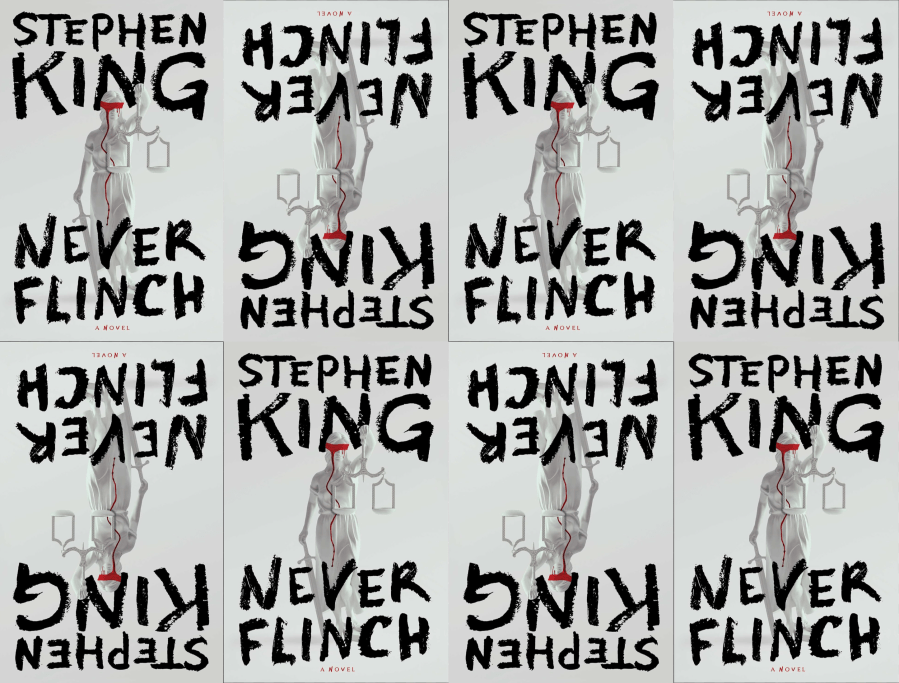
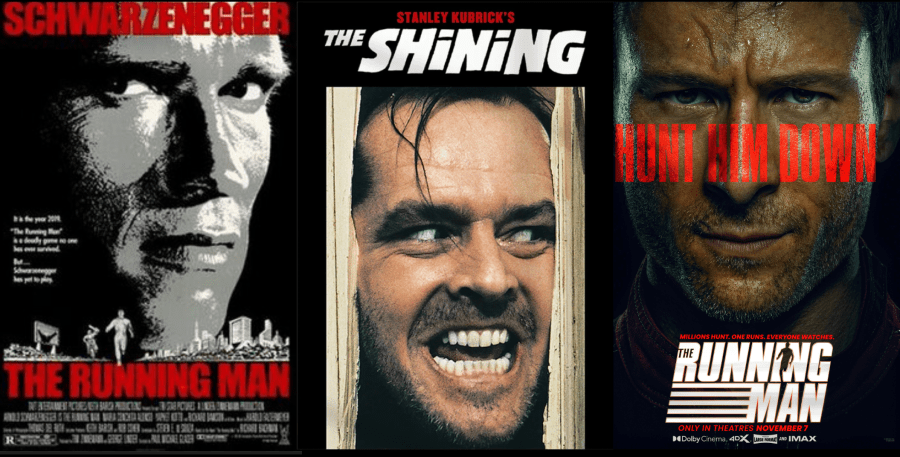
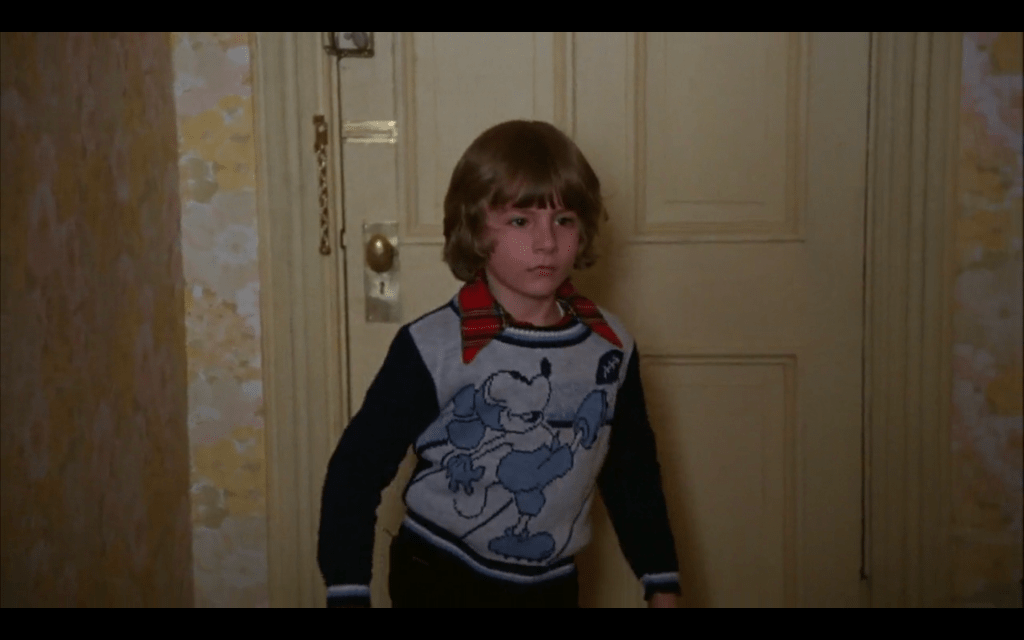

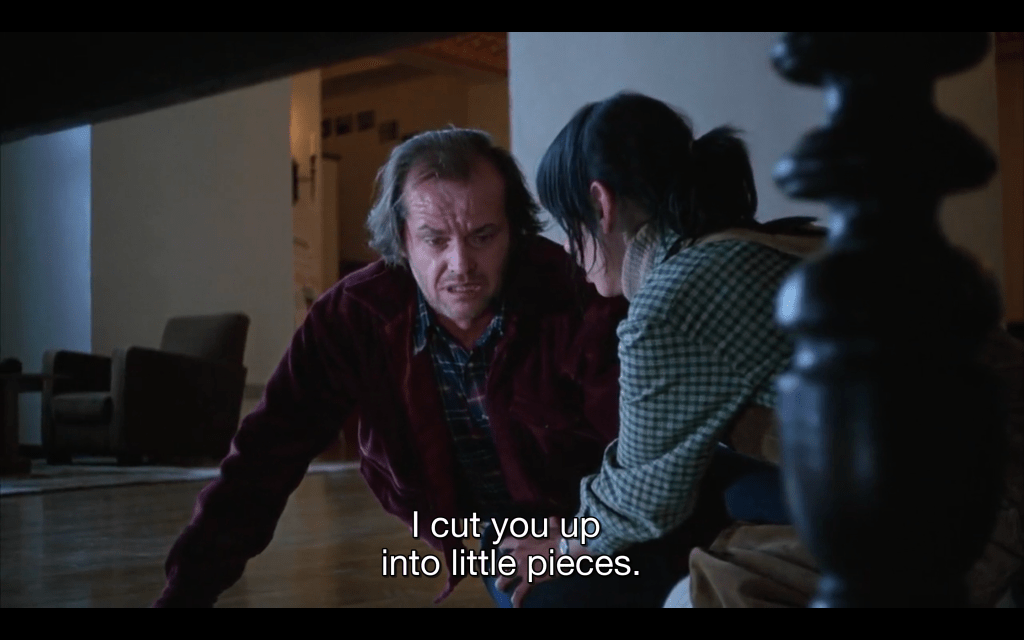



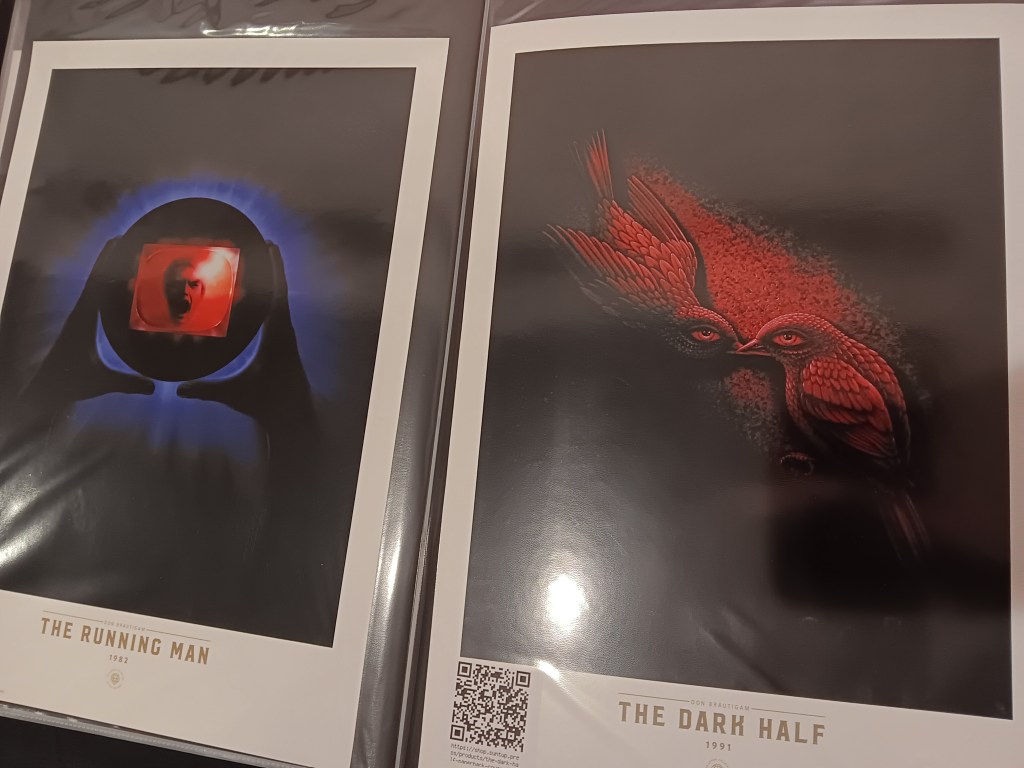
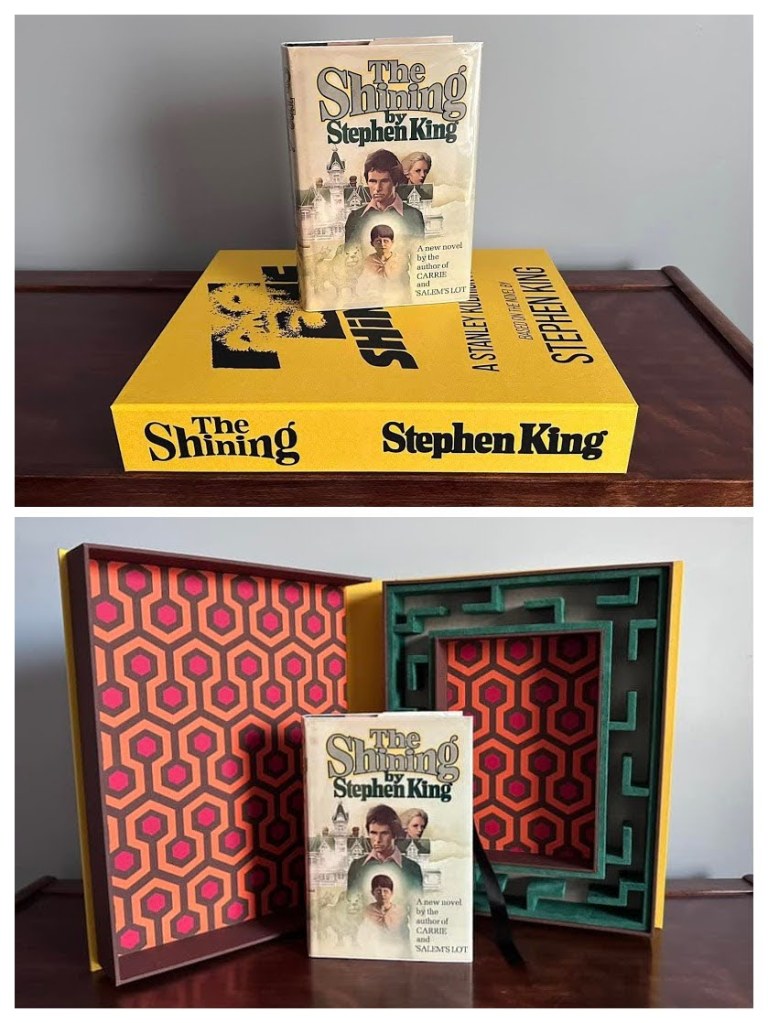
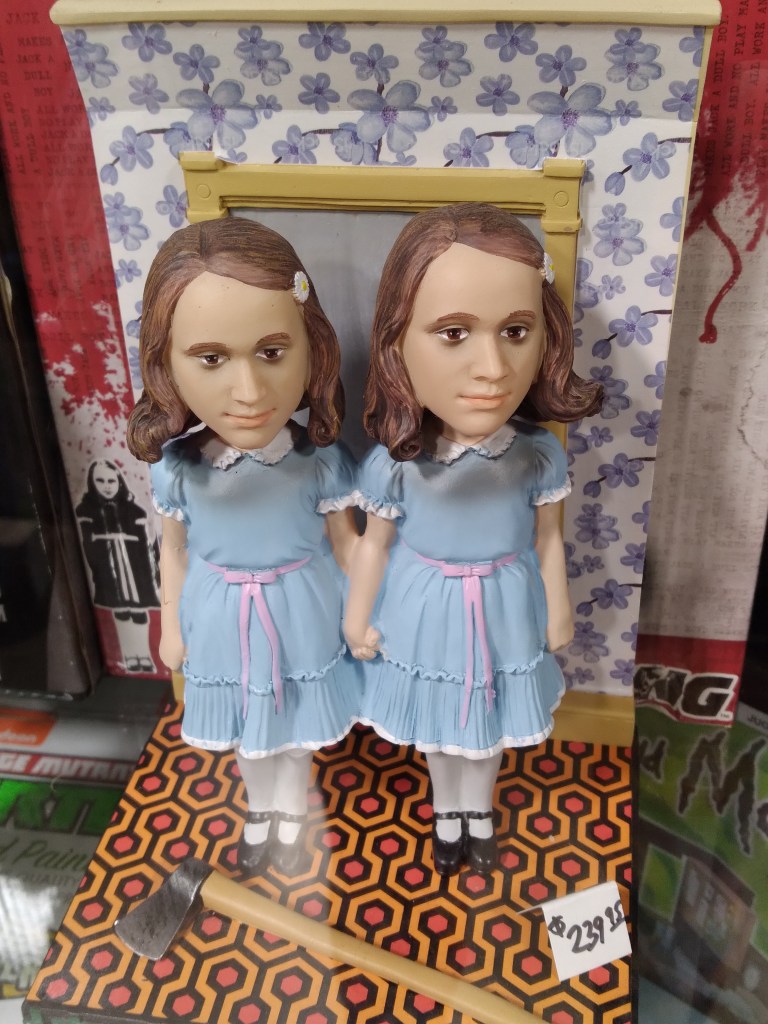
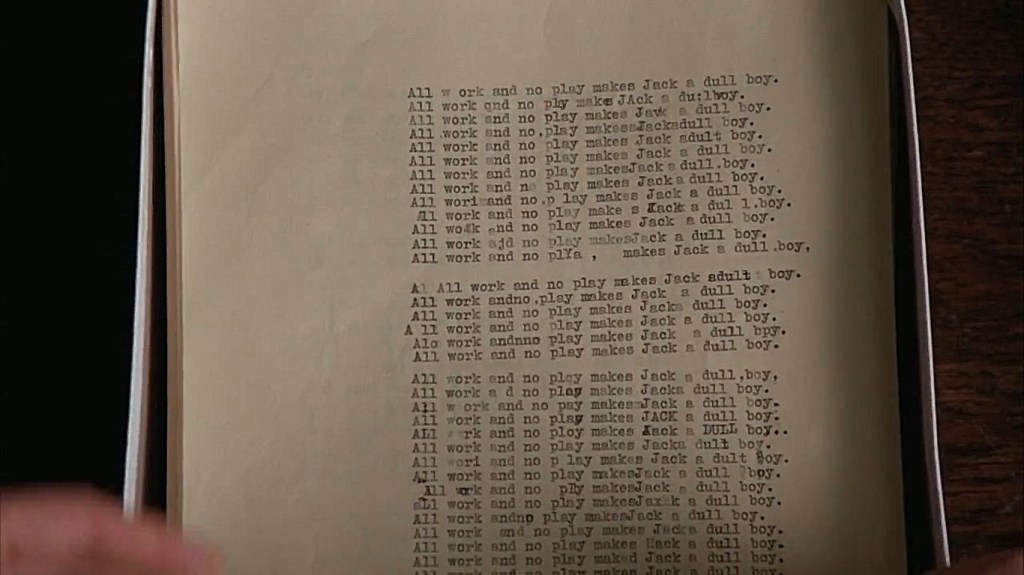


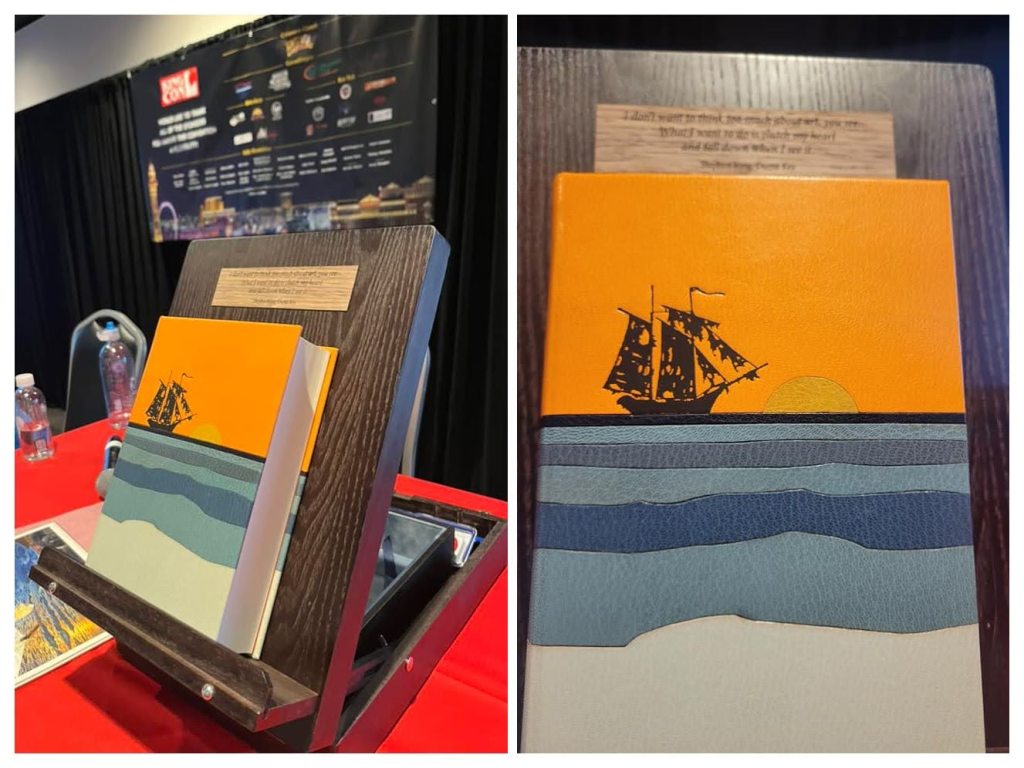
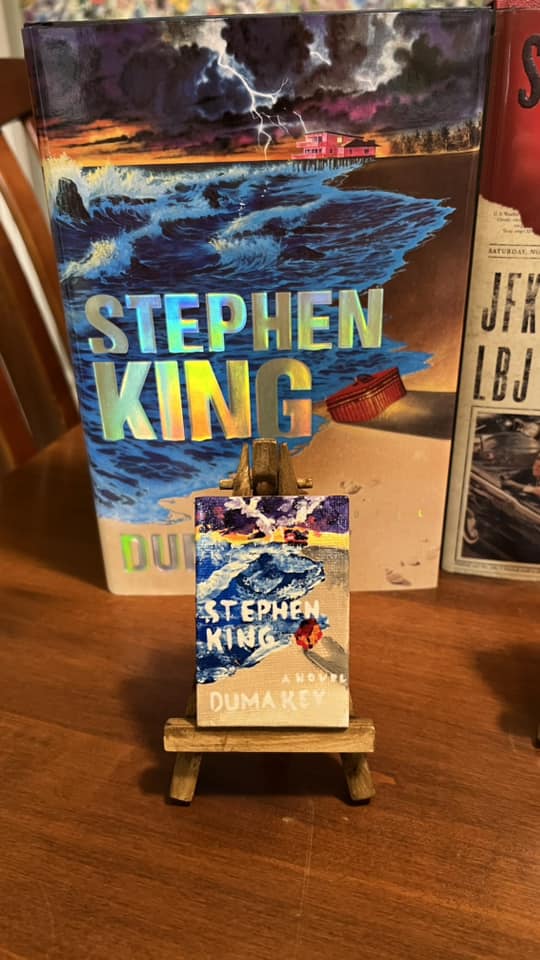


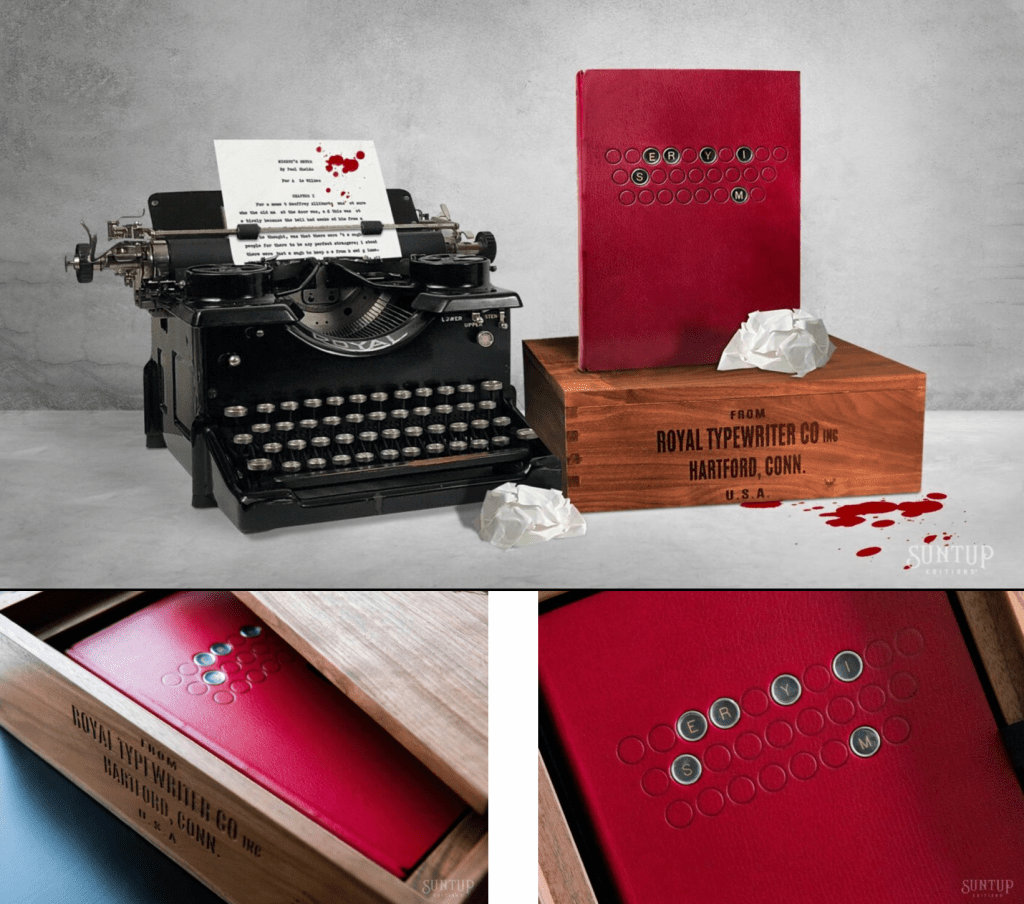




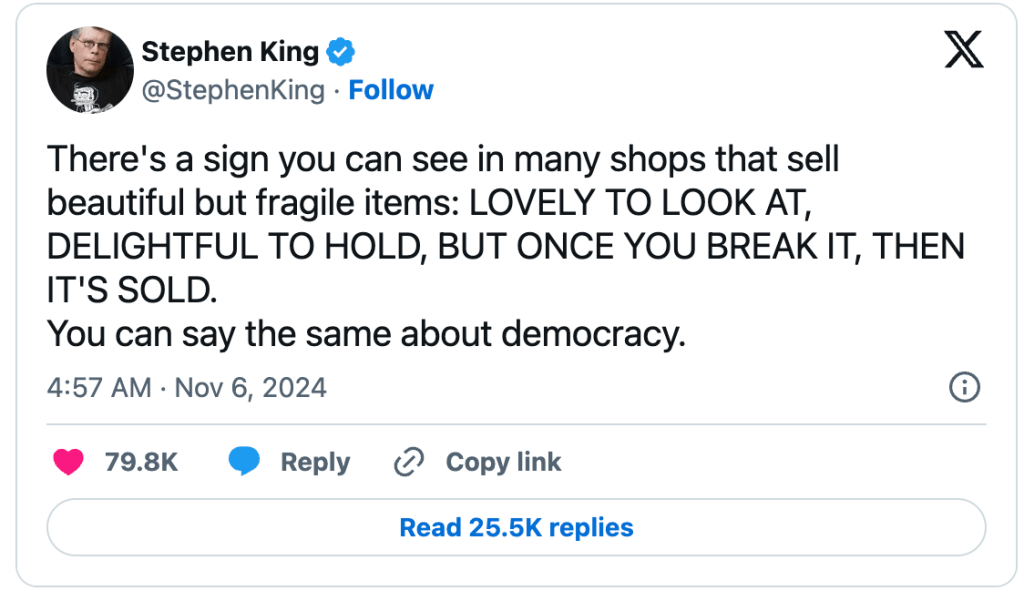
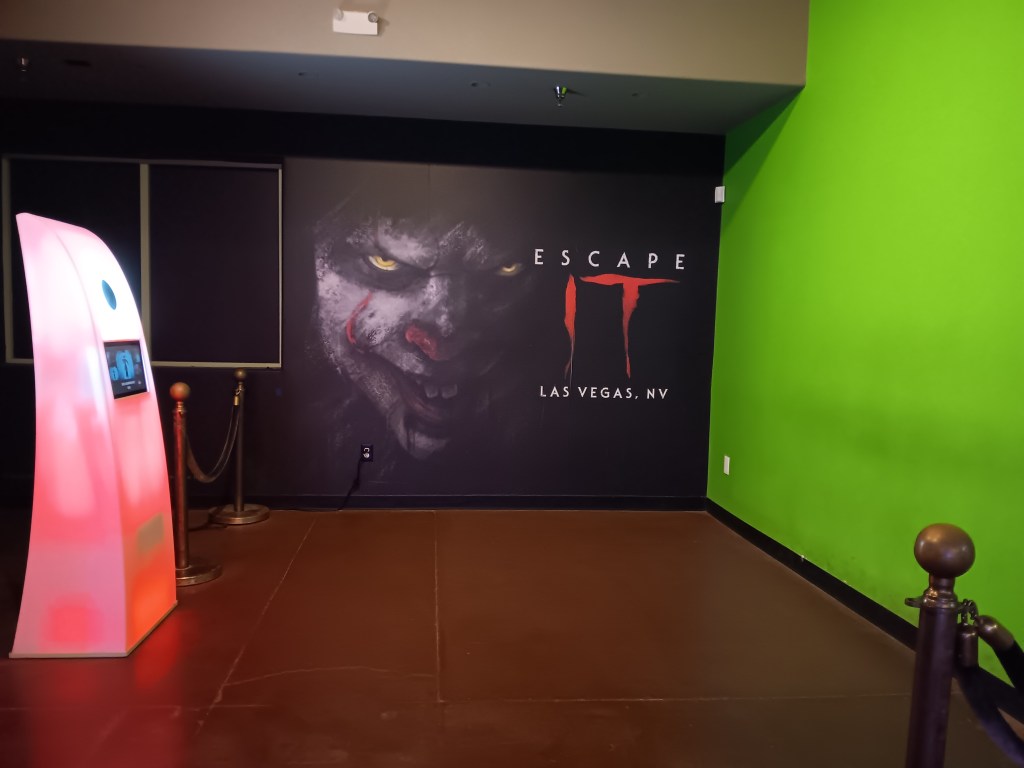



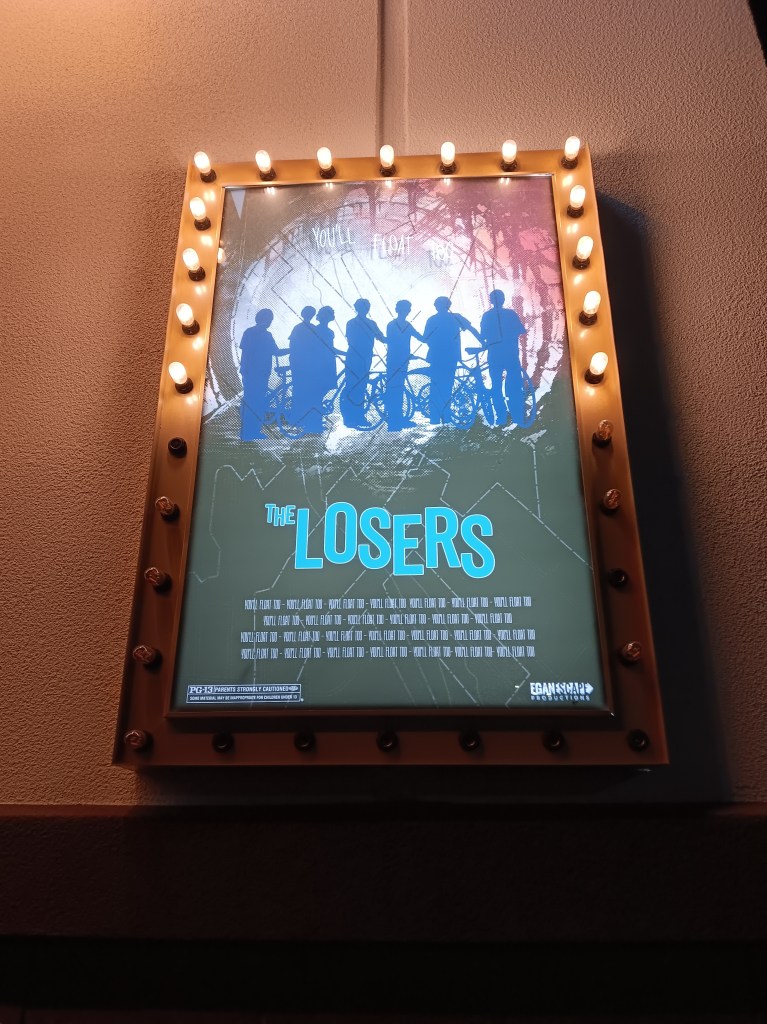
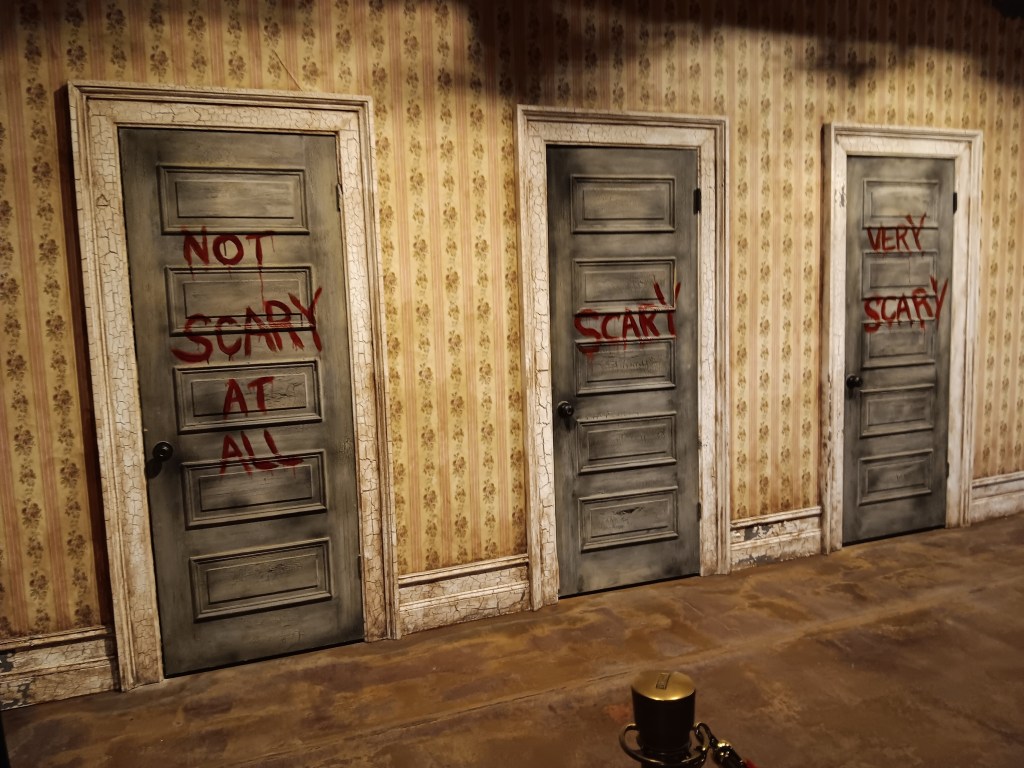


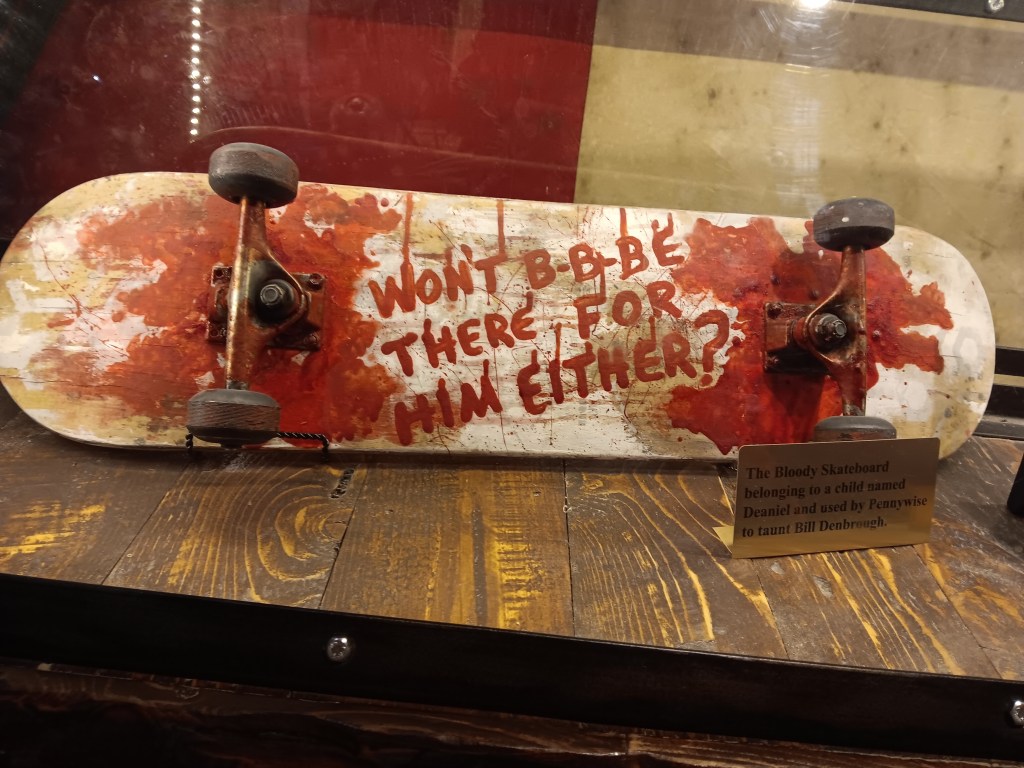
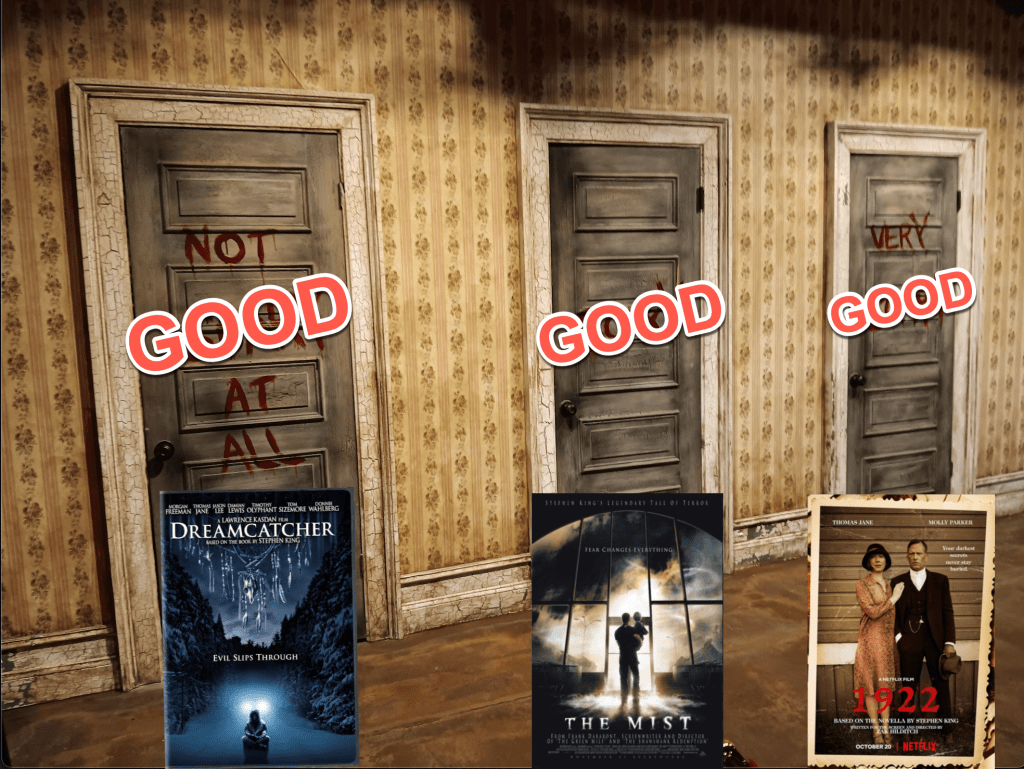
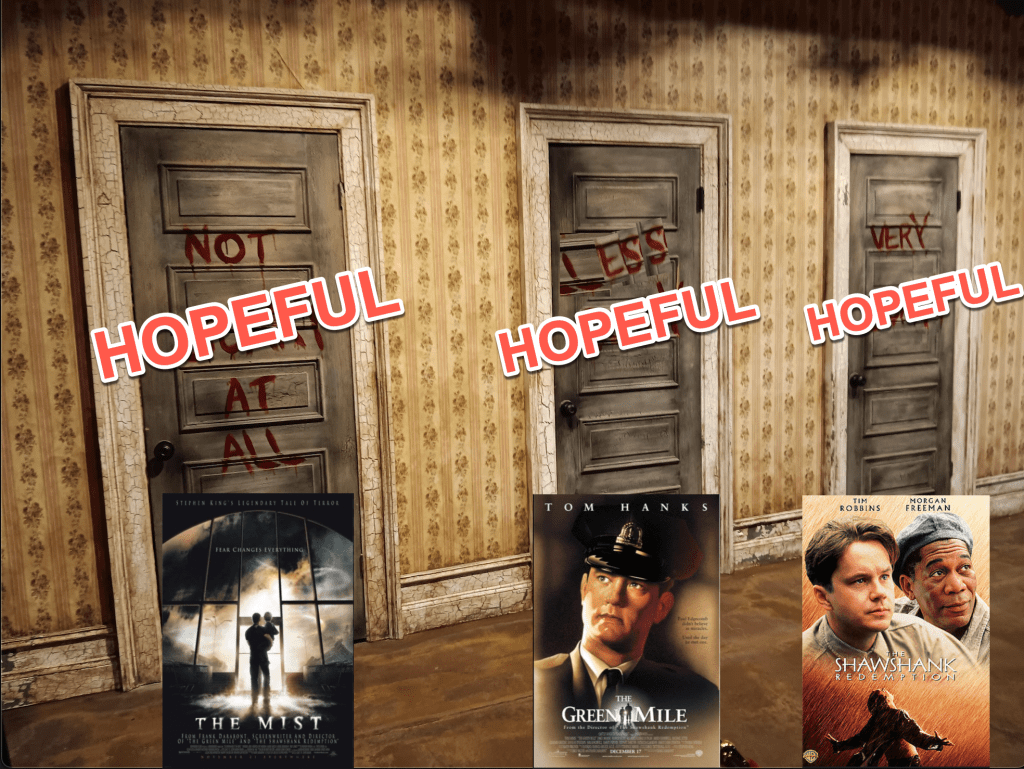
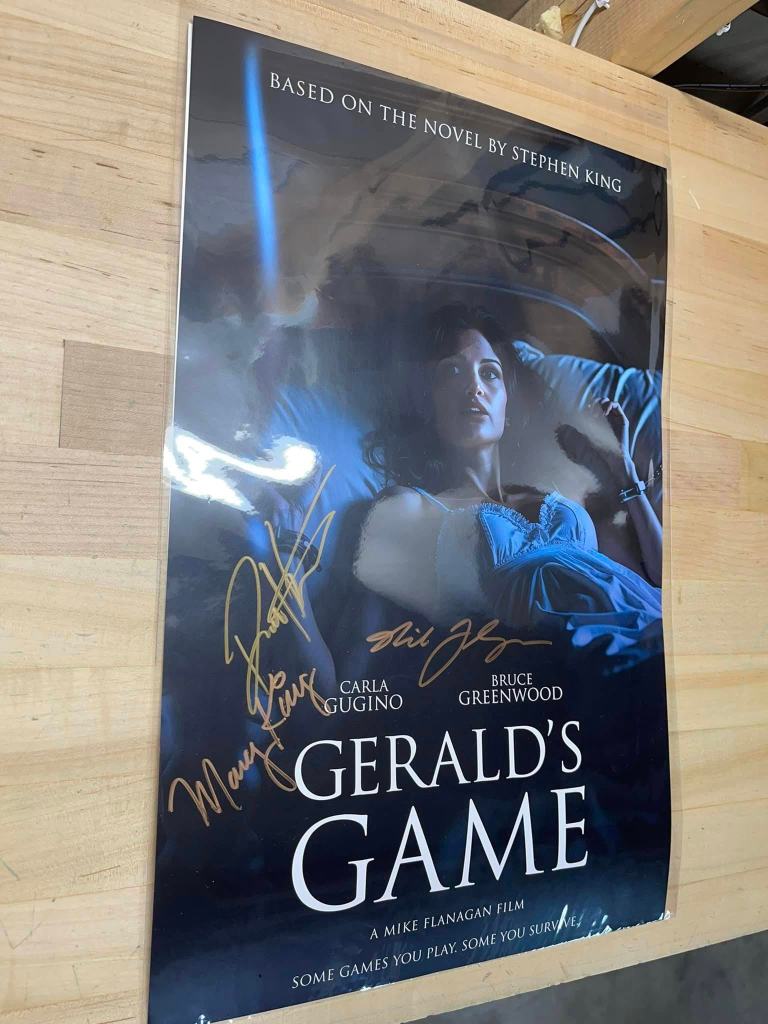

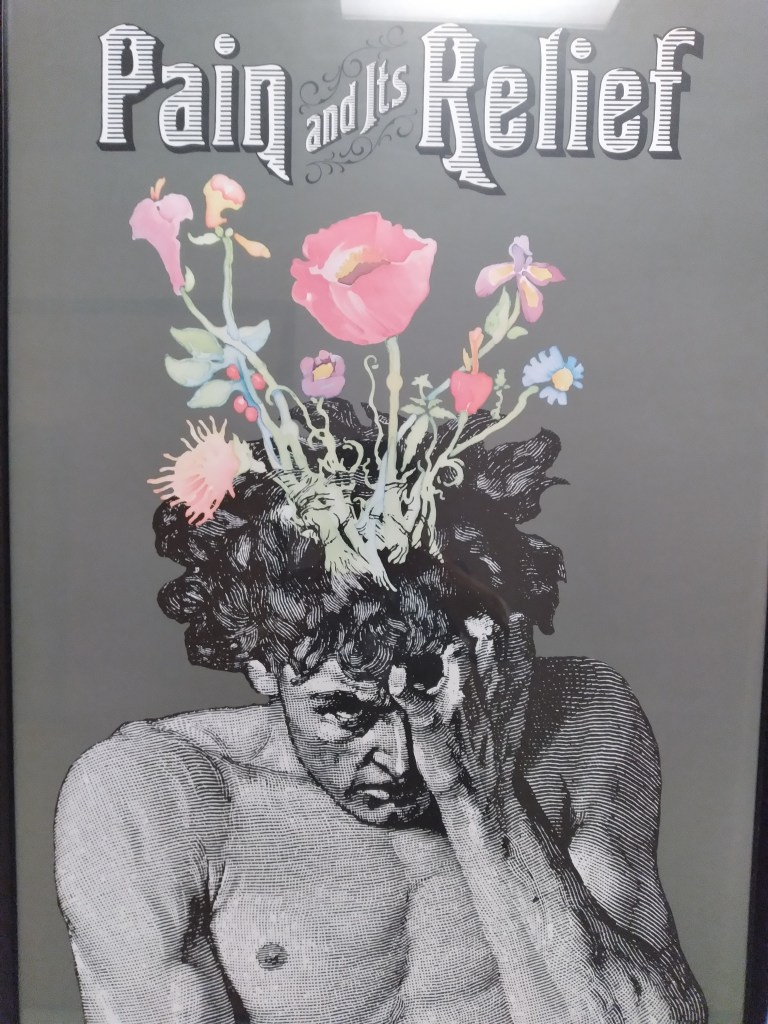
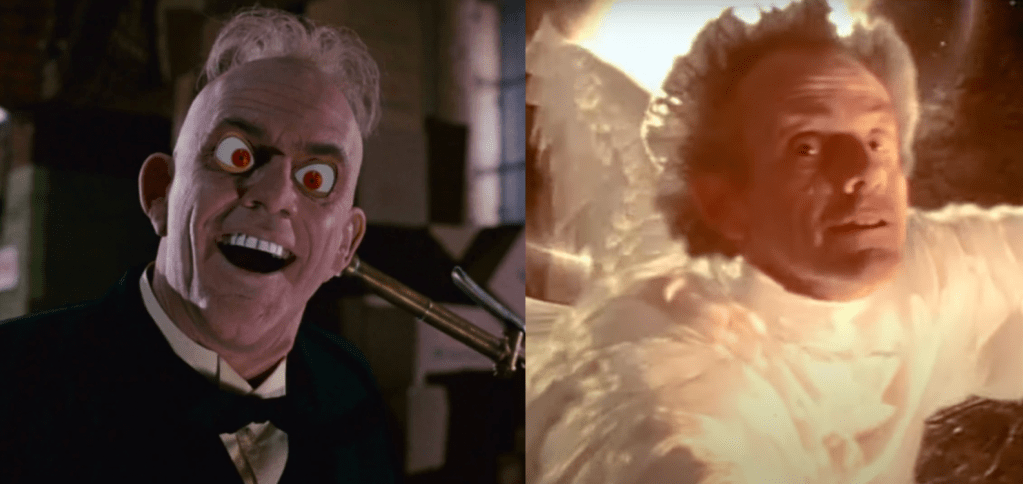

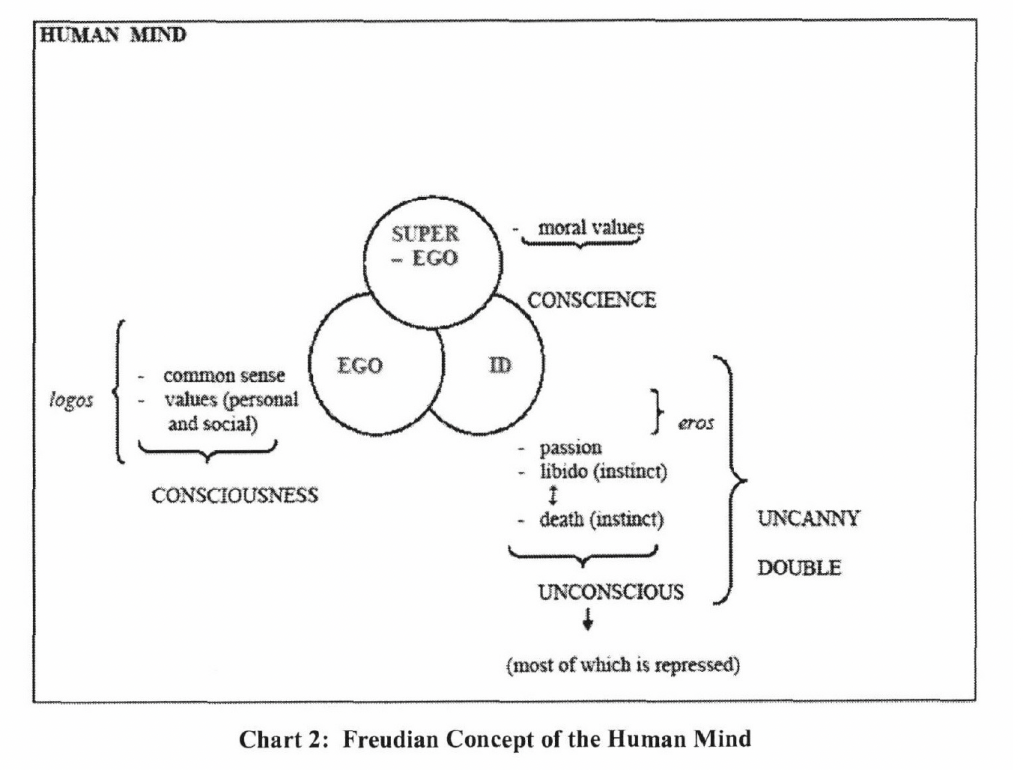
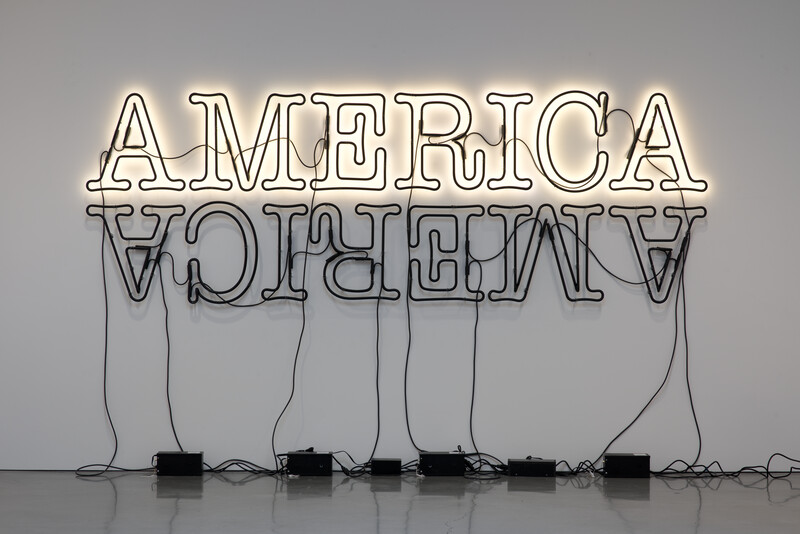

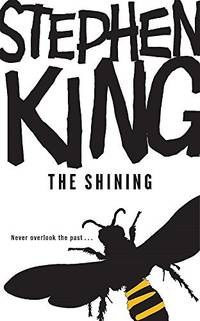
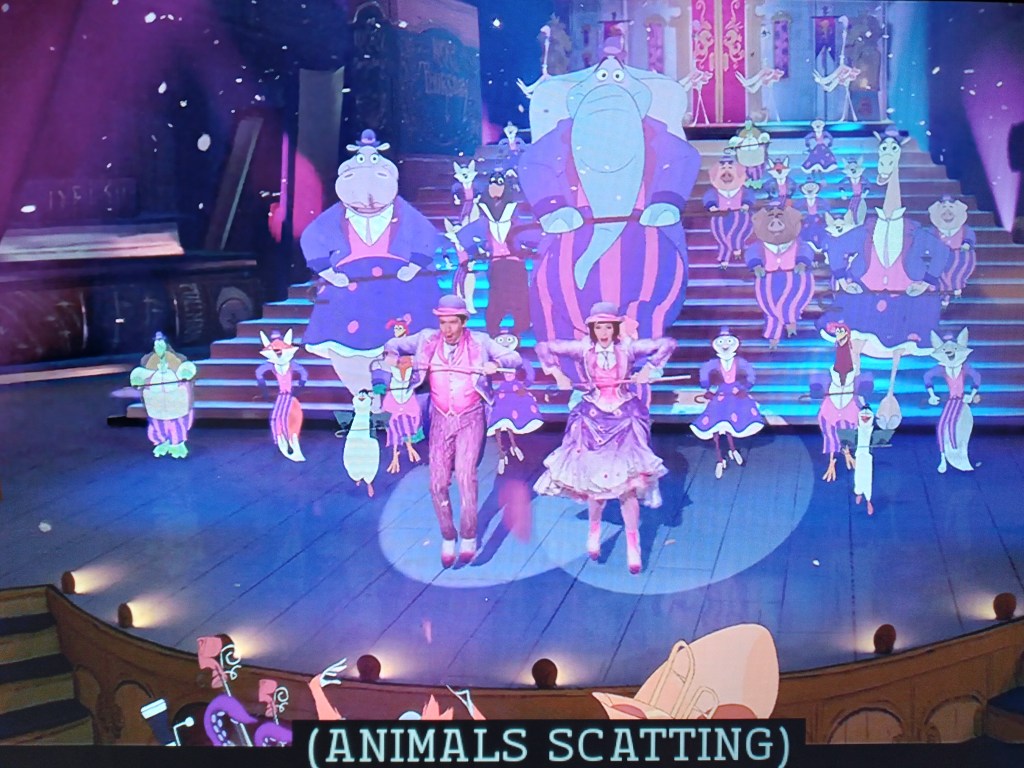
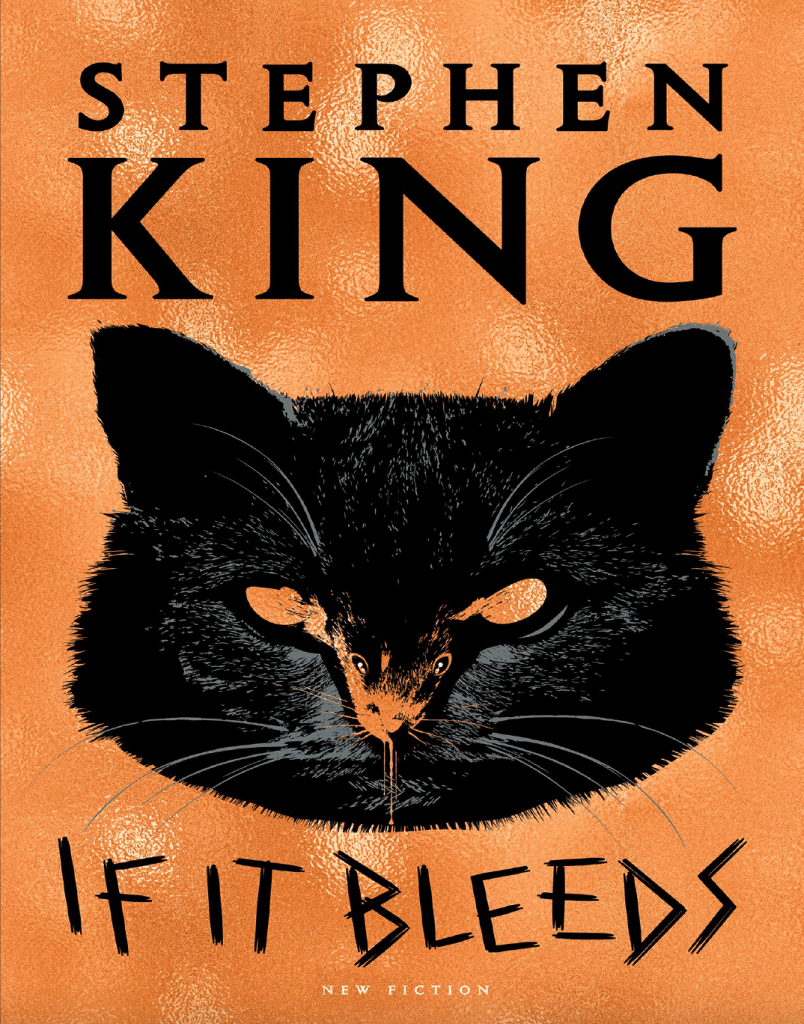
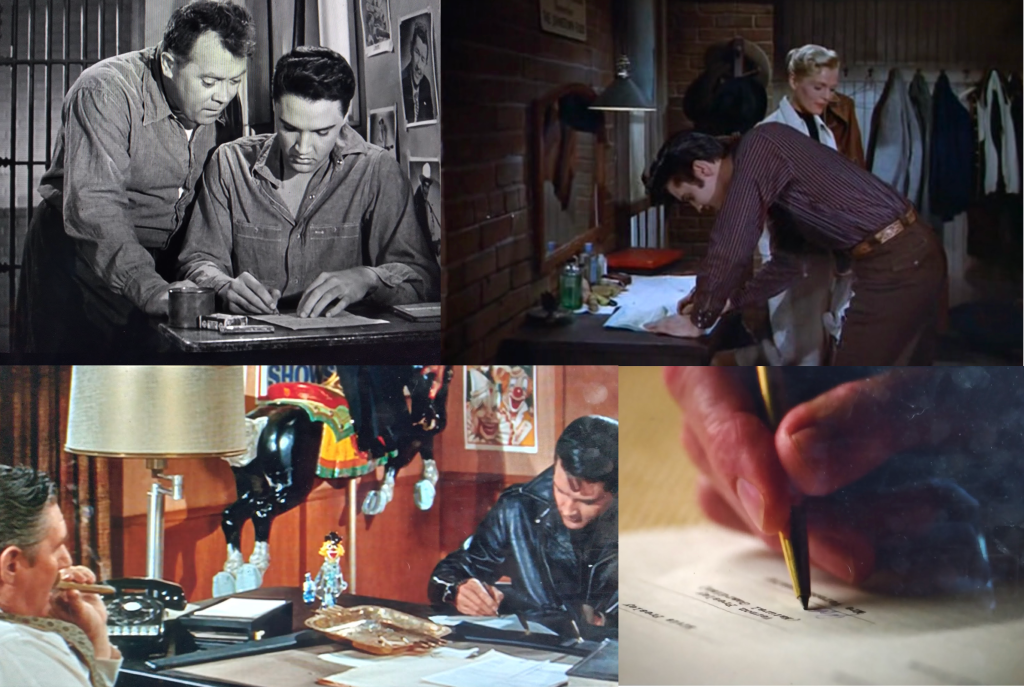
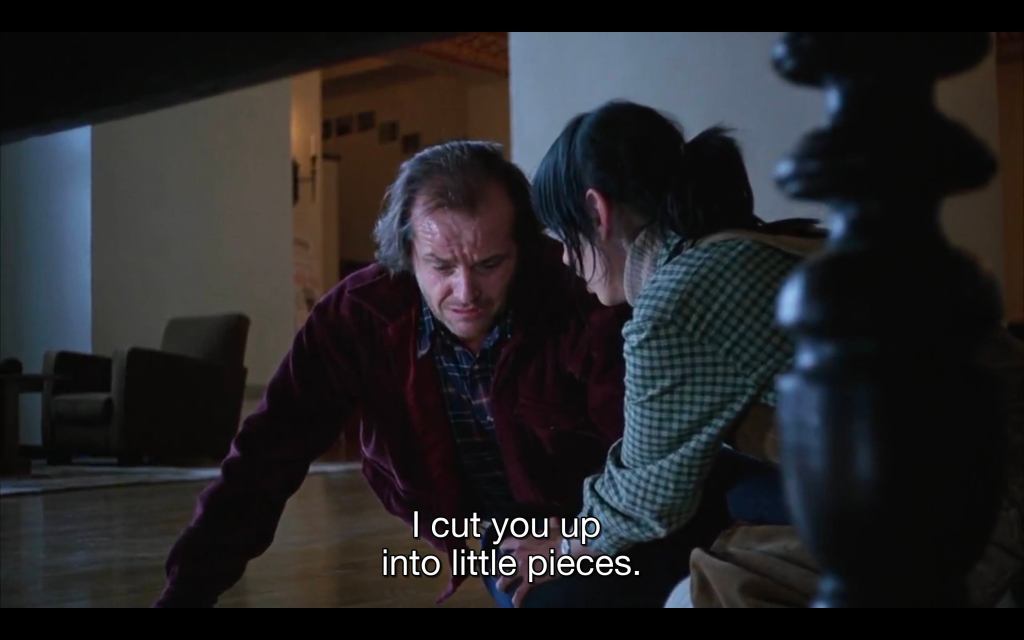
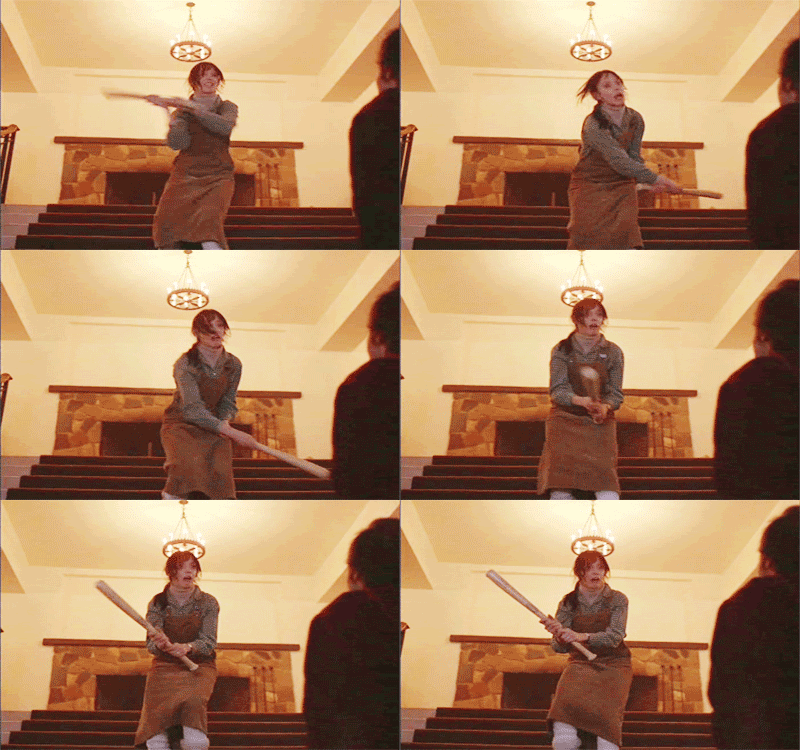

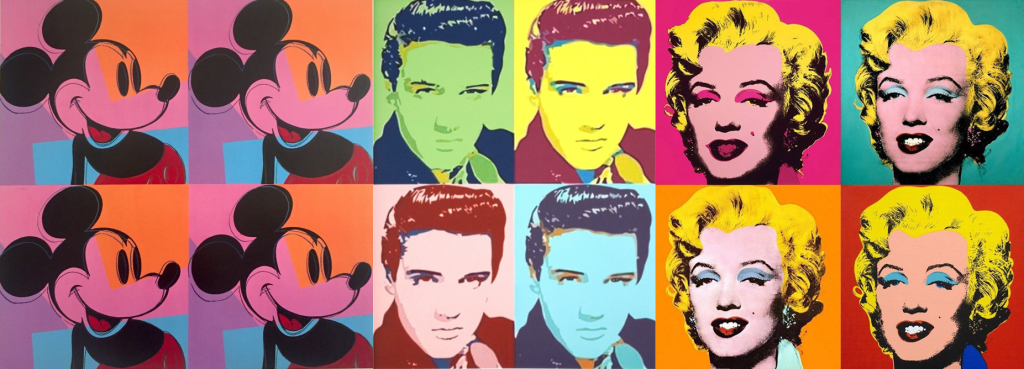
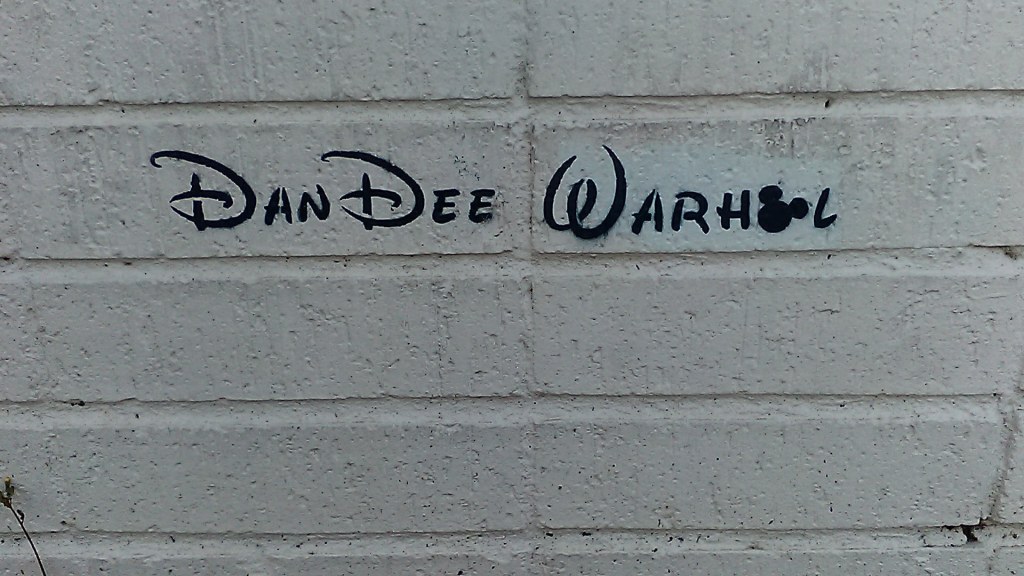





 Long Live The King